Birds cannot fully control when or where they poop. Their digestive and urinary waste empties into a single chamber called the cloaca and gets expelled together through one opening called the vent. There's no "hold it" mechanism the way mammals have. That said, birds aren't completely random either, their flight patterns, roosting habits, and nesting behavior all influence where droppings land, which means you can actually do something about repeat messes if you understand the biology.
Can Bird Control Their Poop? Facts, Cleanup, Prevention

Marcus Fielding
3 May 2026
What bird poop actually is
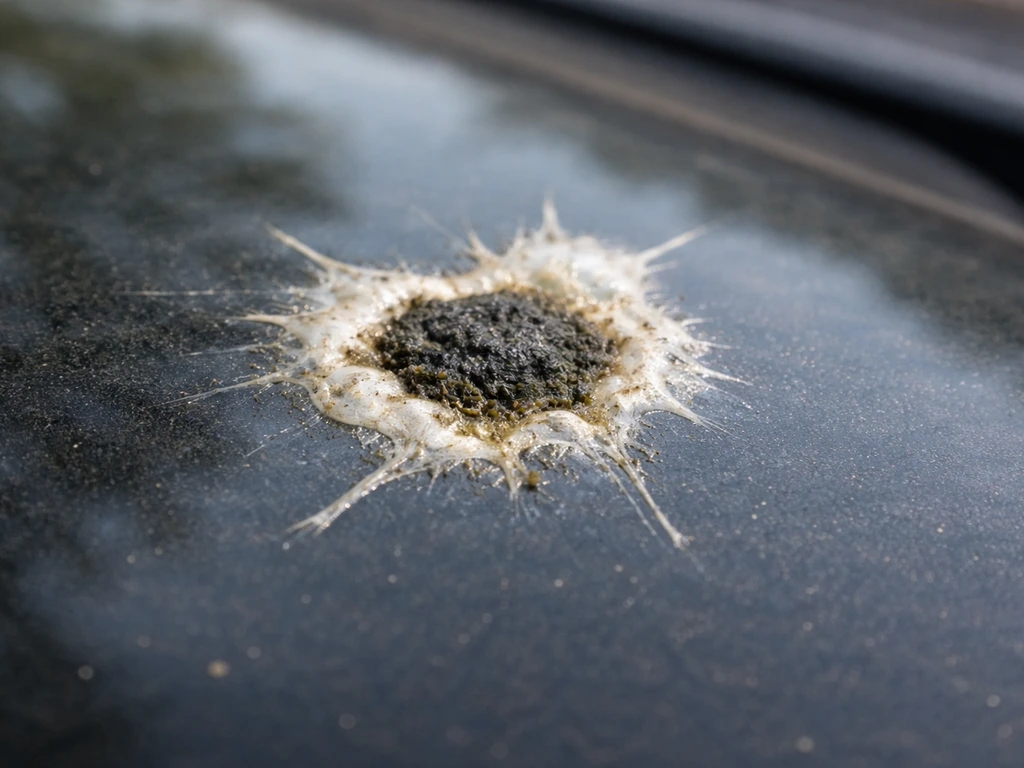
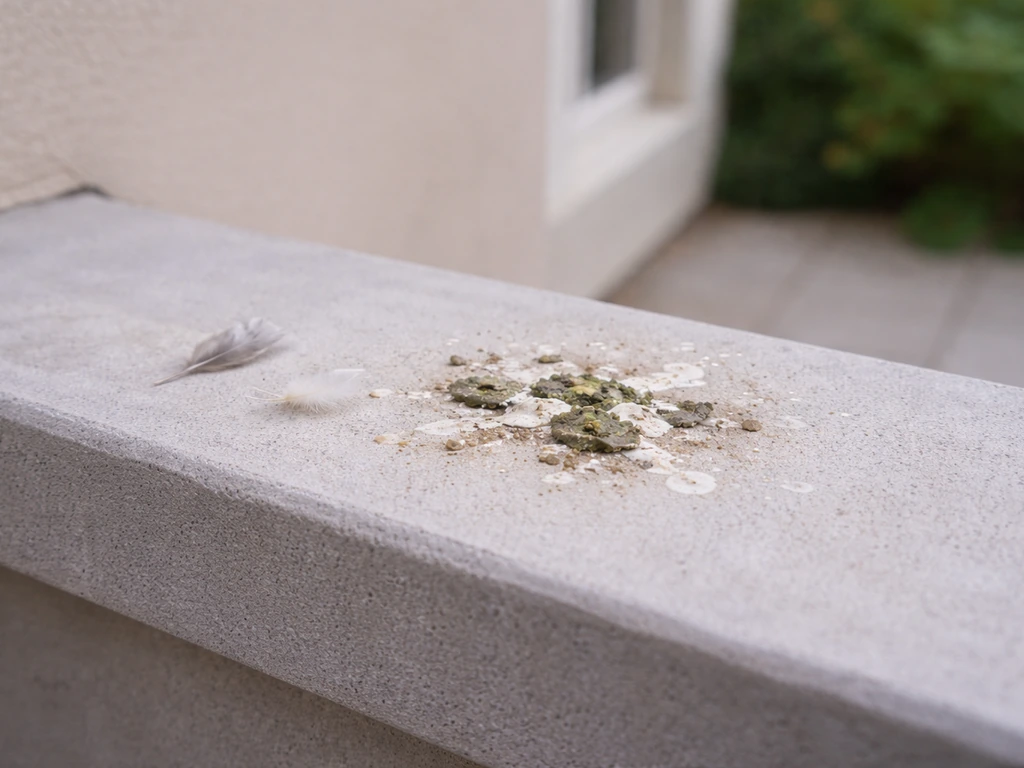
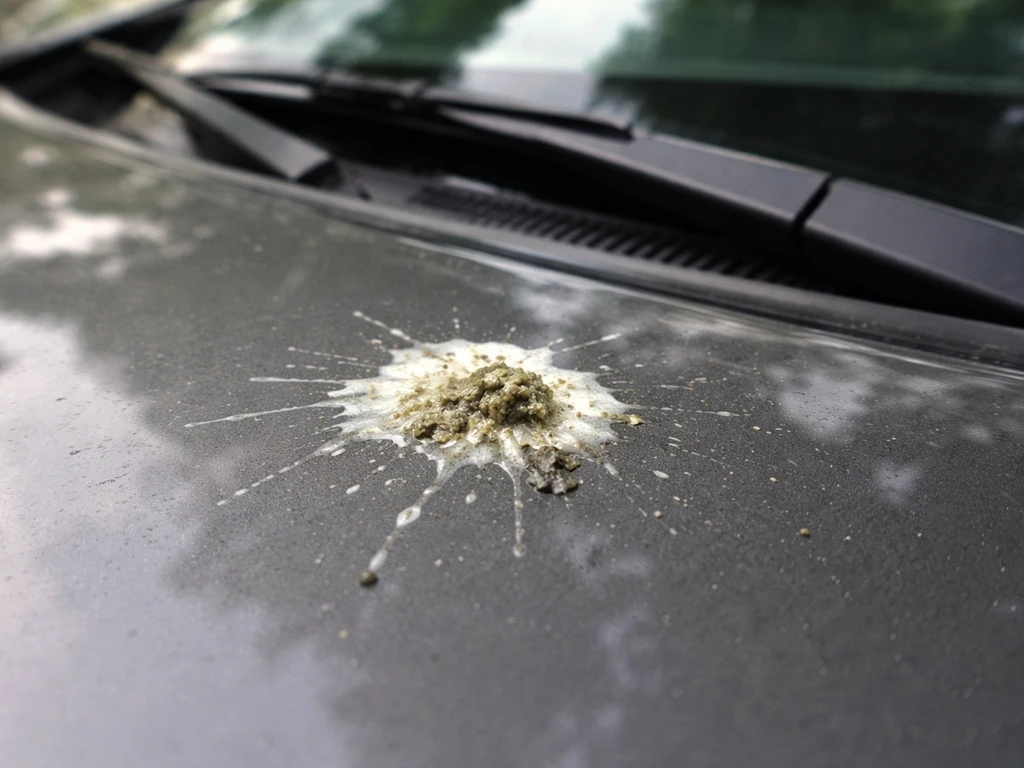
That white-and-dark blob on your windshield is three things at once: the darker center is the fecal portion (digested food waste), the white or cream-colored paste surrounding it is urates (essentially uric acid crystals, the bird equivalent of urine), and there's sometimes a small amount of clear liquid urine mixed in. Because birds have a cloaca, a single shared chamber for digestive and urinary waste, all of this exits together in one event. Birds don't pee separately and then poop separately the way you do. It all comes out at once, which is why every dropping looks like a little layered package.
The white part is white because of how birds process nitrogen waste. Instead of producing ammonia or urea (which requires lots of water to dilute and excrete), birds produce uric acid, which is poorly soluble and gets deposited as near-solid crystals after the cloaca reabsorbs most of the water. It's an efficient system for an animal that needs to stay light enough to fly, but it means the droppings are concentrated, corrosive to surfaces, and harder to rinse off once they dry.
How bird biology drives when and how much they poop
Timing is physiological, not voluntary. Research on pigeons found that nocturnal dropping patterns track directly with digestive cycles and body temperature fluctuations overnight, the bird isn't deciding to go at 2 a.m., it's just following its gut (literally). The more a bird eats during the day, the more it processes and excretes overnight. Diet and health status also affect droppings volume and consistency, which is why vets use droppings as a wellness indicator in pet birds.
Frequency is high across most species. The number of times a bird poops a day varies a lot by species and can range from every few minutes to several times daily how many times a bird poops a day. Observational research on seabirds showed streaked shearwaters defecating every 4 to 10 minutes while in flight. Smaller birds with faster metabolisms tend to go even more frequently. If you've ever wondered why you walked away from your bird's shoulder with a deposit in under five minutes, now you know. The short answer is that birds eat a lot relative to their body size, digest fast, and have no holding capacity to speak of.
Species differences matter too. Daily droppings output varies meaningfully between species even when diet and environment are similar. A pigeon roosting on your balcony rail operates on different timing and volume than a house sparrow visiting your feeder. Smaller birds can also produce less mess overall, but the best way to choose is to consider a species' typical droppings output and frequency as pets. If you're trying to understand how much droppings accumulation to expect, the species involved makes a real difference.
Can birds choose where they go?
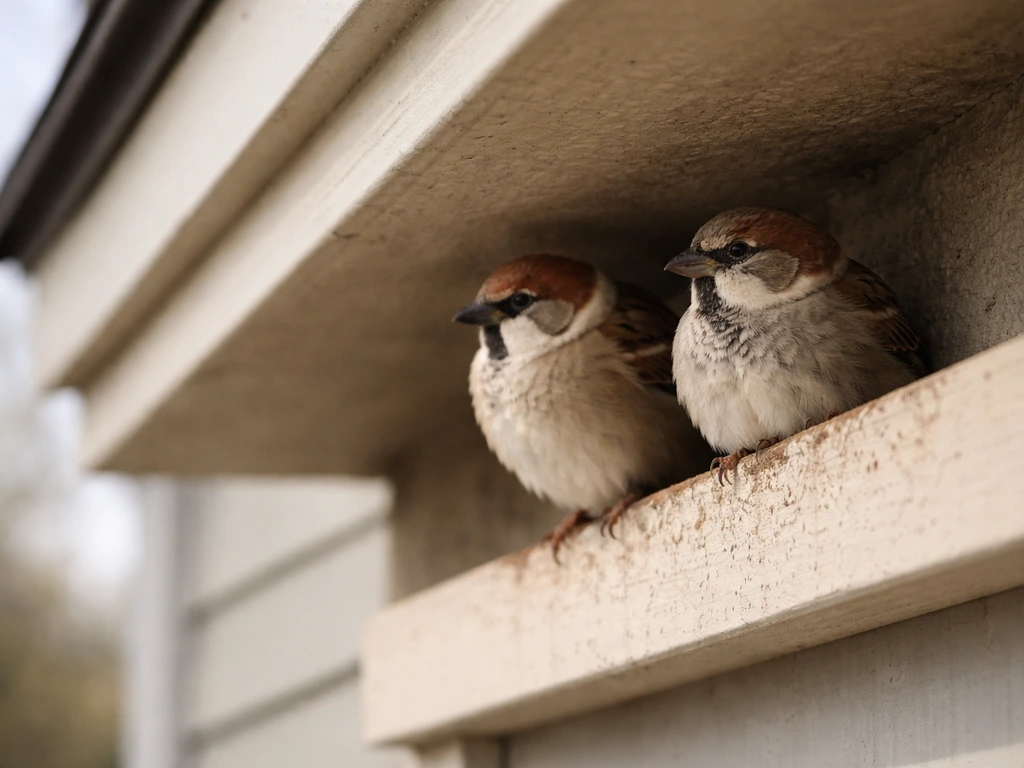
Not in the way you'd choose to find a bathroom. Some people also ask what bird poops the most, but the answer depends on species frequency and how much they eat relative to their size. But here's the practical nuance: while a bird can't aim, it absolutely controls where it sits, roosts, and flies. That indirectly determines where the droppings land. A pigeon that roosts on your AC unit every morning is going to drop below that spot every morning. A flock of starlings that stages in the oak tree over your driveway at dusk is going to annihilate your car every evening. The behavior is deliberate (they chose that spot); the defecation during and after is not.
Nesting is a partial exception worth knowing about. Parent birds actively remove fecal sacs from the nest to keep it clean, which is why you often find nest sites relatively tidy compared to roost sites. In nestling birds, peer-reviewed research reports that parents remove fecal sacs from the nest, which helps explain why nests are cleaner than surrounding roost or perch areas [Parents actively remove fecal sacs from the nest to keep it clean](https://pmc. ncbi.
nlm. nih. gov/articles/PMC4566197/). If you're curious about why bird nests aren't covered in poop, the answer is a mix of active housekeeping by parents and the fact that nestlings have evolved to produce neatly packaged fecal sacs that adults can carry away.
Roost sites, by contrast, have no such cleanup behavior and accumulate droppings directly below perches over time.
In flight, deposition is essentially random from the bird's perspective, it happens when the bird has to go, which based on the seabird data is every few minutes. Where it lands is determined by flight path and stop points, not intent. This is why bird feeders, power lines, and favorite perch branches get disproportionately hit: those are the spots where birds consistently stop.
When droppings become a health risk
Most casual exposure, a single dropping on your arm or a fresh splatter on your car, carries low risk for healthy adults. But droppings that accumulate, dry out, and get disturbed are a different matter. The main concerns are histoplasmosis, psittacosis, and campylobacter infection.
- Histoplasmosis: A lung infection caused by Histoplasma fungus spores, which grow in soil enriched by accumulated bird (and bat) droppings. The risk comes from breathing in aerosolized spores when dry, contaminated material is disturbed — think sweeping up under a pigeon roost or clearing a dusty attic where birds have nested.
- Psittacosis (ornithosis): A bacterial infection most commonly associated with pet parrots, cockatiels, and poultry. It spreads through contaminated droppings and respiratory secretions. Pet bird owners are the highest-risk group, and safe cage-cleaning practices matter.
- Campylobacter: A bacterial gut infection spread by contact with animal feces, food/water contamination, or touching cages and enclosures without hand washing.
The key risk factor for histoplasmosis specifically is accumulation. The CDC and NIOSH both frame prevention as stopping droppings from building up in the first place, because spores concentrate in sites where droppings collect over time. A single fresh dropping on a surface is not the same risk as a ledge caked with months of dried pigeon residue. If you're dealing with heavy buildup, a roost site, an attic, or a large outdoor accumulation, the CDC recommends professional hazardous waste removal rather than DIY cleanup.
How to clean up bird droppings safely
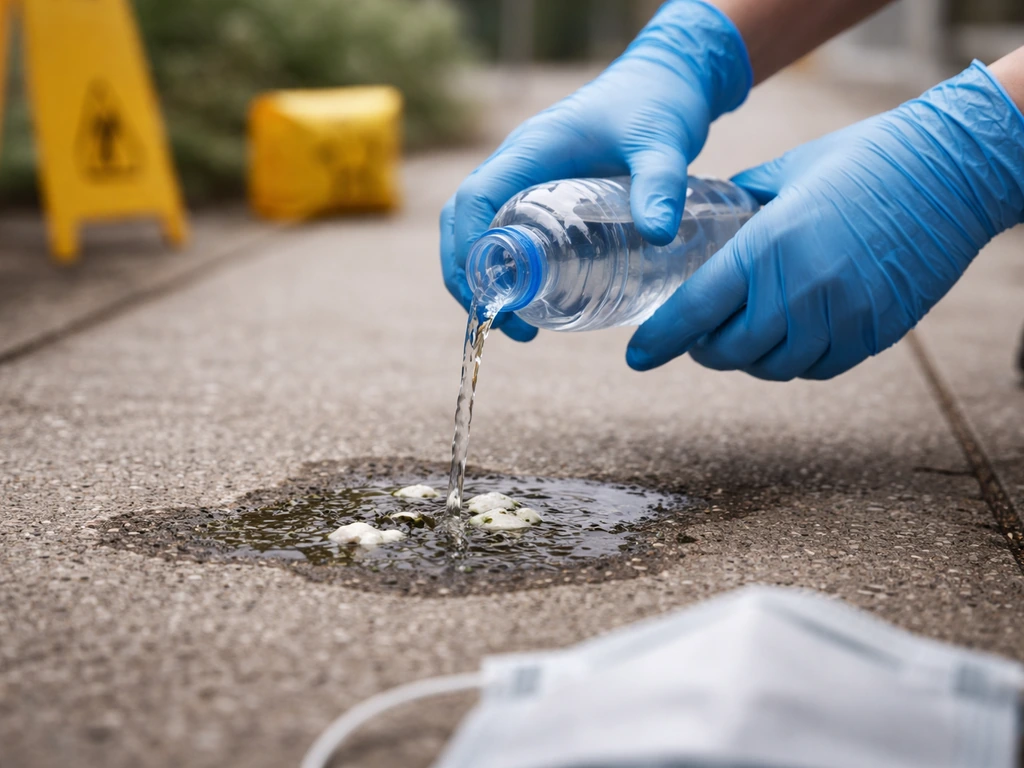
The single most important rule: never dry-sweep or vacuum dry droppings. Disturbing dry, dusty droppings aerosolizes particles and dramatically increases inhalation risk. Wet it first, always.
General cleanup steps
- Put on gloves before touching anything. Do not pick up droppings with bare hands.
- If indoors or in an enclosed space, open windows/doors for ventilation before starting.
- Dampen the droppings thoroughly with water or a disinfectant spray before disturbing them. This suppresses dust and aerosolization.
- Scoop or wipe up the wetted material and seal it in a bag for disposal.
- Disinfect the surface with an appropriate cleaner.
- Wash your hands thoroughly afterward, even if you wore gloves.
Cleaning droppings off your car
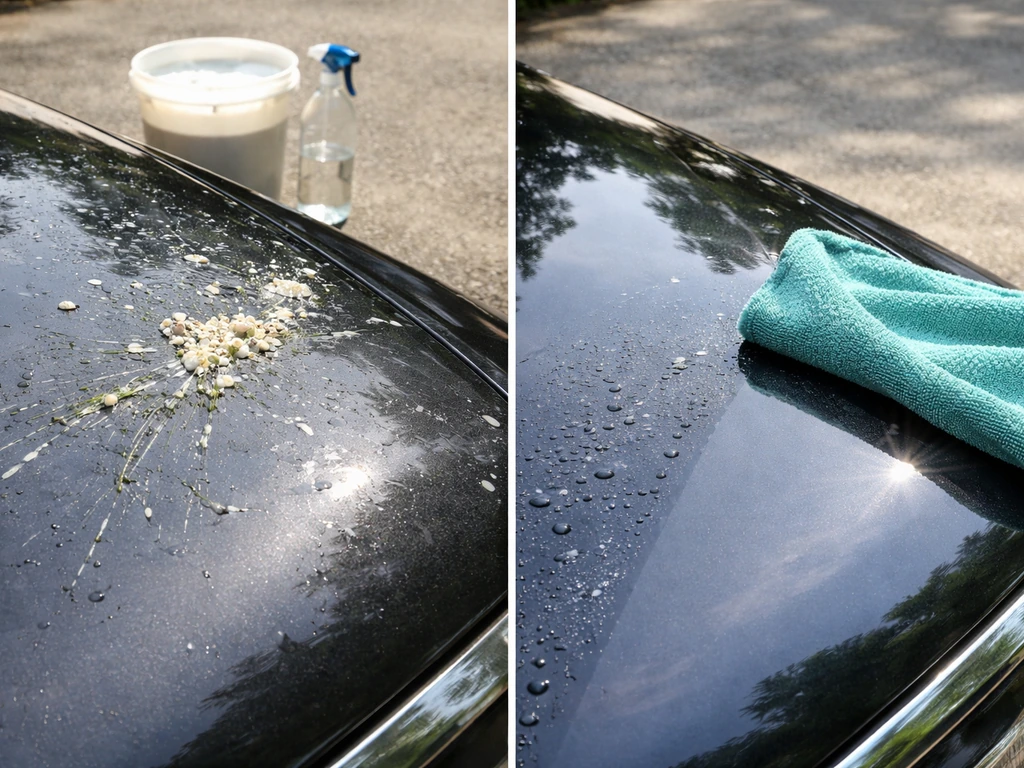
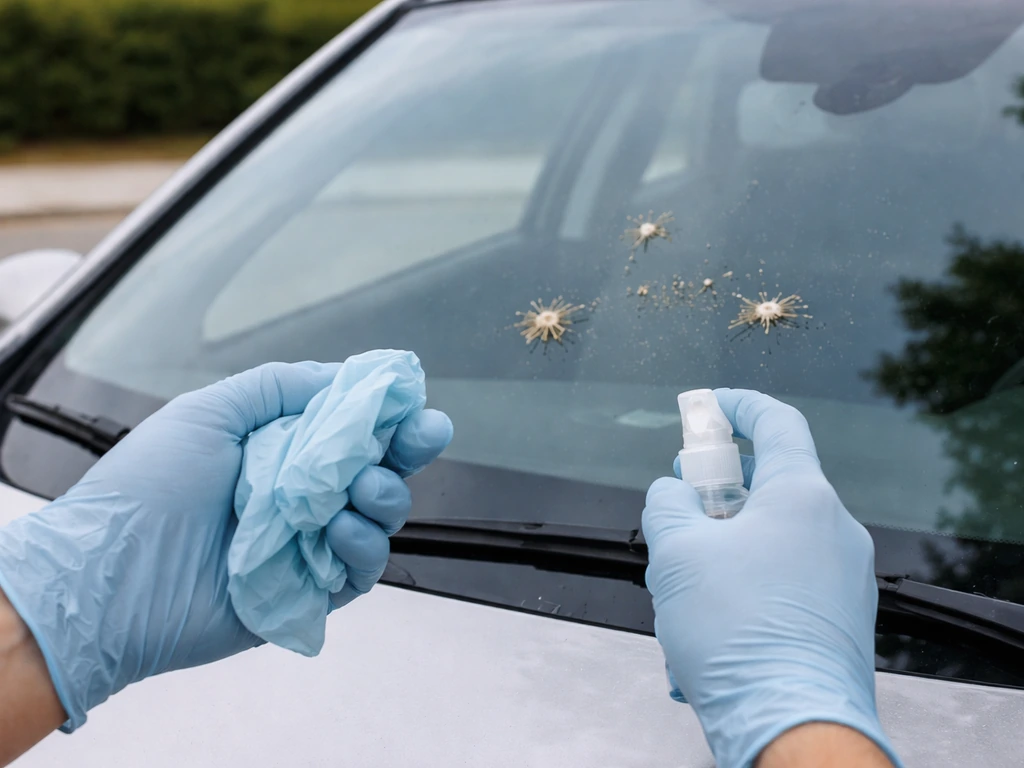
Fresh droppings are much easier to remove than dried ones, and the uric acid in droppings will etch clear coat if left in the sun for even a few hours. For fresh drops, a damp microfiber cloth or a quick rinse works well. For dried-on spots, soak with water or a car-safe detailing spray first to rehydrate before wiping, scraping dry will scratch the paint. Avoid pressure-washing at close range on older paint. For interior surfaces (if a bird got inside your car), follow the wet-before-wipe approach and ventilate the car fully.
Cleaning droppings from patios, balconies, and outdoor furniture
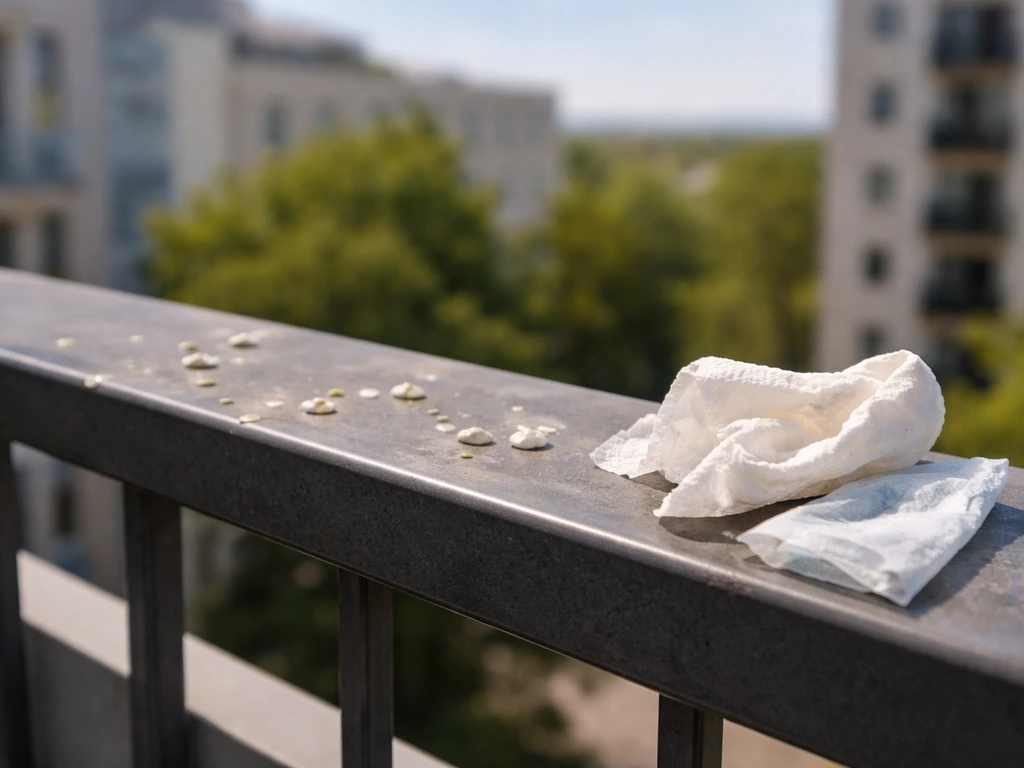
For outdoor hard surfaces, spray or wet the area first, let it sit briefly, then rinse with a hose or wipe with disposable paper towels. For patio cushions or fabric, check the fabric care tag but a diluted disinfectant spray followed by a rinse is usually safe. Cage cleaning for pet birds follows the same principle the CDC spells out for psittacosis prevention: wet the cage surfaces with water or disinfectant before wiping, do not dry-sweep, and wash hands after.
When to call in professionals
If you're looking at a large accumulation, an attic with a roosting colony, a barn overhang, or a commercial ledge caked with years of guano, this is not a weekend DIY project. The CDC is explicit that large-scale droppings removal should be handled by professional hazardous waste removal companies. If you're a renter or tenant, that responsibility typically falls on building management.
Stopping birds from pooping where you don't want them
Since you can't stop the birds from pooping, you redirect where they sit. Removing or blocking favored roosting and perching spots is the most reliable long-term approach.
| Method | Best For | Effectiveness | Notes |
|---|---|---|---|
| Bird spikes (porcupine wire) | Ledges, railings, AC units, window sills | High for targeted spots | Durable, low maintenance; install carefully to cover full perch area |
| Exclusion netting | Rafters, balconies, building facades | High for larger areas | Keeps birds out of enclosed spaces entirely; needs proper anchoring |
| Reflective deterrents (tape, discs) | Gardens, patios, open areas | Moderate; birds adapt | Better as a temporary or supplemental measure |
| Habitat changes (remove food/water sources) | Backyards, patios, feeders | High if sources are eliminated | Relocating feeders away from cars/seating areas helps redirect traffic |
| Covered nesting or nest discouragement | Eaves, balcony corners | High when applied early | Remove unfinished nests early in season before eggs are laid |
The CDC and NIOSH frame accumulation prevention as the primary health-risk reduction step, not just a cleanliness preference. Stopping roosting prevents buildup, which prevents the conditions where histoplasmosis risk accumulates. If pigeons, starlings, or other communal roosters have claimed a spot on your building, bird spikes on ledges and netting over exposed rafters are the most durable solutions. For individual property owners, moving bird feeders away from parking areas or seating spots is often enough to redirect traffic. If it's a building-wide issue, contact building management, large-scale exclusion is their responsibility.
Myths, superstitions, and the "it's clean if it's fresh" mistake
The idea that being pooped on by a bird brings good luck shows up in cultures across Europe, Russia, and parts of Asia. The logic varies, some versions say it's lucky because it's rare (it isn't, statistically), others frame it as a sign of prosperity. It's a charming belief, and if it makes you feel better about having to clean your jacket, there's no harm in it. But it's worth separating the folklore from the facts.
One myth that does carry real risk is the idea that fresh droppings are automatically safe. Fresh droppings can carry live bacteria including Campylobacter and Chlamydia psittaci (the cause of psittacosis), and while fresh outdoor drops from a random bird carry low risk, fresh droppings from sick pet birds absolutely can transmit infection. The "it's fine, it's fresh" assumption is the reason the CDC's psittacosis guidance specifically tells pet bird owners to wet cage surfaces before cleaning rather than assuming fresh material is benign.
Another common myth: dry sweeping or vacuuming is equivalent to wet cleanup. It's not, it's actually worse. Dry disturbance of accumulated droppings is exactly how Histoplasma spores get airborne. The CDC and NIOSH are clear that dust suppression (wetting first) is a required control step, not optional etiquette. Vacuuming is specifically called out as something to avoid in certain situations, the CDC's guidance for responding to bird droppings around pools, for example, explicitly says do not vacuum.
And one more: the size of the dropping doesn't tell you the health risk. A small, dry dropping that's been sitting in an attic for six months in a warm, humid environment poses more real histoplasmosis risk than a large fresh splatter on your patio. Risk is about accumulation, disturbance, and conditions, not just volume.
FAQ
Can birds “aim” their droppings at you, or is it random every time?
They cannot aim the release like peeing, because the waste exits from the cloaca in one event. What you can control is where birds choose to perch, roost, and stop during flight, which strongly determines where droppings land.
If the droppings look fresh, is it safe to wipe them up without precautions?
Fresh can still carry bacteria, including organisms that are relevant to psittacosis or campylobacter, especially if the bird is a sick pet or if the droppings come from a roosting area with heavy contamination. The safer approach is still wet the spot before wiping.
Does it matter whether the bird is wild or a pet bird for cleanup risk?
Yes. Droppings from healthy wild birds generally pose lower risk than droppings from sick pet birds, where psittacosis-causing bacteria may be present. If you clean a home with pet birds, follow wet-before-cleaning and disinfecting steps, and avoid aerosolizing waste.
Is there a difference between feces and the white urate part for cleaning and damage?
Yes. The white portion is urates (concentrated nitrogen waste) that can be more corrosive and more likely to leave residue or etch finishes if left to dry in sun. For vehicle surfaces, wet-before-wipe helps reduce both staining and clear-coat damage.
Can I use a regular household cleaner or bleach instead of disinfectant?
For droppings, the key control is preventing dust/aerosols by wetting first. After that, use a product appropriate for the surface type (car-safe products for paint, and a disinfectant compatible with cages and interiors). Avoid mixing chemicals and test a hidden spot for finish-safe compatibility.
What should I do if bird droppings get inside my car (vent areas, seats, or carpets)?
Treat it as an indoor buildup situation: ventilate the car, wet before wiping, and focus on thorough removal from seams and vents. For upholstery or carpet, use a damp extraction approach rather than brushing dry material, and consider professional detailing if there is staining or lingering odor.
How do I safely remove droppings from outdoor solar panels or delicate coatings?
Do not scrape dry. Wet the area first to rehydrate residue, then use a gentle, non-abrasive wipe and water rinse appropriate for the panel coating. Avoid pressure-washing at close range, which can damage seals or finishes.
Are pressure washers and power rinses ever okay?
They can be risky for aerosolizing if used in a way that disturbs dried material. For fresh or rehydrated droppings, a rinse is usually fine after wetting first, but for older buildup on paint and many exterior surfaces, keep pressure moderate and avoid concentrating force right at the residue.
What’s the best way to clean bird droppings from clothing or bedding?
Start by soaking or wetting the stain before handling to prevent particles from drying and becoming airborne. Wash with detergent on the hottest safe cycle for the fabric tag, and consider a pre-soak if residue has dried.
Can I just wait for the droppings to weather off naturally to avoid cleanup risk?
For small, isolated spots, natural weathering is possible, but it increases the chance of buildup and later disturbance. If droppings are accumulating on ledges, near entrances, or in roosting areas, proactive exclusion and wet-based cleanup reduce both mess and infection risk.
When is it time to call professionals instead of cleaning myself?
If you’re dealing with large accumulation, roosting colonies, an attic-like space, or years of dried residue, professional hazardous waste removal is recommended. The main reason is both safety from aerosol exposure and the ability to control cleanup so spores are not spread.
How can I tell whether a place is a roost hotspot and worth blocking?
Look for repeat patterns: droppings concentrated directly under the same perch points, staining that grows over time, and birds returning at consistent daily or seasonal times. If you see heavy residue under railings, AC units, or specific branches, those are prime candidates for exclusion.
Do bird spikes or netting work if the birds already roost there?
They work best when installed to remove access to the exact perch or landing ledge where birds stop. Coverage should be continuous, gaps can become new landing points, and successful results usually depend on redirecting both roosting and favorite staging stops.