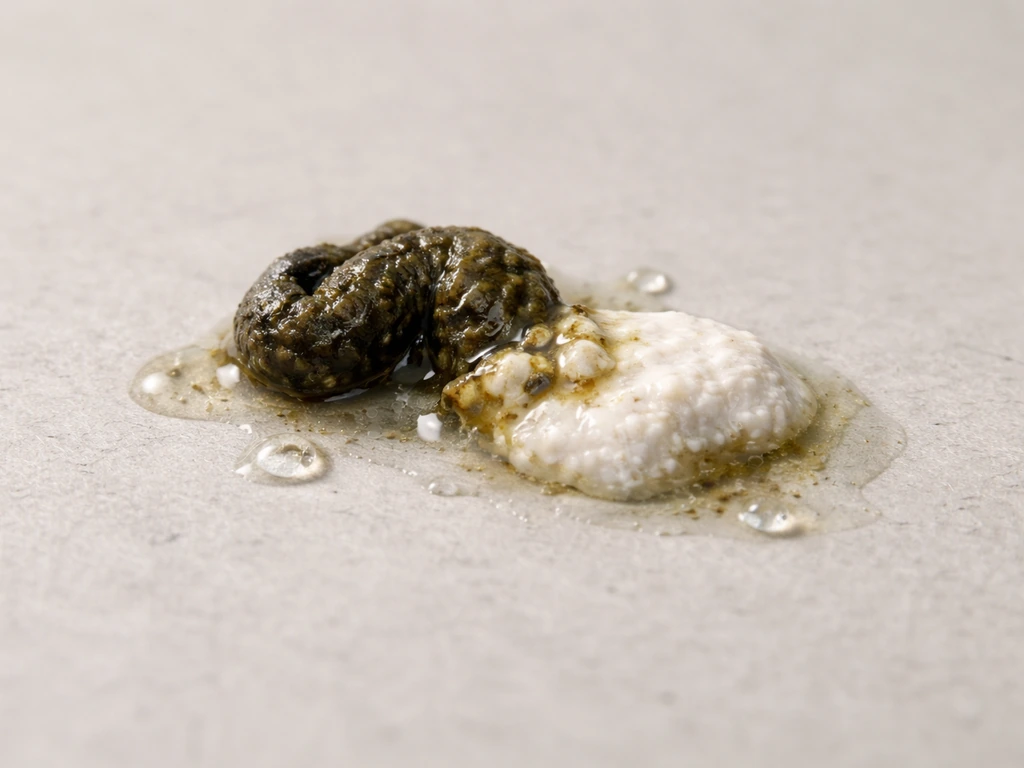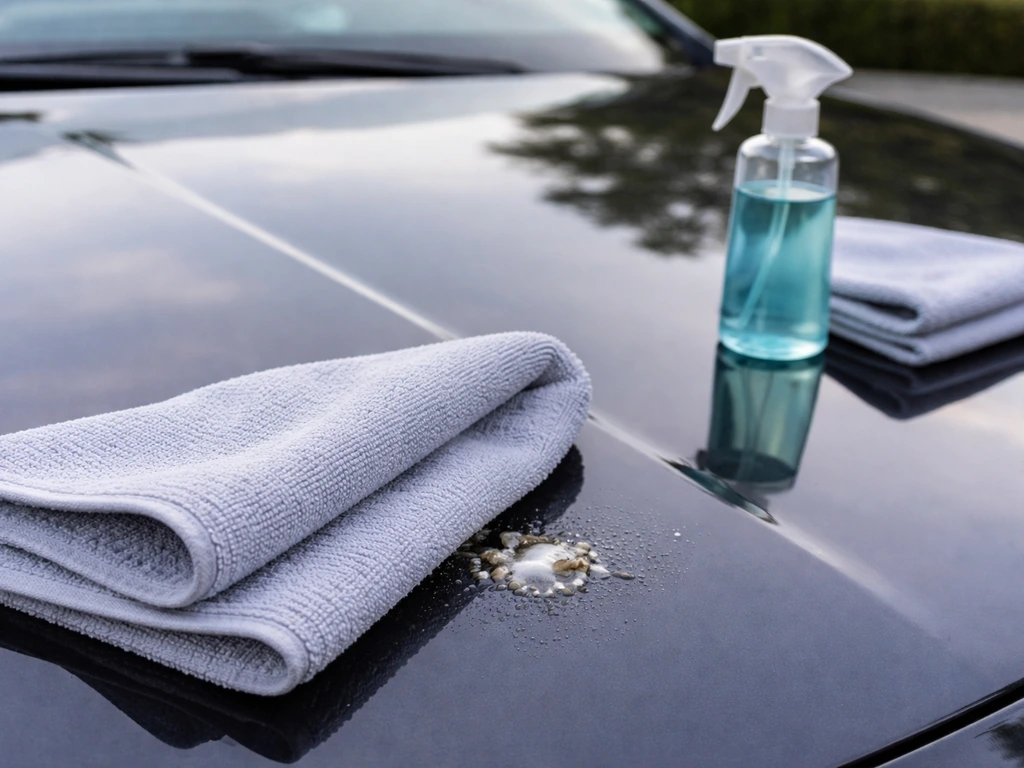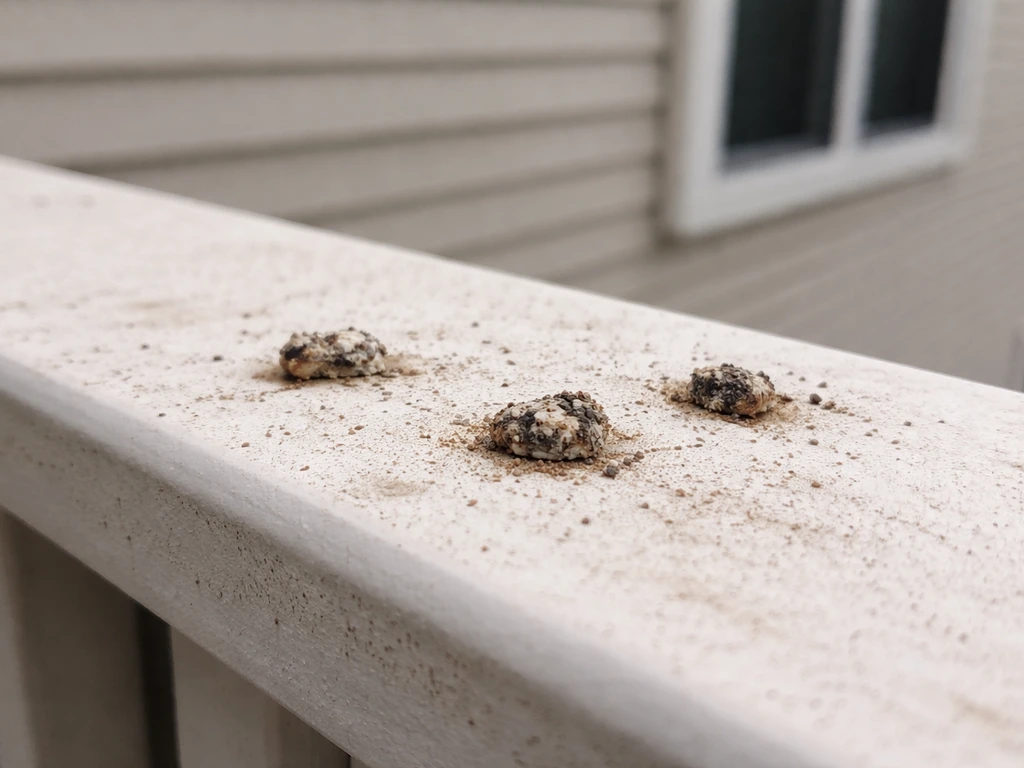
Bird pee is not a separate stream of liquid the way it is in mammals. What you are actually looking at when you see that white streak on your car or patio is a combined dropping that contains three parts: dark feces, a white-to-cream chalky paste called urates, and a small amount of clear watery urine. The white stuff is the urate component, which is made of uric acid crystals. The clear or slightly watery smear around the edges is the actual liquid urine. They all exit through the same opening (the cloaca) at the same time, which is why you rarely see bird pee on its own.
What Does Bird Pee Look Like? How to Spot and Clean It

Marcus Fielding
25 Apr 2026
How bird urine is actually produced (and why it comes out white)
Unlike mammals, birds do not have a bladder that stores liquid urine. Instead of converting nitrogen waste into urea dissolved in lots of water, birds produce uric acid, which is almost insoluble. The kidneys concentrate it into a thick, paste-like substance called urates. This is an evolutionary advantage: it lets birds excrete nitrogen waste without losing much water, which matters a lot when you are flying and need to keep weight and water loss to a minimum.
The urates are what give bird droppings their characteristic white or off-white color. There is still a small liquid urine component, but it is minimal compared to what a mammal of similar size would produce. Everything, including the feces, exits through the cloaca together. So when people ask whether birds pee at all, the honest answer is yes, but it looks nothing like what you would expect from a cat or a dog.
Fresh vs dried: what bird pee looks like at each stage
Fresh deposits
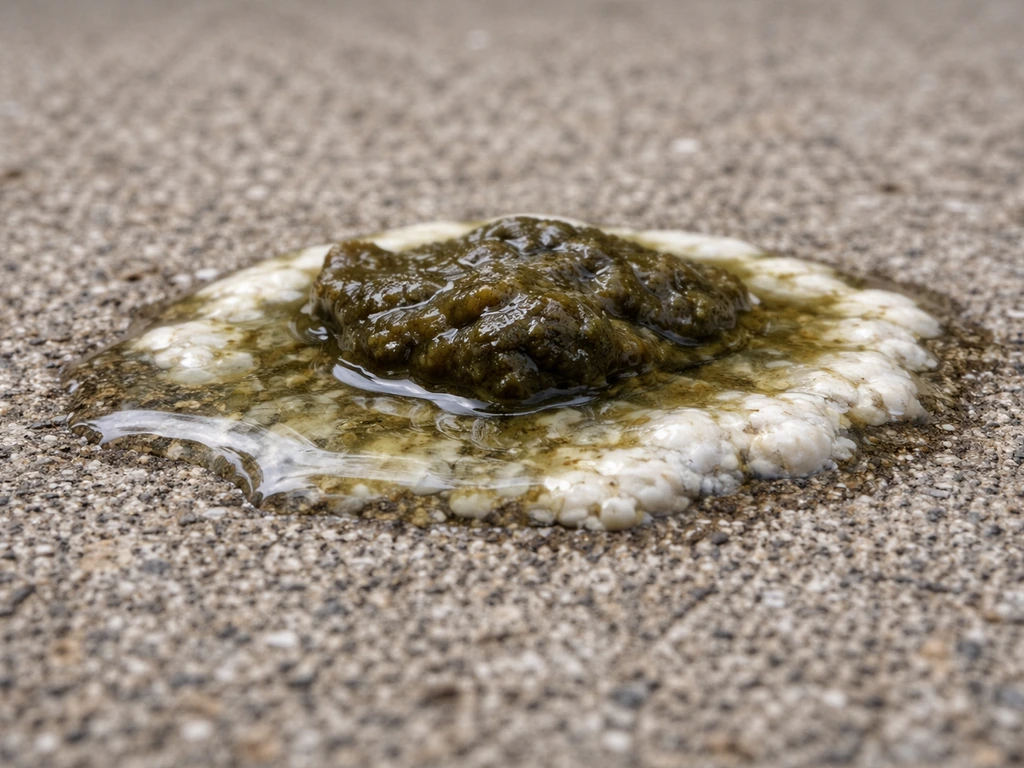
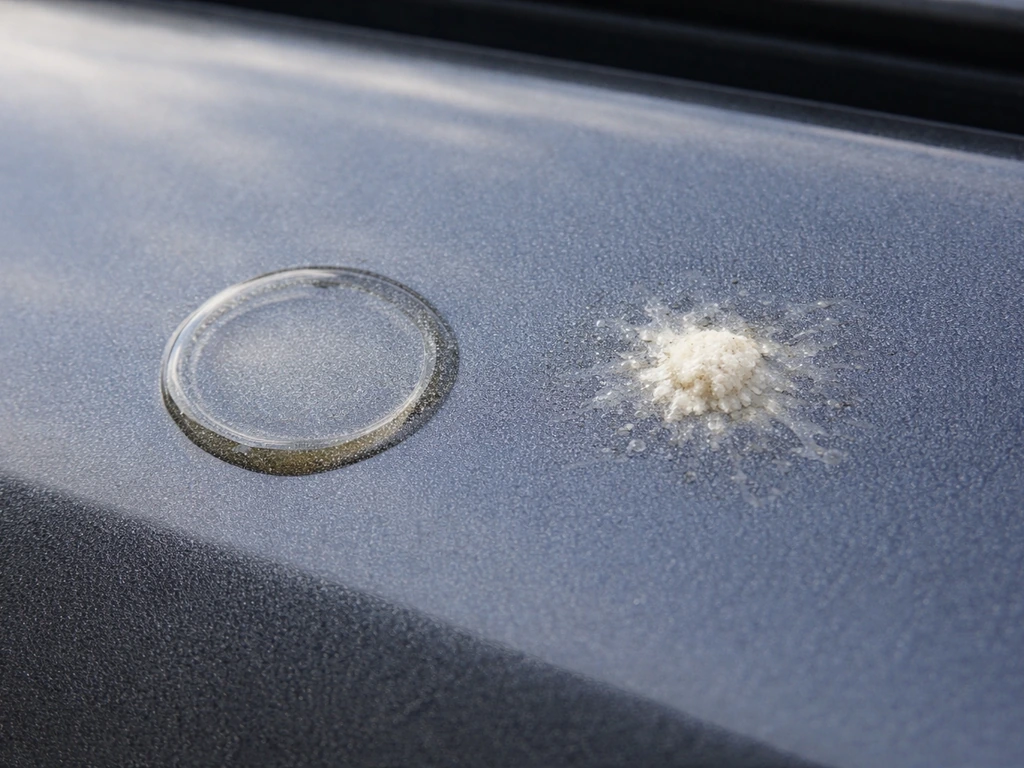
When a dropping first lands, you can usually make out all three components if you look closely (without touching it). The feces is the darker, often greenish or brownish center. Surrounding or mixed into it is the white-to-cream urate paste, which looks chalky and opaque. You might be wondering, <a data-article-id="10218AF2-67FA-41F3-B7F0-1F6FD74E1778">what color is bird pee</a> exactly, and the answer depends on whether it is fresh or dried. At the outer edge or just beyond, you may see a thin clear or very pale yellowish wet ring. That ring is the liquid urine component. On a smooth surface like car paint or glass, the whole thing may spread into a smear with a clear watery halo. It looks wetter and more distinct when fresh, and the white portion has a soft, almost toothpaste-like texture.
Dried and crusted
Once it dries, the clear liquid evaporates and the urates harden into a white or off-white crust. On painted surfaces, this crust can bond into the clear coat within hours, especially in warm weather or direct sun. The dried residue looks chalky, flaky, or powdery depending on how long it has been there. On concrete or decks, older deposits often look like a flat, irregular white stain that is resistant to rain because uric acid does not dissolve easily in water. This is actually the same property that makes it so tenacious on car paint.
Telling bird pee apart from bird poop (and why the line is blurry)
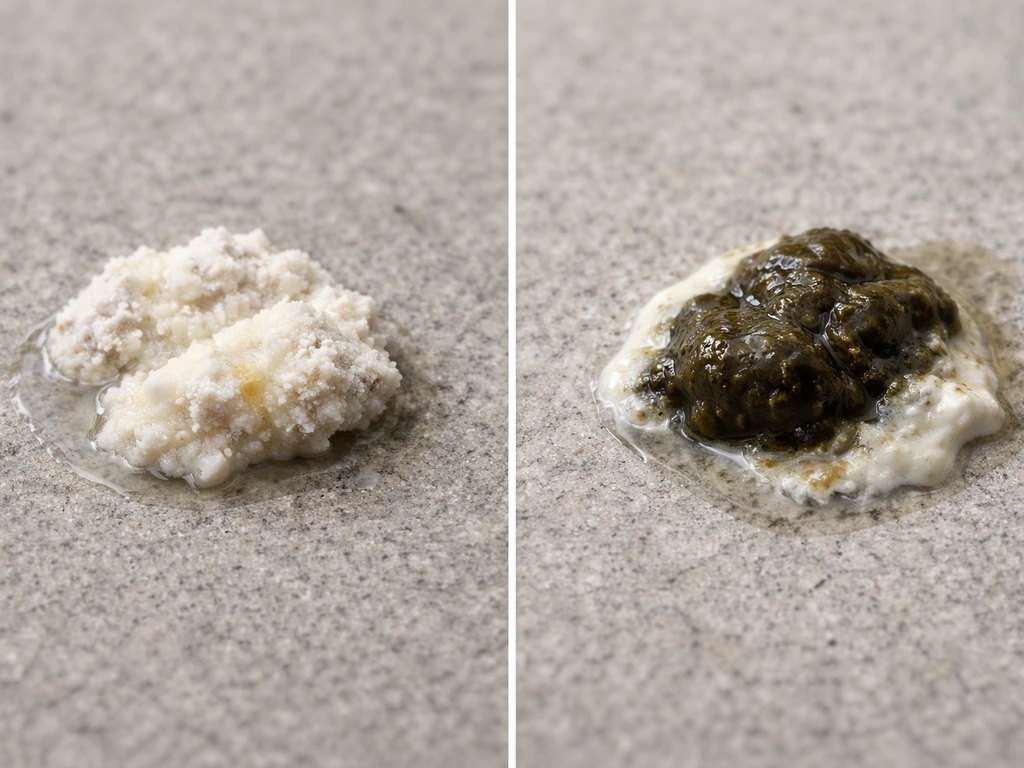
Because everything exits together, separating bird pee from bird poop is more of a visual exercise than a biological one. The urates (the urine component, chemically speaking) are the white part. The feces is the darker, solid center. The liquid urine is the clear, watery part. If you see a pure white or off-white chalky spot with no dark center at all, you are likely seeing mostly urates with minimal fecal matter, which can happen with certain diets or in smaller birds. If you see only a clear, watery smear, that is closer to pure liquid urine, which is rare but can happen when a bird is stressed or has been drinking a lot.
In practice, the white component is the most visually dominant part of what you find on surfaces, which is why people often describe bird droppings as white. The fecal core is present but can be small or blended in. On a light-colored surface, the white urates stand out dramatically. On dark surfaces like a black car hood, you notice the contrast immediately.
Where you are most likely to spot it
Birds tend to drop while perched or in flight, so the location of the stain tells you something about the bird's behavior. Here are the most common spots and what the deposits tend to look like in each setting:
- Car hoods and roofs: Usually a splatter pattern with a clear watery ring when fresh, hardening into a raised white crust with a darker center within a few hours. Often found under trees, power lines, or near roof edges where birds perch.
- Windshields and windows: The urate paste sticks to glass and dries into a filmy white residue that can streak when you try to wipe it dry. The clear liquid component may run down the glass as a faint streak.
- Patio furniture and decks: Repeated deposits in one spot look like layered white crusts, especially on horizontal surfaces. Wood decks can absorb the uric acid, causing faint discoloration over time.
- Sidewalks and concrete: Look for flat, irregular white stains with a slightly raised center. Old deposits on concrete turn grayish-white and become harder to remove as they set.
- Outdoor window sills and ledges: Birds perch here, so you often see long streaks running down the wall below the sill, with white crust concentrated at the top.
Is that bird pee or something else? How to tell
Not every white or clear stain outdoors is from a bird. Here is a quick reference for the most common lookalikes:
| Stain type | Color | Texture/appearance | Key difference |
|---|---|---|---|
| Bird urates/pee | White to cream | Chalky, slightly raised crust; watery ring when fresh | Darker fecal center often present; irregular splat shape; appears under perching spots |
| Hard water/sprinkler | White to gray | Flat, mineral film; often in rings or streaks | No raised center; appears in regular patterns from spray direction; no smell |
| Insect splatter | Clear, tan, or greenish | Small, flat; dries to a thin translucent film | Very small; no white chalky component; often near light sources at night |
| Tree sap or pollen | Yellow, amber, or green | Sticky, resinous; may be granular if pollen | Sticky when fresh; no white urate portion; appears directly under trees |
| Mud/dust splash | Brown, gray | Flat, irregular; crumbles when dry | Brown or gray color throughout; no white chalky component; appears after rain or on lower surfaces |
The most reliable identifier for bird urine or droppings is the combination of a white chalky portion and a darker center, appearing under or near a known perching spot like a wire, branch, or roof edge. Hard water deposits are flat and follow spray patterns. Insect splatter is tiny and translucent with no chalky residue. If you are unsure, note the location: bird deposits almost always appear on horizontal or near-horizontal surfaces directly below a perch.
Health and safety: when bird droppings are a real concern
A single fresh dropping on your car is not a significant health emergency. Fresh bird droppings have not been shown to present a meaningful histoplasmosis risk on their own. The bigger concern is accumulated, dried droppings that get disturbed, because dried material can become airborne dust containing Histoplasma fungal spores. The CDC recommends that large accumulations of bird or bat droppings be handled by professional hazardous-waste companies, not DIY'd with a dry brush.
For routine cleanup of small amounts (like what lands on your car or patio), you are generally fine with gloves and basic precautions. But the key rule is never dry-sweep or dry-scrub bird droppings. Wetting them first before wiping prevents you from aerosolizing particles. People who are immunocompromised should avoid cleaning areas with significant accumulation entirely.
There is also avian influenza to consider. Bird flu transmission to humans through contact with droppings is rare, but good hygiene matters: wash hands with soap and water after any contact with surfaces contaminated by bird droppings, and use an EPA-approved disinfectant with claims against influenza A viruses if you are cleaning up after a sick or wild bird.
- Never dry sweep or dry scrub dried droppings. Wet them first to avoid creating airborne dust.
- Wear disposable gloves for any cleanup. For large or accumulated deposits, add an N100 respirator.
- Immunocompromised individuals should avoid cleaning areas with heavy accumulation.
- Wash hands thoroughly with soap and water after cleanup, even if you wore gloves.
- Large accumulations (attics, barns, under large roosts) should be handled by professionals.
Cleaning bird pee and droppings by surface
Car paint and clear coat
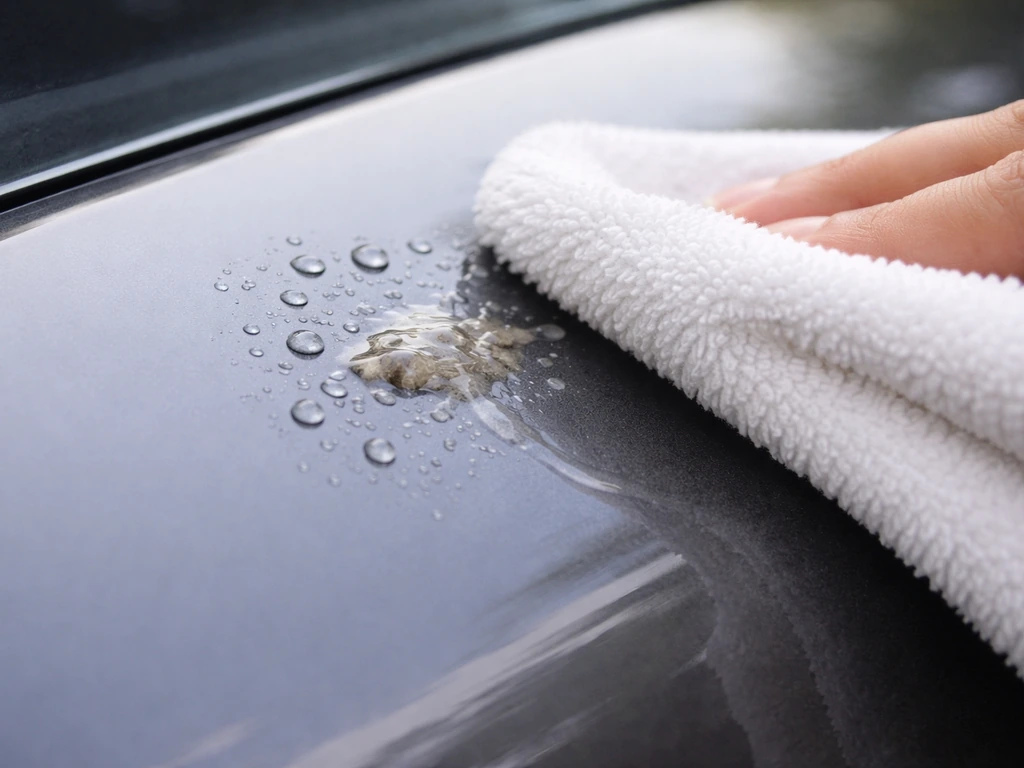
Bird droppings have a pH of roughly 3 to 4.5, meaning they are acidic enough to etch car paint and clear coat, especially in warm weather or direct sun. Get them off as soon as possible. Soak the area first with a wet cloth or spray bottle of water for a few minutes to soften the deposit. Then gently lift it off with a microfiber cloth. Do not scrub dry. Do not use acid-based household cleaners. A dedicated car detailing spray or a small amount of car wash soap works well. If the paint already shows a dull or etched area after removing the dropping, a light polish may help, but deep etching may need professional attention.
Glass and windows
Wet the dried deposit first, then wipe with a glass cleaner and a microfiber cloth. On windshields, do not scrape dry material with a blade unless you have thoroughly soaked it first. For stubborn urate film on glass, a diluted white vinegar solution can help dissolve uric acid residue. Rinse well afterward. Avoid mixing any bleach-based cleaner with ammonia-based glass cleaner as the combination produces toxic gases.
Concrete, pavers, and sidewalks
Wet the area first, then scrub with a stiff brush and dish soap or a mild detergent. For older stains that have set into concrete, an enzymatic cleaner or a diluted white vinegar solution applied and left to sit for a few minutes can help break down the uric acid before scrubbing. Rinse thoroughly. Avoid bleach on historic masonry or stone as it can cause damage, and the GSA specifically cautions against it for that reason.
Wood decks and patio furniture
Wipe up fresh deposits quickly before they soak into the wood. For dried deposits, wet first, then use a soft brush and a mild soap solution. Uric acid can gradually discolor and degrade unsealed wood, so regular cleaning and sealing the wood surface is the best long-term prevention. On painted or stained wood furniture, follow the same soak-then-lift approach and use a cleaner that is safe for the finish.
A quick note on the good luck angle
If you have landed on this page partly because a bird just made a direct hit on you and someone told you it is good luck, you are in good company. The superstition is ancient and shows up across many cultures. Whether or not you buy it, the practical follow-up is the same: clean it off promptly, wash your hands, and do not let it sit on fabric or painted surfaces. Luck or not, uric acid is not sentimental about your car's clear coat.
FAQ
Can I tell bird pee from bird poop if there is only a clear smear or watery spot?
Yes, sometimes bird urine shows up with little or no dark center. If you see a mostly clear to pale yellow smear with a thin wet ring around it, that can be urine-rich and may happen with stress, recent drinking, or small droppings from tiny birds. Even then, you should treat it like regular droppings, because the white urate paste may be minimal but still present as a residue.
What does bird pee look like on clothing or upholstery, and does it stain?
On fabric, the white urate component can leave a chalky stain after it dries, even if the liquid part seems to disappear. Blot, then saturate the spot with water, wash according to the fabric label, and check before drying with heat. Heat can set urate residue, making it harder to remove.
If it is mostly white and chalky, is that definitely bird pee?
If the spot is mainly white and chalky, it is usually urates, but not always pure urates. A true “mostly urate” deposit often looks opaque and toothpaste-like when fresh, then becomes powdery or crusty as it dries. If you can identify a darker center even faintly, that suggests a combined dropping rather than urine-only.
How can I tell bird urine apart from other animal urine stains on my car or patio?
Probably not. Rat urine, dog urine, and many other stains can leave yellowing or a smear, but the bird pattern is typically a white or off-white chalky deposit (urate crust) plus, in many cases, a slight clear halo around the edges. If you find white chalk-like residue concentrated beneath a perch or consistent “drip line” on a near-horizontal surface, bird origin becomes much more likely.
What do hard water spots look like compared with bird droppings?
Hard water can mimic the “flat white” look, but it usually follows the spray pattern and lacks a chalky, crusty urate film that spreads outward with a fresh watery halo. Another clue is location, bird droppings often cluster under the same perch points, railings, or roof edges, while hard water deposits tend to align with where water flows or drips.
Why does bird droppings seem to damage my car faster in summer, and how do I know I etched the paint?
In warm weather, bird deposits often bond into paint faster, sometimes within hours, so the longer it sits the more it can etch the clear coat. If you notice a dull or rough feel after cleaning, that is a sign of possible etching rather than just residue left on the surface.
What is the best way to remove bird pee haze from windshield or glass without scratching?
For glass, you can usually avoid damage by never scraping dry. First wet thoroughly, then wipe. If you still see a hazy white film, repeated wetting and wiping usually helps; vinegar can help dissolve uric-acid residue, but rinse well after and avoid using it on unsealed or porous surfaces.
How do I remove older bird urine stains from concrete when rain will not wash them away?
On outdoor concrete or decks, older stains may resist rain because uric acid does not dissolve easily in water. If water alone does not lift the stain, let a vinegar-based soak sit briefly before scrubbing gently, then rinse thoroughly. If discoloration remains, it may be etched or stained into the surface rather than removable surface residue.
What household cleaning mistakes should I avoid when removing bird pee?
Avoid acid cleaners and bleach, even “gentle” ones, because bird waste is already acidic and can react unpredictably with strong household chemicals. Also do not mix bleach with other cleaners, especially anything containing ammonia. Stick to water-first softening, mild soap or a car-safe cleaner, and rinsing.
Is it ever unsafe to clean bird droppings myself, even if I do not get it on my skin?
If you are dealing with lots of dried droppings, the risk is less about a single fresh spot and more about disturbing dust. Use wet methods, avoid sweeping or brushing dry, and consider a professional hazardous-waste cleanup when the area is large or heavily accumulated.
Should I test a cleaner on a small area first, and when does that matter?
A bird spot can look “clean” but still leave residue. For delicate finishes, do a small test patch first, soak, then wipe, and check for color change or dullness before moving to the whole area. This is especially important for matte paint, wraps, and certain coated metals.
If the stain is random, can it still be from a bird?
Birds can deposit from different heights and angles, so you might see dots that seem “random.” Still, the most reliable pattern is repeat placement, look for perching sites like power lines, rails, roof edges, or nearby branches that line up with where you consistently find the chalky spots.
What should I do right after a bird hits me, beyond just wiping it off?
If a bird made a direct hit on you, the practical priority is fast removal from skin and clothing. Wash exposed skin with soap and water, then launder fabric promptly. If you feel unwell, seek medical care, particularly if you had contact with wild birds or were cleaning a large accumulation.