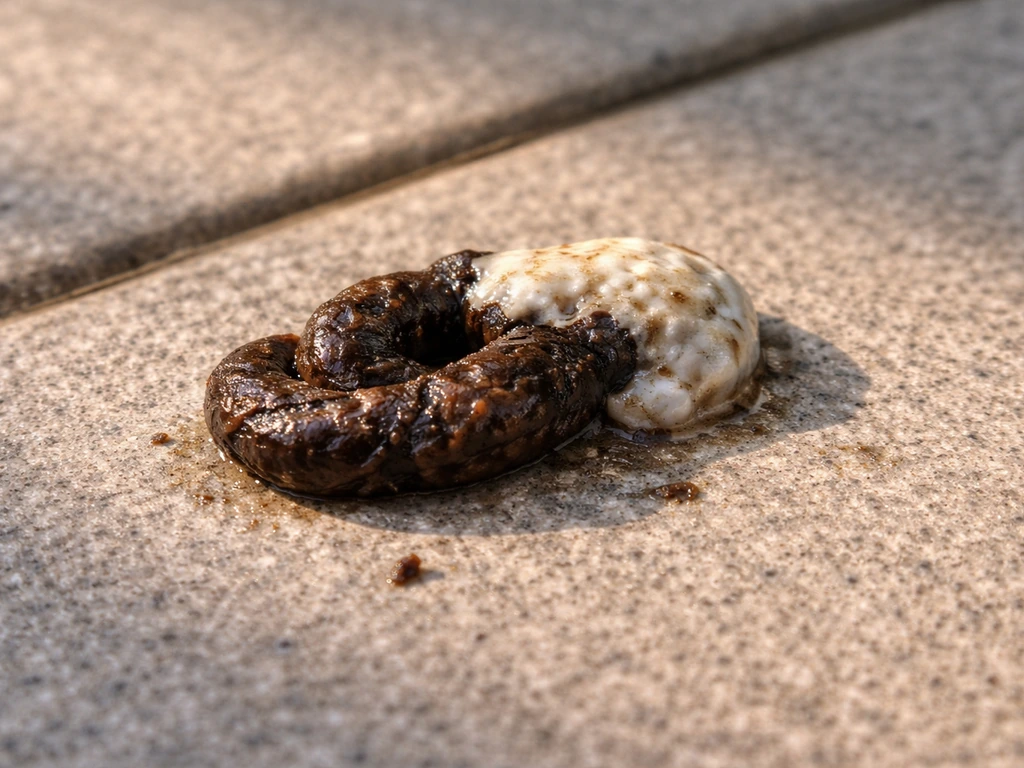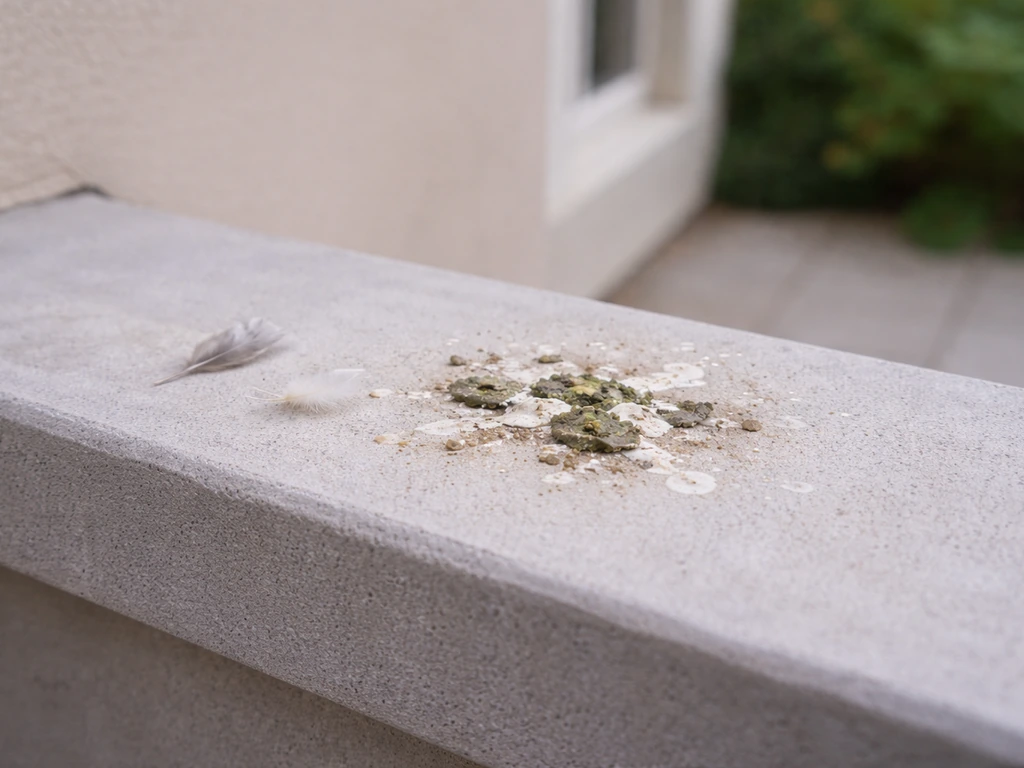
Crows, ravens, starlings, and grackles are the birds most likely to leave noticeably dark or black-looking droppings in backyards, on cars, and on patios. That said, almost any bird can produce dark feces depending on what it has been eating, so the color alone won't always pin down the species. What you really need to do is combine the poop color with its size, location, and any birds you've actually spotted nearby to make a confident match.
What Bird Poops Black? Causes, Identification, Cleanup

Marcus Fielding
19 May 2026
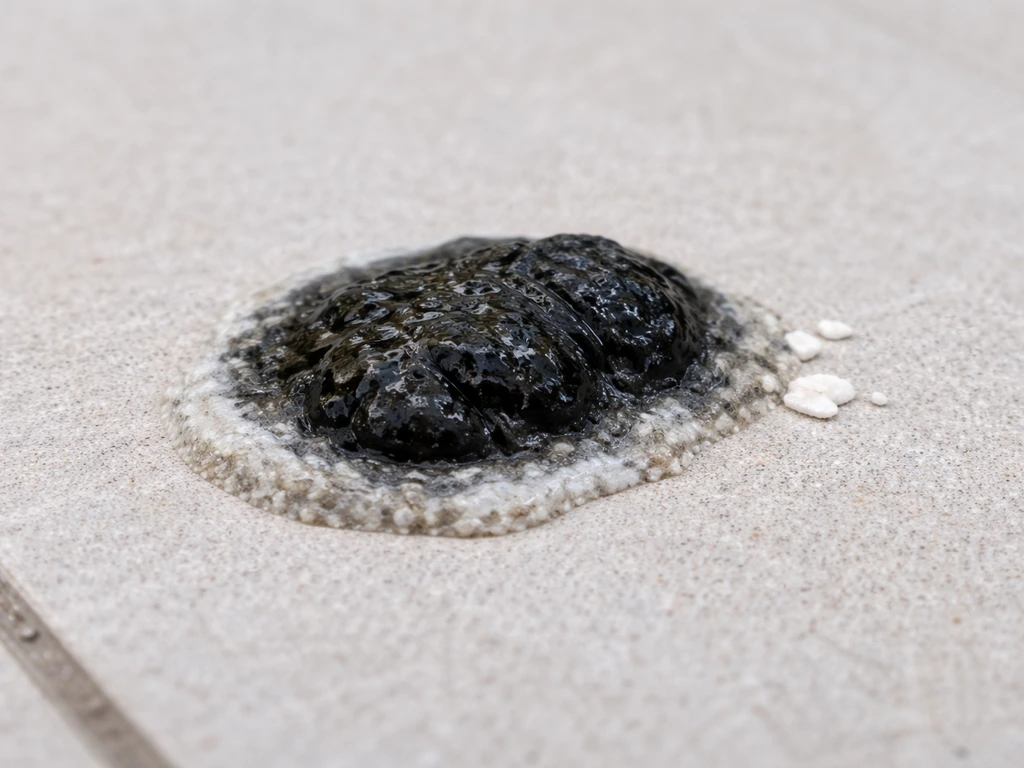
Why bird droppings can look black
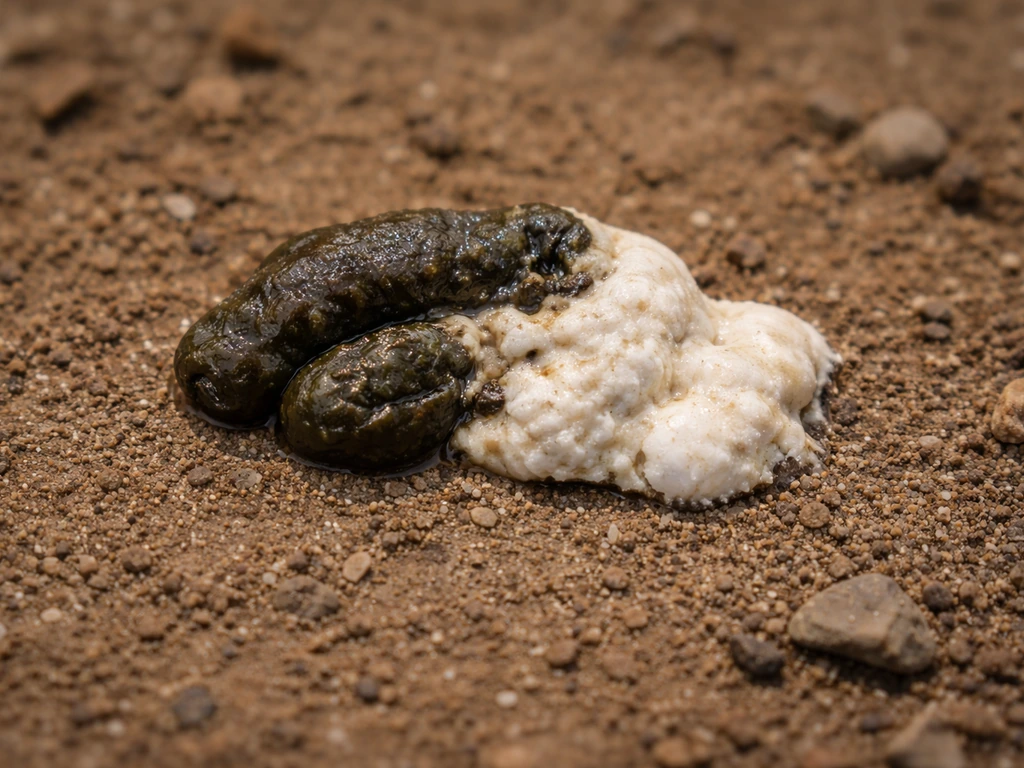
Bird droppings have three components: feces (the dark part), urates (the white or cream chalky portion, which is how birds excrete nitrogen waste instead of liquid urine), and a small liquid fraction. The fecal portion is naturally dark, and once it dries and oxidizes on a surface it can look almost black, even if it started as a dark greenish-brown. Hot sun, concrete, and dark pavement all make this effect more pronounced. So when you're looking at what seems like a purely black smear, you're often just seeing an oxidized fecal mass where the white urate portion has dried separately or blended in.
Diet plays an enormous role too. A bird that has been eating dark berries, mulberries, or other heavily pigmented fruit can produce droppings that are genuinely dark purple-to-black in color. This isn't a health problem for the bird; it's just the pigment passing through. If you notice the dark droppings appearing seasonally and your yard or neighborhood has fruiting trees, that's usually the explanation. The color fades back to normal once the food source changes.
Which birds most often leave black-looking poop
A few species stand out as frequent culprits in most parts of North America, especially in suburban and urban settings.
- American Crows: All-black birds that are completely comfortable around humans, trash, pet food, and bird feeders. They flock heavily in urban areas and produce medium-sized, dark droppings often found in clusters beneath roosting trees or wires. If you've been seeing large black birds and finding dark droppings, crows are the first suspect.
- Common Ravens: Larger than crows with a heavier build and a deeper, gravelly call. They tend to appear alone or in pairs unless near a food source like a landfill or large compost area. Their droppings are correspondingly bigger and often darker due to a varied omnivorous diet.
- European Starlings: Smaller and more iridescent, but they roost in enormous flocks and their collective droppings can coat a car or patio quickly. Individual droppings are small but accumulate fast. Starlings consume a lot of fruit and insects, which produces darker feces.
- Common Grackles: Common in the eastern US and often confused with crows because of their dark, iridescent plumage. Grackles are medium-sized and leave medium-sized dark droppings, frequently around parking lots, feeders, and suburban trees.
- Feral Pigeons: Pigeon droppings are classically brown to greenish-brown with a white urate cap, but in urban areas where pigeons eat a lot of scraps and dark-colored food, the fecal mass can look very dark or almost black after oxidizing on asphalt or concrete.
If the droppings are very small and very dark, think starlings or house sparrows. If they're large and solitary, lean toward ravens or crows. Medium-sized droppings in dense clusters under a tree or on a ledge often point to blank" rel="noopener noreferrer">pigeons or grackles.
How to tell black poop from other dark stains and colors
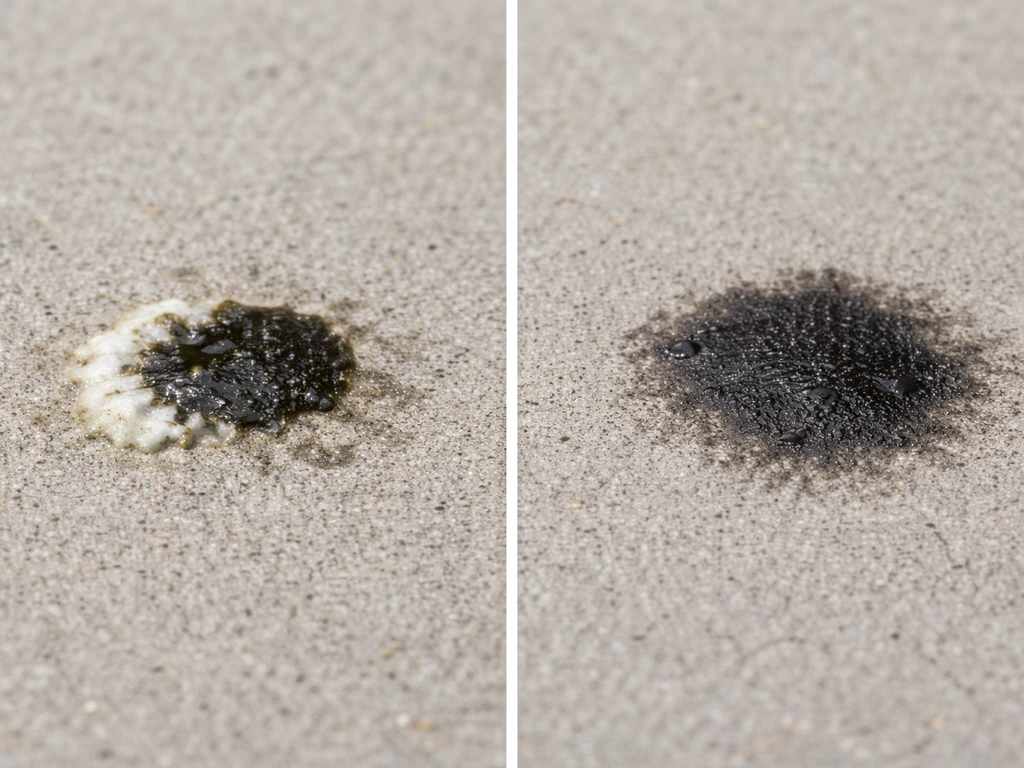
The single most reliable sign that you're looking at bird droppings rather than soot, oil stains, or something else is the two-tone pattern. Genuine bird droppings almost always show a dark fecal mass alongside or beneath a white or cream urate component. If what you're looking at is uniformly black with no trace of white, it's worth considering whether it might be a dark smear from something else entirely: oil drip, tire rubber, or even insect frass.
Here's a quick way to work through it. Fresh bird droppings are moist and slightly shiny. Older ones are dry, chalky, and crack when disturbed. Soot or oil stains smear when wet but don't have the chalky, friable texture of dried droppings. Insect frass (caterpillar or beetle waste) tends to be perfectly cylindrical pellets with no white urate component at all.
| What you see | Likely cause | Key distinguishing feature |
|---|---|---|
| Dark mass + white/cream cap | Bird droppings (normal) | Two-tone structure; chalky when dry |
| Purely black, uniform smear | Soot, oil, tire rubber | No white component; smears rather than crumbles |
| Dark purple-black, no white | Bird eating dark berries/fruit | Often seasonal; may have seed fragments inside |
| Tiny dark pellets, no white | Insect frass (caterpillars, beetles) | Perfectly cylindrical; no urate cap |
| Dark reddish-brown + white | Crow, raven, grackle on mixed diet | Larger size; found beneath known roosting spots |
If the fecal color is dark but the urate is still clearly white or cream, the bird is probably healthy and just eating pigmented food or a high-protein diet. Changes in urate color (yellow, green, or orange urates) are more concerning from a bird health perspective, but that's really only relevant if you own the bird. For wild birds leaving droppings on your property, you don't need to worry about what the urate color means for the bird's health. You just need to clean it safely.
For context, if you're curious about other color variations, the reasons droppings appear orange, pink, or brown in different scenarios follow similar logic: diet and the feces-to-urate ratio are usually the explanation rather than disease. The same diet-and-color logic also explains why bird poop can look pink in some situations pink droppings. Brown droppings can also come from a bird’s diet or from the way the feces breaks down as it ages on surfaces.
Health risks and when to actually worry
Most casual exposure to bird droppings, like a single splatter on your arm or a deposit on your car, carries very low practical risk for a healthy adult. The genuine concern arises in two main situations: large accumulations that you need to disturb or clean up, and exposure for people who are immunocompromised.
The pathogen most closely associated with bird and bat droppings is Histoplasma, a fungus that thrives in soil enriched by droppings and can cause histoplasmosis, a respiratory illness. The key exposure pathway is inhaling dust or aerosol particles when you disturb dried, accumulated droppings. A single fresh dropping on your windshield is not a histoplasmosis risk. A pile of accumulated droppings you're about to scrub off an attic floor without any protection is a different situation entirely. The CDC specifically flags cleanup of large accumulations as the point where respiratory protection and gloves become necessary.
Avian influenza is another concern that has grown more relevant in 2025 and 2026 with ongoing H5N1 activity. The CDC recommends avoiding contact with bird waste, feathers, and secretions, and advises against stirring up dust from dried bird material. For backyard flock owners, this is an active concern. For most homeowners dealing with crow droppings on a patio, standard precautions (gloves, don't dry-brush the material, wash hands) are sufficient.
NYC Health guidance is direct about one group: if you have a compromised immune system due to HIV/AIDS, cancer treatment, or similar conditions, do not personally clean up bird droppings. Get someone else to do it or hire a professional. This isn't overcaution; it's the right call.
Cleanup and safety steps for cars, patios, and home exteriors
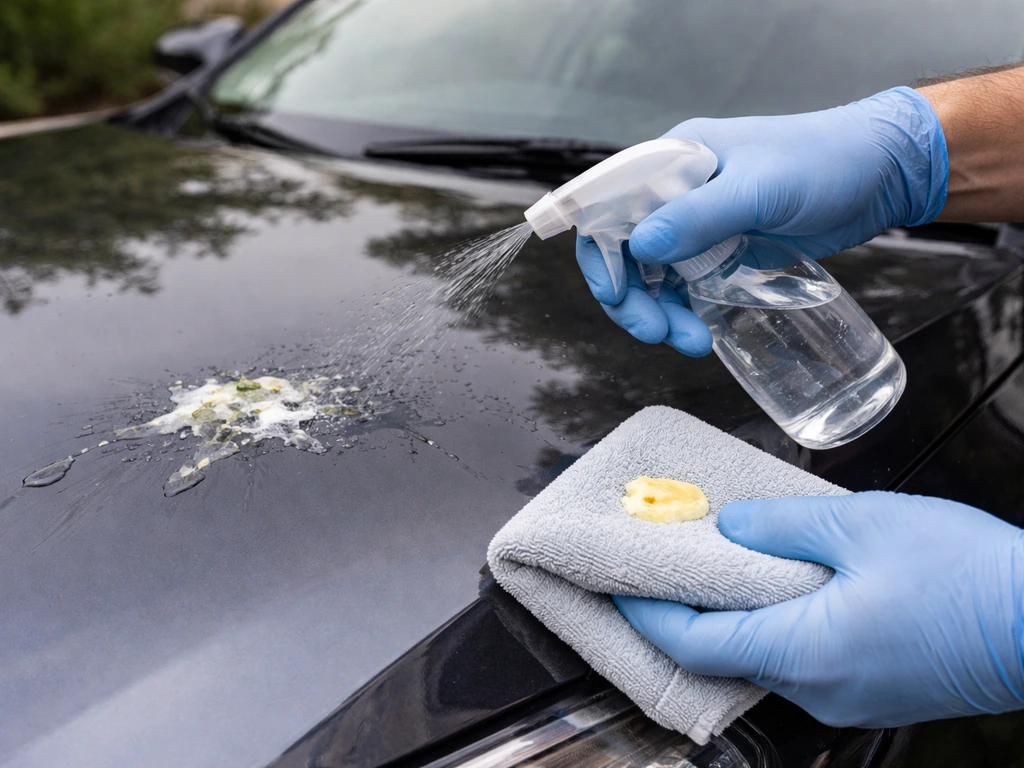
Before you touch anything, get your PPE in order. For a small cleanup job (a few droppings on a car or patio), disposable nitrile gloves and a simple dust mask are the minimum. For a larger accumulation, an N95 respirator or a well-fitting equivalent, plus heavy rubber gloves, is the right standard. The goal is to avoid inhaling any dust that comes off dried material and to keep your hands clean throughout.
Car paintwork
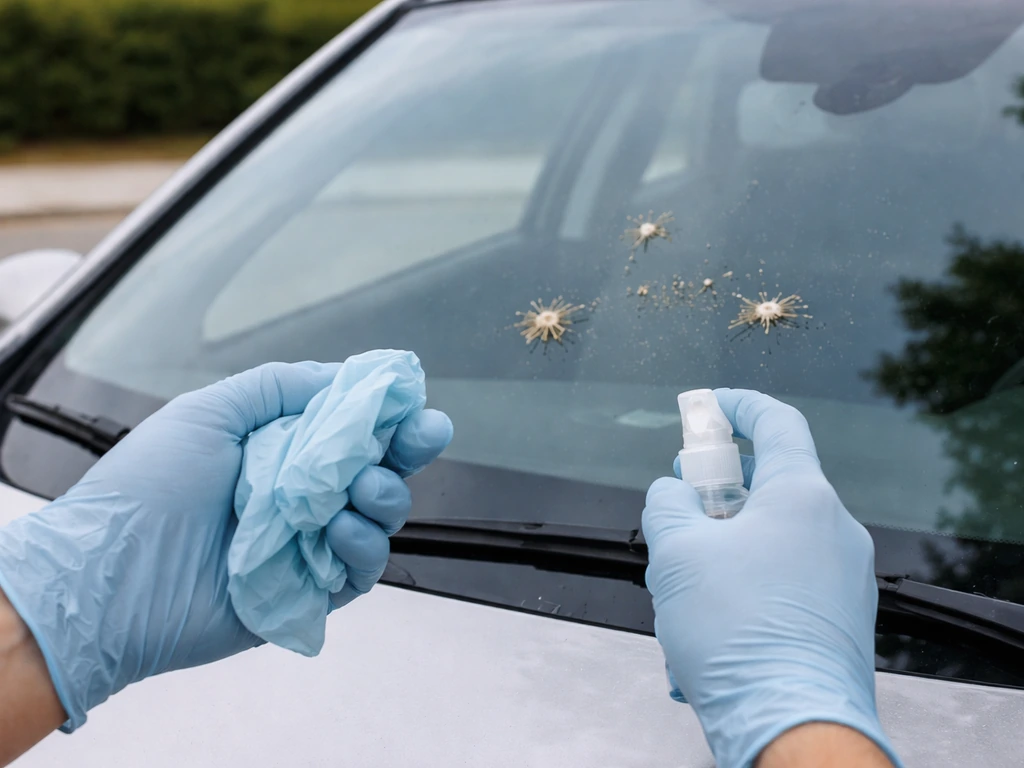
Don't dry-scrape bird droppings off a car. Dried droppings are slightly acidic and will scratch and etch clear coat if you scrub dry. Instead, wet the dropping thoroughly with a damp cloth or a spray bottle for 30 to 60 seconds to soften it, then wipe gently with a clean microfiber cloth. Rinse the area and dry it. If there's etching already visible in the paint, a light polish or detailing clay can help. Dispose of the used cloth in a sealed bag.
Patios, sidewalks, and outdoor furniture
Wet the droppings first (a garden hose works well) rather than sweeping or dry-brushing, which would throw particles into the air. Use a detergent solution and a stiff brush to scrub the surface, rinse, then follow up with a diluted bleach solution if you want to disinfect. The CDC recommends a two-step process: clean visibly dirty surfaces with soap first, then apply disinfectant. Follow the bleach label for the correct dilution ratio. Let the disinfectant sit for the contact time specified on the label before rinsing.
Attics, sheds, and large accumulations
Large accumulations inside enclosed spaces are the highest-risk scenario. Wet the material before disturbing it, use an N95 respirator and heavy-duty gloves, seal waste in heavy plastic bags, and wash your hands and exposed skin thoroughly afterward. In genuinely large accumulations (years of buildup in an attic, for example), professional remediation is the right call. The CDC and NIOSH both note that professional cleanup may be warranted in those cases.
How to prevent birds from making a mess in the first place
Once you've identified the likely bird (crows near trash, starlings near feeders, pigeons roosting on a ledge), you have a clearer set of levers to pull. Prevention is almost always easier than repeated cleanup.
- Remove food attractants: Cover trash cans with locking lids. Store pet food inside or in sealed containers. If you have a bird feeder that's attracting crows, grackles, or starlings in numbers you don't want, consider switching to feeders designed for smaller birds that physically exclude larger species.
- Deny roosting spots: Birds like ledges, flat rooftops, and horizontal rails. Bird spikes, angled surfaces, or bird wire on ledges make those spots uncomfortable to land on without harming the birds.
- Use visual deterrents near problem areas: Reflective tape, predator decoys (especially owl or hawk silhouettes), and moving objects hung near roosting areas can discourage regular use. Rotate these every week or two because birds habituate quickly.
- Cover your car: A car cover or parking in a garage is the single most effective solution if birds are targeting your vehicle specifically. If a crow-roosting tree is above your usual parking spot, moving the car 20 feet may solve the problem immediately.
- Trim or net fruit-bearing trees: If dark droppings are appearing seasonally and you have mulberry, cherry, or similar trees nearby, birds are eating the fruit and passing the pigment. Netting the tree during fruiting season or harvesting fruit promptly reduces the food source.
The combination of removing food, blocking roost sites, and adding deterrents works far better than any one approach alone. If you're dealing with a genuine flock problem (dozens of starlings or grackles descending daily), persistent deterrence and reducing every available attractant simultaneously is the approach that actually sticks.
FAQ
If the droppings are black but I cannot see any white, could it still be bird poop?
Yes, it can be, especially if the urates were smeared, washed away, or the droppings have been on the surface long enough that the chalky part has broken down. Still, uniformly black smears are also common from oil, tire rubber transfer, or certain insect frass. If you cannot find any pellet-like structure and there is no two-tone pattern anywhere near the area, treat it as unknown until you can confirm by checking for nearby roosting or by comparing with fresh samples.
How can I tell old bird droppings from soot or other grime on a patio or car?
Old bird droppings usually have a dry, chalky, friable texture, and they often crack when disturbed. Soot and many oil stains stay more smearable and do not typically become brittle and granular. A practical test is to gently dampen a small spot, if it softens and lifts like a residue plus a slightly chalky component, bird waste is more likely than soot.
Why do bird droppings look darker on concrete or black pavement?
Drying and oxidizing make the dark fecal portion appear closer to black, and sun plus porous or dark surfaces amplify that contrast. Concrete and dark pavement also hold heat, which can speed the change. If you see the same bird species elsewhere but lighter-colored droppings on a different surface type, the surface conditions often explain the color shift more than diet alone.
Can diet really make bird droppings look black year-round?
It can, especially if the same local food sources persist, such as fruiting trees, dropped berries, or heavily pigmented landscaping plants. If the droppings are seasonally dark, that strongly points to diet timing. If they are consistently very dark and you do not see any urate contrast, recheck for alternative sources like oil streaks from vehicles or dark waste material from insects.
Is it safe to clean one fresh black dropping with bare hands if I wash right after?
For a healthy adult, a single fresh droplet is generally low risk, but bare-hand cleaning increases the chance of transferring contaminants to your eyes, mouth, or small cuts. The safer approach is to use disposable nitrile gloves even for small spots, then wash hands thoroughly after. Avoid touching your face during the cleanup.
When should I use a respirator instead of just a dust mask?
Use an N95 or equivalent when you are dealing with larger accumulations, working in enclosed areas (attics, sheds), or when you cannot reliably keep the material wet while cleaning. A simple dust mask may be adequate for tiny, dampened spot cleanups on open surfaces, but it is not the right choice if you might create dust while disturbing dried waste.
Does wetting the droppings prevent health risk and paint damage at the same time?
It helps both. Wetting keeps dust and aerosol particles from becoming airborne, and it also reduces abrasion when removing residue from painted or clear-coated surfaces. For cars, wet thoroughly first, wipe gently, then rinse. If you see etching or haze after removal, a light polish or detailing clay may be needed before waxing or sealing.
What is the correct way to disinfect if I want bird droppings fully cleaned off indoors?
A common approach is two-step: clean first with soap or detergent to remove visible waste, then apply disinfectant to the cleaned surface. Let the disinfectant remain for the contact time on the product label before rinsing. Do not skip the cleaning step, because disinfectants work less reliably on dirty residue and can become harder to apply evenly.
Should I brush or scrape dried droppings off furniture, windows, or outdoor cushions?
Try not to dry-brush or dry-scrape, since that can generate dust and can also damage finishes. Instead, pre-wet the droppings thoroughly, wipe with a microfiber cloth, then rinse or wash the fabric-safe items according to care instructions. For porous fabrics, consider whether laundering fully removes the residue, and discard if you cannot clean without repeatedly disturbing dried material.
If I own birds, do black droppings mean I should change anything immediately?
Not automatically. Black or very dark droppings can come from pigment in food, and for pet birds the more important check is overall health trends plus urate changes. If you notice persistent abnormalities, appetite changes, lethargy, ruffled feathers, or abnormal urate color that does not match diet changes, consult an avian veterinarian rather than assuming it is only pigmentation.
How do I stop crows, starlings, or pigeons from returning to the same spot?
Focus on removing what they key in on: food sources, accessible water, and comfortable roosting ledges. Physical barriers, cleaning up all droppings promptly, and using deterrents consistently (not occasionally) matter most. If droppings are concentrated under a particular tree or near a window, adjust roosting conditions and block repeat access rather than only cleaning the visible mess.