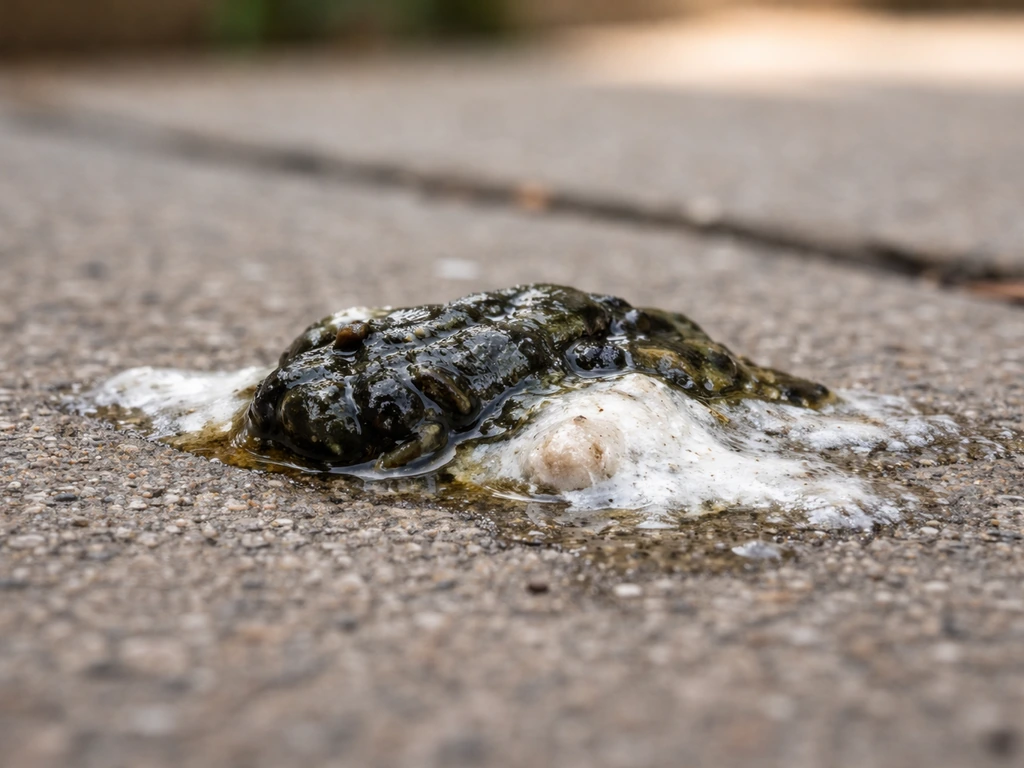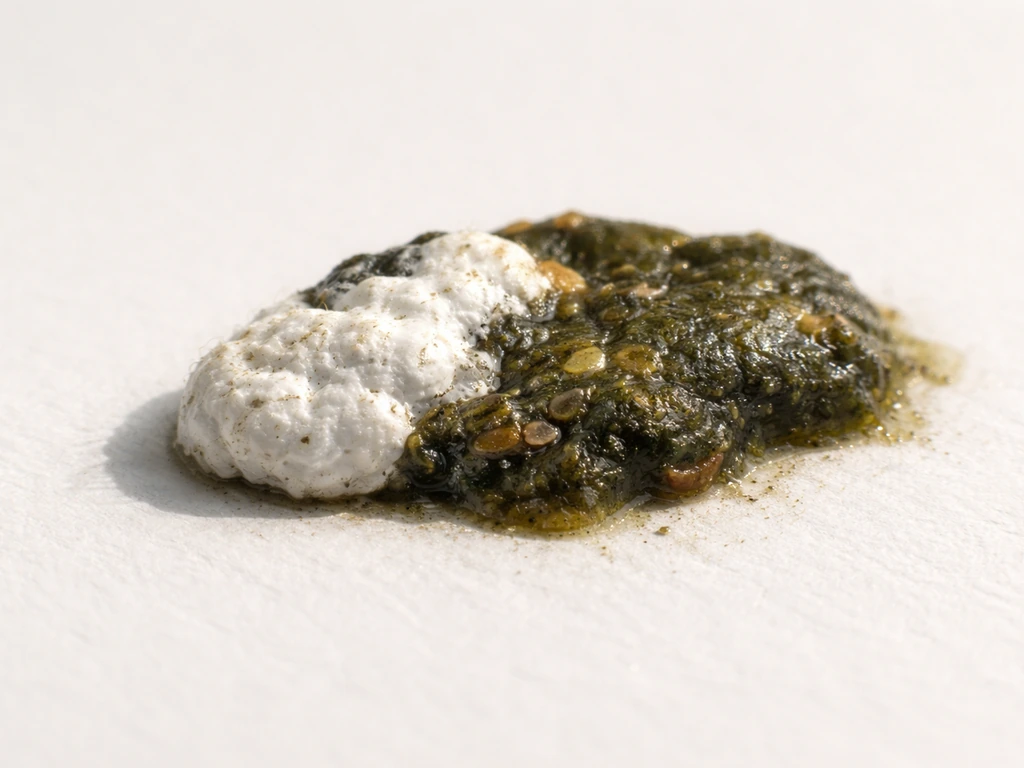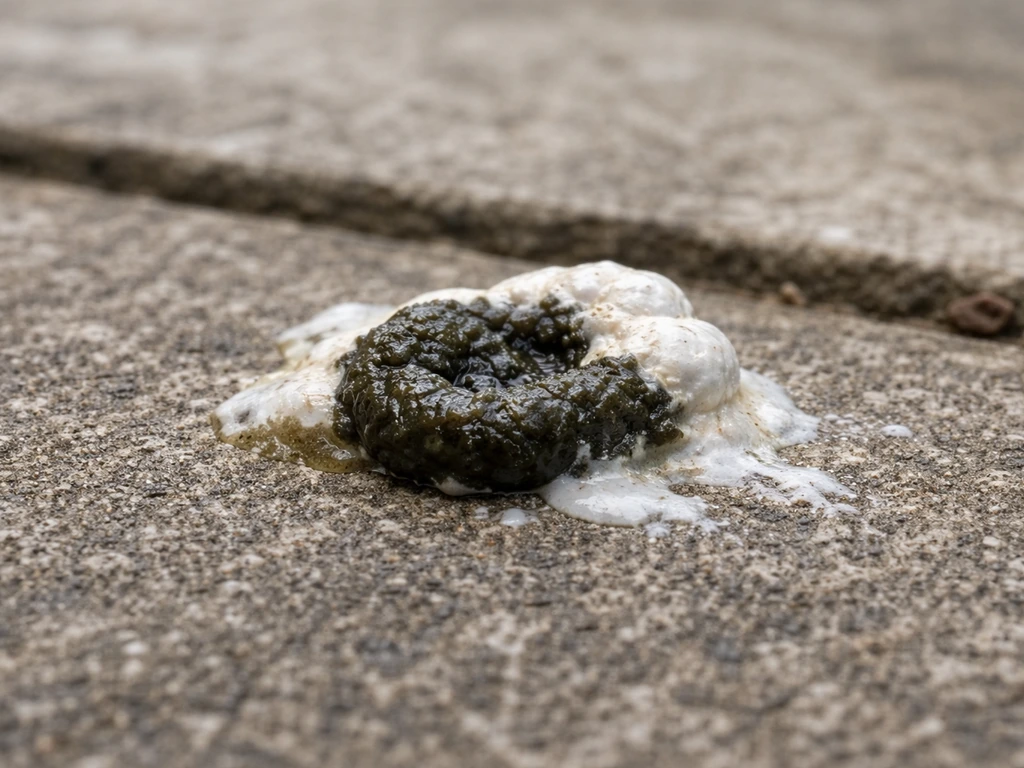
Bird waste is most commonly called bird droppings, and that's the term you'll see from health agencies and researchers. You'll also hear it called bird poop in everyday conversation, bird feces in clinical or academic contexts, and guano when referring to large accumulated deposits (especially from seabirds or bats) that are collected and used as fertilizer. All of these terms describe the same thing: the combined solid and liquid waste birds expel together in one go. Whatever you call it, the practical questions are the same: what's in it, how risky is it, and how do you safely clean it up?
Bird Waste Is Called What, Plus Cleanup and Safety Steps

Marcus Fielding
23 May 2026
The correct names for bird waste (and when each one gets used)
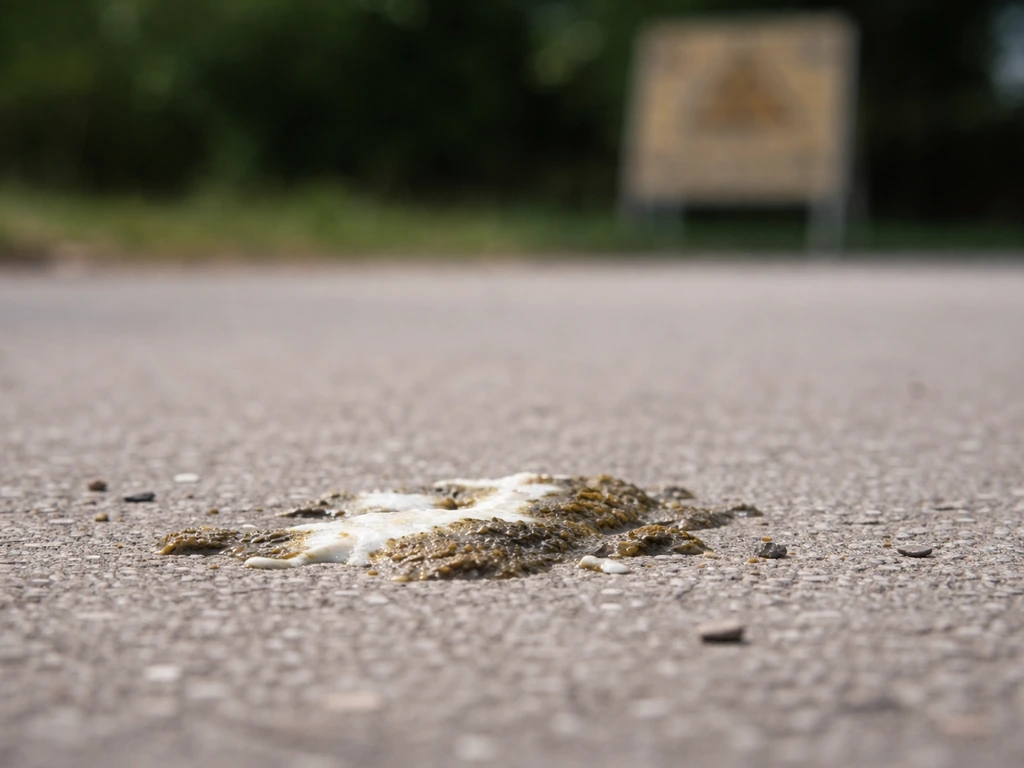
"Bird droppings" is the standard term used by the CDC, health departments, and university environmental health offices. It's neutral, accurate, and universally understood. "Bird poop" is the casual version most people use in everyday speech, and there's nothing wrong with it. "Feces" (from Latin, used in its plural form) is the formal biological term that applies to all animal waste, including birds.
"Guano" is a more specific word with an interesting backstory: it comes from the Quechua word for dung and was historically used to describe the massive seabird deposits harvested from coastal islands as fertilizer. Today the National Park Service and Oxford dictionaries still define guano as bird (or bat) droppings, but in common usage it tends to refer to large-scale accumulations rather than the single splat on your windshield.
You'll sometimes see "bird waste" used interchangeably with droppings, particularly in institutional cleanup procedures.
What bird droppings are actually made of
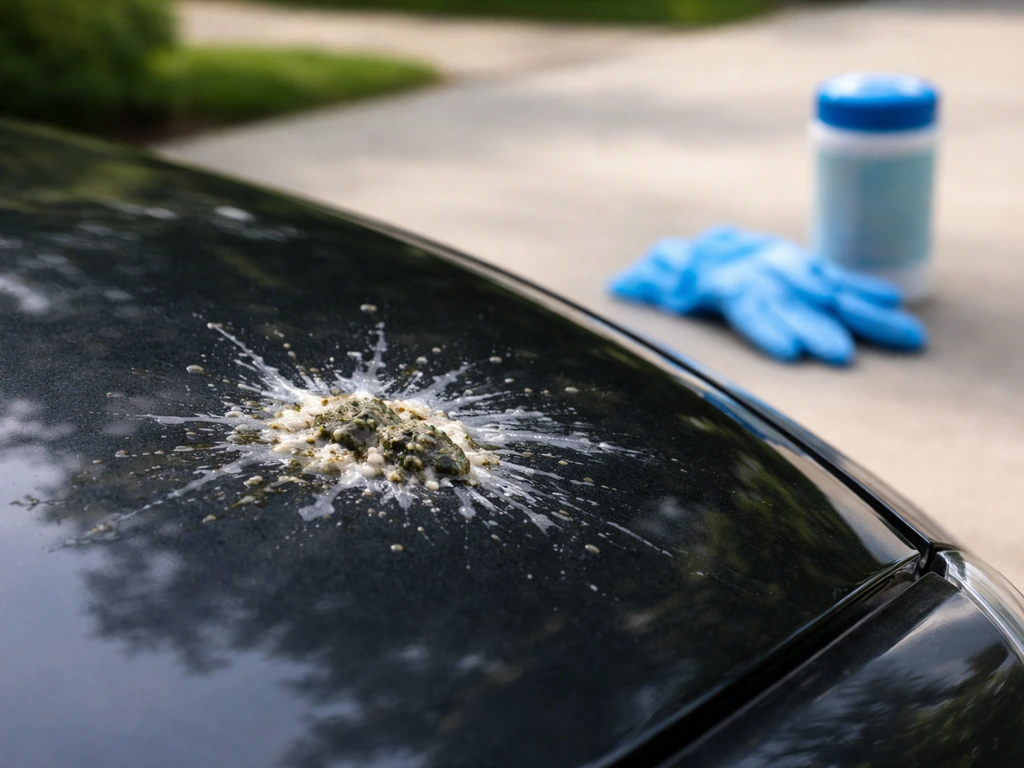
Unlike mammals, birds don't produce urine and feces separately. They expel both at once through a single opening called the cloaca. What you see on your car hood is a combination of solid dark fecal matter, blank" rel="noopener noreferrer">the white paste (uric acid, which is how birds excrete waste nitrogen instead of liquid urine), and sometimes a clear fluid component. That white stuff is not actually paint or calcium, it's crystallized uric acid. This matters practically because uric acid is mildly corrosive and can etch into car paint or porous stone if left sitting in heat. Fresh droppings are easy to remove. Dried ones that have bonded to a surface are a different challenge entirely.
The composition also explains why bird droppings can carry pathogens. The fecal portion can harbor bacteria, fungi, and viruses shed by the bird. When droppings dry out and get disturbed, those particles become airborne, and that's where the real health risk begins.
Real health risks: what to actually worry about
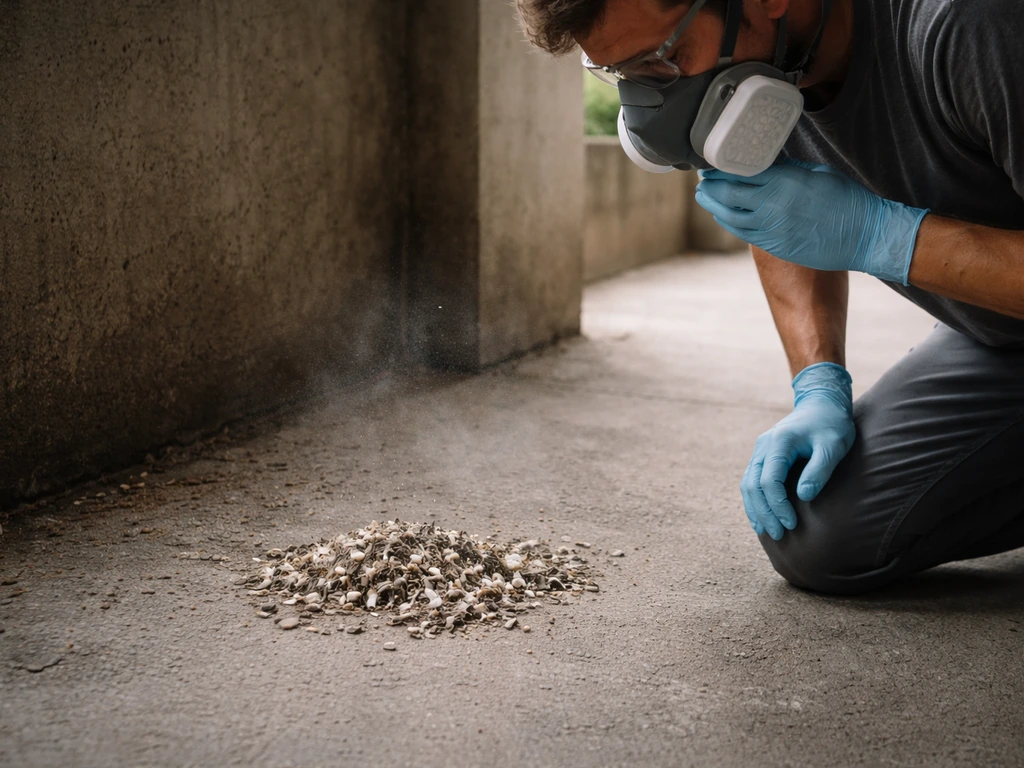
The main health risk from bird droppings is not touching them, it's inhaling dust from dried droppings. Two diseases are worth knowing about specifically.
Histoplasmosis
Histoplasmosis is a lung infection caused by a fungus (Histoplasma) that grows in soil enriched by bird or bat droppings. The CDC notes that most reported cases are linked to events that disturb that contaminated soil, such as construction, demolition, or even cleaning out an old barn or attic. Spores become airborne when the material is disturbed, and you breathe them in.
Symptoms typically appear 3 to 17 days after exposure and can resemble pneumonia: fever, cough, fatigue, headache, chest pain, and chills. Most healthy people recover without treatment, but the illness can be severe in people with weakened immune systems. The key point is that a single fresh dropping on your windshield carries very low risk, but an attic full of years-old dried droppings that you start shoveling out without protection is a different situation entirely.
Psittacosis
Psittacosis (also called parrot fever) is a bacterial illness caused by Chlamydia psittaci, which infects birds, especially parrots, cockatiels, and other pet birds, as well as pigeons and poultry. The CDC states the most common transmission route is breathing in dust containing dried secretions or droppings from an infected bird. It presents like a respiratory illness, which means clinicians often don't suspect it unless they know about the bird exposure. With appropriate antibiotic treatment, it's rarely fatal, but it can be serious enough to require medical care. If you've recently handled a new pet bird or worked around live poultry and then develop flu-like or respiratory symptoms, mention the exposure to your doctor.
Avian influenza
The CDC also identifies inhalation of dust contaminated with bird secretions and excrement as an exposure route for avian influenza. This is mainly a concern for people who work closely with poultry or live birds, not for the average person cleaning droppings off a patio chair. That said, the protective principles are the same: don't stir up dust from dried droppings without respiratory protection.
How to clean up bird droppings safely
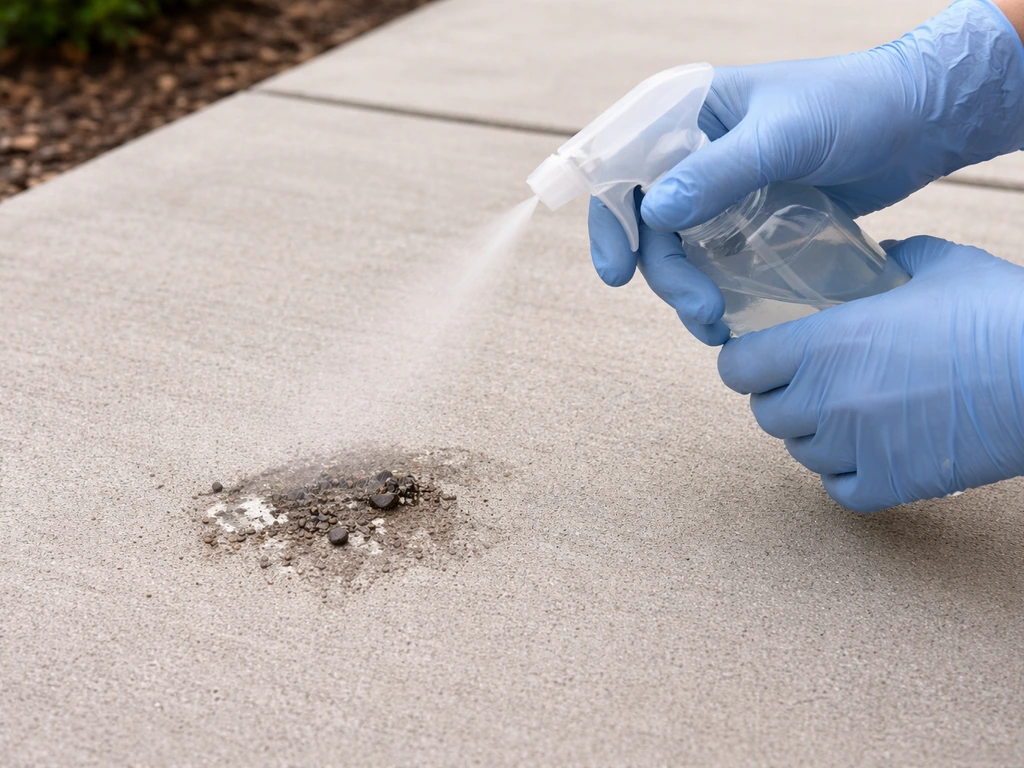
The single most important rule, backed by university environmental health offices and CDC/NIOSH guidance, is this: never dry-sweep or vacuum bird droppings. Dry sweeping turns dried droppings into airborne dust, and that dust is exactly what you're trying to avoid inhaling. The procedure is wet-first, always.
What to wear before you start
- Disposable gloves (nitrile or latex): wear them the entire time and remove them carefully without touching the outside surface
- An N95 respirator or well-fitting mask if you're dealing with a large accumulation or dried droppings in an enclosed space
- Eye protection (safety glasses or goggles) if you're scrubbing or pressure-washing, since splatter is a real possibility
- Old clothes you don't mind bagging up afterward, or a disposable coverall for larger jobs
Step-by-step cleanup
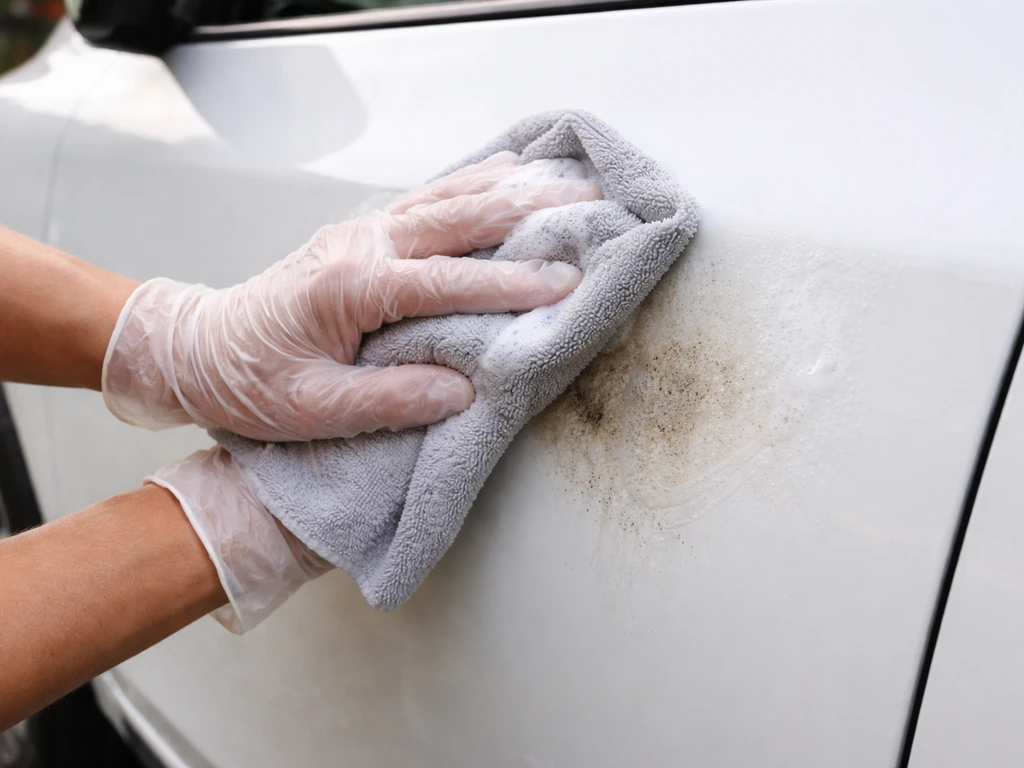
- Put on your gloves and any other PPE before touching anything
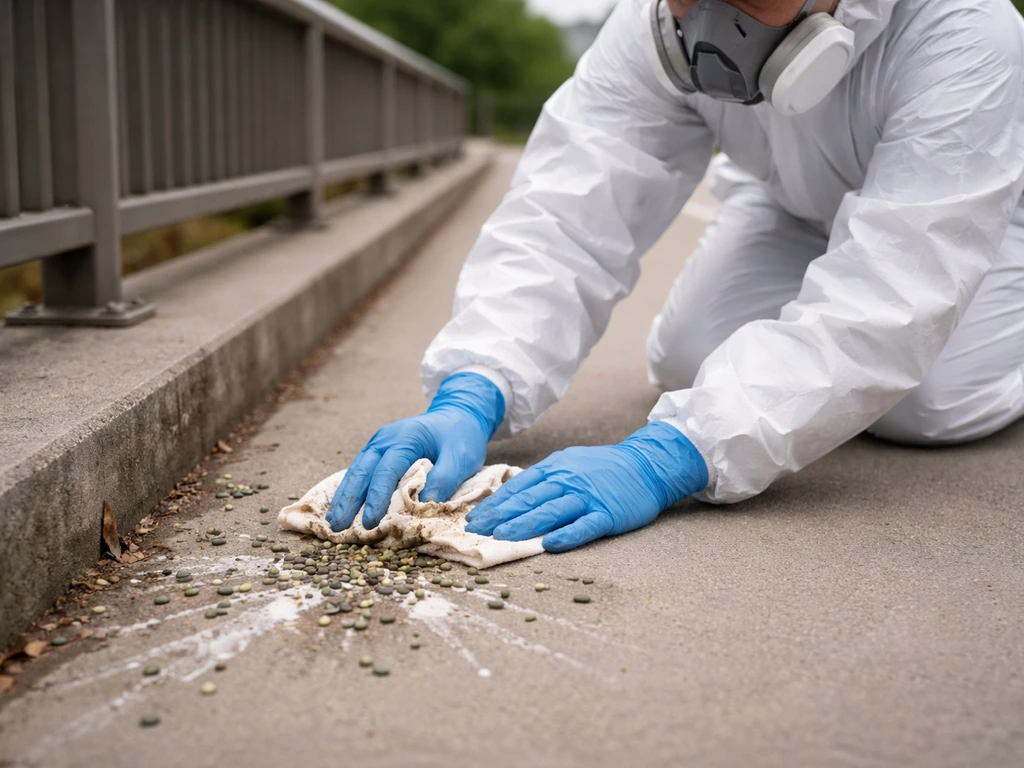
- Wet the droppings thoroughly with water and a small amount of dish soap or a surfactant before touching or moving them. Adding a wetting agent (detergent) further reduces how much material becomes airborne. Keep wetting throughout the process, not just at the start
- Use a disposable paper towel, damp cloth, or scraper to collect the softened material. For outdoor hardscapes, a hose works well
- Do not vacuum droppings. Vacuums cannot be properly disinfected and will recirculate contaminated particles
- Double-bag the collected waste and seal the bags before disposing
- Disinfect the surface with a household disinfectant or diluted bleach solution
- Remove and dispose of gloves by rolling them inside-out, then immediately wash your hands with soap and water for at least 20 seconds
- If you wore a mask and protective clothing, remove them carefully and wash the clothing separately or bag for disposal
What to do if you've already been exposed
Got it on your skin or clothes?
Wash the affected skin immediately with soap and warm water. Don't touch your eyes, nose, or mouth until your hands are clean. If it landed on clothing, change out of those clothes and wash them separately on a hot cycle. Fresh droppings on intact skin from a healthy bird (like a wild songbird) are low risk, but the good hygiene response is the same regardless.
Got it in your eyes?
Flush your eye with clean running water for at least 15 minutes. If irritation, redness, or blurred vision persists, get medical attention. Eye exposure to fresh droppings from a healthy bird is unlikely to cause serious illness, but it's worth taking seriously, especially if you were cleaning up large or old accumulations.
Inhaled dust from dry droppings?
This is the exposure that warrants the most attention. If you swept, blew, or otherwise disturbed a significant amount of dried bird droppings without respiratory protection, monitor yourself for symptoms over the following two to three weeks. CDC/NIOSH advises seeking a medical evaluation if you think you've had significant Histoplasma exposure. Tell your healthcare provider specifically what happened and when. Histoplasmosis symptoms can appear anywhere from 3 to 17 days after exposure. A brief, incidental exposure to a small amount of dried droppings outdoors carries low risk for most healthy adults, but a sustained cleanup of a heavily contaminated attic, rooftop, or outbuilding without a mask is a different level of concern.
When to seek medical care
See a doctor if you develop respiratory symptoms, fever, persistent cough, or flu-like illness within a few weeks of cleaning bird droppings, especially if the job involved a large accumulation or an enclosed space. If you've recently bought or handled a new pet bird and develop those symptoms, mention the bird exposure explicitly because psittacosis is easy to miss without that context.
The good luck thing: symbolism vs. what's actually happening
Many cultures hold the belief that being hit by bird droppings is good luck, and it's one of those superstitions that cuts across very different traditions. The idea has genuine staying power, possibly because the odds of it happening at any given moment are low enough that people notice it and attach meaning to it. If it brings you a moment of amusement or a sense of optimism after a surprising and frankly unpleasant experience, that's a perfectly reasonable way to process it.
But "good luck" doesn't mean "safe to ignore." The practical response to being hit by bird droppings is to wash up promptly, especially before eating or touching your face. Treating the symbolism as a fun story to tell while also handling the hygiene side is not a contradiction. You can hold both things at once. The superstition doesn't need to compete with the cleanup.
Cleaning droppings off your car or around your home
Your car
Bird droppings on car paint are more than an eyesore. The uric acid in the white portion is corrosive and, combined with heat from the sun, can etch into clear coat within hours on a hot day. The goal is to remove them while they're still fresh and before they dry hard and bond to the surface.
| Situation | What to do | What NOT to do |
|---|---|---|
| Fresh dropping on paint | Dampen with water, let it soften for 30–60 seconds, then blot gently with a microfiber cloth. Finish with a quick detail spray or car-safe soap rinse. | Don't scrub dry. Don't use paper towels aggressively on clear coat. Don't use household cleaners like Windex or bleach on paint. |
| Dried dropping on paint | Soak with a damp cloth for several minutes to rehydrate, then gently lift. Use a dedicated car-safe bug and tar remover or detailing spray if needed. | Don't use a dry brush or fingernail to scrape. Don't let it sit longer in direct sun while you decide what to do. |
| Dropping on glass (windshield) | Use window washer fluid or plain water and your wipers, or wipe with a damp cloth. Glass is more forgiving than clear coat. | Don't smear it dry across the windshield with dry wipers. It reduces visibility and spreads the material. |
| Bird droppings on convertible soft top | Rinse with water, then use a soft brush with mild soap made for fabric or vinyl tops. | Don't use bleach or harsh solvents. Don't let it dry on fabric tops, as staining is harder to reverse. |
Around your home and patio
For patio furniture, wood decks, concrete, or pavers, the wet-first rule applies just as it does for any other cleanup. Hose down the area first to wet the droppings, then scrub with a brush and soapy water. For heavy accumulations under a regular roosting spot, such as under a tree where birds gather every evening, consider wearing an N95 mask if you're dealing with substantial dried buildup. Rinse thoroughly and allow the surface to dry in sunlight, which has some natural disinfecting effect.
If birds are regularly roosting on your roof, awning, or AC unit, the health and property-damage risks are worth addressing proactively. Bird deterrents like spikes, reflective tape, or motion-activated sprinklers can reduce accumulation without harming the birds. Letting large deposits build up unchecked is where the real risk starts, not the occasional random dropping.
One thing worth keeping in mind: bird droppings, their composition, and why they look the way they do (especially that distinctive white coloring) are all connected questions. Understanding that the white portion is uric acid and not a separate substance helps explain both why they're corrosive and why the wet-cleanup method works so well. It also puts the health risks in perspective: the fecal portion carries the pathogens, while the uric acid portion is the surface-damage culprit.
FAQ
What should I do if bird droppings get on my food or I accidentally touch them with food contact surfaces?
If it hits a plate, utensil, cutting board, or anything that touches food, treat it like contamination: wash with hot soapy water immediately, then sanitize (for example, with a food-safe disinfectant) and air-dry fully. Don’t just wipe, because dried material can leave residue and dust-prone particles.
Is it safe to use a regular household vacuum on bird droppings?
No. Household vacuums can stir up fine particles and spread them through the air, especially if the droppings are dried. If you must clean up, use a wet-first approach (spray to dampen, then wipe/scrub) and dispose of wipes or slurry safely instead of vacuuming.
Do I need an N95 mask for fresh droppings, or is that only for dried buildup?
For small, fresh spots on a stable surface, the risk is generally low and many people can clean with gloves plus wet-first methods. Use respiratory protection when there is dried material, heavy accumulation, or any plan that could disturb dust (scraping, brushing, or working overhead).
How should I dispose of cleaned-up droppings and used cleanup materials?
Bag them immediately after wet cleaning (paper towels, wipes, gloves) and tie the bag closed. If you used wet slurry, avoid pouring it into landscaping beds where it could spread, instead wipe up and bag solid residues, then clean the area with detergent and water.
What if droppings are on delicate surfaces like car clear coat, stainless steel, or painted walls?
Act fast and keep it wet while removing. Use gentle soap and water first, avoid abrasive pads, and don’t let residue sit in heat. On cars, repeated light washing is safer than one aggressive scrubbing session that can scratch clear coat.
Can I clean bird droppings in the rain or right after it rains?
Rain can help, but it doesn’t guarantee everything is safe. If material is dried and bonded, rain may only spread it. Use wet-first dampening regardless, and avoid sweeping or agitation that turns material into airborne dust.
How long should I wait before I go back outside after cleaning a dusty, dried accumulation?
If you disturbed dried droppings, give the area time to settle and ventilate, then wipe surrounding surfaces you touched. For enclosed or attic spaces, plan on thorough wet-cleaning first, then leave doors open for airflow before spending extended time inside.
What symptoms mean I should call a doctor, and when is it “too soon to worry”?
Call promptly if you develop fever, persistent cough, worsening shortness of breath, or flu-like illness after a cleanup that involved dried droppings or an enclosed space. It is not “too soon” to mention exposure early, but Histoplasmosis timing commonly falls within a window of about 3 to 17 days, so reporting the exposure helps clinicians decide on evaluation.
If my pet bird pecks or wipes its beak on my hands after I cleaned droppings, is that a concern?
Yes. Prevent cross-contamination by washing your hands thoroughly before handling your bird, and keep the bird away from the cleaned area until surfaces are fully cleaned and dry. If you used respiratory protection or got droppings on clothing, change clothes before interacting with the bird.
Are bird droppings always dangerous, or are some situations much lower risk?
One fresh dropping on an outdoor car or patio surface is usually a low-risk event when cleaned promptly with wet-first methods. Higher risk situations include enclosed spaces (attics, barns), large accumulations under roosts, and any activity that creates airborne dust from dried material.