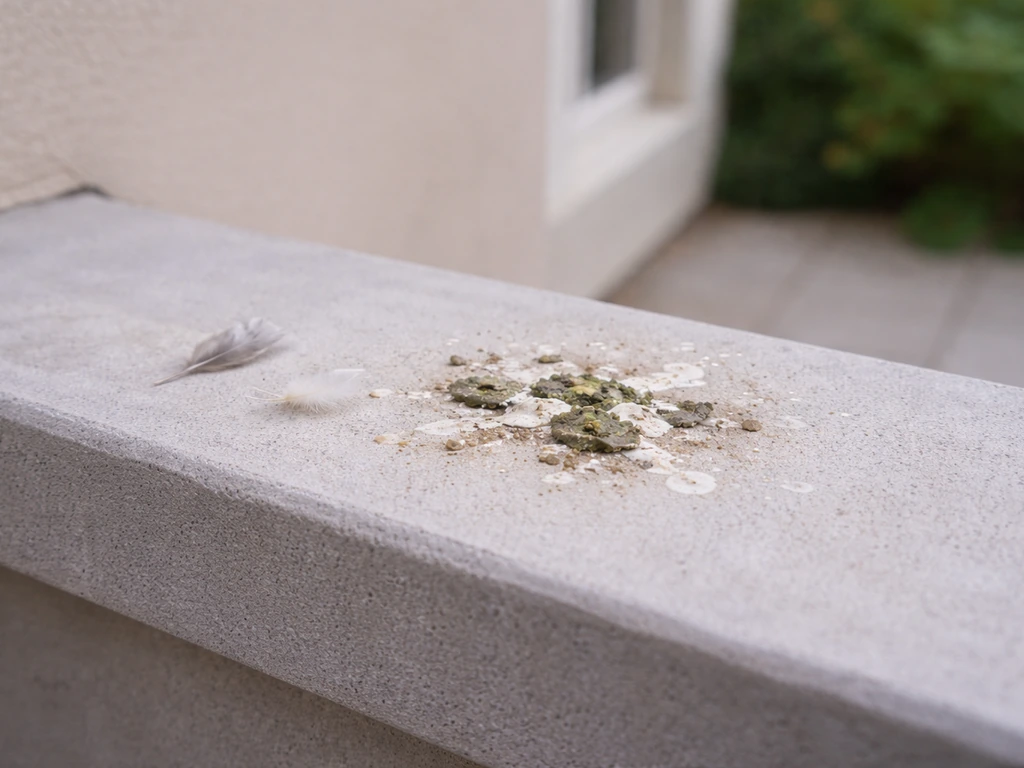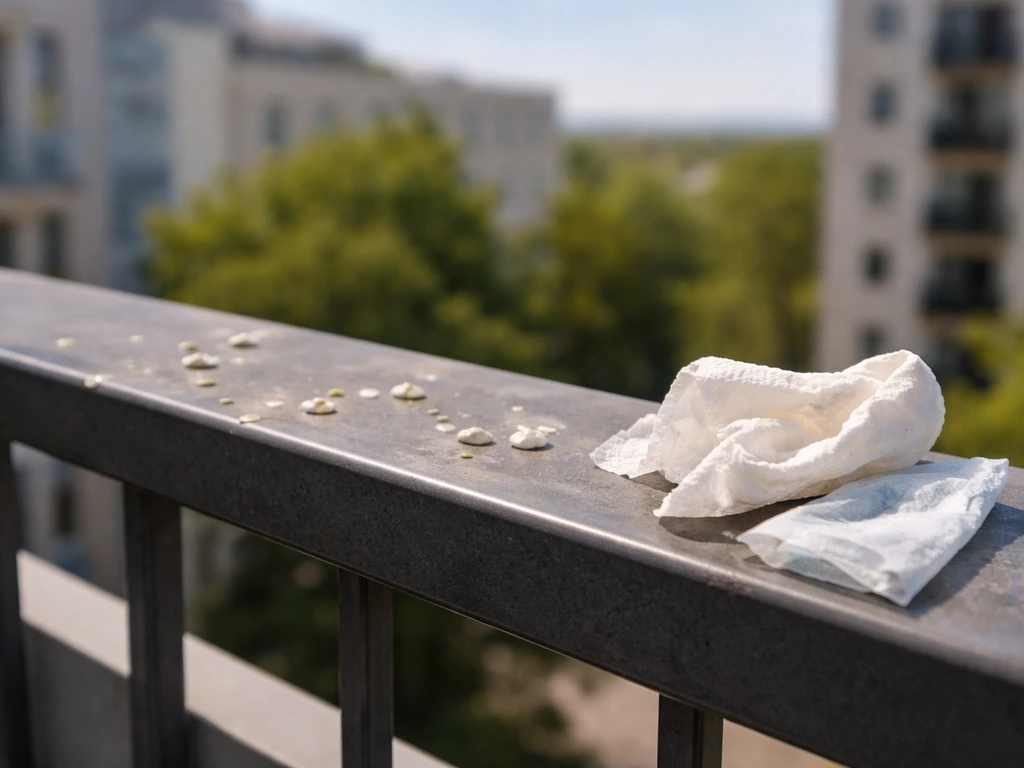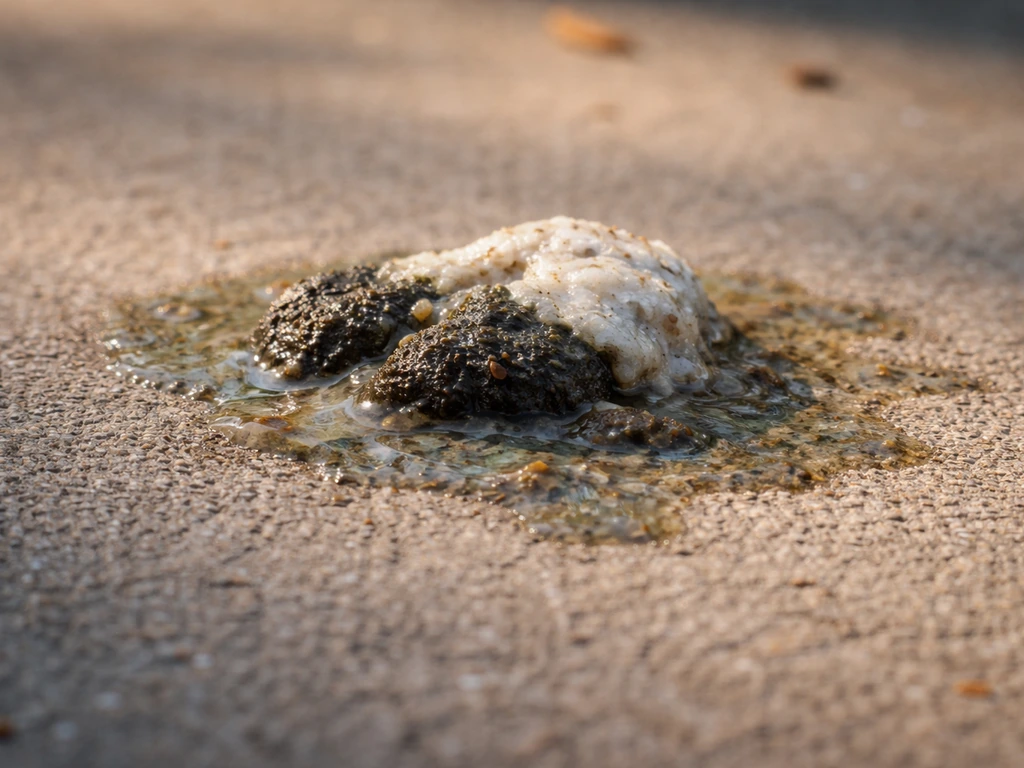
Bird poop is almost always a sign of one simple thing: a bird was there recently. That's it, 90% of the time. But if you're finding it repeatedly in the same spot, in large quantities, or inside a closed space like an attic or vent, it starts to mean something more specific, active roosting or nesting nearby, and that's when it shifts from a minor annoyance to something worth actually addressing. On the health side, fresh droppings from a single passing bird are low risk. Accumulated, dried droppings in enclosed or poorly ventilated areas are a different story entirely.
What Is Bird Poop a Sign of? Risks and Safe Cleanup

Marcus Fielding
8 Jun 2026
What bird poop commonly signals
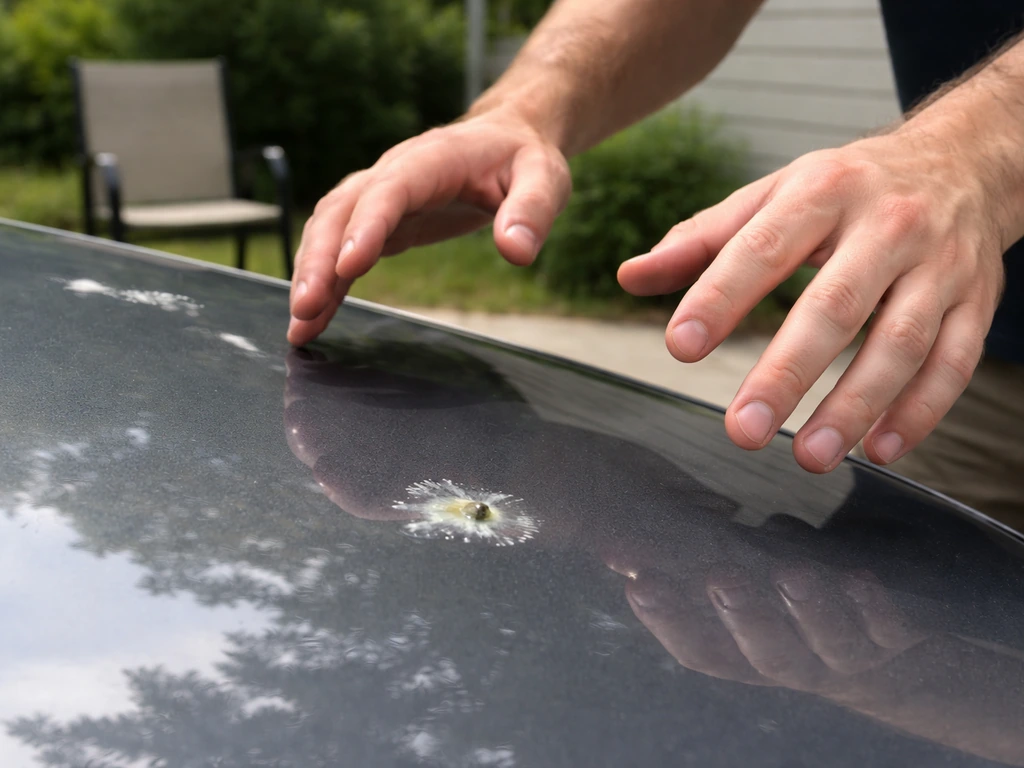
Finding a dropping on your car hood or patio chair means a bird perched, passed through, or flew over. Birds have fast metabolisms and no ability to choose when or where they go, so any spot that offers a perch, a branch, a wire, a ledge, a roofline, is fair game. Single or scattered droppings like this are normal, low-stakes, and don't indicate a problem beyond the inconvenience of cleanup.
The picture changes when you notice droppings concentrated in one location over and over. A particular corner of your balcony, the same beam in your garage, a patch of roof below a specific eave, that pattern tells you birds are roosting (sleeping or resting regularly) or nesting there. You're not just dealing with a random flyover. There's a bird or a group of birds using that spot as home base, and the droppings will keep coming until you change something about that environment.
Droppings also look different depending on the bird's diet and hydration. If you're curious about what causes bird guano to look and smell the way it does, it's largely tied to what birds eat and how their droppings are formed bird's diet and hydration.
The white or chalky portion is actually the avian equivalent of urine, birds convert nitrogenous waste into uric acid rather than liquid urea, which is why bird poop looks the way it does. (If you want the full breakdown of what bird poop is made of, that composition is worth understanding on its own. Guano is the special term for accumulated bird droppings, often used for fertilizer or for deposits in places where birds roost in large numbers.
If you're wondering what is bird poop, it helps to know what it is made of and how birds produce it. ) The darker center is the fecal portion from digested food. A watery, mostly clear splash around the edges is liquid urine. Diet changes color: berry-eating birds leave purple or red-tinged droppings, seed-eaters leave greener ones.
None of this is usually alarming, it just tells you what the bird has been eating.
Why birds choose certain spots (and what that tells you)
Birds aren't random about where they land. They choose spots that offer shelter, elevation, warmth, or proximity to food and water. If your car gets bombed every morning, check what's directly above it, a favorite branch, a power line, or a rooftop edge where birds like to gather before sunrise. If droppings keep appearing on a window ledge, that ledge probably has a good view, feels safe from predators, and might even be near a nest.
- Concentrated droppings below a roofline or eave: likely an active nest or roost site above
- Droppings inside a garage, attic, or shed: a bird (or birds) has found a way in and may be nesting
- Droppings on the same car or furniture daily: a nearby perching spot like a branch or wire overhead
- Large accumulations on flat roofs or ledges: a colony roost, common with pigeons, starlings, or sparrows
- Droppings near a pool or water feature: birds are using the water source regularly
- Droppings from above on paths or walkways: likely a nesting tree where birds are raising young
Indoor droppings, especially in attics, crawlspaces, or around ventilation ducts, are the most important scenario to take seriously. Once birds are nesting in an enclosed space, accumulation happens fast and the air quality concern becomes real.
The real health risks and who needs to be extra careful
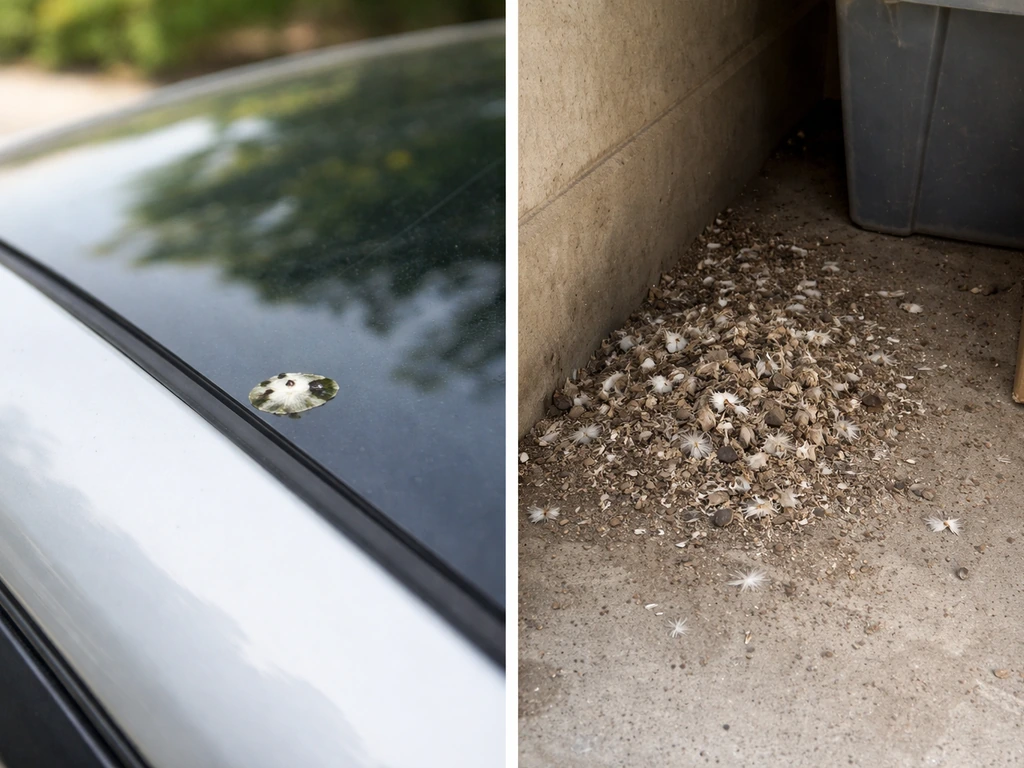
Let's be honest about the risk level here. A single bird dropping on your hand or your windshield is not a medical emergency. The legitimate health concerns come from breathing in dried, aerosolized droppings, particularly in enclosed spaces or with large accumulations. Two diseases get the most attention:
- Histoplasmosis: A lung infection caused by breathing in spores of the fungus Histoplasma, which is found in bird and bat droppings (especially in large accumulations). The CDC and NIOSH specifically flag disturbance of large accumulations of bird or bat droppings as a recognized exposure risk. Most healthy people who breathe in a small number of spores either have no symptoms or recover on their own, but it can be serious in people with weakened immune systems.
- Psittacosis: Caused by the bacterium Chlamydia psittaci. The CDC and multiple state health departments confirm that the most common route of infection is breathing in dust from dried bird droppings or secretions — particularly from parrots, parakeets, cockatiels, and similar pet birds, though wild birds can carry it too.
- Avian influenza (bird flu): Primarily a concern for people working directly with infected birds or heavily contaminated environments. The CDC recommends N95 respirators and safety goggles for those in contaminated premises.
For most people encountering everyday bird droppings outdoors, these risks are low. The groups who genuinely need to be more cautious are: pregnant people, older adults, anyone who is immunocompromised (including people on chemotherapy or immunosuppressant drugs), and people with existing respiratory conditions like asthma or COPD. If you fall into one of those categories, let someone else handle a significant cleanup and consider wearing respiratory protection even for modest amounts.
When to worry vs. when to just clean it up
Here's the honest rule of thumb: a small amount of fresh droppings on an outdoor surface is a cleanup job, not a health crisis. A large amount of old, dried droppings in a confined space is a real concern. Use this as your guide:
| Situation | Risk Level | What to do |
|---|---|---|
| Single fresh dropping on car, patio, or skin | Very low | Clean promptly, wash hands, no further action needed |
| Scattered droppings on an outdoor surface (balcony, walkway) | Low | Standard wet cleanup with gloves, no mask needed for healthy adults |
| Repeated droppings in same outdoor spot over days/weeks | Low-moderate | Clean, then focus on deterrence to stop recurrence |
| Droppings in an enclosed space (garage, shed, porch ceiling) | Moderate | Wet the area before cleaning, wear gloves and a dust mask, ventilate well |
| Large accumulation of dried droppings in attic, crawlspace, or ductwork | High | Call a professional — do not disturb without proper PPE and containment |
| Droppings near or in a pool | Moderate | CDC recommends treating this like a fecal incident — follow fecal incident response decontamination steps |
| Pet bird droppings changing significantly in color, smell, or consistency | Varies — consult a vet | Could indicate diet change or illness; worth a vet call if persistent |
How to clean up bird droppings safely
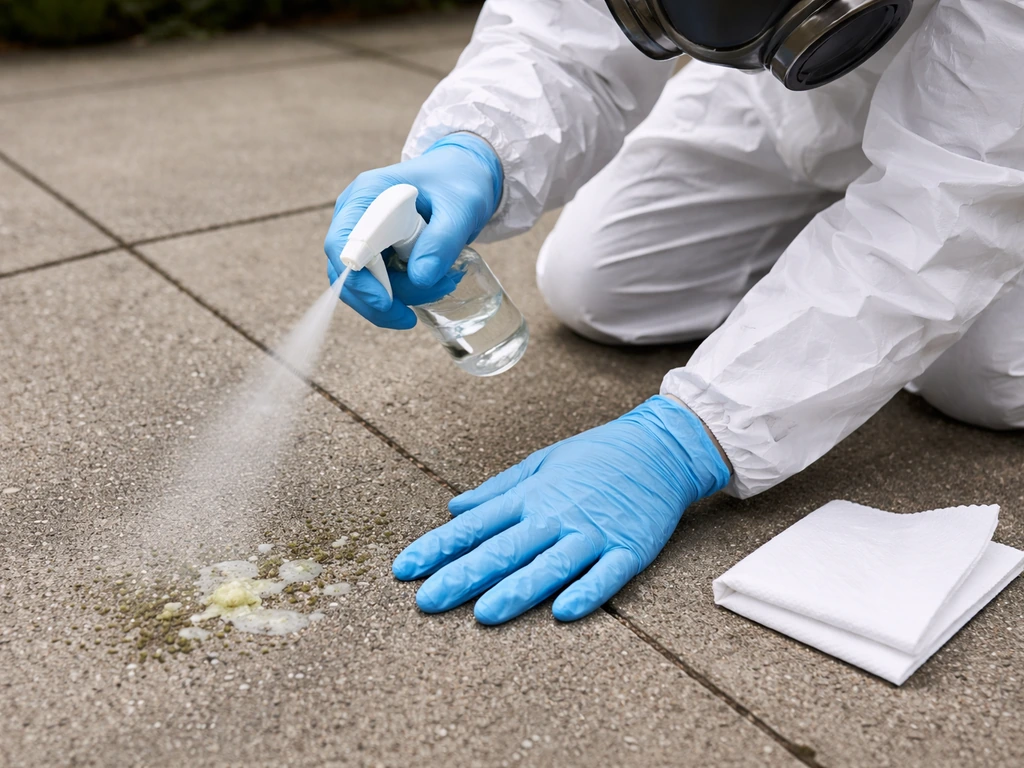
The single most important rule for any bird dropping cleanup: never dry-sweep, dry-brush, or vacuum dried droppings. Disturbing dried material kicks fungal spores and bacteria into the air where you breathe them. Always wet the area first.
General cleanup steps (outdoor surfaces, patios, balconies, sidewalks)
- Put on disposable gloves and, if you're cleaning a larger area or have any respiratory sensitivity, a well-fitting mask or N95 respirator.
- Spray or mist the droppings thoroughly with water or a disinfectant solution to wet them completely. Let it soak for a few minutes.
- Wipe up with disposable paper towels or rags you're prepared to throw away. Do not scrub dry material.
- Disinfect the surface with a bleach solution (1 tablespoon of household chlorine bleach per 1 gallon of water, per CDC guidance) or an EPA-approved disinfectant. Allow 15-20 minutes of dwell time before rinsing.
- Bag and dispose of all used materials, gloves, and paper towels immediately.
- Wash your hands thoroughly with soap and water.
One critical warning about bleach: do not use it on surfaces where bird droppings are still present in bulk before pre-cleaning. Bird droppings contain ammonia, and mixing bleach with ammonia creates toxic gases. The U.S. General Services Administration specifically warns against using bleach directly on bird excrement on masonry buildings for this reason. Always remove the bulk of the material first, then disinfect. And never mix bleach with any other cleaning product.
Cleaning bird poop off a car
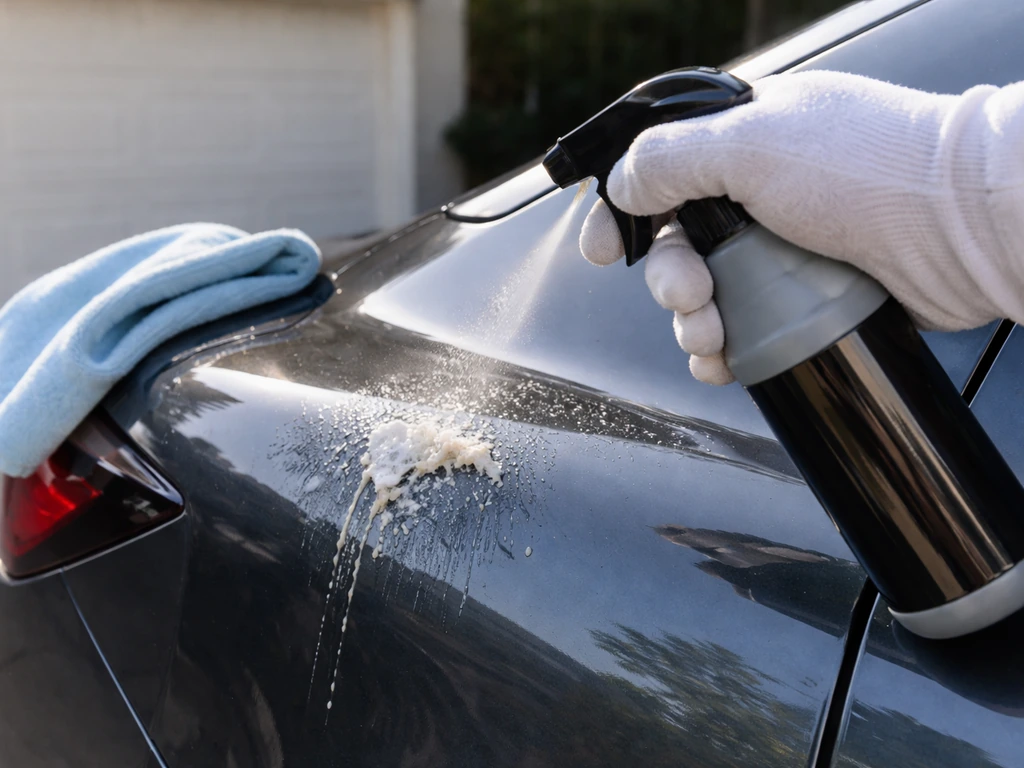
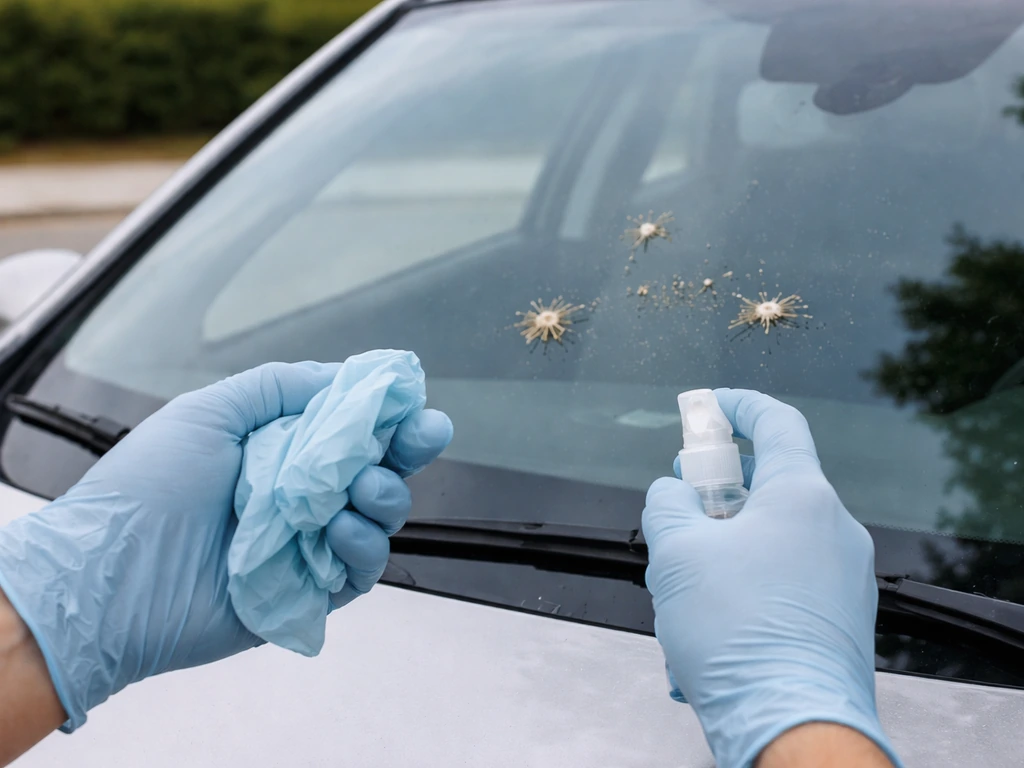
Car paint is vulnerable, bird droppings are acidic and can etch clear coat if left to dry and bake in the sun. Act quickly. Wet the dropping with water or a detailing spray, let it soften for 30-60 seconds, then blot gently with a microfiber cloth. Don't rub. For stubborn dried spots, a damp cloth left over the area for a couple of minutes will soften it enough to remove without scratching. Wash the area with car shampoo afterward and consider applying a wax or paint sealant to the affected spot.
Indoor droppings (garage, shed, sunroom)
Ventilate the space before you start, open windows and doors and let air move through for several minutes. Wear gloves and a dust mask at minimum, an N95 if the accumulation is significant. Mist the area with water, let it settle, then collect material with damp paper towels. Disinfect with a 10% bleach solution (mix after removing bulk material, not before). Bag everything and remove it from the building immediately. Wash any clothing you wore separately or in a hot wash cycle.
If a pet bird makes a mess
Pet bird droppings in a cage or on surfaces are everyday cleanup. Use damp paper towels or cage liner changes, wear gloves if you want to be cautious, and wash your hands after. If you or a family member is immunocompromised, consider wearing a mask when cleaning cages. Clean the cage regularly so droppings don't dry and accumulate, dried droppings are always higher risk than fresh ones.
How to stop birds from coming back
Cleanup handles today's problem. Prevention handles tomorrow's. If birds are actively roosting or nesting in a spot, removing the droppings alone won't stop them, you have to make that spot less attractive or physically inaccessible.
- Bird spikes: Installed on ledges, rooflines, and window sills, spikes prevent birds from landing and roosting. They're effective for pigeons, starlings, and other ledge-roosting birds. Utah State University Extension and West Lothian Council both flag spikes as a practical and humane deterrent.
- Bird netting: The most effective option for large open areas like fruit trees, roof sections, or building facades. Use proper, tightly installed netting — loose or improperly hung small-mesh netting can trap birds and cause harm. The U.S. Fish and Wildlife Service specifically warns against loosely hung small-mesh netting for this reason.
- Reflective deterrents: Reflective tape, old CDs, or foil strips hung in problem areas disrupt birds' visual comfort. They work for a while but birds can habituate over time.
- Remove food and water sources: If a bird feeder, open compost bin, water feature, or uncovered pet food bowl is nearby, that's the real draw. Remove or relocate it.
- Seal entry points: For indoor bird problems (attics, soffits, vents), find and seal how they're getting in — after confirming no active nesting is occurring (nesting birds may be protected under federal law during breeding season).
- Slope modifications: Adding angled covers to ledges and flat surfaces discourages roosting by eliminating comfortable perching spots.
Consistent deterrence works better than any single method. Combining physical barriers (spikes or netting) with removing attractants gives you the best long-term result. And be patient, established roosts take a few weeks to fully abandon.
The good luck thing: superstition vs. reality
You've probably heard that getting hit by bird poop is good luck. This belief shows up in cultures across Europe, Russia, and parts of Asia, the idea being that something so randomly unpleasant must be the universe balancing things out, or that birds in general are associated with good omens. Some versions of the belief hold that the rarer the species that drops on you, the better the luck.
Is it true? Not in any measurable sense, obviously. But it's also completely harmless to enjoy the absurdity of it. If believing you're owed a lottery ticket after getting hit by a pigeon makes the experience less annoying, great. The superstition almost certainly originated as a way to reframe an unpleasant surprise into something tolerable, which is genuinely useful even if it's not magic.
What is real: the moment of contact with fresh droppings is low risk for a healthy person. What matters after is washing the area promptly, hands, skin, or clothing, not standing around waiting for the luck to kick in. Enjoy the superstition, do the cleanup.
When to call a professional
Most bird dropping situations are DIY-friendly. These specific scenarios are the exceptions where you should step back and get professional help:
- Large accumulations in enclosed or confined spaces: Attics, crawlspaces, wall voids, or ductwork with significant buildup require professional remediation with proper containment, HEPA filtration, and disposal protocols. NIOSH specifically identifies these large accumulation disturbances as a recognized histoplasmosis risk.
- You're immunocompromised, pregnant, elderly, or have a respiratory condition: Don't attempt significant cleanup yourself. Call a remediation company or at minimum get detailed guidance from your doctor first.
- Droppings are in or near HVAC systems or ventilation: Contaminated air circulation is a different problem than a dirty ledge. A professional needs to assess and clean this safely.
- You've been significantly exposed and feel unwell: If you had heavy exposure to droppings dust (especially in an enclosed space without PPE) and develop flu-like symptoms, fever, chest tightness, or respiratory difficulty within two weeks, see a doctor and mention the exposure. This is relevant for both histoplasmosis and psittacosis.
- Bird infestation inside a building: If birds are actively living inside your home, attic, or business, a wildlife removal professional can handle eviction, exclusion, and cleanup as a combined service — and they'll know local regulations around protected species.
- Repeated heavy contamination on commercial property: If you're managing a commercial building with ongoing pigeon or starling colonization, a pest management company specializing in bird control will have access to deterrents and cleanup protocols that go beyond DIY options.
The bottom line: bird poop on your car or patio is a nuisance, not a crisis. Bird droppings in your attic from a colony of pigeons that moved in over the winter is a legitimate remediation job. Know which situation you're dealing with, act accordingly, and you'll handle it safely and efficiently.
FAQ
How can I tell if bird poop is just a one-off mess or a sign birds are nesting nearby?
If you find droppings only once in a while on an outdoor surface, treat it as an inconvenience, wipe up and wash the contact area. If you keep seeing the same location accumulate, especially under the same roof edge, on the same balcony corner, or inside an attic/vent, that pattern points to active roosting or nesting, which needs removal plus preventing access.
Is bird poop on my windshield or car paint dangerous, and what should I do right away?
Yes, but it is usually manageable if you move quickly and use proper technique. Wet the area first, remove with damp paper towels, then wash with car shampoo or an appropriate cleaner. Avoid scrubbing dry spots because dried grit can scratch paint or clear coat.
Does hot sun or high heat make bird droppings more damaging to car surfaces?
Warm or hot weather makes the surface dry and bake faster, increasing the chance of etching. That means you should not wait, wet the dropping immediately, soften for about a minute, blot gently, and rinse or wash afterward.
Why is vacuuming or sweeping dried bird droppings a bad idea?
Do not dry-sweep, dry-brush, or vacuum dried droppings because that can aerosolize particles and increase what you breathe in. Use wetting, gentle blotting, and damp collection instead, then disinfect after bulk removal in enclosed spaces.
What precautions matter most when cleaning bird poop in an attic, crawlspace, or around vents?
If you are about to clean a large buildup indoors, first ventilate (open windows and doors), wear gloves plus at least a dust mask, and mist to keep particles from becoming airborne. If the area is extensive, heavily contaminated, or you notice strong lingering odors, that is a good reason to hire help.
Can I use bleach right away on bird droppings, or does it matter when I apply it?
If bleach is your goal, the key step is order of operations. Remove the bulk material first, then disinfect using a properly diluted bleach solution, never before you pre-clean. Also, never mix bleach with other cleaners because it can release dangerous gases.
What symptoms should make me worry after cleaning bird droppings?
It can, especially indoors or in small enclosed spaces where droppings have dried and accumulated. If you or someone else develops new respiratory symptoms such as wheezing, persistent coughing, or shortness of breath after cleanup exposure, treat it as a medical concern and seek care promptly rather than trying to power through.
Should I wear a mask, and what level of protection is appropriate?
A dust mask might be fine for small, fresh outdoor cleanup, but for significant indoor accumulation, an N95 (or higher) provides better filtration. If you are pregnant, immunocompromised, or have asthma/COPD, consider having someone else handle large cleanups and prioritize respiratory protection.
Why do birds come back if I clean up the droppings?
Removing droppings alone often fails because it does not stop access to the chosen roosting or nesting spot. Focus on prevention, like blocking entry points, adding physical barriers, and removing attractants, then expect established roosts to take weeks to fully abandon.
Are bird droppings from a pet bird a health risk, and do I need the same precautions?
Yes, pet birds can leave droppings that are routine to clean, but dried buildup still carries higher risk than fresh waste. Keep cages cleaned on a regular schedule, use damp wipe methods, and wash hands after handling droppings or cage liners.
Is rinsing with water enough to safely clean bird poop?
Rinse water helps on floors or outdoor surfaces, but it does not replace wetting and careful collection, because runoff can spread contamination. Use wetting first, collect material with damp towels, then wash the area, and keep runoff controlled during cleanup.