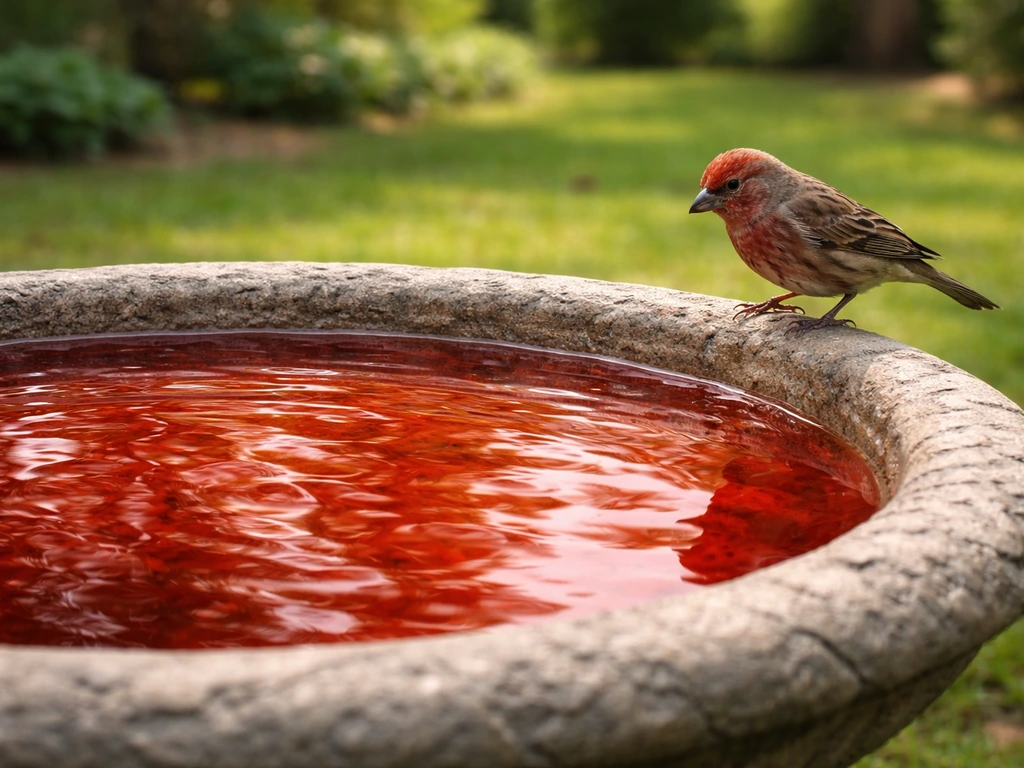
Red or pinkish bird bath water is almost always caused by one of three things: a bacterial biofilm (most commonly Serratia marcescens, a pink-red pigment-producing bacterium that thrives on wet surfaces), iron or sulfur bacteria reacting to minerals in your water, or rust and mineral runoff from nearby metal hardware or the basin itself. The good news is that most cases are easy to identify by smell and appearance, and you can confirm and fix the problem today without any special equipment.
Why Is My Bird Bath Water Red? Causes and Fixes

Marcus Fielding
15 May 2026
What's actually turning your bird bath water red
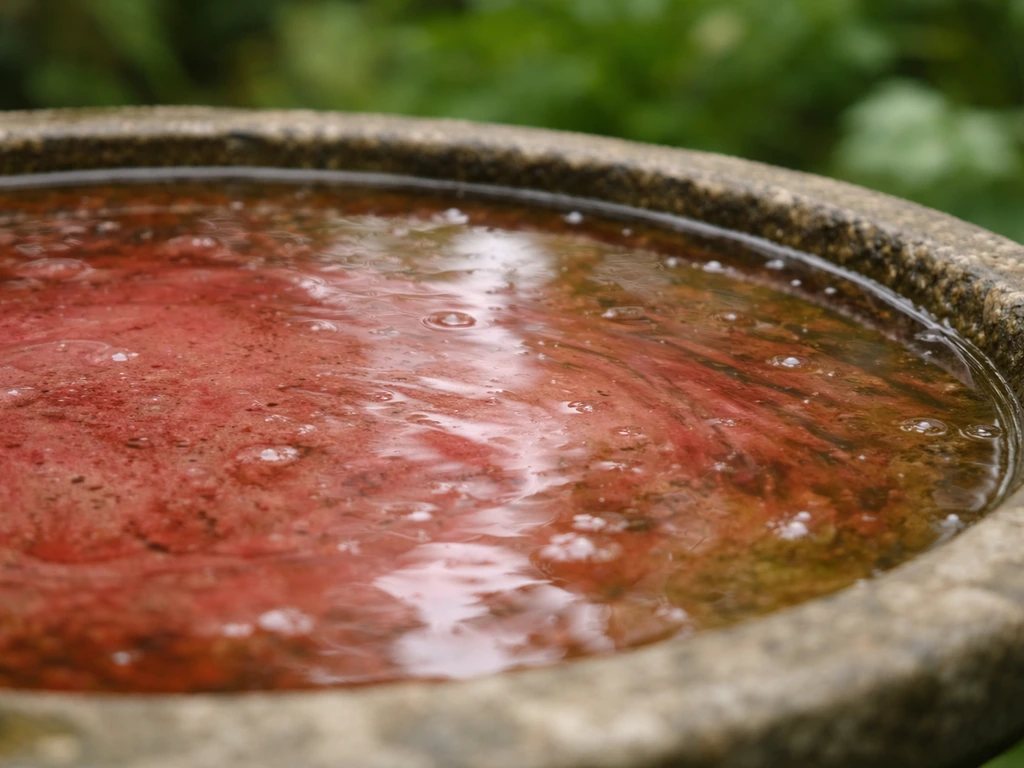
There are a handful of realistic culprits, and knowing which one you're dealing with changes how you handle it. Here are the most common causes, roughly in order of how often they show up in outdoor bird baths.
Serratia marcescens (the pink-red slime bacteria)
This is probably the most surprising cause, and also the most common one. Serratia marcescens is an airborne bacterium that produces a distinctive pink to red pigment. It loves moisture, moderate temperatures, and organic material, which makes a bird bath sitting outside in warm weather basically its dream home. You'll typically see it as a slimy pinkish-red film on the water surface, along the waterline of the basin, or coating the bottom. It's not algae, it doesn't look like dirt, and it tends to come back fast after you rinse it out if you don't actually disinfect.
Iron and sulfur bacteria
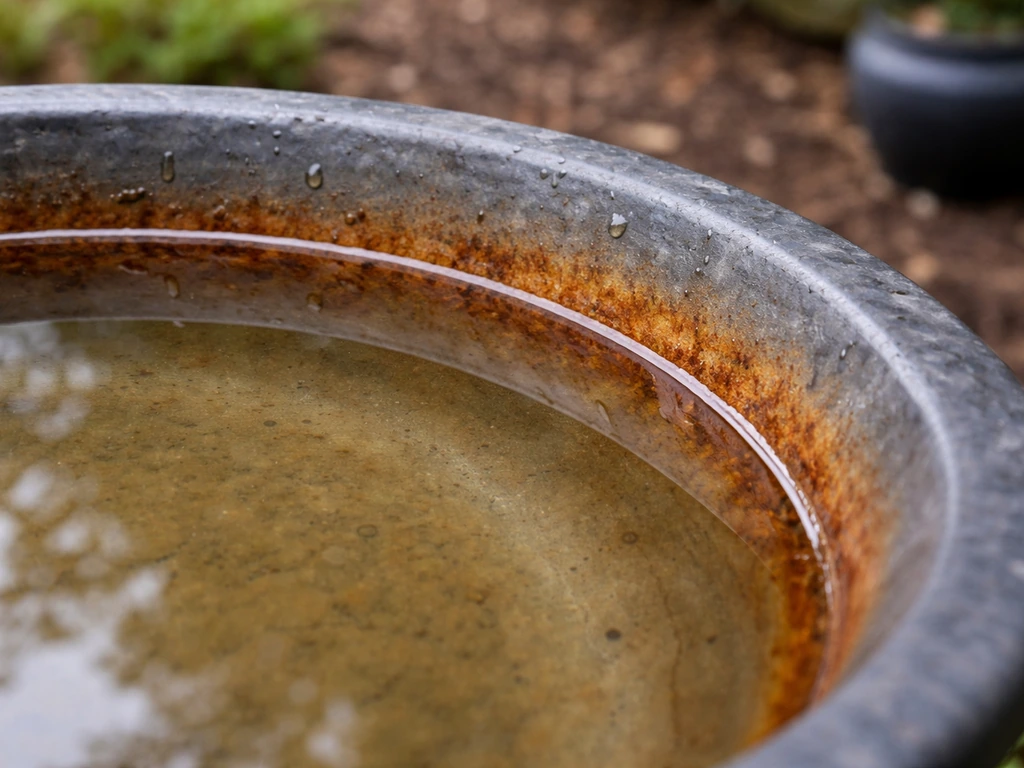
If your water has a rotten egg smell or the discoloration is more of a rusty orange-brown than pink-red, iron or sulfur bacteria are likely involved. These bacteria react with iron and manganese dissolved in water and form reddish-brown slimy masses or oily-looking films. They're especially common if you're filling the bird bath with well water or if groundwater seeps into the basin area. The sulfur-reducing types can produce that classic rotten egg odor, which makes them easy to rule in or out.
Rust from the basin or nearby metal
If your bird bath has a metal basin, metal stand, or sits near iron fencing, garden stakes, or hardware, rust runoff can tint the water orange-red. This type of discoloration doesn't form a film on the surface and doesn't smell. Instead, you'll see a murky reddish-orange tint throughout the water and possibly rust staining on the basin walls. It's one of the easier causes to confirm because the color is uniform rather than patchy or slimy.
Red algae or other biological growth
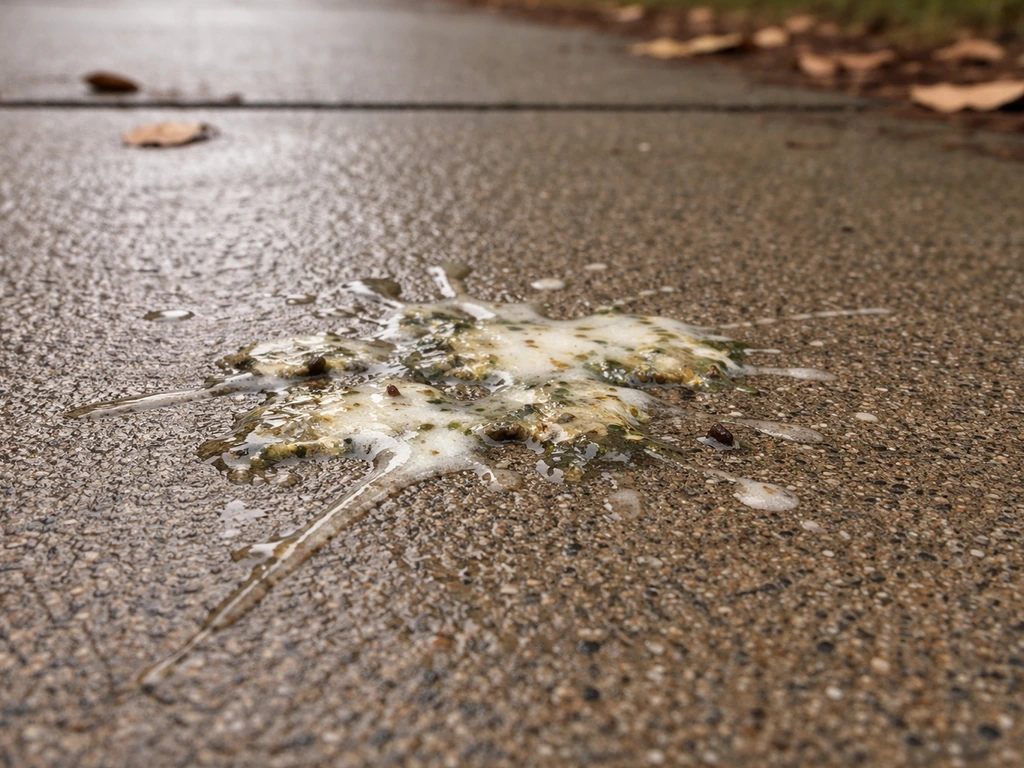
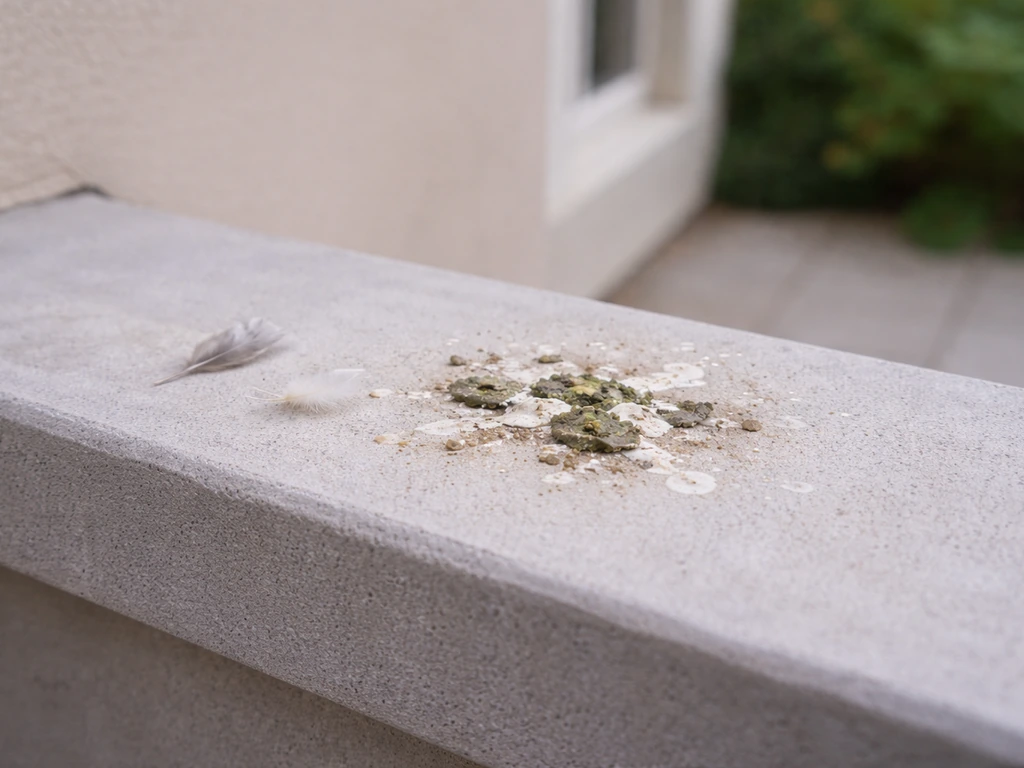
True red algae is less common in small bird baths than green algae, but it does happen, especially in warmer climates or during summer months. Red algae tends to look more like a dusty or powdery coating rather than a slime, and it's more common in bird baths that get a lot of direct sun. Certain types of pigmented biofilm from other microorganisms can also create reddish or brownish tints, particularly when bird droppings are present and decomposing in the water. If you've noticed birds regularly pooping in the bath (which they absolutely do), that organic matter accelerates microbial growth significantly.
Environmental runoff or accidental contamination
Mulch, certain soils, berries falling from nearby trees, or even runoff from painted surfaces or treated wood can introduce red or brown pigmentation into standing water. If you recently added new mulch near the bird bath or if there's a berry-producing plant overhead, take a look at what's falling into the water before assuming it's biological.
Biological causes vs rust and chemical causes: how to tell them apart
The fastest way to distinguish a living biological cause from a non-living one is to look at the texture and smell of the discoloration. Use this as a quick field guide.
| What you see or smell | Most likely cause | Key clue |
|---|---|---|
| Slimy pinkish-red film on surface or basin walls | Serratia marcescens bacteria | Slimy texture, often returns quickly after rinsing |
| Reddish-brown or orange-brown slime with foul smell | Iron or sulfur bacteria | Rotten egg or earthy smell, oily surface sheen |
| Uniform orange-red tint in the water, no smell | Rust from metal | Rust staining on basin, no film or slime |
| Dusty red-pink coating, more in sunny spots | Red algae or pigmented biofilm | Powdery rather than slimy, common in high-sun baths |
| Sudden dark red or purple tint after berries or mulch | Environmental contamination | Visible debris, color change coincides with garden work |
The slime test is the most reliable single indicator. Dip a finger or a stick into the discolored area. If it feels slippery or films up, you're dealing with bacteria or biofilm. If the color wipes off like rust stain on your fingertip without any slippery quality, you're looking at mineral or rust contamination.
Quick troubleshooting steps you can do today
- Look at the color and location of the discoloration: Is it a surface film, throughout the water, or coating the basin walls?
- Smell the water: Rotten egg or sulfur odor points to iron/sulfur bacteria. No smell with orange tint points to rust. No smell with pink-red slime points to Serratia marcescens.
- Check for nearby rust sources: Look at the stand, any metal hardware, nearby fencing, or decorative elements touching the basin.
- Check what's overhead or nearby: Berry-producing plants, painted wood, treated lumber, or freshly laid mulch can all leach color.
- Test if it's a film: Drag a stick through the discolored water. A slimy or oily film that reforms confirms a biological cause.
- If you have well water, consider that as a source: Well water high in iron or sulfur is a common contributor to reddish-brown discoloration.
- Empty the bath and examine the dry basin: Rust stains are hard and orange-brown. Bacterial biofilm is soft, slimy, and often pink-red even when dry.
Health and safety for people, pets, and birds
Serratia marcescens is generally harmless to healthy adults, but it's an opportunistic pathogen, meaning it can cause infections in people with weakened immune systems, open wounds, or in young children and elderly individuals. You don't need to panic if you've touched the water, but you should wash your hands thoroughly and avoid letting small children splash in a bird bath showing signs of pink-red slime.
For pets, the risk level depends on whether they're drinking from the bird bath. Dogs sometimes drink from outdoor water sources, and while a small exposure to bacteria-contaminated water rarely causes serious illness in healthy dogs, it's not water you'd want them drinking regularly. If your dog has been drinking from a bird bath with visible slime or discoloration, watch for gastrointestinal symptoms over the next day or two and contact a vet if anything seems off.
For the birds themselves, stagnant water with heavy bacterial growth or strong chemical contamination can be harmful. Birds that drink or bathe in heavily contaminated water can develop infections or stress-related illness. Since birds also frequently poop in the bath (yes, while they're bathing in it), that organic material feeds bacterial growth fast.
If you are wondering why birds seem to eat their poop, it often relates to natural foraging behavior and how they process nutrients why does my bird eat his poop. The connection between bird droppings and water quality is real: bird poop introduces bacteria and nutrients that accelerate every kind of microbial growth in standing water, which is part of why bird baths need more frequent cleaning than most people realize.
Watery bird poop can also be a sign your bird is sick or dehydrated, so it’s worth checking your bird’s health alongside cleaning the bath why is my bird poop watery. If you’re wondering what watery bird poop means, that usually points to lots of droppings in the water feeding bacterial growth and causing discoloration and film bird droppings.
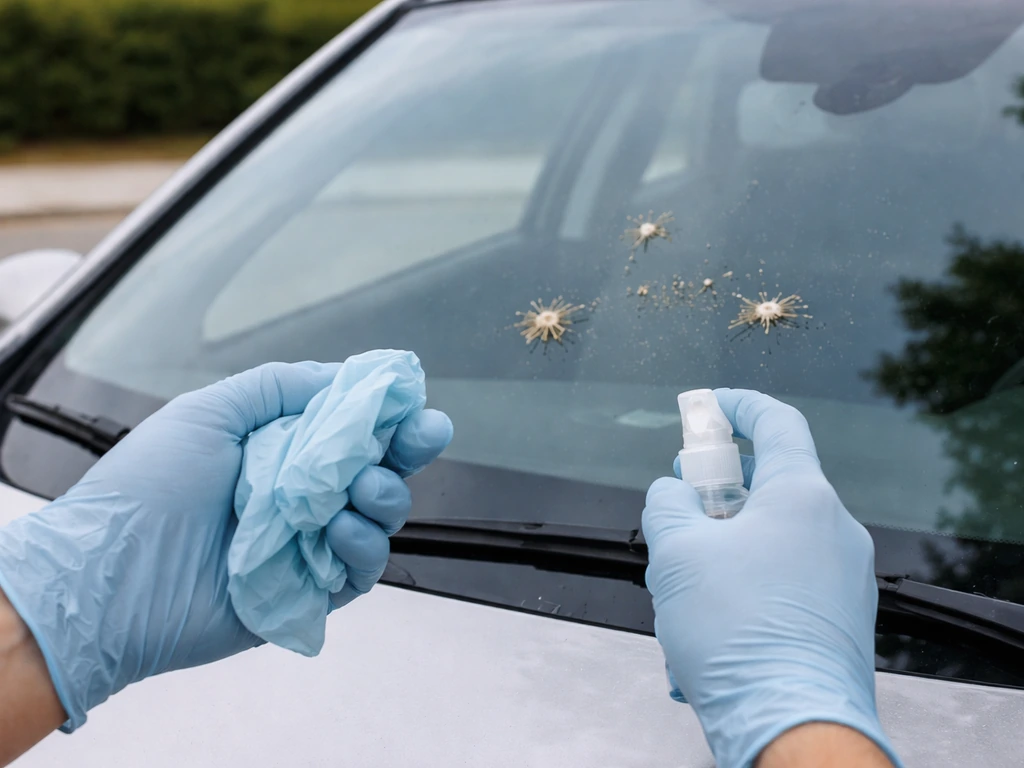
If you're cleaning a bird bath that has visible slime or biofilm, wear disposable gloves. Serratia and similar bacteria can enter through cuts or mucous membranes. Avoid splashing water near your face, and don't use the same scrub brush on other surfaces without disinfecting it first.
How to clean and disinfect a red bird bath safely
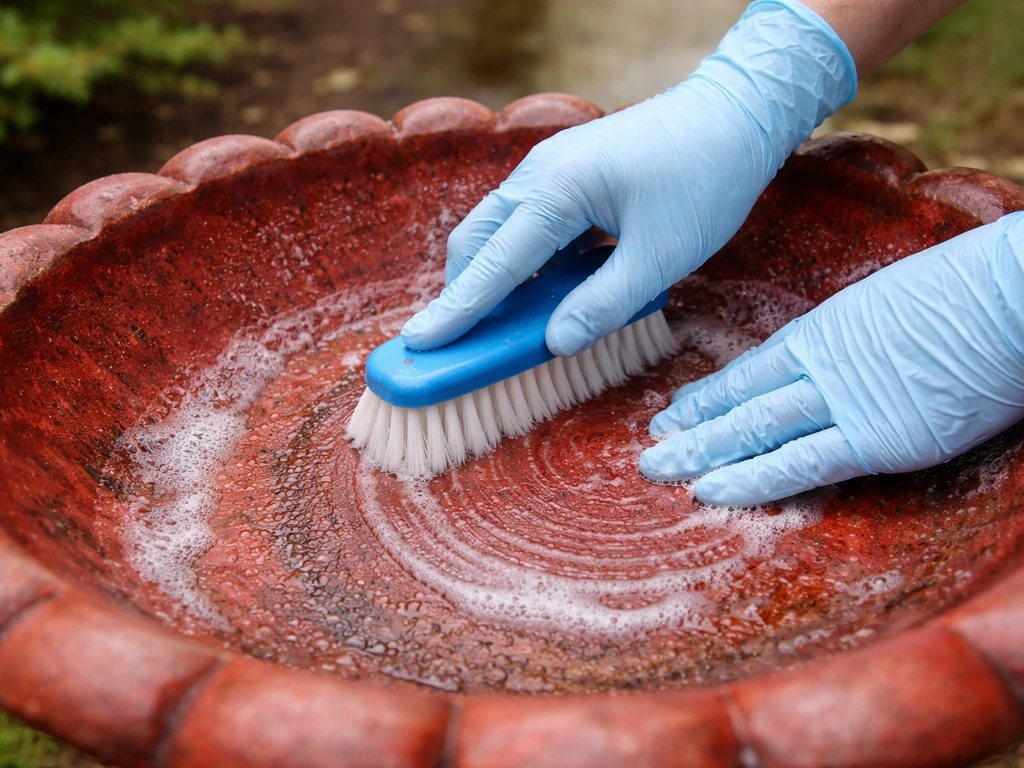
Here's a step-by-step process that works for biological causes (bacteria, algae, biofilm) and mineral/rust causes alike. For biological discoloration, the disinfection step is essential, not optional, because a plain rinse just moves the bacteria around.
- Put on disposable gloves before you start. If you're dealing with slimy biofilm, avoid touching your face.
- Empty all the water from the bath. Don't dump it near a vegetable garden or pet water bowl.
- Rinse the basin with a garden hose to remove loose debris, droppings, and discolored water.
- Mix a cleaning solution: For biological causes (bacteria, algae), mix 1 part white vinegar to 9 parts water, or use a diluted bleach solution of 1 tablespoon of unscented household bleach per gallon of water. For rust stains, use a scrub with undiluted white vinegar or a commercial rust remover safe for the basin material.
- Scrub the entire basin including the sides and bottom using a stiff-bristled brush. Pay close attention to the waterline where biofilm tends to concentrate.
- Let the disinfecting solution sit in the basin for 10 to 15 minutes, then scrub again.
- Rinse the basin extremely thoroughly with clean water. Bleach residue is harmful to birds, so rinse until you cannot smell any bleach at all.
- Let the basin air dry in sunlight if possible before refilling, as UV light helps kill residual surface bacteria.
- Refill with fresh, clean water.
For persistent rust staining, a paste of baking soda and white vinegar left on the stain for 20 minutes before scrubbing works well on concrete and ceramic basins. If the rust is structural (coming from the metal itself corroding), cleaning will only be a temporary fix until you address the source, either by repainting, sealing, or replacing the rusting component.
How to keep the water clear and stop it coming back
Prevention is genuinely simpler than dealing with a full bacterial bloom after the fact. The main levers are water change frequency, sunlight exposure, and removing organic material quickly.
- Change the water every 2 to 3 days in warm weather. Bacteria like Serratia marcescens can colonize a wet surface in under 24 hours in warm conditions, and stagnant water accelerates every type of growth.
- Give the basin a quick scrub every time you change the water. A stiff brush takes less than a minute and disrupts biofilm before it can establish.
- Do a full disinfection clean (with the diluted bleach or vinegar solution) once a week during summer and every two weeks in cooler months.
- Consider moving the bird bath to a spot with morning sun and afternoon shade. Full all-day sun encourages algae growth, while deep shade keeps the water cooler but can allow certain bacteria to thrive in consistently damp conditions. Morning sun with some afternoon shade tends to be the sweet spot.
- Keep the bath away from iron fencing, rusting hardware, or treated wood that can leach into the water.
- Trim or move the bird bath away from berry-producing plants or trees that drop debris into the water.
- If you use well water with high iron content, consider using municipal tap water or letting tap water sit for 30 minutes before adding it to flush chlorine, which actually provides temporary antimicrobial protection.
- Avoid using soap or detergents to clean the bird bath since residues are toxic to birds and can strip the protective oils from their feathers.
- If you're consistently fighting pink-red slime even with regular cleaning, a small amount of apple cider vinegar added to the water (about 1 tablespoon per gallon) can help inhibit bacterial growth without harming birds.
One thing worth knowing: birds pooping in the bath isn't just a nuisance, it's a direct contributor to faster bacterial and microbial growth. The nutrients in bird droppings essentially fertilize whatever microbes are already in the water. If you're seeing a lot of bird activity at your bath, that's a signal to increase your cleaning frequency rather than extend it. The more birds, the more often you clean. It's that simple.
FAQ
Why does my bird bath water look red right after I add fresh water?
If the water turns red immediately after you refill, the most likely cause is non-biological tinting from water chemistry (iron, manganese, sulfur) or runoff from nearby materials. Biofilm usually develops over days with warm, wet conditions. Check for an immediate match to the color of your hose or tap water, and look for uniform color throughout (mineral/rust) rather than a patchy film (biofilm).
How can I tell if the redness is Serratia biofilm versus algae or minerals?
Yes, you can have a red film that is not Serratia. The key decision point is texture and persistence: a pink-red slime that quickly returns after rinsing suggests a biofilm, while a dusty powdery coating or a color that wipes off like staining suggests algae or minerals. If you see a slippery film, prioritize disinfection rather than just scrubbing.
Is red bird bath water dangerous to touch, especially for kids or people with health risks?
The safest answer is that you should treat the bath as contaminated until you see it clear. Wash your hands after cleaning, avoid letting toddlers play with the rim, and keep kids from splashing the water. Serratia is usually not dangerous to healthy adults, but it can be an issue for people with open wounds or weakened immune systems.
Can red bird bath water harm the birds using it?
For birds, the main concern is heavy bacterial growth and stagnant, nutrient-rich water (especially when many droppings are present). If the bath looks slimy, smells unusually strong, or stays cloudy even after cleaning, clean and refresh more often and consider relocating the bath to reduce debris and direct sun. If birds look lethargic, that is a separate health issue, not just a bath cleanliness problem.
What if disinfecting fixes the slime but the water remains red?
Yes, for mineral or rust-related discoloration, disinfecting may stop biofilm but will not remove the underlying tint source. If the color is uniform and does not form a surface film or smell, focus on the source: stop runoff from metal hardware, check for corroding components, and if you use well water, test for iron or sulfur and adjust your water handling.
Why does the red film come back even after I scrub and rinse?
Fresh vinegar solutions or quick rinses can help loosen mineral stains, but they often do not fully kill a biofilm that is already established. If you see slippery pink or red film, use a true disinfection step after scrubbing and then rinse thoroughly. Skipping the disinfection step is the most common reason the discoloration comes back quickly.
How do I know it is biofilm and not just dirt or algae?
A red or pink tint can sometimes be mistaken for dirt. Dirt tends to settle and look more grainy or speckled, while biofilm shows as a slimy layer at the surface, waterline, or along the basin bottom. A quick “slime test” (slippery and clings to your finger) is the fastest way to avoid misidentifying the cause.
Could nearby metal hardware or fencing be the source of the red color?
If you have iron fencing, stakes, or nearby metal components, look for reddish staining along contact points, scuffs, or bolts, and check whether the tint is the same depth throughout the basin. Also ensure the bath is not sitting in standing puddles of rusting runoff, since that can continuously feed mineral staining even after cleaning.
How do sunlight and weather affect why my bird bath water turns red?
If your bath is in full sun and the water warms quickly, you may see faster microbial growth and more frequent recurring discoloration. Try providing partial shade, reduce how long the water sits between cleanings, and remove fallen leaves, mulch particles, or berries promptly to cut the organic “food” for microbes.
Does frequent bird droppings really make the redness worse, or is it just coincidence?
The presence of bird droppings alone does not prove the cause, but it strongly accelerates the process that leads to pink-red biofilm. If you notice heavy bird traffic or droppings accumulating in the bath, increase cleaning frequency and do not rely on a single weekly rinse. Consider setting up a more frequent refresh schedule during hot weather.
Could a cleaner, pool chemical, or other product be causing the red water?
If you use chemicals that can change water chemistry (such as pool chemicals or cleaning products), even small residual amounts can contribute to harmful water conditions for birds. If you recently used any cleaner near the basin, rinse longer than you think, and avoid applying harsh products to the basin when birds are actively using it. If you cannot be sure, switch to mechanical scrubbing plus appropriate disinfection steps specifically for bird-bath use.