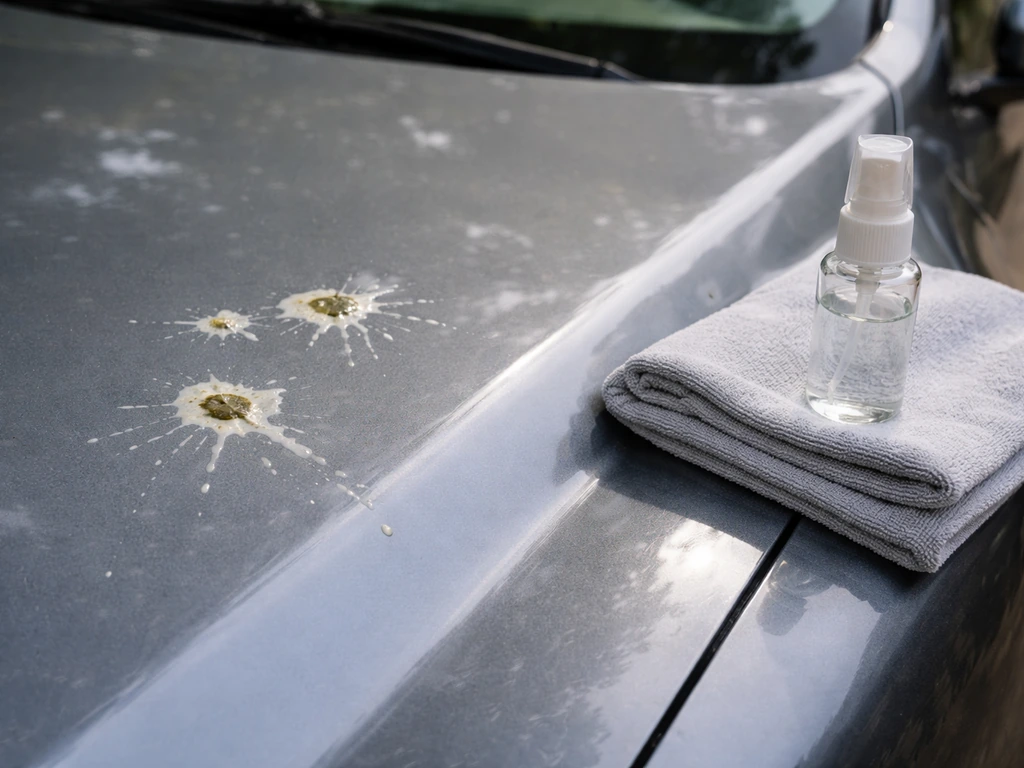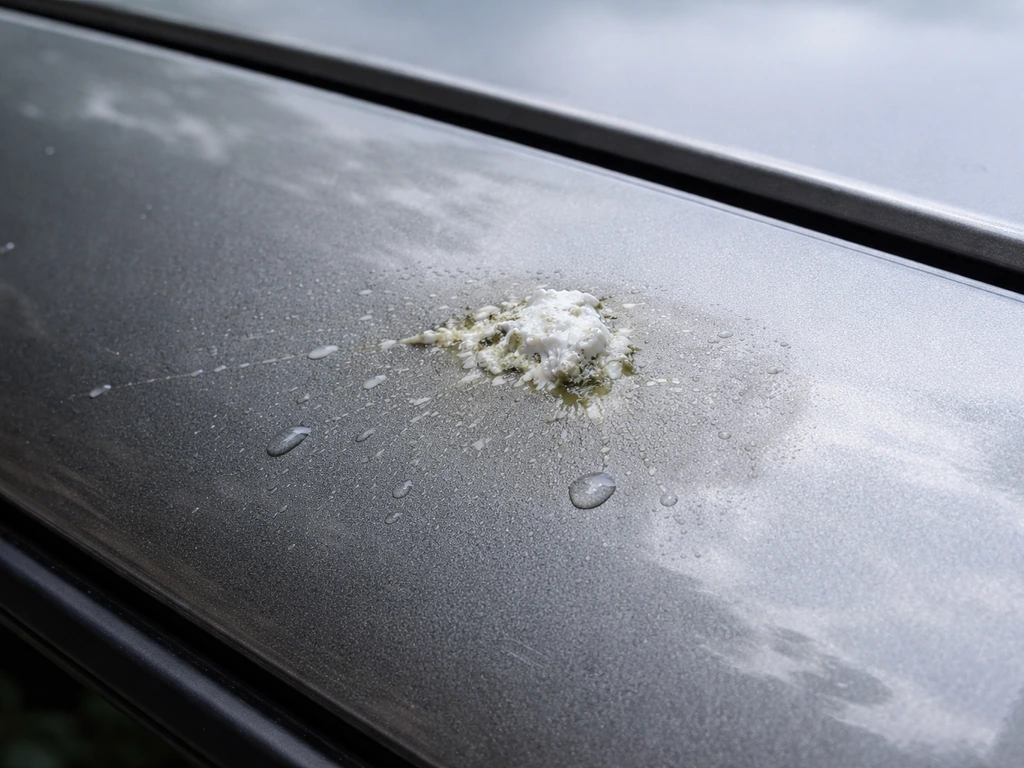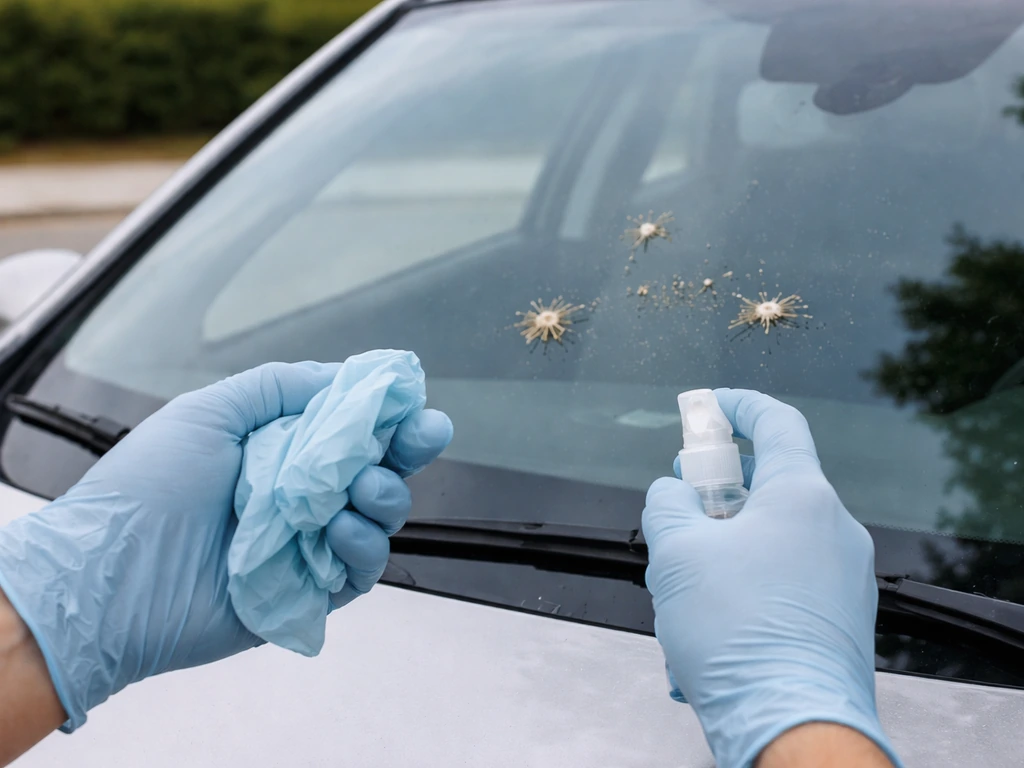
Bird poop can start etching your car's clear coat in as little as a few hours, and if you leave it sitting in direct sun on a hot day, you may see visible damage within 30 minutes to an hour. That's not a scare tactic, that's the chemistry of uric acid (pH around 3 to 4.5) working against a surface that was never designed to resist it. The good news: fresh droppings are far easier to deal with than dried ones, and acting fast almost always prevents permanent damage.
How Long Does Bird Poop Take to Damage Car Paint?

Marcus Fielding
6 May 2026
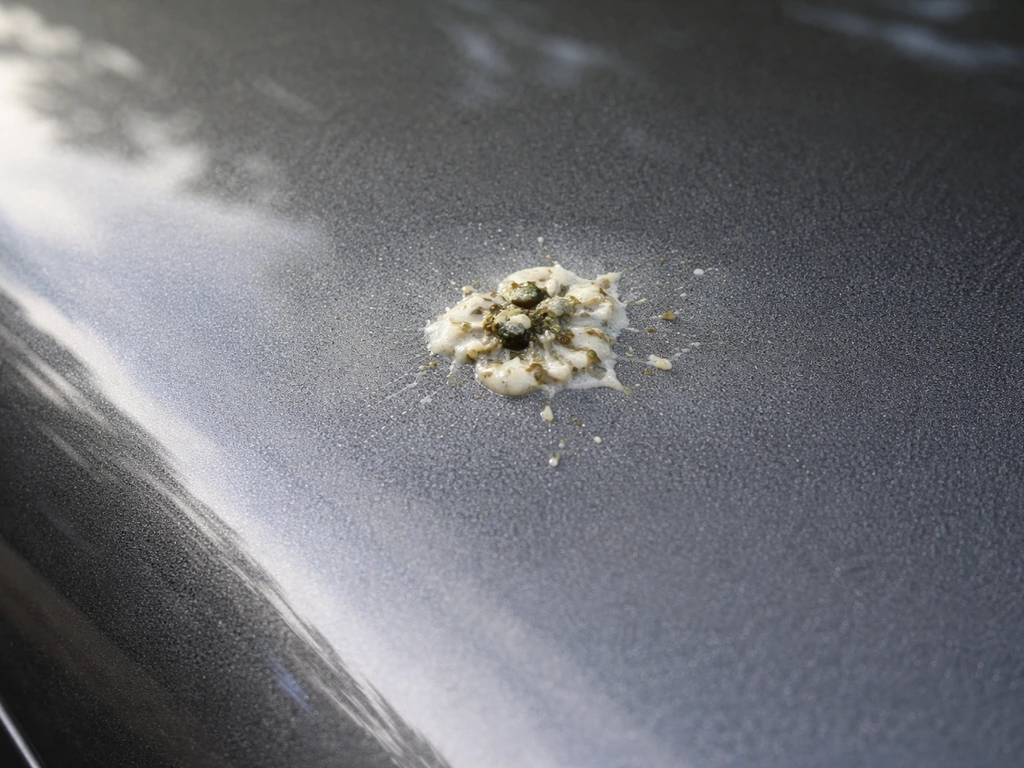
What paint damage from bird poop actually looks like
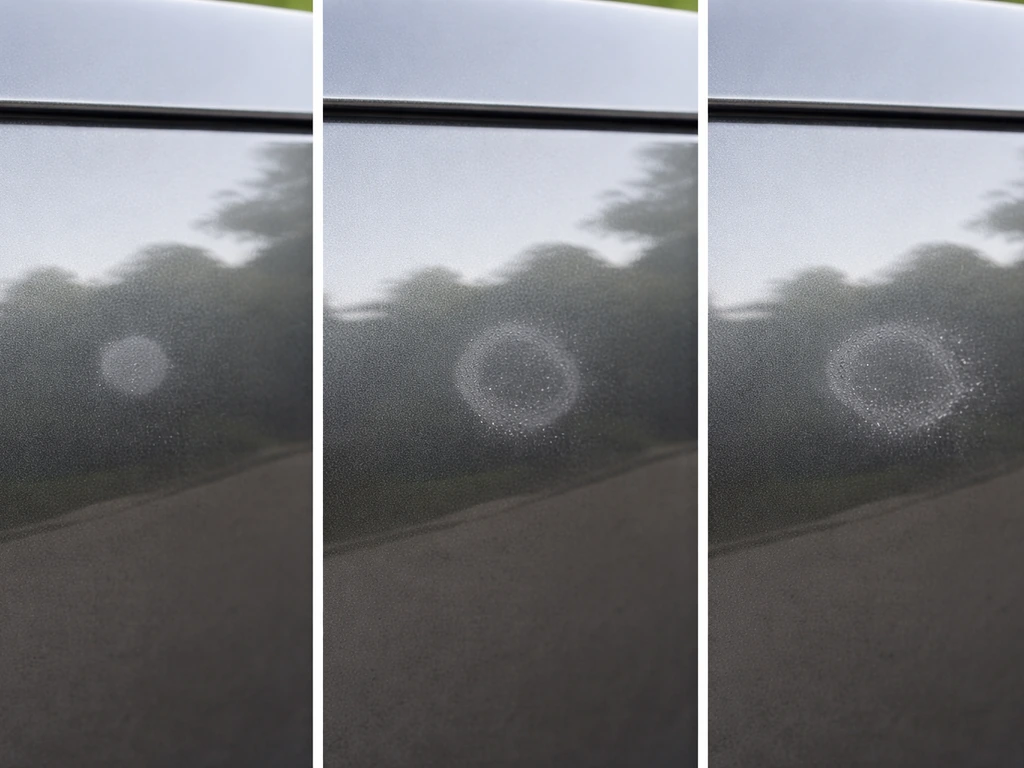
Not all bird poop damage is the same, and knowing what you're looking at helps you figure out how serious things are. The clear coat is the transparent protective layer sitting on top of your colored base coat, and it takes the first hit.
- Spotting and staining: The mildest form. A dull or discolored circle remains after you clean the dropping. The clear coat is still intact but has absorbed pigment or minerals from the droppings.
- Etching: The acid has chemically burned into the clear coat surface, leaving a rough, frosted, or slightly sunken area. You can often feel it with a fingertip. This is the most common outcome if you wait too long.
- Clear coat wrinkling or lifting: Less common but documented. As hot droppings cool and harden on the paint, they can physically contract and pull the clear coat, creating a wrinkled or crazed texture.
- Base coat penetration: In severe or repeated cases, the damage goes through the clear coat entirely, exposing or discoloring the colored layer beneath. At this point you're looking at a repaint.
The gritty texture of dried bird poop makes things worse. Those solid uric-acid crystals form a hard crust that acts like fine sandpaper against your clear coat, which is why scraping or rubbing dry droppings is such a bad idea.
How fast bird poop can etch paint: the real timeline
The honest answer is that the timeline varies a lot, but here's a practical breakdown of what the research and real-world experience suggest:
| Timeframe | Likely outcome | Conditions |
|---|---|---|
| Under 1 hour | Minimal to no damage if cleaned immediately | Any conditions, especially shaded or cool |
| 1 to 6 hours | Light staining or very early-stage etching possible | Ambient temperature, partial sun |
| 6 to 24 hours | Noticeable etching into clear coat likely | Typical outdoor parking |
| 24 to 48 hours | Moderate to deep etching, possible base coat exposure | Sun, heat, or repeated moisture/dry cycles |
| 48+ hours | Severe etching or clear coat loss, repaint may be needed | Hot climate, long-term neglect |
Industry coating research confirms that degradation of automotive clear coat from bird droppings is a measurable, documented problem, not just an internet myth. A peer-reviewed ScienceDirect paper evaluating automotive clear coat found that bird droppings can cause severe etching and irreversible performance changes on acrylic melamine clear coats, including effects seen in visual appearance and surface roughness severe etching and irreversible effects on automotive acrylic melamine clear coat performance. Studies published in paint and coatings science journals have quantified the etching severity under different exposure conditions, and the consistent finding is that the damage is real and progressive, not something that only happens after days of neglect.
What speeds up or slows down the damage
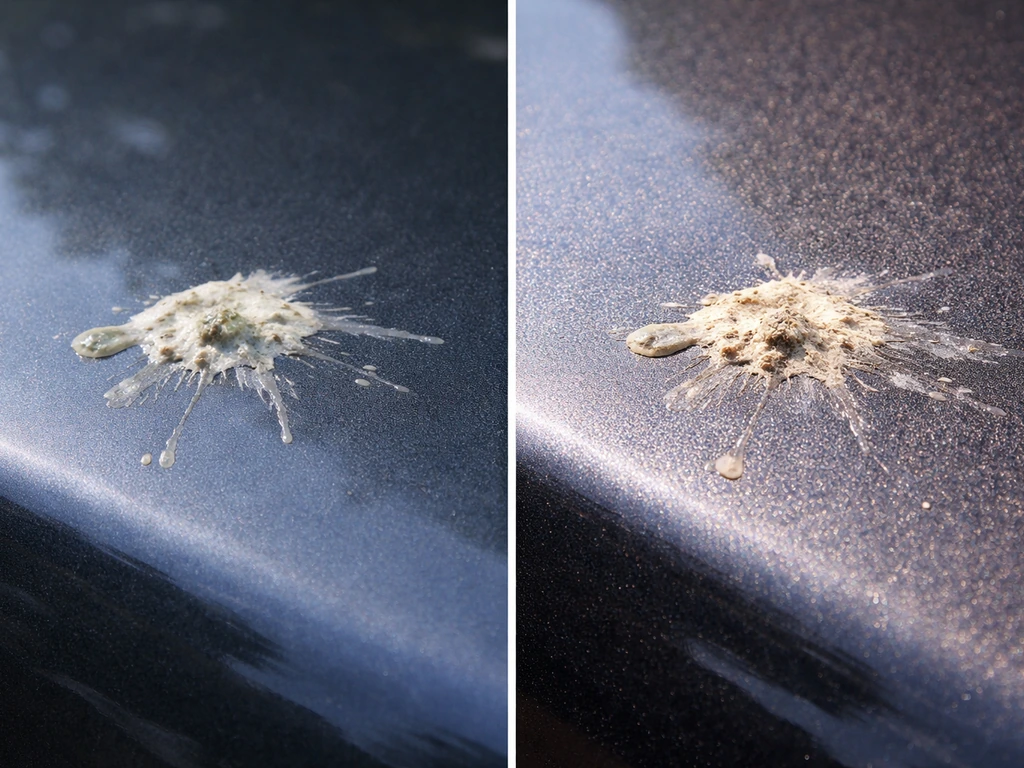
Heat and direct sunlight
This is the biggest accelerant. Heat activates and concentrates the uric acid as water evaporates from the droppings, effectively creating a more potent acid solution sitting directly on your paint. A car parked in full summer sun can develop visible etching within an hour. Parked in the shade, the same dropping might take the better part of a day to cause similar harm.
Drying and crust formation
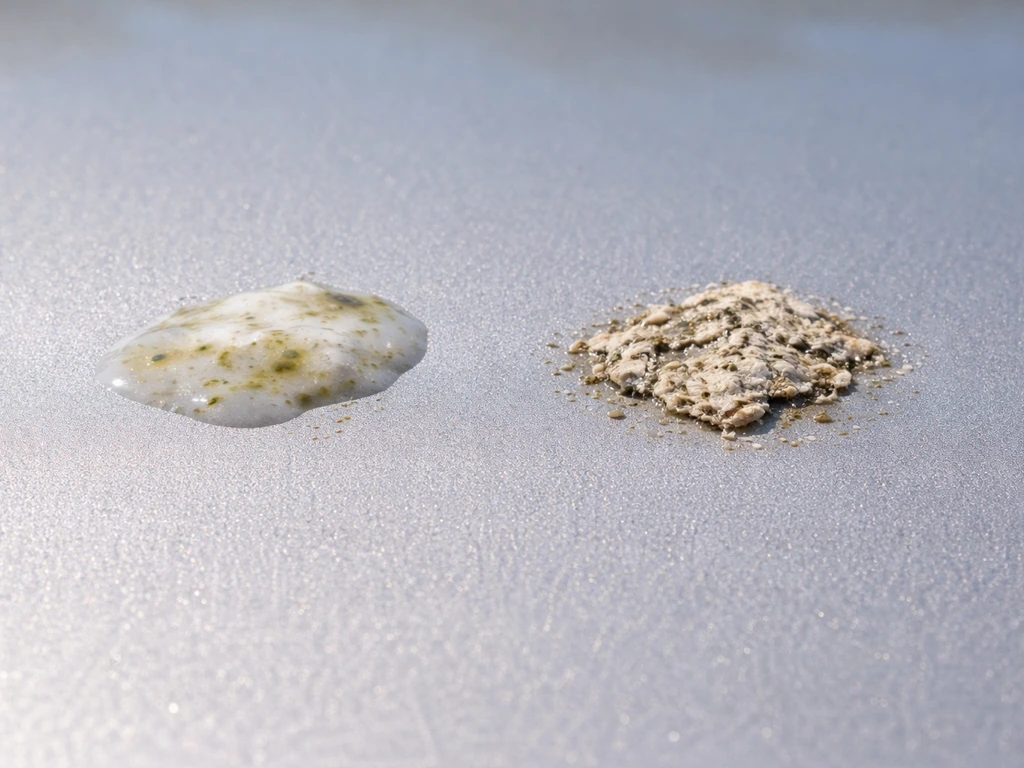
Fresh, wet droppings are actually easier on your paint than droppings that have dried into a hard crust. Once dried, the uric-acid crystals bond to the surface and the abrasive solids press into the clear coat. Re-wetting dried droppings can also re-activate the acid, which is why moisture and heat together after initial drying is a particularly bad combination.
Rain and repeated wet/dry cycles
Rain alone doesn't clean bird poop off your car, it just spreads it around and rehydrates the acids. Repeated cycles of rain followed by sun-drying actually accelerate the damage by repeatedly activating and concentrating the corrosive chemistry.
Bird species and diet
Not all bird droppings are equally acidic or damaging. Fruit-eating birds tend to produce more acidic, pigmented waste, which can be both more chemically aggressive and harder to remove without staining. Seed-eating birds generally produce less acidic droppings. Larger birds deposit more material, so the volume of acid in contact with your paint is greater.
Your paint's condition and protection
An older car with worn or thin clear coat is far more vulnerable than a newer vehicle with a full-thickness, well-maintained coating. Waxed or ceramic-coated surfaces also buy you meaningful extra time, since the protective layer takes the initial chemical attack instead of the clear coat itself. Ceramic coating can help, but it does not make bird droppings harmless ceramic coating protect against bird droppings. If you've been wondering whether ceramic coating is worth it specifically for bird dropping protection, the short answer is yes, it genuinely helps.
Do this right now if you just found bird poop on your car
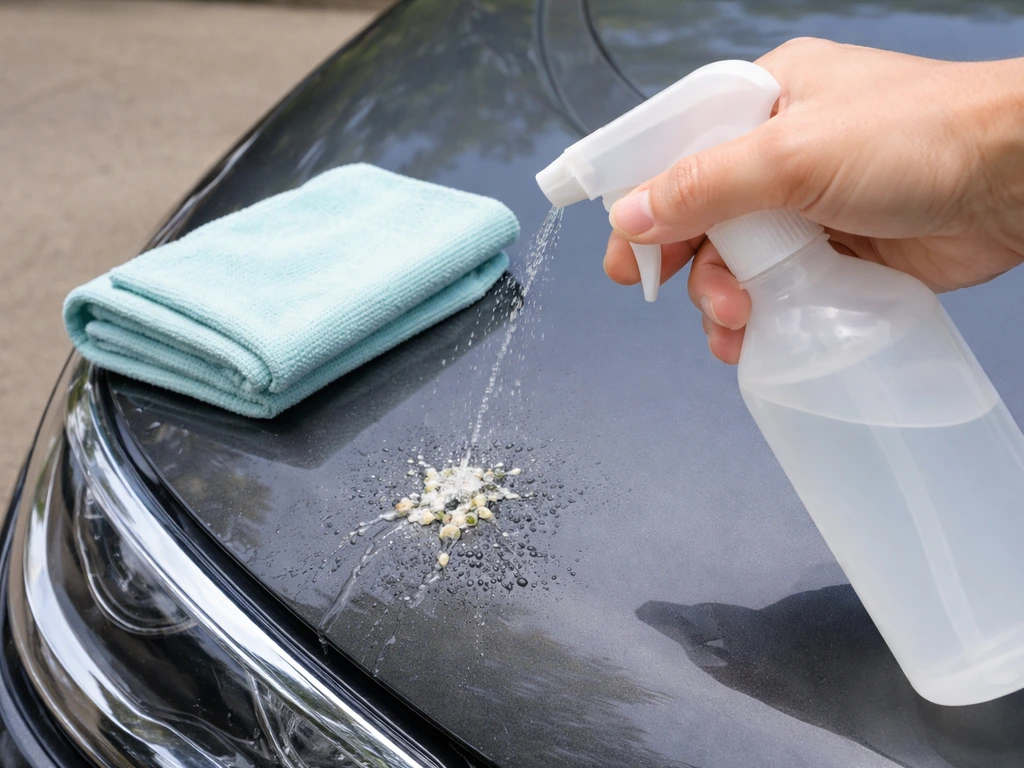
Speed matters more than technique at this stage. Here's the fastest safe approach:
- Don't scrape, wipe dry, or rub. You will grind the uric-acid crystals directly into the clear coat and create scratches on top of chemical damage.
- Soak it first. Pour a small amount of plain water over the dropping to rehydrate and soften it. Let it sit for 30 to 60 seconds. If you have a detailing spray or quick detailer in your car, even better.
- Blot, don't wipe. Use a soft microfiber cloth and press gently to lift the softened material, rather than smearing it across the paint.
- Repeat with a clean section of cloth until the area is clear.
- Rinse the area with water and dry with a fresh microfiber towel.
- If you have a quick detailer or waterless wash, apply it to the cleaned spot and buff gently to remove any remaining residue and add a thin protective layer.
If you're nowhere near cleaning supplies, even pouring your water bottle over the dropping and letting it run off is better than leaving it to bake on. The goal in the first few minutes is simple: get the acid off the surface before it does more work. If you need a quick checklist, this guide on when a bird poops on your car covers what to do first and what to avoid bird poop on your car.
Cleaning methods that actually protect your paint
Products that work well
- Detailing spray or quick detailer: Lubricates the surface so material slides off rather than being dragged across the clear coat. This is the best all-around option for on-the-go cleanup.
- Waterless car wash spray: Similar principle, safe to use without a hose.
- pH-neutral car wash soap and water: The standard safe choice for a full cleanup at home.
- Bird dropping–specific wipes or sprays: Several detailing brands make these; they typically contain enzymes or mild surfactants that dissolve biological material without harming clear coat.
What not to use or do
- Don't use household glass cleaner, all-purpose cleaner, or dish soap directly on paint — many are too alkaline or contain degreasers that strip wax and stress the clear coat.
- Don't use paper towels or dry cloths to wipe fresh or dried droppings. Both are abrasive enough to leave fine scratches.
- Don't scrub. Ever. If the dropping isn't coming off with gentle blotting, soak it longer.
- Don't use a pressure washer at very close range on an area you suspect is already etched — it can lift already-compromised clear coat.
How to tell if you need polish, or if it's beyond polishing
Once the area is clean, inspect it in good light, ideally sunlight or a bright LED torch held at a low angle. Here's how to read what you're seeing:
| What you see | What it means | What to do |
|---|---|---|
| No mark visible | No damage, lucky you | Apply a layer of wax or detailer to protect the spot |
| Slight dullness or light stain | Surface-level discoloration, clear coat intact | A light polish or paint cleaner will usually restore the shine |
| Rough, frosted, or slightly sunken texture | Etching into the clear coat | Machine or hand polishing with a cutting compound can remove mild etching; moderate etching may need a detailer with a machine polisher |
| Deep crater, visible ring, or color change | Etching through the clear coat into base coat | Spot repaint or respray needed; see a professional body shop |
| Wrinkling, bubbling, or lifted paint | Physical lifting of clear coat | Professional repair required; do not try to polish this |
For light etching, a good-quality cutting or polishing compound used by hand or with a dual-action polisher can level the surface and restore gloss. Go slowly and check your progress frequently. If you're not seeing improvement after two passes with a cutting compound, the damage is probably deeper than polishing can fix. At that point a professional assessment is worth it before you spend more time and money on DIY attempts.
If the bird poop situation on your car feels constant rather than occasional, it's worth thinking about where you're parking and what's attracting birds to that spot. If you're seeing lots of bird poop on your car, that pattern usually points to where birds are landing or roosting nearby. That's a separate problem, but it affects how much paint protection you actually need.
Protecting yourself during cleanup: don't skip this part
Bird droppings are not just a paint problem. They can carry fungal spores (Histoplasma, which causes histoplasmosis) and bacterial pathogens (including Chlamydia psittaci, which causes psittacosis). The CDC specifically notes that the most common way people get psittacosis is by breathing in dust from dried bird droppings or secretions. The key word is dried, and the key risk is aerosolization.
For routine cleanup of a small amount of droppings on a car, the practical precautions are straightforward and worth following every time:
- Wet the droppings before you touch them. This is the single most important step for both your health and your paint. Wetting prevents dried material from becoming airborne dust. Health and safety guidelines from multiple institutions explicitly recommend this wet-first approach.
- Wear disposable gloves. Nitrile gloves are ideal and cheap. Don't touch your face during cleanup.
- Don't scrape dry droppings. Dry-scraping is the fastest way to create the airborne dust you want to avoid. Soak first, always.
- Wash your hands thoroughly after cleanup, even if you wore gloves.
- Dispose of used cloths or wipes in a sealed bag rather than leaving them loose in your car.
For a typical one or two dropping cleanup on a car hood, the risk level is low for a healthy adult. But the precautions are so simple that there's no reason to skip them. If you're dealing with a larger accumulation of droppings, such as a car that's been parked under a roost for weeks, treat it more seriously: wear a fitted dust mask (N95 or better) in addition to gloves, and do all the cleanup wet. CDC (MMWR) notes that psittacosis infection can occur when people inhale aerosolized organisms from dried bird feces or respiratory secretions and recommends using respirators such as N95 or higher during cleanup of contaminated areas wear a fitted dust mask (N95 or better).
The same wet-first principle that protects your paint also happens to be the safest approach for your health. Following it consistently means you're doing the right thing on both fronts at the same time.
FAQ
If I rinse bird poop off, will it still damage the clear coat?
Avoid using a quick wipe followed by leaving residue behind. Uric acid can keep reacting as long as moisture and residue remain, so rinse thoroughly first (hose or damp microfiber), then wash normally. The best indicator you got it all is a clean, squeaky surface under bright light, with no yellowish film or crust left.
Does re-wetting dried bird droppings make the damage worse?
Yes, but the timeline can be very different. If the droppings have dried into a hard crust, you can re-activate uric acid by re-wetting, especially in sun and heat. That means the safest approach is to wet enough to loosen, then clean promptly, not to let it sit for long after re-wetting.
What cleaning products should I use (or avoid) after bird poop lands on my car?
Use an acid-safe car shampoo approach rather than household cleaners. General-purpose glass sprays, vinegar, or alkaline degreasers can strip wax or alter the surface, and that can make later polishing harder. If you need something stronger, apply a dedicated automotive bird-dropping remover or test a small hidden spot first.
Is it okay to scrape off dried bird poop with a plastic scraper or cloth?
Don’t scrape with anything abrasive, even if the droppings look dry. Dry crystals behave like fine sandpaper, and wiping can grind etching deeper into the clear coat. If it is crusted, start with a wet soak (keep it damp), then use a soft microfiber and gentle pressure.
How soon should I inspect the damage after cleaning?
Spot damage can spread beyond what you can see. After removing droppings, wash the whole area and re-check under angled light, because micro-etching sometimes looks worse after the paint is clean and dry. If you notice permanent dullness or roughness, plan on compounding or having a pro assess it.
How do I tell whether I can fix it with polishing or need professional help?
If the spot is visibly dull, has a frosty look, or won’t improve after gentle polishing, the etch is likely in the clear coat. A common decision aid is this, after a careful hand-polish test (one small area), if there is no improvement after a couple of attempts, deeper correction or professional evaluation is usually the smarter next step than repeated DIY rubbing.
Do car wax or ceramic coatings fully prevent bird poop damage?
Wax, spray sealants, and ceramic coatings can add time, but none guarantee protection. Coatings that are newly applied and well-cured tend to resist staining and make cleanup easier, while worn wax or failed maintenance provides less buffer. Treat protection as a delay, not a reason to postpone removal.
Does bird poop damage differ on matte paint or older, worn clear coat?
It can, especially on surfaces that are textured or damaged already. On matte or partially clear-coated finishes, residue can stain differently, and rough clear coats can hold acids in place longer. If your car is matte, stick to matte-safe products and avoid aggressive compounds that can change the finish.
Why does the damage sometimes happen faster on some days than others?
Dry conditions alone are not the whole story. The main accelerator is heat that drives water off the dropping, increasing acid concentration, and repeated wet-dry cycles from rain or dew can worsen it. So even if you missed the initial deposit, controlling the next heat cycle by cleaning promptly helps.
How risky is it to clean bird droppings yourself?
For a small amount on a hood, the risk is generally low for a healthy adult when you work wet-first, avoid raising dust, and clean promptly. If it is heavy buildup (roost situations), wear eye protection and an N95 or better dust mask, keep surfaces wet during cleanup, and consider professional cleanup if the area is large or heavily contaminated.
What should I do if this happens repeatedly in the same parking spot?
If the car keeps getting hit, focus on prevention at the parking location. Birds tend to return to the same landing and roost spots, so reducing attractants (open water sources, accessible ledges, and sheltered nesting areas nearby) matters. If you park under a consistent perch, a cover, decently maintained coatings, and quick wipe-down routines can reduce total exposure time.