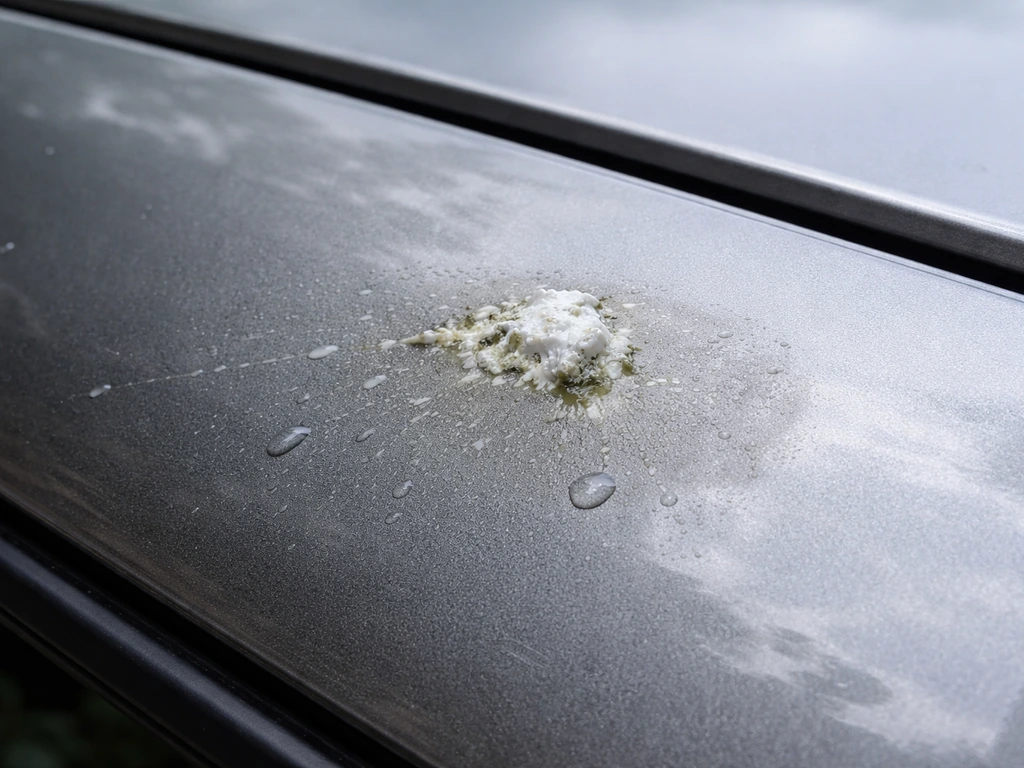
A bird just dropped a gift on your car. The most useful thing you can do right now is grab a microfiber cloth, dampen it with water (or a dedicated detailing spray), lay it over the dropping, wait 30 seconds, and then gently lift, never scrub. That's the move. Bird droppings are acidic (pH around 3.5 to 4.5), and on a hot panel in direct sun they can start etching into your clear coat within a few hours, so speed and the right technique matter more than most people realize.
When a Bird Poops on Your Car: Safe Cleanup Steps

Marcus Fielding
6 May 2026
What it actually means when a bird poops on your car
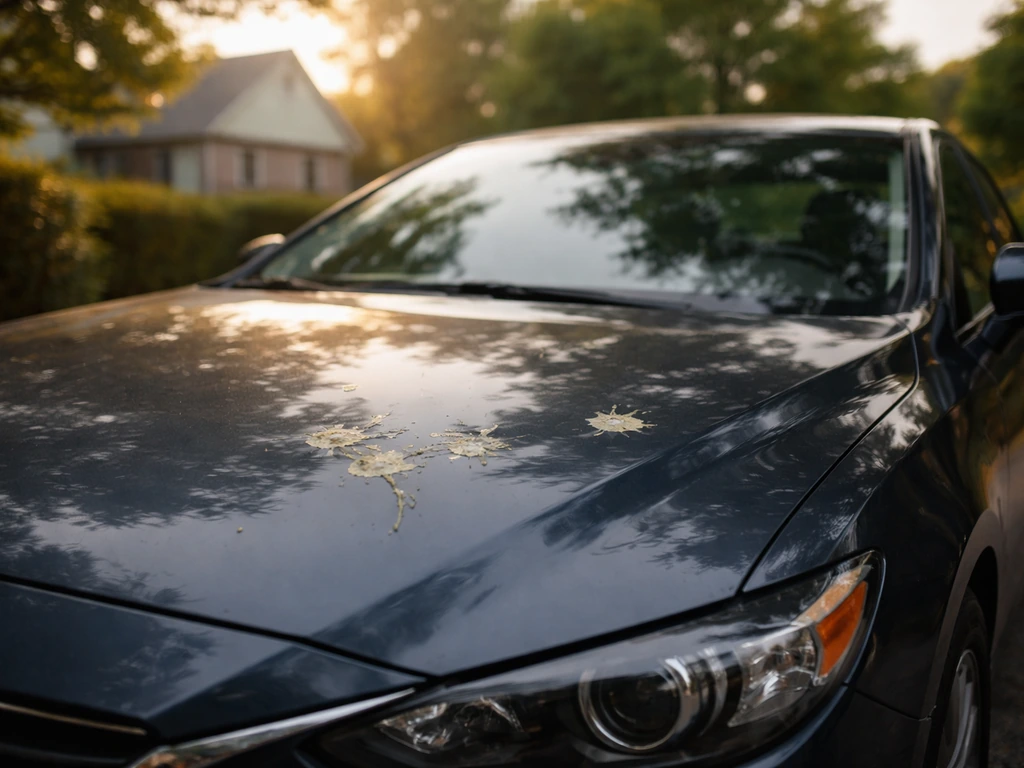
There's a long-standing superstition that bird poop landing on you or your vehicle is a sign of good luck, some traditions even say the more birds, the bigger the windfall. It's a cheerful way to reframe an annoying moment, and honestly, there's nothing wrong with that framing if it helps your mood.
The practical reality is a lot less mystical. Birds perch where they feel safe, trees, power lines, rooftops, ledges, and your car is often parked directly below those spots. It's geometry, not destiny. Folklore also claims birds prefer certain car colors, but the evidence for that is thin at best. What's actually happening is that your parking spot is near a favorite bird hangout, and your car is a large stationary target. The 'meaning' here is: move the car or clean it fast.
Real health risks for car owners, what to actually worry about
For most healthy adults cleaning a single dropping off a car, the health risk is low. The NYC Department of Health is pretty clear that routine cleaning of a few droppings is not a serious health concern for the general population. That said, there are a couple of things worth knowing so you don't accidentally create a problem.
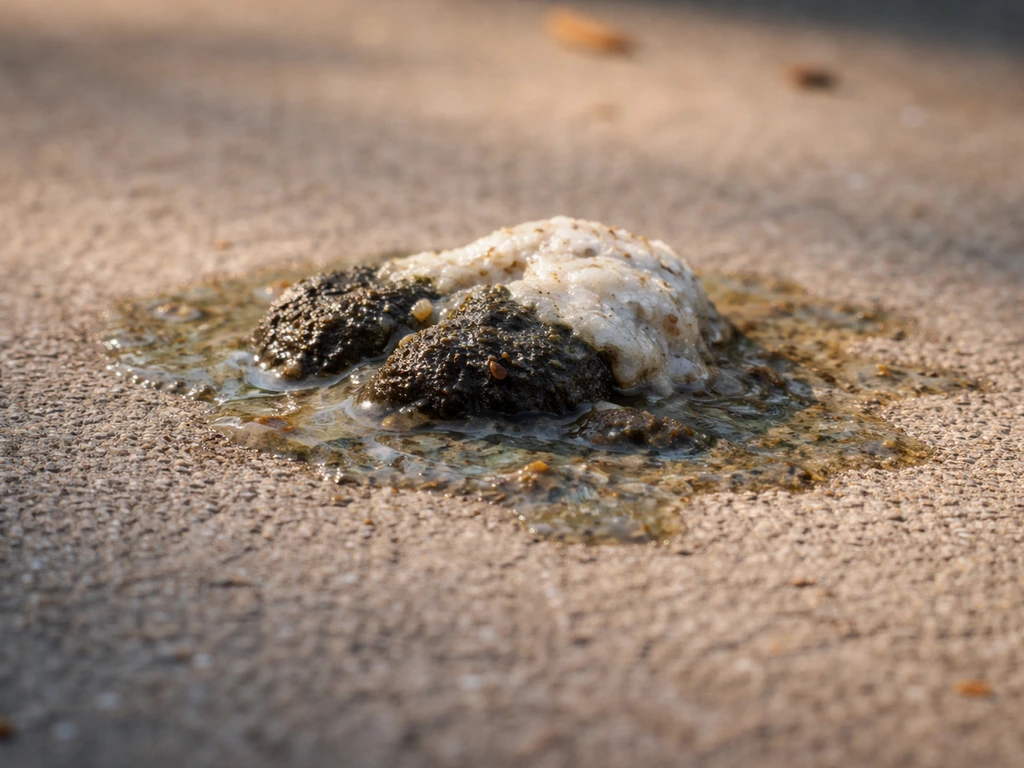
The main risk from bird droppings comes from inhaling dried particles or dust, not from touching a fresh splat on your hood. Diseases like histoplasmosis (a fungal lung infection) and psittacosis (a bacterial respiratory illness) are transmitted primarily by breathing in aerosolized dried droppings, not by brief skin contact. The CDC specifically notes that psittacosis transmission happens through inhalation of airborne dust from dried secretions or droppings. The risk goes up significantly with large accumulations, active roosts, and disturbing dried material in enclosed spaces, not a single spot on a car panel.
Where you should be careful: if you're scraping off dried, caked droppings, especially if there's a lot of buildup, wet the surface first to avoid kicking up dust. Don't use compressed air or a dry brush on dried droppings. And if you're immunocompromised, the NYC DOH actually recommends skipping the cleanup yourself entirely and having someone else handle it.
How to clean fresh bird poop off your car without damaging the paint
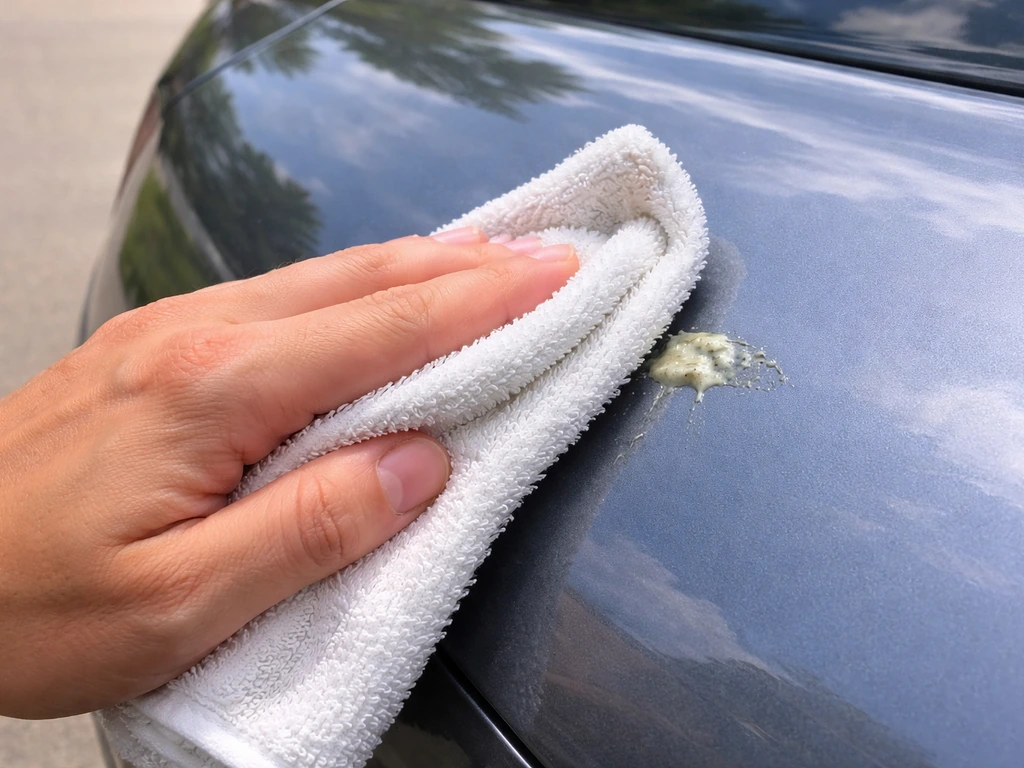
The cardinal sin of bird poop cleanup is scrubbing. If you are still wrestling with how to lift it cleanly after the fact, see why is bird poop so hard to get off and how to prevent the residue from bonding to your paint. Bird droppings often contain grit, seeds, and other abrasive particles, so rubbing a dry dropping across your paint is basically dragging sandpaper across your clear coat. Here's the method that actually works:
- Act fast — especially in warm weather or direct sunlight. The sooner you get to it, the less etching risk you face.
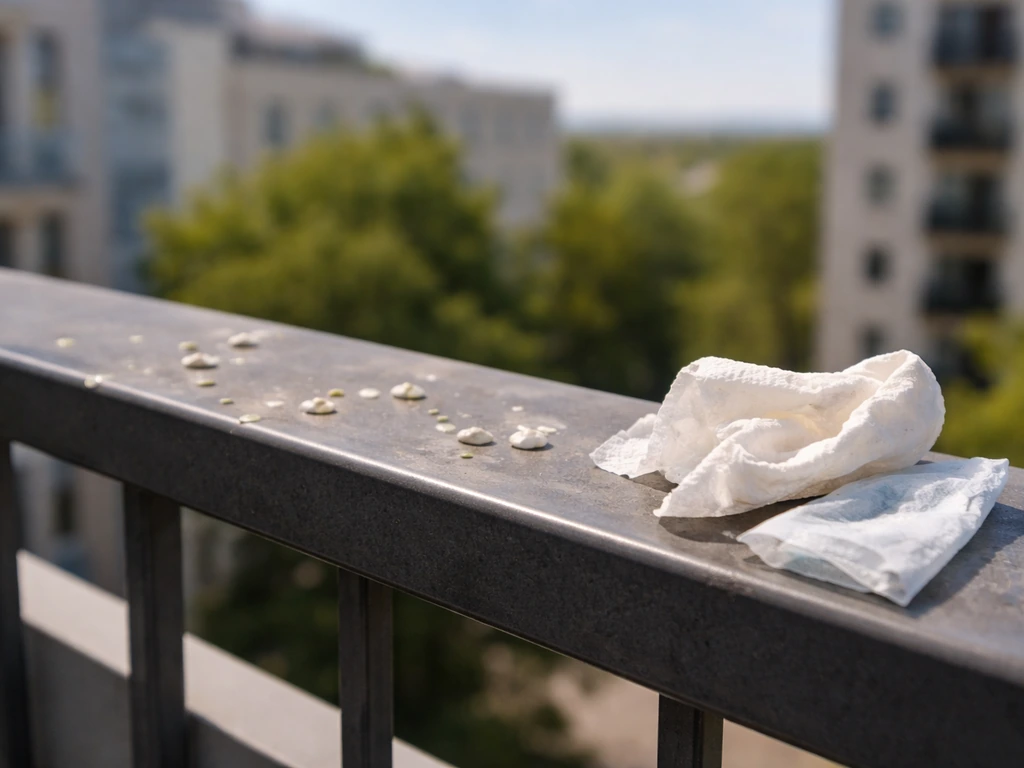
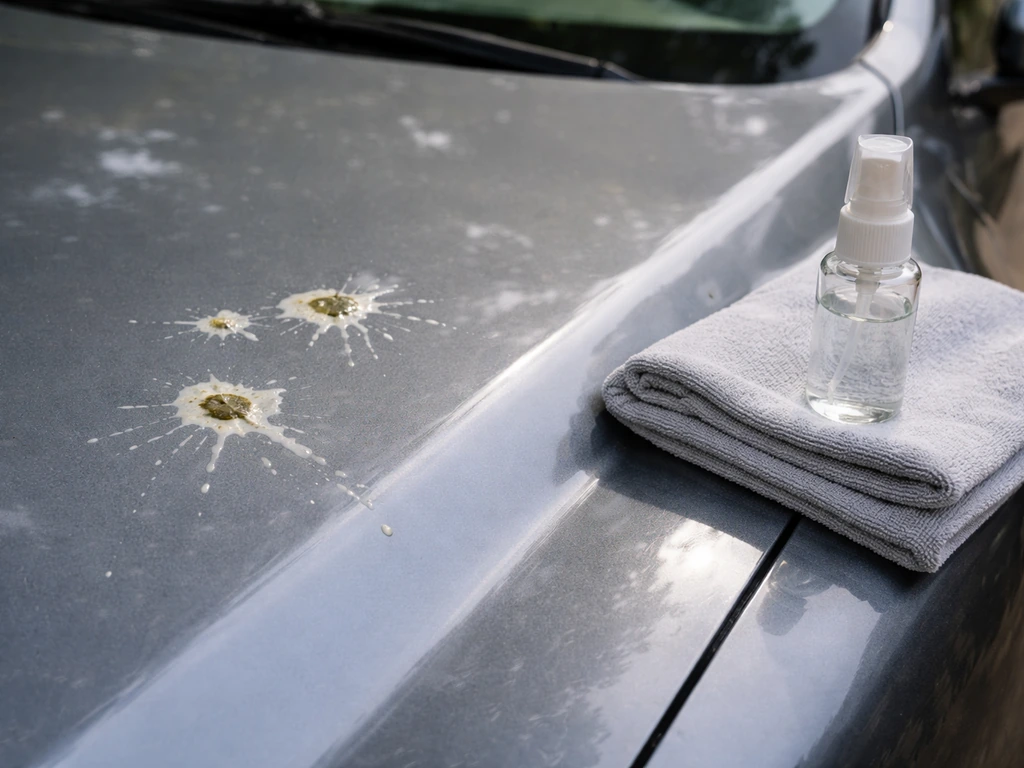
- Gather what you need: a clean microfiber cloth (or a few sheets of damp paper towel in a pinch), a spray bottle of plain water or a quick-detailer spray, and ideally a pair of disposable gloves.
- Mist the dropping generously so it's fully saturated. The goal is to re-hydrate and soften it, not to blast it off.
- Lay the damp cloth flat over the dropping and let it sit for 30 to 60 seconds. This dwell time is what separates a safe wipe from a scratching incident.
- Lift the cloth straight up to remove the bulk of the material. Don't wipe side to side yet.
- Mist again lightly and then make a single, gentle pass with a clean section of the cloth. If resistance remains, repeat the dwell step rather than pressing harder.
- Inspect the spot. If there's a slight haze or water mark, a clean buff with a detailing spray will usually sort it out.
- Wash your hands thoroughly afterward, even if you wore gloves.
Dedicated bird dropping wipes (like those from AutoGlym) follow the same principle, the product is designed to soften before you lift, which is why they work better than a dry tissue. A 1:1 mix of water and isopropyl alcohol (around 20% IPA diluted in distilled water) can help dissolve residue, but keep concentrations low on painted surfaces and always test an inconspicuous area first. High-concentration IPA is a prep solvent, not a daily cleaner.
What to do if the poop has already dried or damaged the finish
Dried bird droppings need more patience, not more force. Start by soaking the area: fold a wet microfiber cloth over the spot and leave it for several minutes, or use a detailing spray with some dwell time. Resist the urge to pick or scrape, you will scratch the paint. Once the material has re-hydrated and you can lift it cleanly, assess what's underneath.
If the paint looks dull, hazy, or has a white ring or textured etch mark after removal, the uric acid has done some damage to the clear coat. If you are wondering does bird poop hurt car paint, dullness, hazy spots, and white ring or etched marks after removal are the clearest signs the clear coat took the hit. Light etching can often be corrected with a paint correction polish, a light machine or hand polish with a cutting compound will level out the surface. Deeper etching that has gone through the clear coat into the base coat is a different story and will need professional attention or a respray of that panel.
The speed at which etching happens depends on a few factors: temperature, how long the dropping sits, and whether the car is in direct sun. How long does bird poop take to damage car paint? It mainly depends on temperature, how long it sits, and whether your car is in direct sun. Etching can start within hours on a hot day, and it almost always gets worse the longer you wait. This is also why parking in shade when possible isn't just about comfort, it genuinely buys you more cleanup time.
Stopping repeat incidents, practical deterrents that actually help
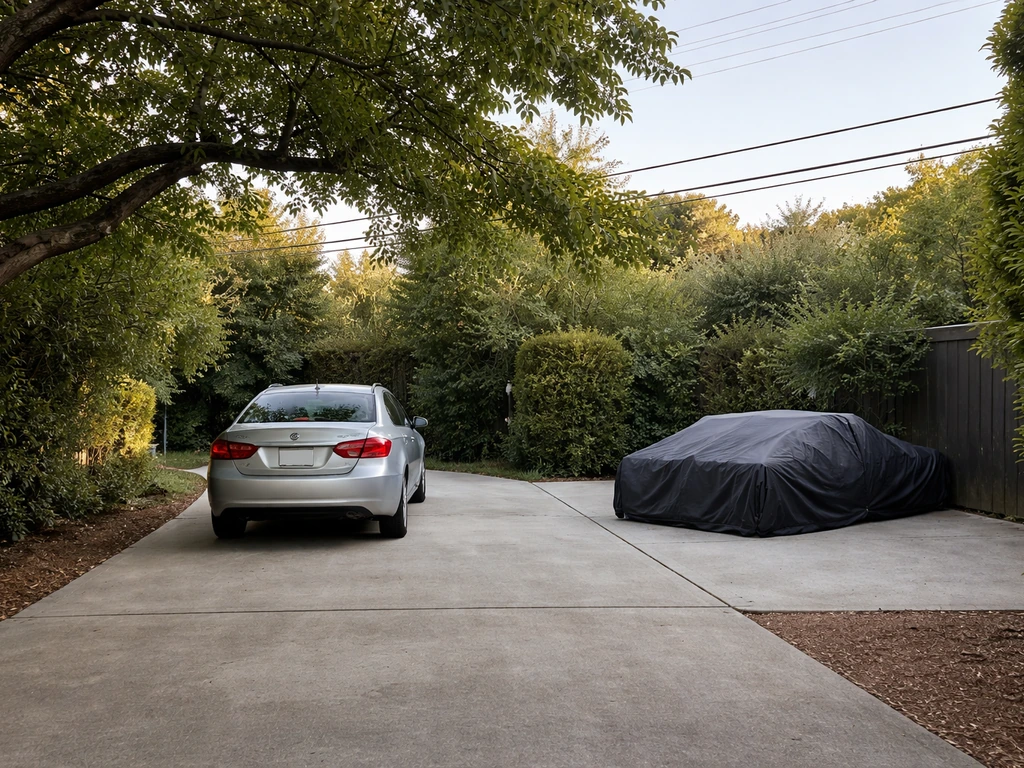
If your car keeps getting hit in the same spot, the problem is almost always the parking location, not bad luck. Look up: is there a power line directly overhead, a tree with heavy bird traffic, or a ledge on a building where birds roost? Moving your parking spot even 10 feet can make a meaningful difference.
If you can't move, a car cover is the most reliable physical solution, it protects the paint completely and is easy to shake out. For open parking under structures, visual deterrents like holographic reflective tape, terror-eye balloons, or fake predator decoys can help, but research suggests birds habituate to static objects over time. Rotating or moving them periodically extends their effectiveness. Bird spikes and netting are more durable solutions for blocking roost spots on structures above your parking area, though that depends on whether you own or have access to the building.
A good wax or paint sealant also helps indirectly, it doesn't stop birds from targeting your car, but it does make droppings easier to remove and slows how quickly acid etching penetrates the surface. A good wax or paint sealant also helps indirectly, it doesn't stop birds from targeting your car, but it does make droppings easier to remove and slows how quickly acid etching penetrates the surface, and the related question of does ceramic coating protect against bird droppings is covered next. Ceramic coatings offer even better chemical resistance, though they're not a permanent shield if a dropping sits for hours in the heat.
When to actually be concerned: exposure symptoms, odor, or heavy buildup
One or two droppings on a car is a cosmetic nuisance, not a health event. But there are scenarios where you should take things more seriously.
If you got dropping material in your eyes, flush thoroughly with clean water for several minutes and contact a doctor if irritation continues. If you think you inhaled a significant amount of dried dust during cleanup, especially from a heavy accumulation, monitor for flu-like symptoms (fever, cough, fatigue) over the next few weeks, which can be early signs of histoplasmosis or psittacosis. These infections are treatable but do require medical attention if they develop.
A persistent foul odor from a specific area of your car (particularly after rain) can indicate a larger buildup you haven't found yet, check under hood edges, roof racks, sunroof drainage channels, and the area around the trunk lid. Hidden accumulations in crevices are the scenario where the aerosolization risk actually becomes relevant, so wet the material thoroughly before any scrubbing or brushing in those areas, and wear an N95 mask and disposable gloves for that kind of deeper cleanup.
If you're immunocompromised, elderly, or pregnant, the advice is simple: have a healthy adult handle the cleanup, follow the wet-first protocol, and don't linger over the work area. The risk from a car panel is still low, but there's no reason to take on unnecessary exposure when it's easy to delegate.
Quick-reference: what to use and what to avoid
| Approach | Good or Bad? | Why |
|---|---|---|
| Damp microfiber cloth with dwell time | Good | Softens the dropping before lifting — prevents abrasion on paint |
| Dedicated bird dropping wipes | Good | Formulated to soften and lift without mechanical damage |
| Plain water spray bottle | Good | Safe, always available, re-hydrates dried material |
| Quick-detailer or waterless wash spray | Good | Adds lubrication to reduce scratching risk during wipe |
| Dry tissue or paper towel (dry scrubbing) | Bad | Drags abrasive particles across the clear coat |
| Compressed air on dry droppings | Bad | Aerosolizes dried particles — health risk and spreads contamination |
| High-concentration IPA straight on paint | Use with caution | Can strip wax/sealant; dilute significantly and test first |
| Fingernail or hard tool to scrape | Bad | Scratches or gouges clear coat and paint |
FAQ
Can I wash the car normally right after a bird poops on it?
You can, but do a quick pre-wet first. If the dropping is fresh, let water and a damp microfiber do the heavy lifting before you hit it with soap, otherwise you can spread residue into micro-scratches. If it is already dried or caked, do not rely on a standard wash alone, soak and lift first, then wash.
What should I do if the dropping is on glass or a windshield wiper area?
Use water first and avoid abrasive wipes, especially around wiper tracks where scratches can affect visibility. After lifting, rinse thoroughly, then clean with a glass cleaner. For stuck material, let a damp microfiber sit longer (several minutes) rather than scrubbing.
Is it safe to use vinegar or lemon juice to remove bird droppings?
Usually not, since they add another acid to an already acidic substance and can increase the chance of dullness or etching on clear coat. Stick to water, a dedicated detailing spray/wipe, or low-dilution isopropyl alcohol only after patch-testing an inconspicuous spot.
Will a clay bar or sanding be a bad idea for bird poop residue?
It can be. Clay bar works on bonded contaminants but it often involves friction and may not be appropriate if the surface is already etched. If you see dullness or white ring after removal, that indicates paint damage, so use a paint correction approach only after confirming whether the clear coat is affected.
Should I worry about droppings on rubber trim, plastic badges, or painted decals?
Yes, those materials vary in how they react to solvents and scrubbing. Keep solvents mild on plastic and test first, use damp microfiber lifting, then rinse. Avoid aggressive alcohol mixes on unpainted plastics, cloudy or chalky areas can get worse.
What if the poop is on a matte or wrap surface, not glossy paint?
Treat it more gently. Matte paint and vinyl wraps can show streaking or gloss changes if you use strong solvents or too much mechanical pressure. Use damp microfiber lifting and a wrap-safe cleaner, and patch-test before applying any IPA mixture or detailing spray.
How can I reduce the risk of breathing dust if I have to clean dried buildup?
Wet the area thoroughly before you touch it, then keep it wet while you lift. Use a disposable N95 mask and gloves for heavy accumulations, and avoid shaking rags dry or using compressed air, dry brushing, or any action that kicks up particles.
Do bird droppings stain or damage paint if I let them sit overnight?
Sometimes, especially in sun and heat, etching can start within hours. If it has been overnight and the spot looks hazy or leaves a white ring after removal, assume mild clear-coat damage and switch from just cleaning to assessing for paint correction.
How do I tell whether I removed it cleanly or left residue behind?
After lifting, rinse and wipe with a fresh damp microfiber. If the area still feels gritty or looks dull compared with nearby paint, residue may remain or etching occurred. A quick wipe with a mild detailing spray should reveal whether you are seeing leftover film versus actual clear-coat damage.
Can I wax or apply sealant immediately after cleanup?
Wait until the surface is fully clean and dry, and ideally after any alcohol or chemical residue has been rinsed off. If the area is even slightly etched or stained, a sealant might hide but not fix it, so correct first when there is dullness, hazing, or a visible white ring.
If the same spot gets hit repeatedly, what’s the fastest change that actually helps?
Move the car if possible, even a small change like several feet can matter because birds choose safe perching paths. If you cannot move, cover the car for consistent protection and clear the area where birds perch above it, since static deterrents lose effectiveness when birds habituate.
When should I stop DIY cleanup and have a professional handle it?
Get help if you see deeper etching through the clear coat, significant hazing across a larger area, or if you cannot safely access heavy buildup (for example, under rails, roof racks, or sunroof channels). Also delegate if you are immunocompromised or if cleanup would require disturbing large amounts of dried material in enclosed spaces.