Getting pooped on by a bird is almost universally considered good luck in Western folklore, and the short answer is: it depends entirely on whether you believe in omens, so understanding whether is bird poop on your head good luck matters. Most cultures that carry the superstition treat it as a positive sign. But the more immediately useful answer is this: whatever the luck verdict, you still need to clean up properly, because bird droppings carry a small but real set of health risks worth knowing about. A CDC clinical overview explains that activities that disturb bird and bat droppings can increase the risk for histoplasmosis because the fungus can be aerosolized when contaminated material is disturbed blank" rel="noopener noreferrer">bird droppings carry a small but real set of health risks.
Is Getting Pooped on by a Bird Good Luck? What to Do Now

Good luck vs bad luck: what the superstition really means
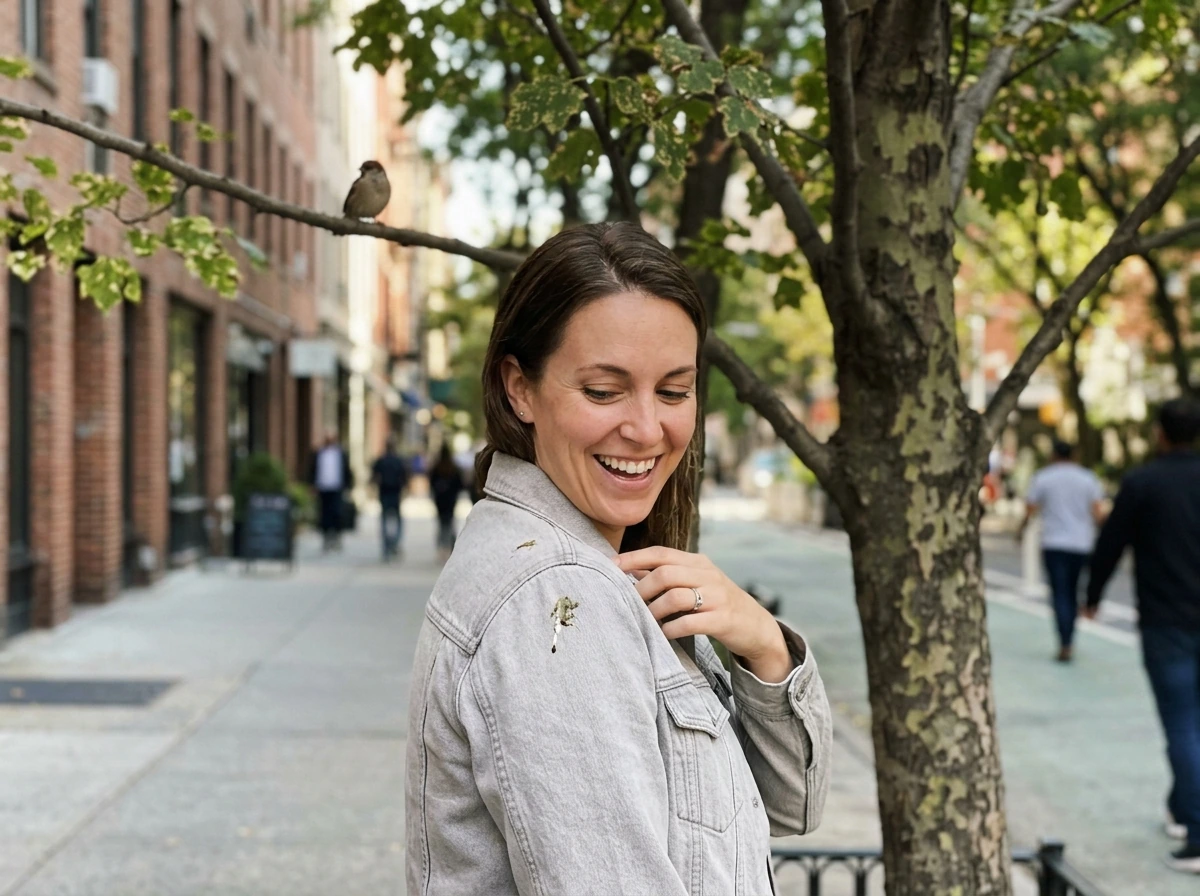
The overwhelming majority of cultures that bother to have an opinion on this say bird poop landing on you is good luck. The USC Digital Folklore Archives records one version of it directly: "Break a mirror, it's seven years bad luck, but if you get pooped on by a bird, it's seven years good luck." That phrasing is telling. It's intentionally structured as a mirror image of a famous bad-luck superstition, which suggests people needed a way to cope with an unpleasant surprise and decided to flip the script.
European folklore traditions, including German-speaking regional beliefs, have documented the same idea in slightly different forms. The common thread is that something gross and unexpected happening to you gets reframed as a cosmic sign of good fortune coming. It is, honestly, a pretty human response to an undignified situation.
There are minority variations where the event is framed as bad luck, but these are far less common. They tend to appear in contexts where omens in general are treated negatively, or where the species of bird matters (a crow or raven, for example, carries different symbolic weight than a sparrow in many folk traditions). If you are wondering whether bird poop on your head specifically carries extra weight, that variant also leans positive in most tellings, since the head is symbolically significant in many cultures.
The truth is that superstitions like this persist because of how human brains work, not because of causal evidence. If you are trying to sanity-check claims like is bird pooping on u good luck, remember that the key practical takeaway is still to clean up properly and consider hygiene and health risks. We notice and remember the times something good happened after a weird event, and quietly forget the many times nothing happened at all. That pattern-matching tendency is what keeps these beliefs alive across generations, even when nobody has ever tested them properly.
Spiritual interpretations and how to think about them
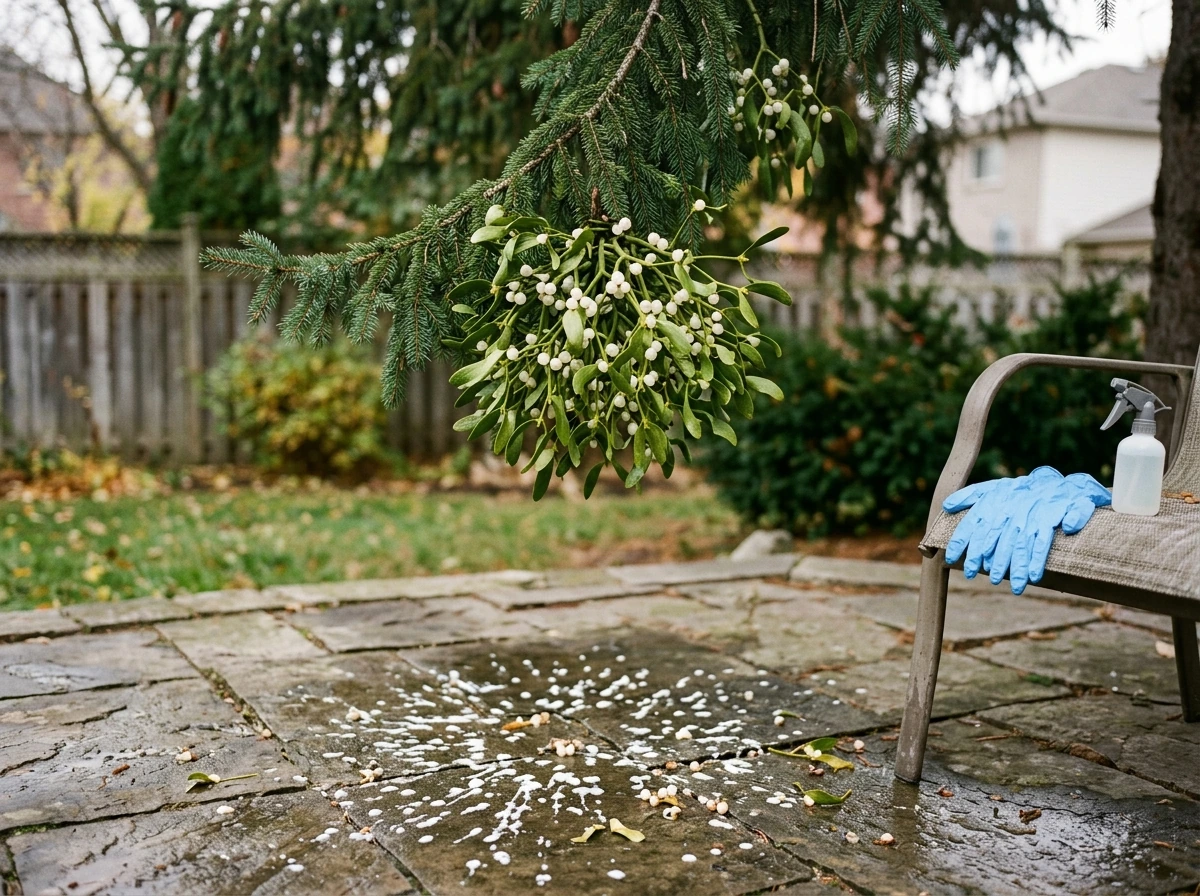
From a general spiritual or folkloric standpoint, bird poop landing on you is most commonly interpreted as a sign of incoming financial fortune, a cleansing of bad energy, or simply a random blessing from nature. and if you are dealing with is mistletoe bird poop, it still needs the same kind of careful cleaning and health-safety approach. The House of Good Fortune and similar folk-belief sources describe it as "good fortune" in most Western retellings. Some people take this seriously as a meaningful omen; others treat it as a fun story to tell at dinner. Both are reasonable positions.
From an Islamic perspective, the picture is clearer and more explicit. Islamic teaching directly rejects omen-based beliefs through the hadith that negates tiyarah (the practice of drawing good or bad omens from signs): "No contagion, no evil omen, no hama, no safar superstition." The principle is that nothing harms or benefits except by Allah's will, so drawing spiritual conclusions from a bird's bowel habits is considered baseless and contrary to tawhid. ...whether framed as good luck or bad luck, is not something to act on or give weight to. Because it is bird poop, it is also classed as najis in Islamic practice, so proper cleaning matters is bird poop najis.
For everyone else, the honest spiritual framing is this: if treating it as why is bird poop good luck makes you feel better about a genuinely unpleasant moment, that is a legitimate psychological benefit. It can also be helpful to remember the question of whether bird poop is good luck, especially if you find comfort in omens if a bird poops on you is it good luck. Just do not make any major financial or life decisions based on it.
What bird droppings actually contain (and how worried you should be)
Bird droppings are not just unpleasant. They can carry organisms that cause real illness in humans, though the actual risk from a single outdoor exposure is low for most healthy adults. Histoplasmosis is caused by breathing in Histoplasma spores that can be found in bird or bat droppings in certain areas, and the spores can become airborne after contaminated material is disturbed Histoplasma spores found in bird or bat droppings. Here is what you are realistically dealing with:
- Histoplasma: A fungus found in bird and bat droppings in certain endemic regions (parts of the Ohio and Mississippi River valleys in the US, for example). It causes histoplasmosis, a lung infection contracted by breathing in disturbed spores. Most people exposed do not get infected, and most infections are mild. The risk goes up significantly when large amounts of dried droppings are disturbed.
- Chlamydia psittaci: The bacterium behind psittacosis (also called parrot fever). The most common transmission route is inhaling dust from dried droppings or secretions, not skin contact. It causes flu-like respiratory symptoms and is treatable with antibiotics.
- Avian influenza: In areas with active bird flu circulation, droppings are a potential transmission route, primarily via contact with the eyes, nose, or mouth after touching contaminated surfaces.
- Hypersensitivity pneumonitis (bird fancier's lung): This is an allergic/inflammatory lung reaction associated with repeated exposure to bird droppings and feathers. It is more relevant to people who keep birds than to a one-time outdoor splat, but people with asthma or allergies may experience heightened sensitivity.
- General fecal bacteria: Standard fecal pathogens can be present, and the CDC is straightforward that feces from animals is a source of germs. Handwashing is the primary defense.
To put the risk in perspective: a single bird dropping landing on your shoulder while you are walking to the car is a very different situation from shoveling out an old roosting site with dried, accumulated droppings. The latter is genuinely risky. The former warrants sensible hygiene, not panic. The CDC is clear that most exposures do not lead to infection, especially when basic hygiene is followed.
What to do immediately after being pooped on
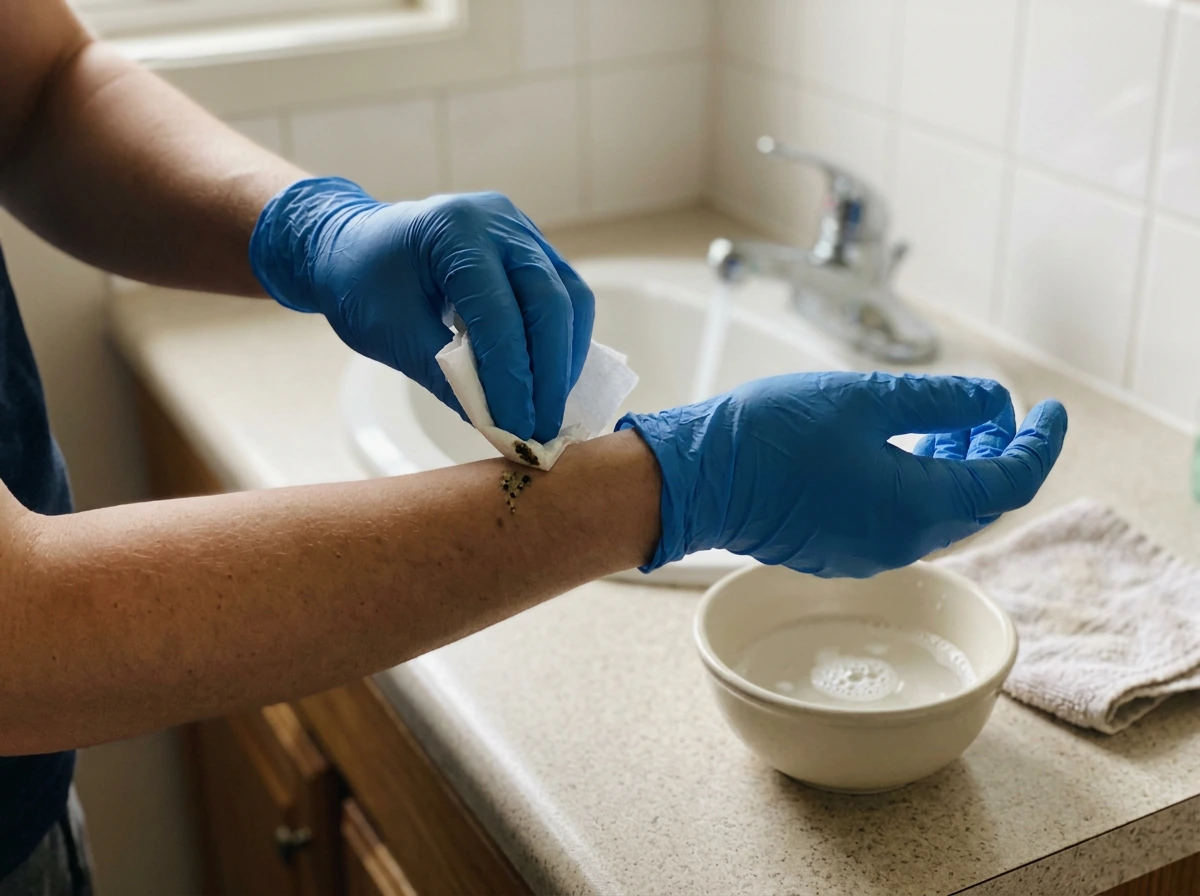
Your first priority is to avoid spreading the contamination, especially to your face. The CDC specifically advises not touching your eyes, mouth, or nose after contact with bird droppings. Before you do anything else, keep your hands away from your face.
On your skin
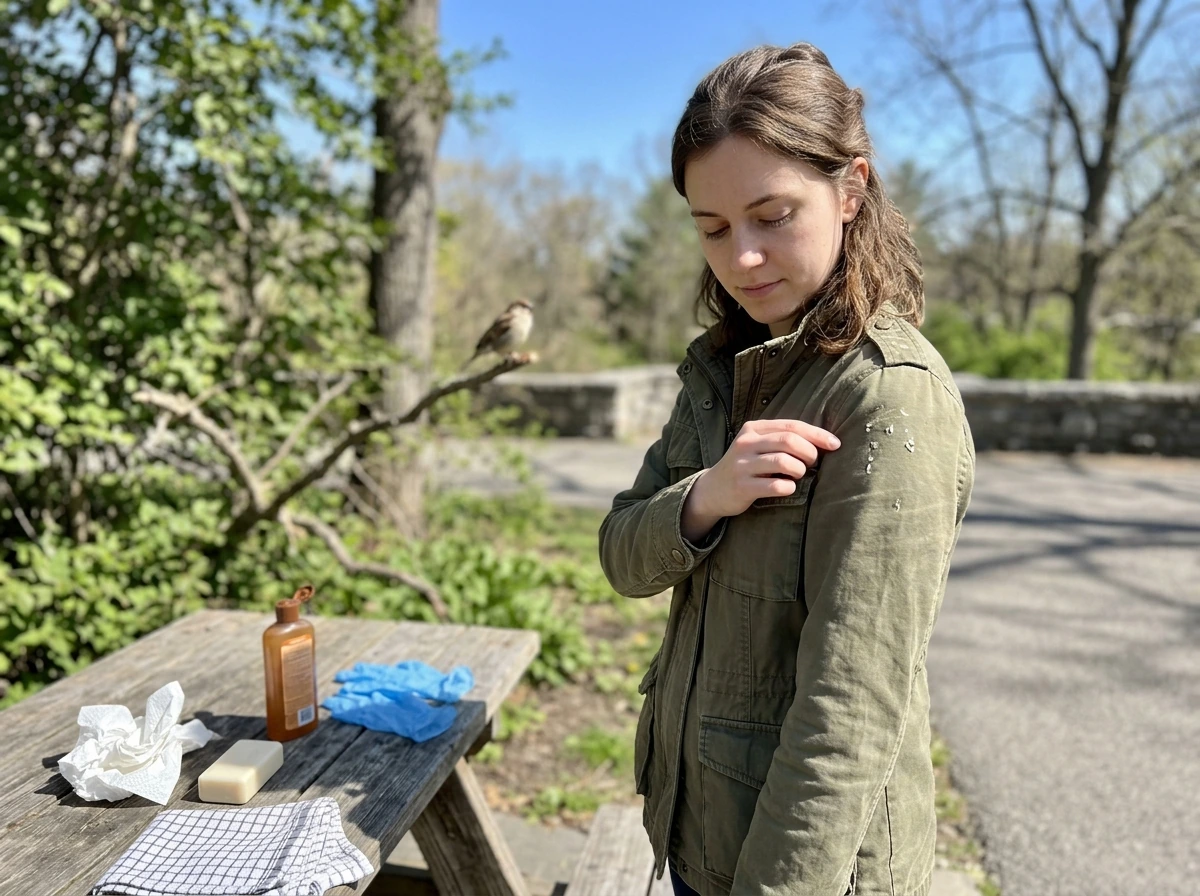
- If you have access to gloves or a tissue, use them to remove the bulk of the dropping without smearing it further.
- Wash the affected skin thoroughly with soap and water. Standard handwashing technique works: lather for at least 20 seconds, rinse well.
- Avoid rubbing the area dry with a cloth that you will reuse. Use a disposable paper towel if possible.
- Wash your hands again after handling the tissue or gloves, even if you did not directly touch the dropping.
In your hair
Rinse as soon as practical. Do not scratch at it dry, which can aerosolize particles. If you can get to a sink or shower quickly, wash your hair with shampoo and rinse thoroughly. The scalp is intact skin, so the infection risk is low, but you want to remove it cleanly and wash your hands well after.
In your eyes
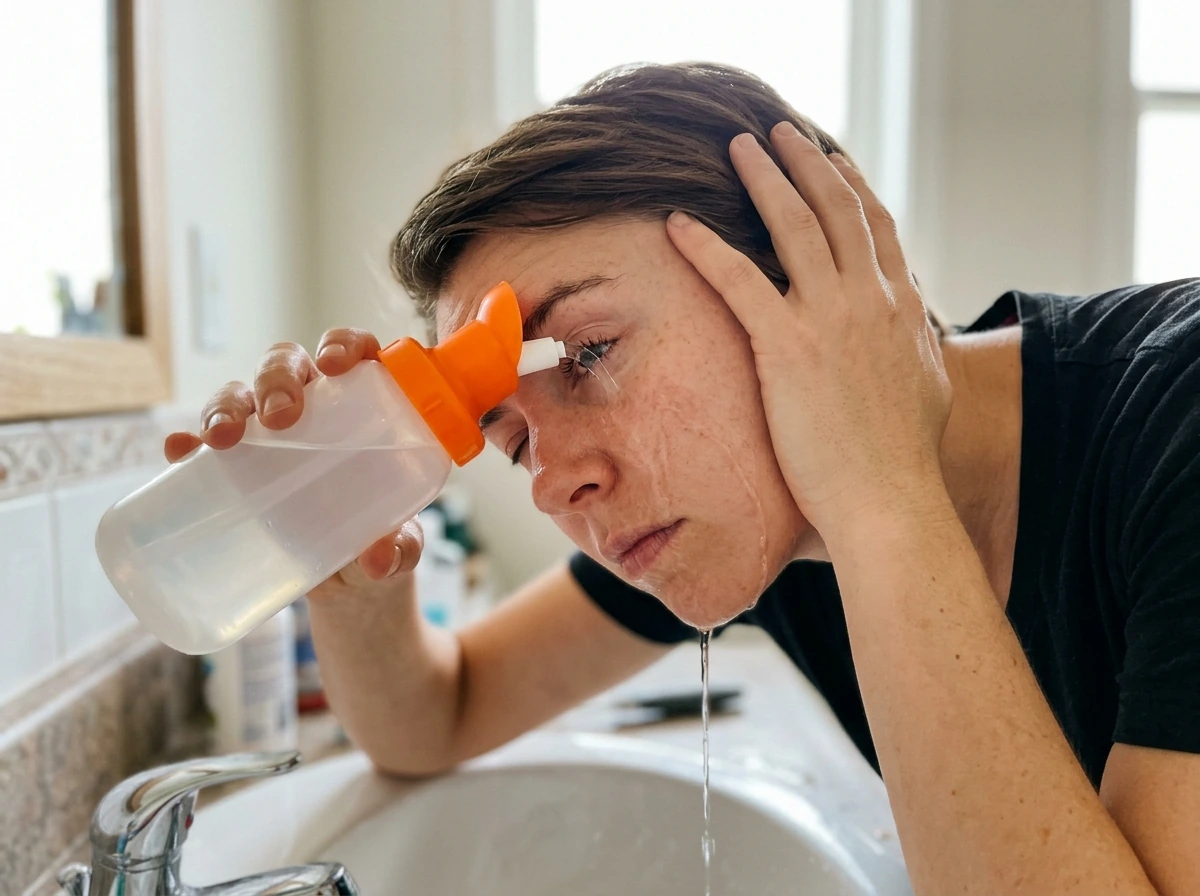
This is the situation that warrants the most prompt attention. Rinse your eye immediately with clean running water or a saline eyewash for at least 10 to 15 minutes. Avian influenza, for example, can be transmitted via the mucous membranes of the eye. If you are in an area with known bird disease activity, or if redness, irritation, or discharge develops in the following days, see a doctor and mention the exposure.
In or near your mouth
Spit and rinse your mouth with water immediately. Do not swallow. Brush your teeth if you can. Monitor for any gastrointestinal symptoms in the following day or two. If material was inhaled or you are experiencing any respiratory symptoms, that is worth a call to your doctor.
Cleaning your clothes and personal items
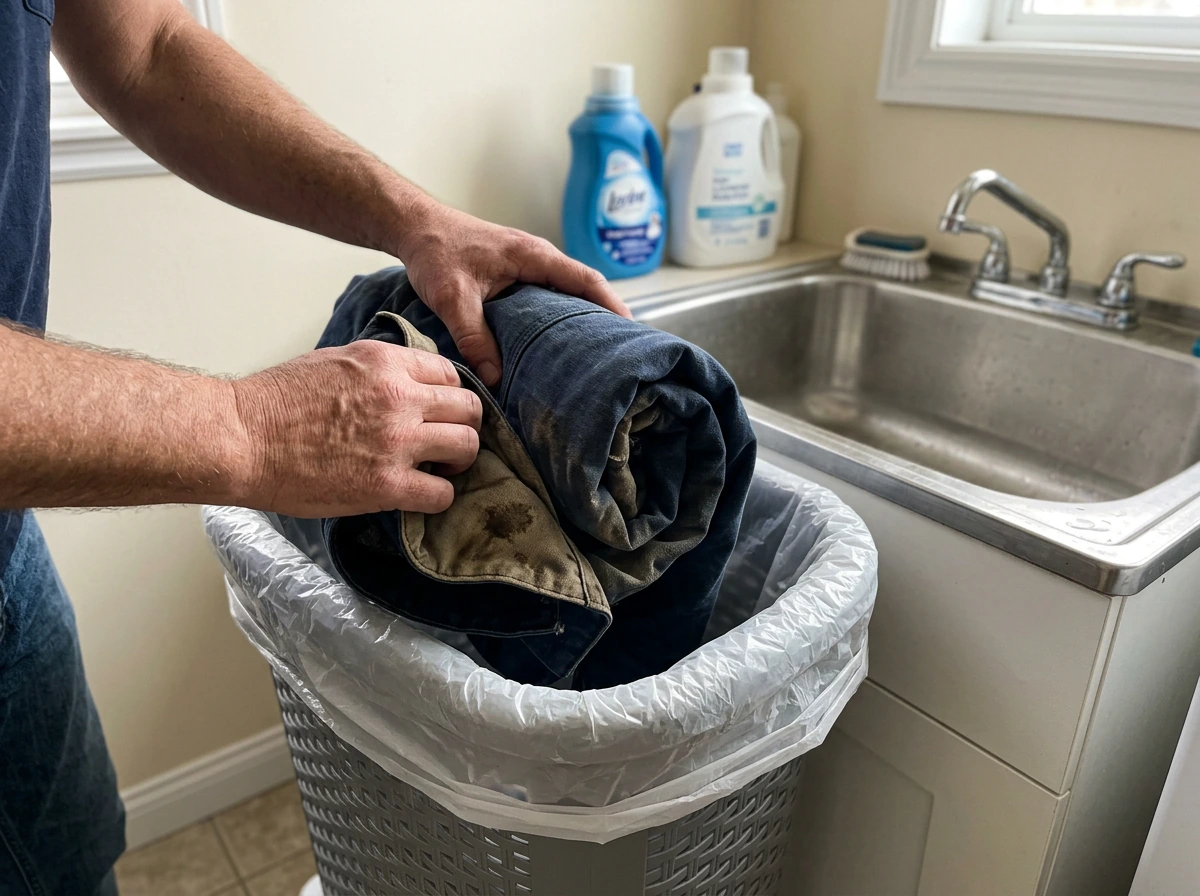
The key rule for clothing is to avoid shaking or brushing the dropping dry, which sends particles into the air you are breathing. Here is the safest sequence:
- Remove the affected clothing carefully, rolling or folding it inward so the soiled area does not contact your skin or other surfaces.
- Place it directly into a plastic bag or laundry basket until you can wash it. Do not let it sit on upholstered furniture or shared surfaces.
- Wash the clothing in your machine with your normal detergent on the warmest setting the fabric tolerates. Most household laundry cycles are sufficient to handle the organisms present in a typical bird dropping.
- Wash your hands with soap and water after handling the contaminated clothing, even if you used gloves.
- For bags, shoes, or other non-washable personal items, wipe down with a damp cloth or disinfectant wipe. Follow any EPA-registered disinfectant's label instructions for contact time (meaning, let the surface stay visibly wet for the required dwell period before wiping dry).
Cleaning cars and hard surfaces without spreading contamination
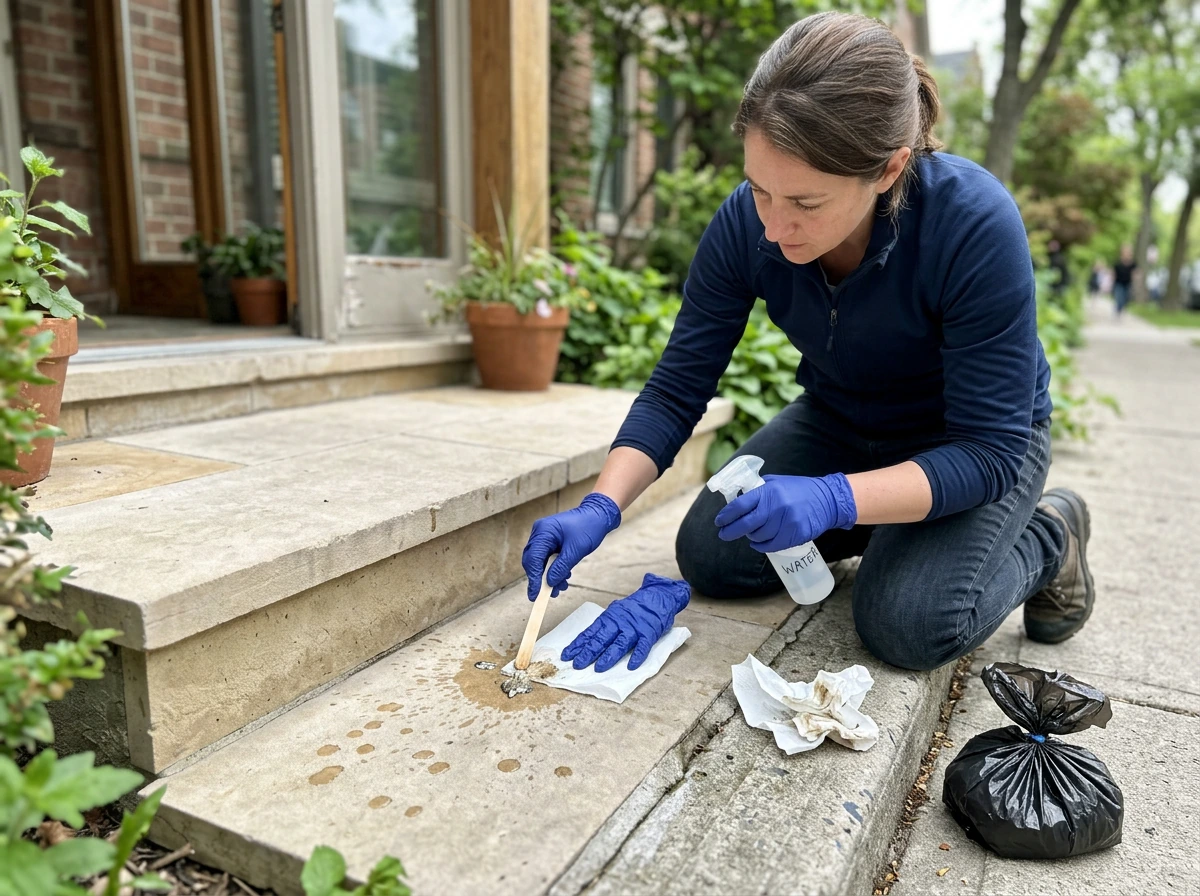
This is where people most commonly make the mistake of dry-rubbing a dropping off a car hood or windshield with a dry cloth, which both smears it and potentially aerosolizes particles. The better approach follows the same principle the CDC recommends for larger cleanups: wet it first.
- Dampen the dropping with a small amount of water before attempting to wipe it. This prevents aerosolization and makes removal easier anyway.
- Use a disposable cloth or paper towel to lift the material. Do not use a cloth you plan to reuse.
- Dispose of the material in a sealed bag rather than leaving the used cloth on your car seat.
- Apply an EPA-registered disinfectant or a diluted household disinfectant to the surface and allow it to sit for the manufacturer's recommended contact time before wiping clean.
- Wash your hands immediately after, even if you wore gloves.
- For your car's interior (steering wheel, door handles), use disinfectant wipes and follow the same wet-and-wait principle.
If you are dealing with accumulated droppings under a roosting area, for example a covered car that sat under a tree for weeks, the risk profile is meaningfully higher. In that case, wear gloves and ideally a disposable mask, wet the area down before cleaning, and wash up thoroughly afterward. The Mayo Clinic notes that cleaning up large quantities of droppings yourself can be risky, and for very large accumulations in enclosed spaces, professional cleanup is worth considering.
When to actually worry and see a doctor
For the vast majority of people, a bird dropping on the shoulder or arm and prompt handwashing is the end of the story. But there are circumstances where medical advice is appropriate:
- Respiratory symptoms (coughing, shortness of breath, chest tightness) appearing within two weeks of a significant exposure, especially if you disturbed or cleaned up a large amount of dry droppings.
- Eye redness, discharge, or irritation that develops after a direct eye splash, particularly if you are in a region with active bird flu.
- Flu-like symptoms (fever, chills, headache, fatigue, muscle aches) that start within one to three weeks of exposure. Psittacosis and histoplasmosis can both present this way.
- You are immunocompromised (undergoing chemotherapy, taking immunosuppressant medications, or living with HIV). The risk of severe infection from organisms in bird droppings is meaningfully higher in this group.
- You have asthma, allergies, or existing lung conditions and notice increased respiratory symptoms after exposure. Hypersensitivity pneumonitis is a real concern for people with these conditions.
- A child had significant contact (especially mouth or eye exposure) and develops any of the above symptoms.
When you do see a doctor, mention specifically that you had contact with bird droppings, where you were (geographic region matters for histoplasmosis risk), and approximately how much material was involved. That context helps them rule in or out the most relevant conditions quickly. For a single small dropping on intact skin that was washed off promptly, you almost certainly do not need a doctor visit at all. Just keep an eye out for symptoms over the next week or two and carry on.
FAQ
If I think it is good luck, can I still be sensible about it?
It is safe to treat it as “good luck” emotionally, but do not use it to justify risky choices. If the event makes you want to take action, keep it grounded, like using it as a reminder to clean up and move on, rather than making financial or relationship decisions based on the omen.
What if I touched my face before I realized it was bird poop?
If the poop got on your skin and you then touched your face, the main issue is likely transfer to mucous membranes. Wash the affected skin right away, then wash your hands thoroughly before eating or touching your eyes, mouth, or nose.
What is the best way to clean hair or scalp after a bird poops on you?
You should rinse first, then wash with soap and shampoo if it is on hair or scalp. Avoid wiping it dry with a dry towel, because smearing can spread particles to your hands and nearby surfaces.
How do I handle bird droppings on my clothes or shoes without spreading germs?
If it lands on clothing, avoid shaking it out. Wet the spot first, blot or wipe carefully, then launder normally. Wash any items that contacted it separately if you can, and clean the sink or tub area where you rinsed.
When is a doctor visit needed for eye exposure?
If you have a known bird disease situation nearby or you develop eye redness, pain, discharge, or light sensitivity, get medical care. Tell them it was a bird-dropping eye exposure and how long after it happened you rinsed.
What symptoms should make me contact a doctor after mouth or inhalation exposure?
If you can rinse promptly, it is reasonable to monitor. Seek advice if you develop persistent cough, trouble breathing, chest discomfort, fever, or worsening GI symptoms, especially after cleaning up dried accumulations.
Is risk higher if the bird poop is old or dried?
Yes, but the “higher risk” case is about accumulated, dried droppings or enclosed, poorly ventilated spaces. A single fresh dropping that you rinse off quickly is much lower risk than clearing out weeks of buildup under a roost.
Should I wear gloves or a mask when cleaning it off?
For small single droppings, gloves are optional but still smart if you do not want residue on your skin. For accumulated droppings, wear gloves and ideally a disposable mask, and wet the area before cleaning to reduce airborne particles.
What should I do if I cannot wash right away?
Washing works best when it is immediate and thorough. If you are outdoors and cannot reach a sink, use water to rinse, then wash hands with soap as soon as possible, and avoid touching your face during the in-between period.
Do I need medical tests because I was pooped on by a bird?
In most situations it is not necessary. You do not need an omen-based explanation, and if you already rinsed promptly and you are otherwise healthy, simple monitoring for symptoms is usually sufficient.
Does medical guidance change for pregnancy or weakened immunity?
If you are pregnant, immunocompromised, or managing serious chronic illness, you should be a bit more cautious. Follow the same hygiene steps, avoid inhaling dust during cleanup, and call a clinician if exposure involved eyes or large dried accumulations.