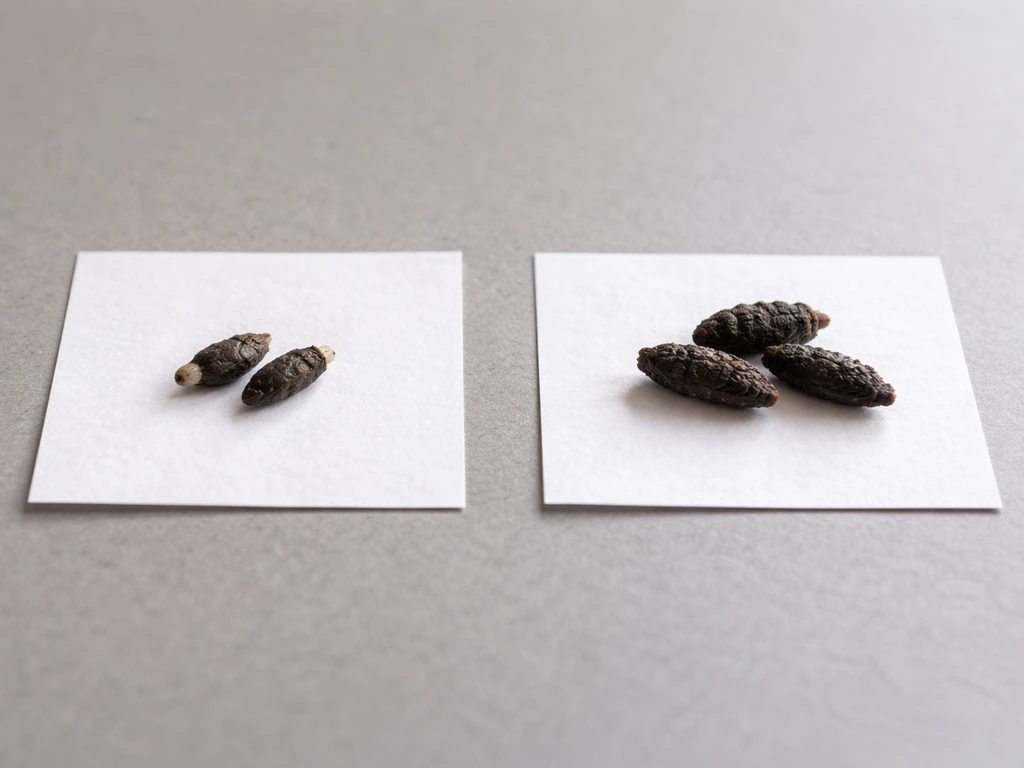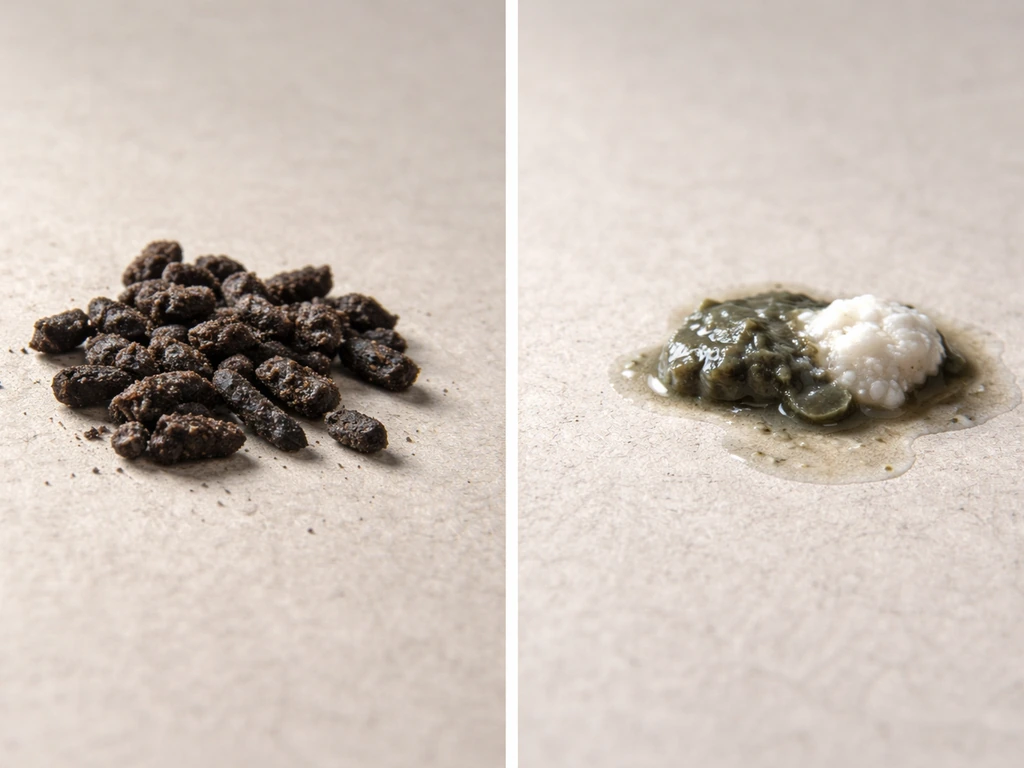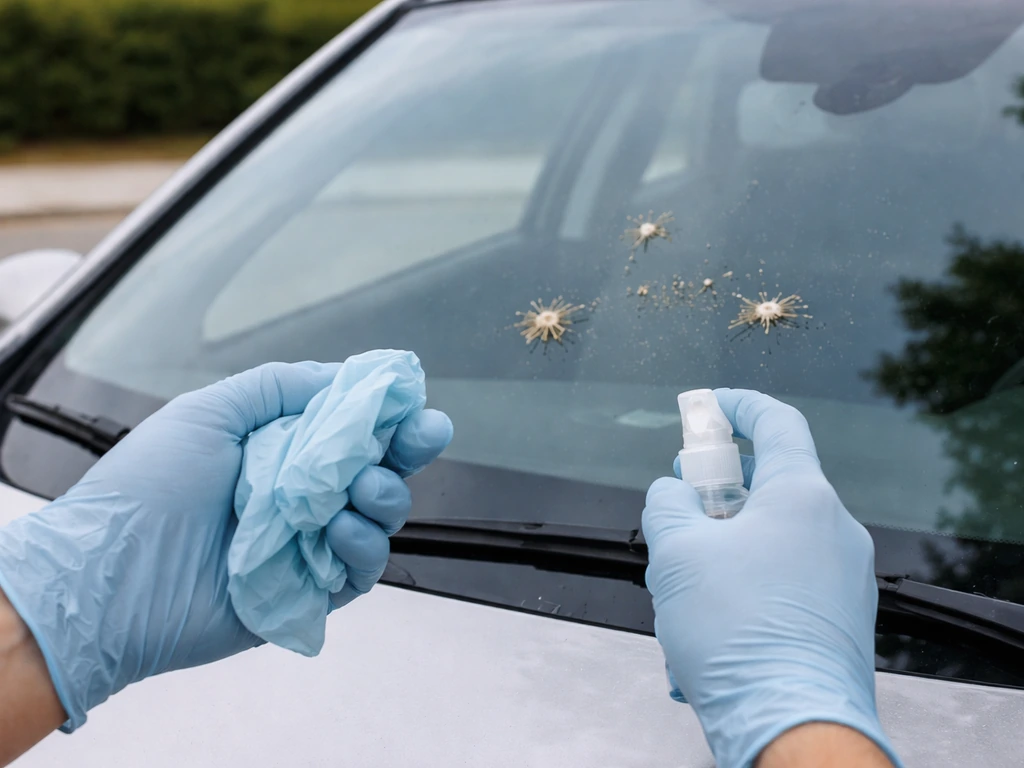
Birds don't actually pee and poop as two separate events. Everything comes out together through one opening called the cloaca, so what you're looking at on your car hood or balcony railing is a combined dropping with up to three distinct parts: a dark fecal mass (the actual poop), a white or cream-colored urate layer (the bird's version of urine, excreted as uric acid rather than liquid), and sometimes a small puddle of clear liquid urine. The white stuff isn't separate pee, it's urates, the solid waste equivalent of urine in birds. Once you know that, telling the components apart and cleaning them up safely becomes a lot more straightforward.
Bird Pee vs Poop: How to Tell, Risks, and Safe Cleanup

Marcus Fielding
13 May 2026
Quick basics: what bird pee vs poop actually are
Most animals, including us, break down nitrogenous waste into urea and excrete it dissolved in water as liquid urine. Birds evolved a different solution: they convert that waste into uric acid, which is nearly insoluble and can be expelled as a semi-solid paste or chalky crystals. That's why birds almost never produce the kind of wet, streaming urine that mammals do. The white or off-white component you see in a typical dropping is urates, the salts and esters of uric acid. The darker center mass is the actual fecal material, colored by bile, digested food, and gut bacteria. Diet matters a lot here: a berry-eating bird leaves purplish-black droppings while a seed-eater leaves more brownish-green ones. The small amount of clear liquid sometimes visible around fresh droppings is true liquid urine, but it's minor compared to the urate component.
The practical takeaway is that there's no such thing as a separate bird pee event to spot on its own. If you see a streak of pure white residue with no darker core, you're looking at urate-heavy droppings, common from birds that ate a lot of protein or were stressed. If you see a dark splotch with a white halo or cap, that's the classic full dropping with all three components present. Both are the same biological event, just with different ratios depending on the bird's diet, hydration, and health. Knowing what bird feces means can help you identify the components and handle it safely bird feces meaning.
How to tell the difference in looks and location
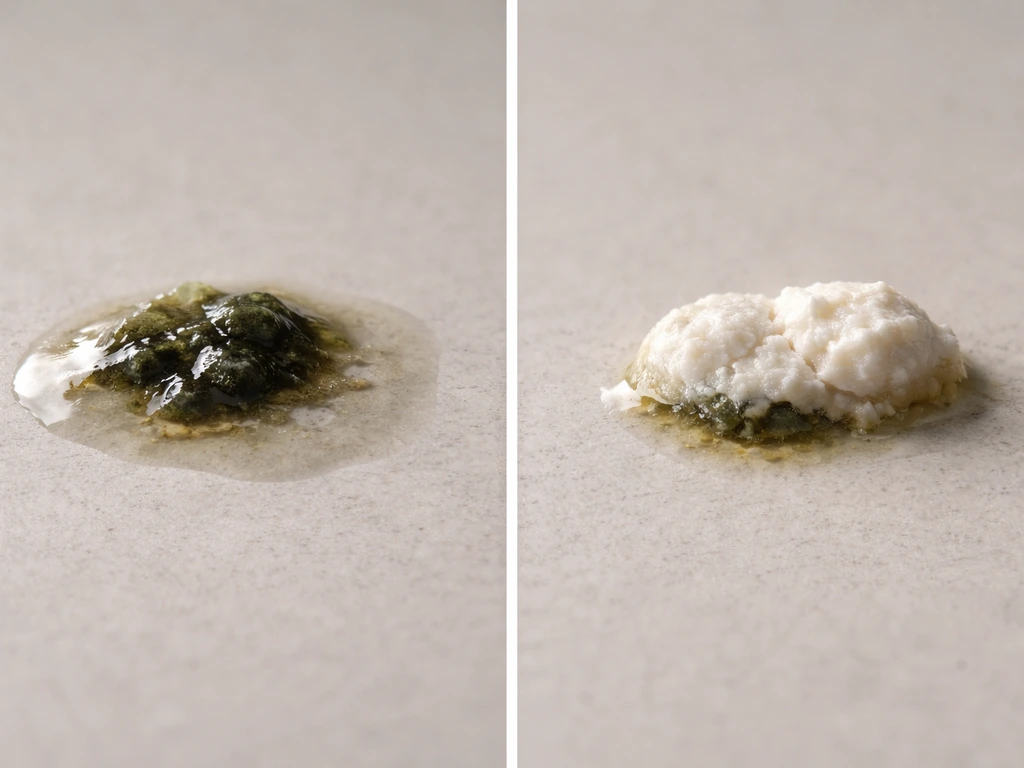
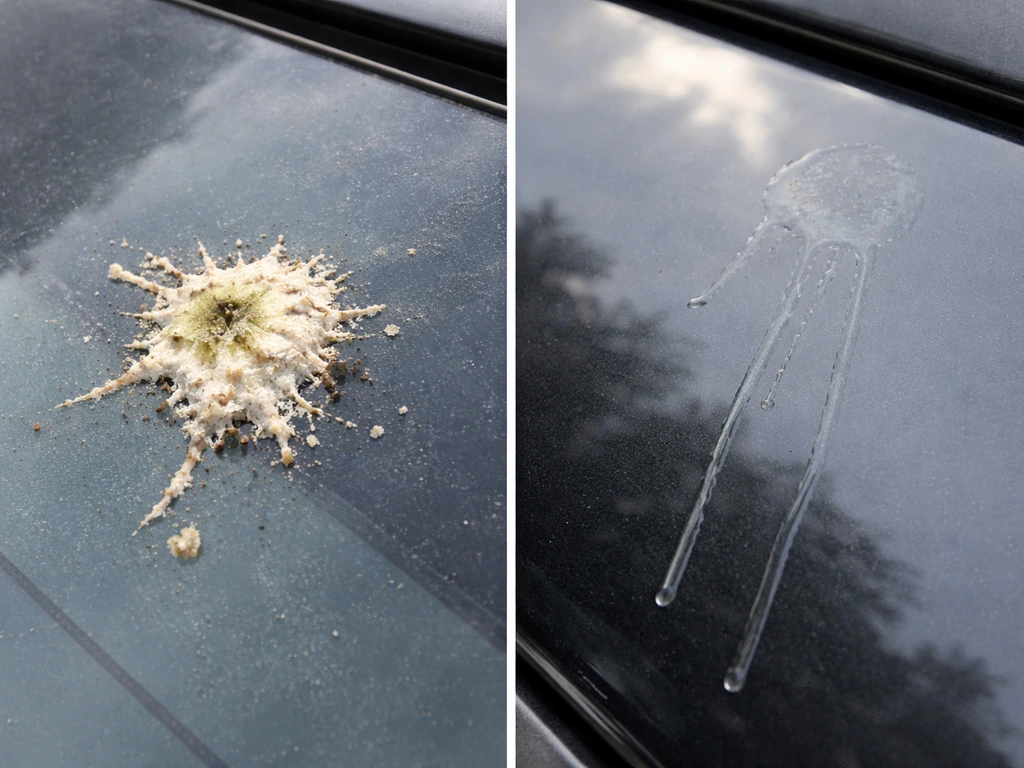
Fresh droppings have a wet, glossy look and the components are easy to distinguish: dark semi-solid center, white or cream-colored urate ring or cap, and sometimes a wet clear halo. As they dry, the urate portion turns chalky and brittle, the fecal part shrinks and darkens further, and the whole thing can crack and flake. That dried, powdery state is actually the most hazardous stage from a health perspective, because disturbing it can send particles airborne. The CDC/NIOSH notes that dried accumulations of droppings can become brittle and create dust or airborne particles if they are disturbed, such as by brushing or scraping dry waste disturbing it can send particles airborne.
| Component | Color | Texture (fresh) | Texture (dried) | Location in dropping |
|---|---|---|---|---|
| Feces | Dark brown, black, green, or purple (diet-dependent) | Semi-solid, moist | Hard, shrunken, crumbly | Center mass |
| Urates | White, off-white, cream | Chalky paste or soft blob | Brittle crystals, powdery | Surrounding cap or ring |
| Liquid urine | Clear | Wet puddle or streak | Evaporates, leaves faint residue | Outer edge, often invisible when dry |
Location gives you useful clues too. A single dropping on your car almost always comes from a bird perched directly above, a power line, branch, or roof edge. Concentrated accumulation on a ledge, windowsill, or A/C unit usually means roosting or nesting. Splatter patterns on vertical surfaces like walls suggest the bird was in flight. If you're comparing bird droppings to other animal waste in your space, the two-tone white-and-dark pattern is a reliable bird identifier. Rat droppings, for example, are all-dark and pellet-shaped with no white component, and bat guano tends to be smaller and drier with insect fragments, something worth noting if you're unsure what you're dealing with.
Health risks: what each can spread or contaminate
Bird droppings as a whole (both the fecal and urate components together) carry the real health concerns. The risks aren't dramatic for casual, one-off encounters, but they're real and worth understanding. The main disease threats associated with bird and bat excrement are fungal and bacterial. If you’re also dealing with bats in the area, bat poop vs bird poop is a helpful comparison for figuring out which risks and cleanup steps apply to your situation. Histoplasmosis is caused by a fungus that can grow in accumulated droppings, particularly in moist, sheltered spots. Cryptococcosis is another fungal infection associated with pigeon droppings specifically. Psittacosis (also called ornithosis) is a bacterial infection primarily from parrots and other psittacine birds but can come from other species too. Avian influenza is an additional concern in contexts involving sick or dead birds. OSHA also notes that inhalation of dust contaminated with bird secretions or excrement is part of the concern for preventing avian influenza exposure blank" rel="noopener noreferrer">Avian influenza is an additional concern in contexts involving sick or dead birds..
The most common route of exposure for all of these is inhalation of contaminated dust, not skin contact. Dried droppings that get disturbed, swept, scraped, or vacuumed can release spores and bacteria into the air. Uric acid in the urate component is also corrosive, which is why bird droppings etch car paint and damage stone surfaces over time, the pH is low enough to break down clear coat and porous masonry. There's no meaningful difference between 'pee risk' and 'poop risk' here because they're always combined; the hazard is the full dropping material.
Safety first: when to wear protection and what to avoid
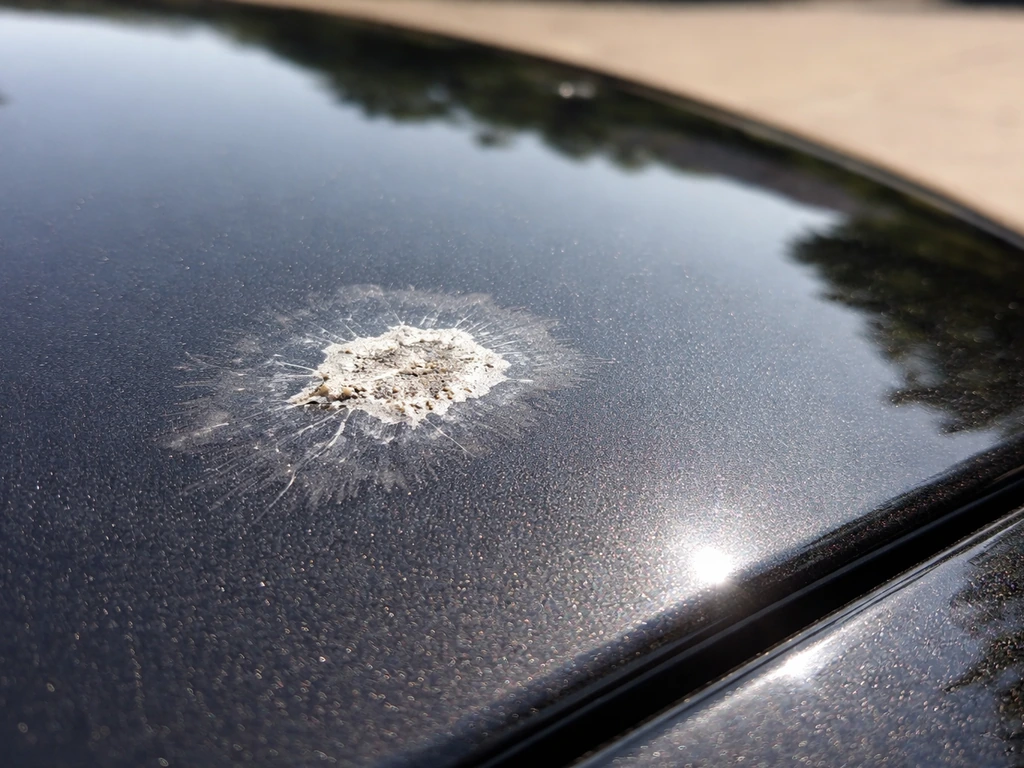
For a single fresh dropping on your car or a step, basic hygiene is enough: don't touch your face, use gloves or a damp paper towel, dispose of it, and wash your hands. Protective gear becomes genuinely important when you're dealing with accumulated droppings, enclosed spaces like attics or sheds with roosting birds, or situations involving sick or dead birds. In those cases, the CDC and OSHA both recommend respiratory protection (at minimum an N95 respirator), eye protection, and gloves. If you're cleaning out a heavily fouled space, disposable coveralls are worth considering too.
The single most important thing to avoid is dry sweeping, dry scraping, or vacuuming dried droppings without wetting them first. This is emphasized by the CDC, OSHA, and public health guidance consistently: disturbing dry droppings sends contaminated dust directly into your breathing zone. Always wet the material before you move it. Don't use a leaf blower on droppings either, that's just aerosolizing the problem across a wider area.
- Wear gloves for any cleanup, disposable nitrile preferred
- Add an N95 or better respirator for accumulated or enclosed-space droppings
- Use eye protection (safety glasses or goggles) when working overhead or in confined spaces
- Never dry sweep, dry scrape, or vacuum dried droppings — wet them first
- Never use a leaf blower or compressed air on droppings
- Keep children and pets out of the area until cleanup is fully complete
- Avoid touching your face during and after cleanup until you've washed your hands
Cleanup guide: the right method for each surface
The general principle for every surface is: wet it, wait, wipe, disinfect. Never start dry. Soak the dropping with water or disinfectant spray first to prevent the material from becoming airborne, then give it a moment to soften, then remove it with a paper towel or cloth you can dispose of or wash immediately. Apply disinfectant and let it sit for at least one minute before wiping. Bleach solutions (diluted per CDC guidance) work well on non-porous, bleach-safe surfaces. For surfaces where bleach could cause damage, use an EPA-registered disinfectant appropriate for that material. Important note from GSA preservation guidance: don't mix ammonia-based cleaners with bleach, bird droppings already contain ammonia, and adding bleach to ammonia creates toxic chloramine gas.
Car paint and clear coat
Uric acid etches car clear coat fast, especially in heat. Fresh droppings on a hot car can start damaging the paint within an hour or two. Don't scrape it dry, mist the spot generously with water or use a dedicated car-safe wet wipe, let it soak for 30 seconds to a minute, then gently lift with a microfiber cloth using zero scrubbing pressure. Rinse with clean water. Inspect the clear coat after: if there's already a hazy or textured etch mark, a light polish or clay bar treatment may help. Avoid household bleach on painted car surfaces; use a pH-neutral car wash soap or bird-dropping-specific detailer spray.
Glass (windows, windshields)
Glass is the most forgiving surface. Wet the dropping thoroughly, let it soften, then wipe with a paper towel and follow up with glass cleaner. For stubborn dried residue, a plastic razor blade or glass scraper held at a flat angle works well once the material is fully wet. Disinfect with a glass-safe EPA-registered disinfectant or a diluted bleach solution on non-tinted glass. Rinse well.
Concrete, stone, and masonry
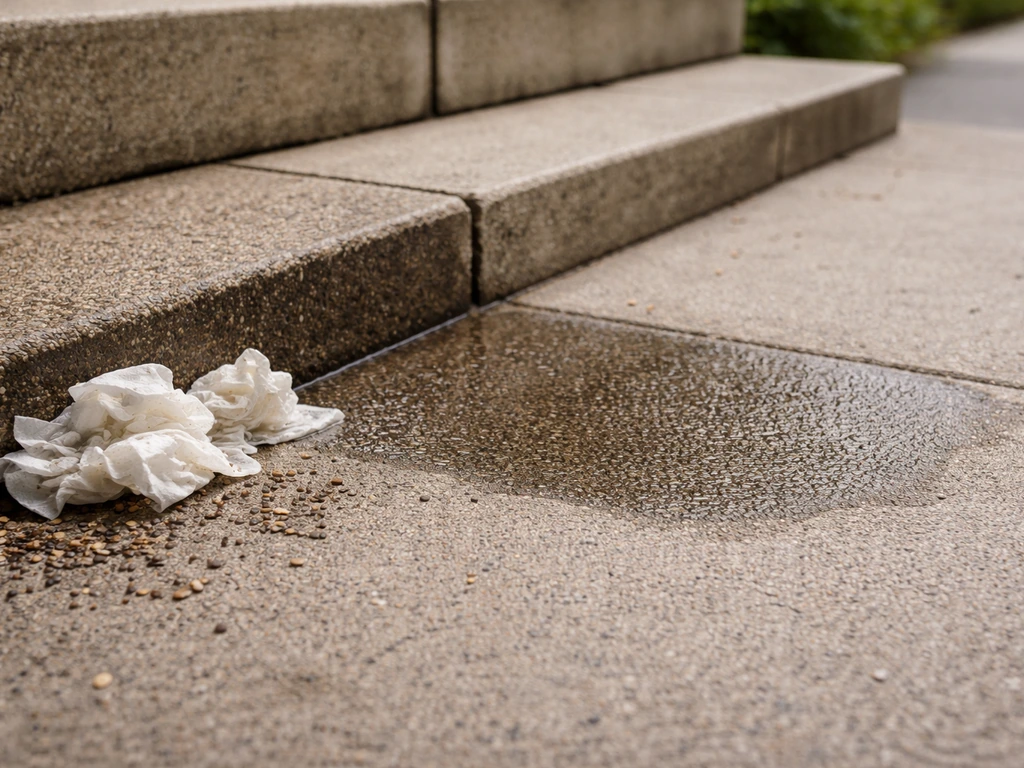
Porous surfaces like concrete and stone absorb droppings and are harder to fully disinfect. The GSA recommends saturating the area with low-pressure water first to prevent debris from becoming airborne. For walkways and patios, soak the area, let it sit, then scrub with a stiff brush and a disinfectant solution. Rinse well. For heavily fouled areas or historic stone, avoid high-pressure washing (it can force material deeper into pores and damage the surface). A diluted bleach solution applied after the initial clean works for most concrete, but test on an inconspicuous spot first since bleach can discolor some stones.
Fabric, outdoor cushions, and upholstery
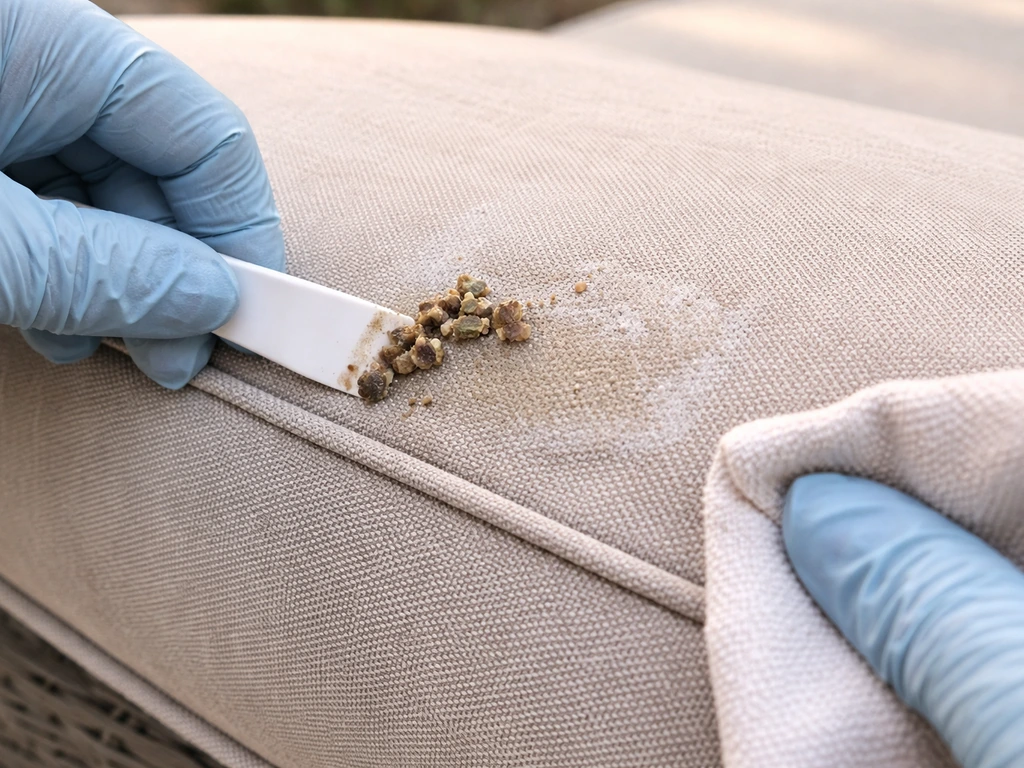
Let fresh droppings dry completely if they're thick, trying to wipe wet droppings off fabric often smears and embeds the stain deeper. Once dry, lift the bulk of the solid material off gently with a dull edge (no scraping), then treat with cold water and an enzyme-based laundry pre-treatment or a dish soap solution. Machine wash if the item allows it; use the hottest water safe for the fabric. For items that can't be machine washed, saturate with disinfectant spray, blot repeatedly, and air dry fully in sunlight if possible.
Step-by-step for any surface
- Put on gloves before touching anything (add mask and eye protection if the area is enclosed or accumulation is heavy)
- Mist or soak the droppings generously with water or an EPA-registered disinfectant — enough to fully wet the material
- Wait 1 to 5 minutes to allow softening and disinfection to begin
- Lift and wipe up the softened material with paper towels, disposable cloths, or a dedicated scrub brush — never dry sweep
- Bag and seal all used paper towels and disposable materials immediately
- Apply disinfectant solution to the cleaned area and let it sit visibly wet for at least 1 minute
- Wipe or rinse the disinfectant according to the product directions
- Remove gloves by inverting them (touch only the outside), bag them, and wash your hands thoroughly with soap and water for at least 20 seconds
After exposure: hands, skin, eyes, and when to call a doctor
If you got dropping material on your hands, wash immediately with soap and water for at least 20 seconds. Don't use hand sanitizer as a substitute here, physical washing removes material, sanitizer alone doesn't. If droppings splashed into your eyes, flush immediately with clean running water for at least 15 minutes and then call a doctor or go to an urgent care clinic. Same with the mouth: rinse thoroughly with water and call a medical provider. For skin contact on intact skin (no open cuts), soap and water is sufficient.
For most people, a brief, incidental encounter with bird droppings doesn't require medical attention beyond good hygiene. You should contact a healthcare provider if you develop respiratory symptoms (cough, shortness of breath, fever) in the days after a significant exposure to accumulated droppings, especially in enclosed, poorly ventilated spaces. Symptoms of histoplasmosis typically appear 3 to 17 days after exposure and can feel like a mild flu. Psittacosis symptoms (fever, headache, dry cough) usually appear 5 to 14 days after exposure. Tell your doctor about the bird dropping exposure so they know what to consider. These conditions are treatable, and most healthy adults clear minor exposures without any illness at all.
Pets, cars, and homes: special cases and prevention
Pets and the ingestion risk
Dogs are the main concern here because they'll readily sniff and lick droppings off the ground, balcony floors, or patio surfaces. Ingestion of bird droppings can expose dogs to the same fungal and bacterial pathogens that concern humans, particularly histoplasmosis and salmonella. Keep your dog away from any area being cleaned until the process is fully complete and surfaces have been disinfected and rinsed. If your dog ate bird droppings and shows signs of illness (vomiting, diarrhea, lethargy, respiratory symptoms) in the following days, mention the exposure to your vet. Cats generally have more natural aversion, but they're not immune. Keep all pets inside or in a separate secured space during cleanup.
Protecting your car
The best protection for your car is a ceramic coating or high-quality carnauba wax, which creates a barrier that slows uric acid from reaching the clear coat. A car cover is the most effective option if birds are routinely roosting near your parking spot. Keep a spray bottle of water and a pack of microfiber cloths in your car so you can wet and remove droppings promptly before the sun bakes them in. In summer, a fresh dropping can begin etching clear coat in as little as an hour in direct sunlight, so speed matters.
Deterrents for balconies, ledges, and homes
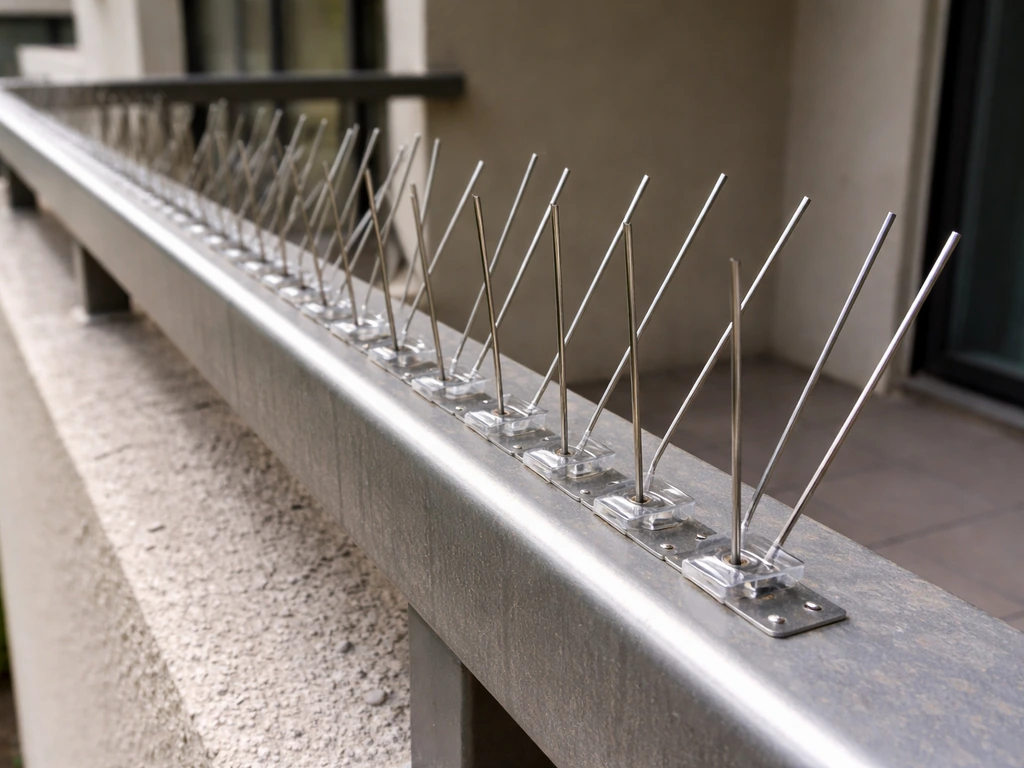
If birds keep returning to the same spot, you need to make that spot less attractive. The most effective deterrents are physical: bird spikes on ledges and railings, bird netting over balconies or garden areas, and sloped or angled ledge covers that prevent landing. Reflective deterrents (old CDs, reflective tape, predator decoys) work temporarily but birds tend to habituate to them within weeks. For outdoor HVAC units and windowsills, mesh guards and sloped covers are your best long-term solution. Eliminate food and water sources if any exist nearby. After a solid deterrent is in place, clean up all existing droppings thoroughly because the scent and visual presence of old droppings can attract more birds to the same spot, they interpret it as a safe established roost.
A note on the cultural side of things: there's a longstanding superstition in many cultures that being pooped on by a bird brings good luck. It's a charming way to reframe a genuinely annoying experience, and honestly, if it helps you stay calm while you're scrubbing your windshield, go for it. The belief shows up across different traditions and has made its way into plenty of memorable public moments. Just don't let the good-luck framing stop you from cleaning it up properly, uric acid waits for no omen.
FAQ
If it looks like only a white streak, should I treat it the same as darker poop spots?
Yes. A white or cream residue is typically urates (bird waste derived from uric acid). Even if there is no dark center, it can still be contaminated, and the uric acid residue can still etch car paint and harm porous surfaces. Wet it first, wipe up, then disinfect or wash as appropriate for the surface.
Is it safe to remove bird droppings with a regular kitchen sponge or cloth?
Not if you reuse it across other surfaces. Use disposable paper towels for the first pass, or dedicate a single cloth for droppings only. Afterward, launder the cloth right away on the hottest cycle safe for the fabric, or discard it. Also avoid wiping dry residue, because that can grind particles into the surface.
Can I just rinse bird droppings off with water and skip disinfectant?
Often you can for truly minor, one-off spots on non-porous surfaces, but disinfecting is smarter for areas where droppings accumulate, where you will repeatedly touch the surface, or in enclosed spaces. For concrete, stone, and other porous materials, a rinsing-only approach may leave contamination deeper in pores, so follow the wet-clean, soak, scrub, and disinfect pattern.
What should I do if the droppings are on textured paint, rust, or chips where water cannot bead?
That is higher-risk for lingering residue and staining. Soak longer (give the area more dwell time), use gentle wiping so you do not abrade edges, then rinse thoroughly. If the area is already damaged (chips, rust pits, hazy etch), plan on polishing or resurfacing after cleanup rather than relying on quick wiping to prevent ongoing etching.
Is vacuuming with a wet/dry shop vac acceptable if I wet the droppings first?
It can be risky. Even when pre-wetted, vacuums can aerosolize fine particles if the material is disturbed or if there is poor filtration. If you use one, use proper respiratory protection, keep the nozzle close without blasting, and ensure the unit is designed for wet debris. For most people, wet paper-towel pickup followed by wipe-down is safer than vacuuming.
How long should I wait after wetting droppings before wiping them up?
Give it time to soften, typically about a minute for small fresh spots, longer for dried crusts. The goal is to prevent you from scraping or rubbing hard. If residue is still chalky or cracking, re-wet and wait again rather than forcing it off dry.
What if droppings get on outdoor furniture cushions or fabrics, and I notice later?
Do not immediately scrub. Let it dry fully if it is already dried thick, then lift off the loose solids gently and pre-treat with an enzyme-based laundry product or a dish-soap solution before washing. If it is still fresh and wet, blot first to avoid smearing, then proceed with pre-treatment. Sun-drying can help, but rinse thoroughly first to remove urate residue.
How can I tell bird droppings from other wastes when there is only one spot to inspect?
Look for the two-tone pattern. Bird droppings commonly show a dark fecal portion plus a white or cream urate component. Rat droppings are usually all-dark and pellet-like, and bat guano tends to be smaller and more fragmented. Still, if you cannot confidently identify it, treat it like potentially contaminated material and use wet-cleanup and PPE for accumulated debris.
Is it dangerous to breathe it in while cleaning, even if I do not touch the droppings?
Yes, inhalation is the main concern when dried material gets disturbed. That is why the key steps are wet first, avoid dry sweeping, and use respiratory protection for accumulated droppings or enclosed areas. If you feel irritation, stop, ventilate, and re-wet before continuing.
Do I need to use bleach, or can I use a disinfectant without bleach?
You can use an EPA-registered disinfectant appropriate for the surface instead of bleach, especially where bleach could damage materials. Bleach works for many non-porous surfaces but can discolor some stones and can react dangerously with ammonia-based cleaners. Follow dwell time instructions on the product label for best results.
Why do people say not to use ammonia and bleach together, and does it matter with bird droppings?
Bird waste already contains ammonia-related compounds, so adding bleach to an ammonia cleaner can generate toxic chloramine gas. If you have used any ammonia-based product nearby, skip bleach and switch to a compatible disinfectant, or rinse the area thoroughly and start fresh with a single cleaner type.
What should I do with cleanup materials like paper towels and gloves?
Bag them promptly so dust does not escape. Seal used towels, gloves, and any disposable coveralls in a trash bag and tie it closed. Wash reusable items immediately, and avoid leaving used materials on counters where you might spread contamination.
If my dog ate some bird droppings, when should I call the vet?
Call promptly if there are symptoms such as vomiting, diarrhea, lethargy, reduced appetite, or coughing or breathing changes. Even without symptoms, inform the vet if the amount was more than a few small bits or if the exposure occurred in a situation with many accumulated droppings, because pathogen risk can be higher with concentrated material.
How can I prevent birds from returning if the droppings keep reappearing the next day?
First clean thoroughly after installing deterrents. Birds may return to a “previously safe” roost because old droppings can leave scent and visual cues. Then install physical barriers like spikes, netting, or sloped ledge covers, and remove nearby food or water sources that are making that location attractive.