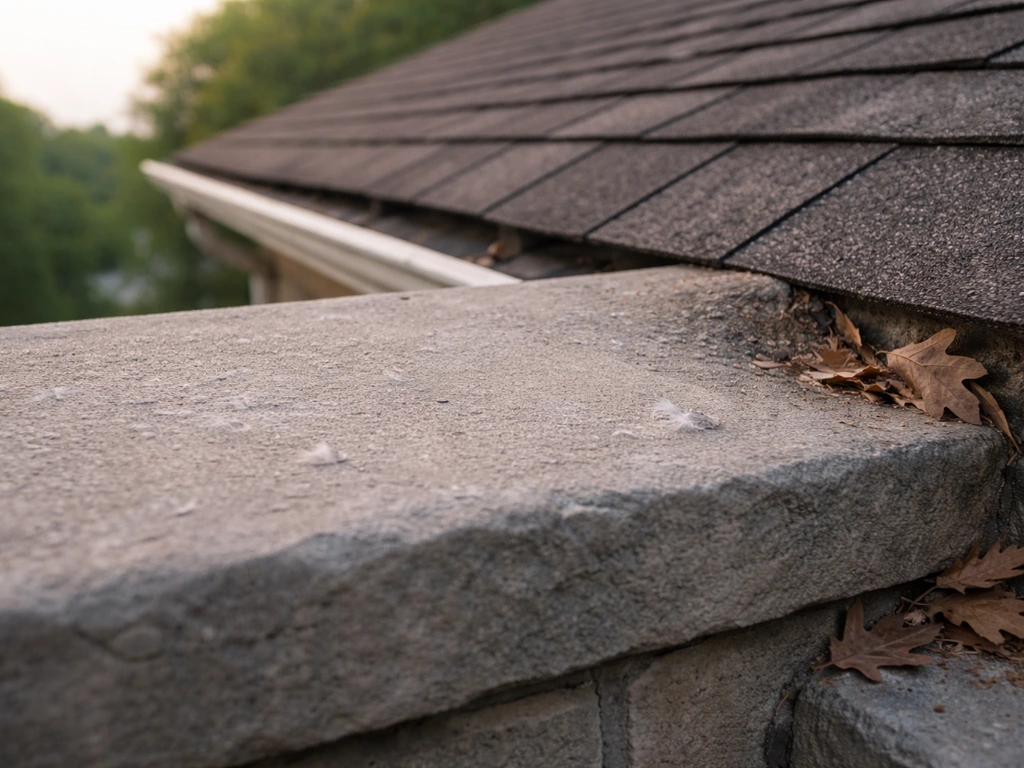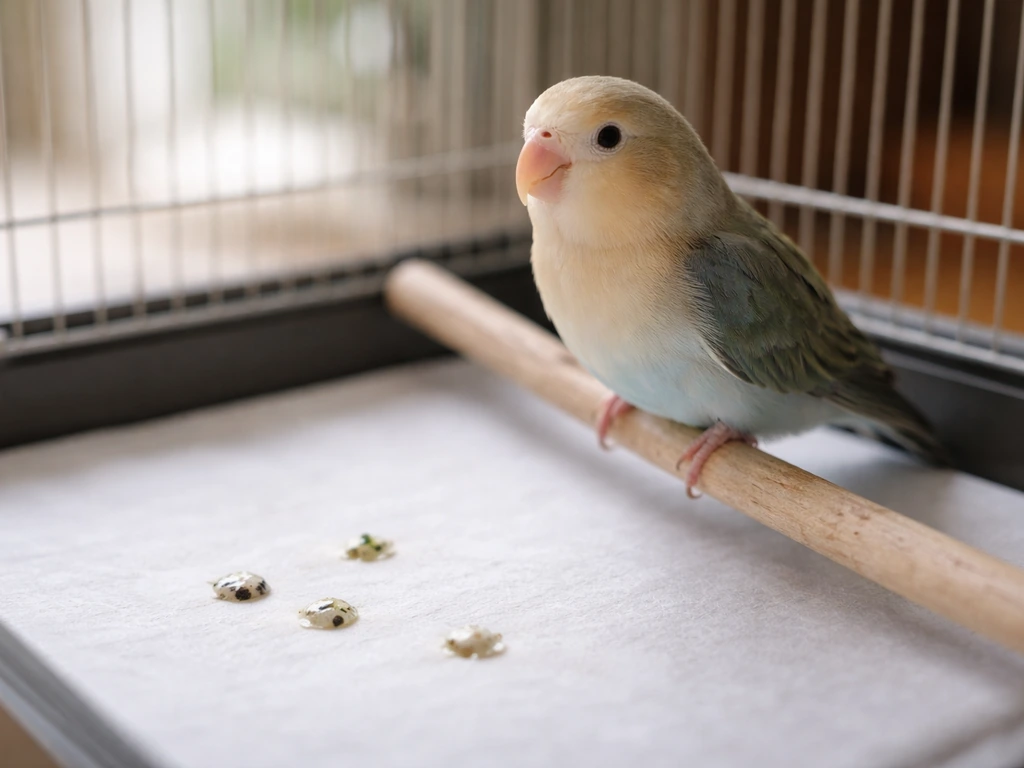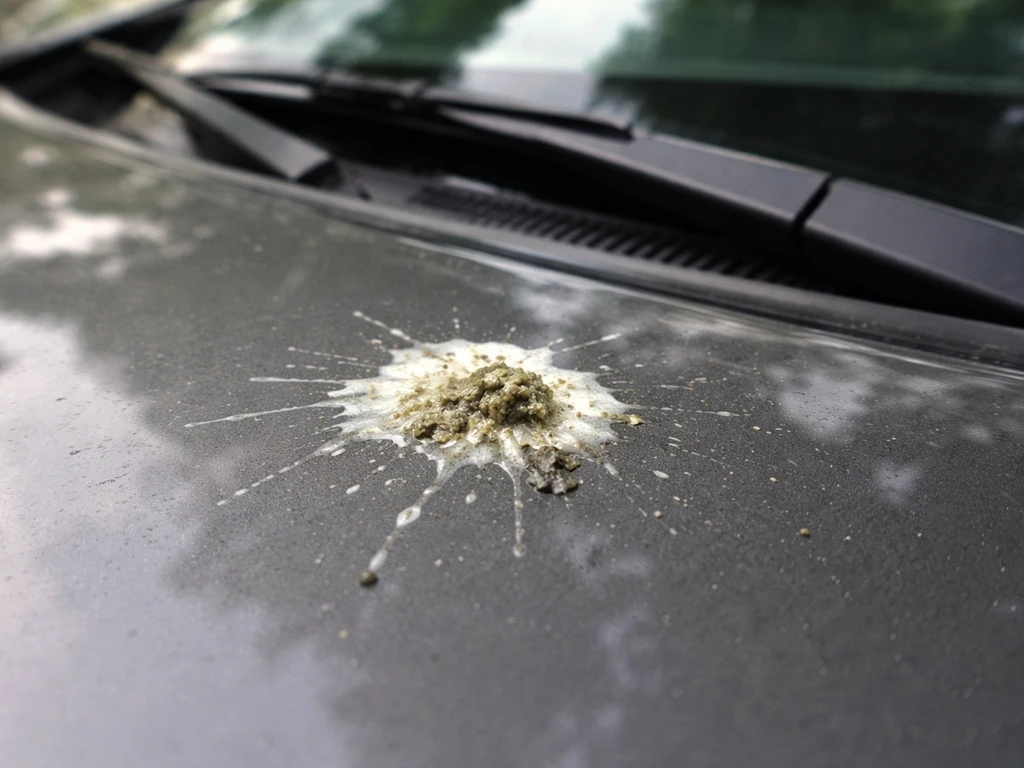
Pigeons are almost certainly the birds pooping the most in your everyday environment. A single pigeon can produce around 25 pounds of droppings per year, and because they roost in dense flocks on rooftops, ledges, and bridges, the mess compounds fast. Starlings and geese are close runners-up depending on your setting: European starlings flock in the thousands and geese can each drop close to a pound and a half of waste per day. If you're dealing with a serious accumulation on your car, balcony, or building, one of these three is almost always responsible.
What Bird Poops the Most and How to Identify It

Marcus Fielding
18 May 2026
Which birds poop the most, and why they do it so much
Bird digestive systems are built for speed, not storage. Birds process food quickly to stay light enough to fly, and they have no separate urine storage, so liquid and solid waste exit together in one shot. The faster the metabolism, the more frequent the output. Small birds like sparrows and finches poop every 15 to 20 minutes. Larger birds poop less often but produce much bigger deposits each time. The birds that cause the most real-world mess are the ones combining high frequency or large volume with the habit of living close to people in large numbers.
Pigeons top the list because they are both abundant and colonial. Unlike some animals, birds do not reliably control when or where they poop, so the best approach is preventing them from roosting nearby Pigeons top the list. They roost year-round in the same spots, meaning droppings pile up rather than scatter. Canada geese are a different kind of problem: a single goose produces roughly 1 to 1.
5 pounds of droppings daily, and a park flock of 50 geese can blanket a lawn in hours. European starlings create their own chaos in winter roosts, where tens of thousands of birds in one tree or on one building can coat everything below. Seagulls, house sparrows, and crows round out the usual suspects in urban areas, but none match pigeons, geese, or starlings for sheer volume in human spaces.
Some people also ask specifically which pet bird poops the least, which can depend more on species and individual care than on size alone.
| Bird | Daily Output (approx.) | Typical Setting | Why They Stand Out |
|---|---|---|---|
| Pigeon | ~0.07 lbs (multiple times/day) | Cities, rooftops, bridges, ledges | Year-round roosting, large flocks, same spots |
| Canada Goose | 1 to 1.5 lbs | Parks, lawns, golf courses, ponds | Very high daily volume per bird, large flocks |
| European Starling | Frequent, smaller deposits | Cities, farms, open country | Massive winter roosts in tight spaces |
| Seagull | Moderate-large deposits | Coastlines, parking lots, landfills | Bold, often targets parked cars and people |
| House Sparrow | Very frequent, small deposits | Eaves, signage, outdoor cafes | Nests in human structures, constant presence |
How to tell which bird left the mess
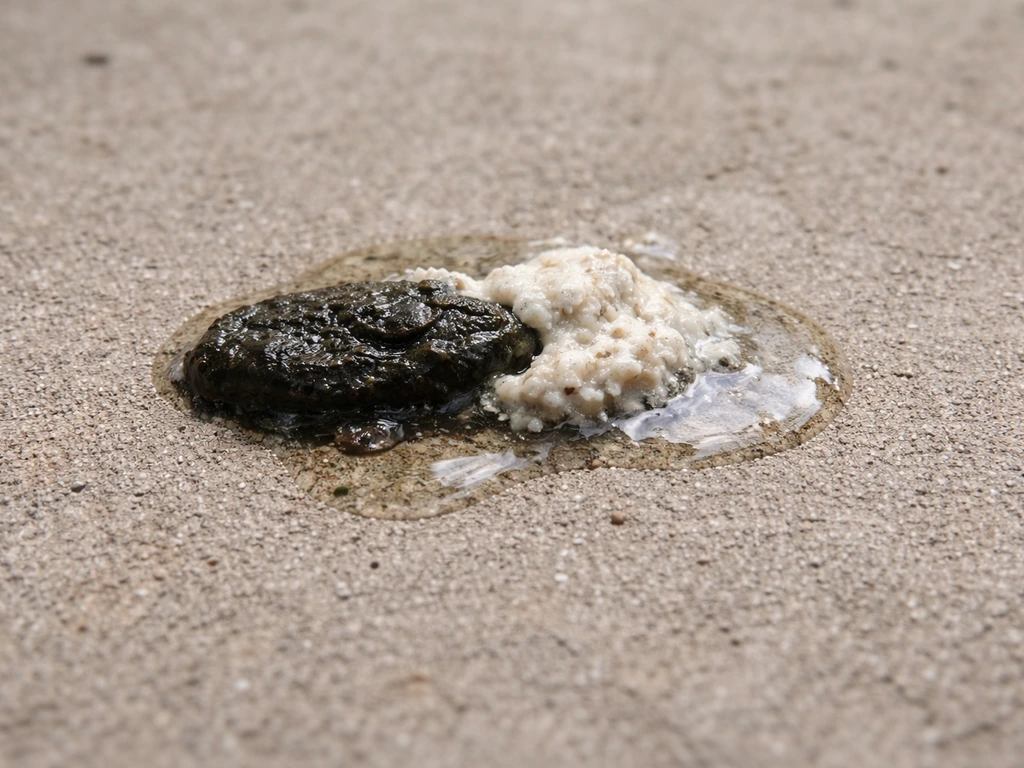
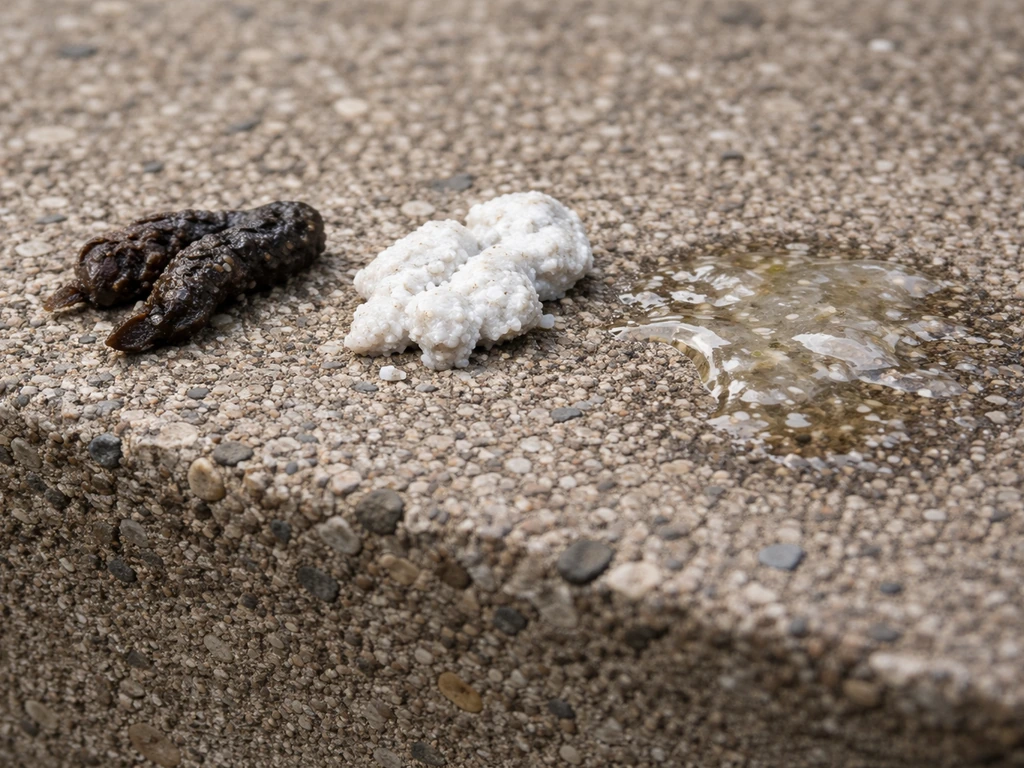
Bird droppings have three parts: the dark fecal matter, the white or cream uric acid (the urates), and sometimes a watery component. The ratio and appearance of these tell you a lot about the bird. Pigeon droppings are typically white-gray, cylindrical, and paste-like with a dark tip. They dry to a chalky crust and tend to accumulate in layers at roost sites.
Goose droppings are long, tubular, greenish-brown, and fibrous because geese eat a lot of grass. They look almost like a short, thick green sausage and are hard to mistake for anything else. Starling droppings are small, splattery, and often purplish if the birds have been eating berries. Seagull droppings are large, splashy, white-dominant, and often liquid because gulls eat fish and other high-moisture foods.
Location is just as useful as appearance. If the mess is concentrated in tight clusters directly under a ledge, beam, or AC unit, you are dealing with a roosting bird, most likely a pigeon or starling. If it covers a wide open lawn or footpath in scattered patches, geese are almost certainly responsible. Splatters on cars parked under trees in autumn or winter, especially with berry-stained color, point to starlings or cedar waxwings in a nearby roost. Single large splats on a windshield in a coastal or waterfront parking lot usually mean gulls.
The top culprits by setting
Urban streets and sidewalks
Pigeons dominate here. They nest on building ledges, window air conditioner brackets, and underneath bridges, then fan out to feed on the street below. The droppings accumulate fastest directly under roosting and nesting spots, which means doorways, fire escapes, and parked delivery areas often bear the brunt.
Rooftops and building exteriors
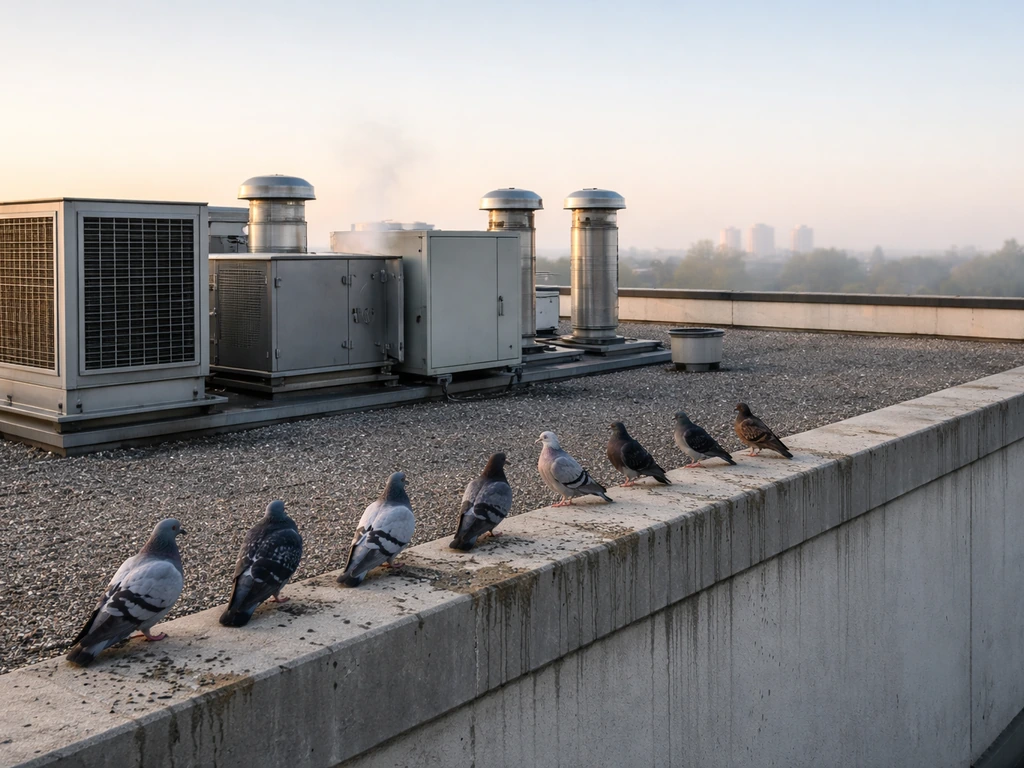
Pigeons and starlings are the main offenders. Flat rooftops with HVAC equipment offer perfect sheltered roosting spots. Droppings can build up to several inches deep over a season if not managed, and that is where serious health concerns begin. Rooftop accumulations are also where the worst corrosion damage to building materials happens, since the uric acid in droppings is mildly acidic and breaks down paint, tar, and metal over time.
Parks and open green spaces
Canada geese are the dominant problem in parks, especially near ponds or retention ponds. Their droppings make grass slippery and smelly within days. Pigeons congregate near food sources like picnic areas and benches, while crows and grackles contribute in areas where people regularly feed birds.
Cars and parking areas
This is usually a seagull, starling, or pigeon problem depending on your location. Cars parked under trees where starlings or crows roost overnight get hit hardest. Coastal and mall parking lots see heavy seagull activity. The issue is not just cosmetic: bird droppings are slightly acidic and, especially in warm weather, can etch clear coat in as little as a few hours if left to dry and bake in the sun.
Nesting sites and eaves
Sparrows, starlings, and pigeons all nest in or on human structures. The droppings pattern around a nest is distinctive: a heavy streak or cone shape running down the wall directly below the nest entrance. Active nest sites can produce mess continuously through the breeding season. Worth noting: birds are actually quite deliberate about not fouling their own nests, which is a fascinating separate topic, but the area immediately outside and below a nest is a different story.
If you are wondering what bird does not poop, know that most birds avoid fouling their own nests, but mess outside and below a nest still builds up. That is why bird nests are usually spared from poop, but the area outside and below them still gets hit by droppings falling from the nesting activity why bird nests aren't covered in poop.
Do the biggest poopers pose the biggest health risk?
Not always, but heavy accumulations of any bird's droppings deserve respect. The three disease concerns most commonly associated with bird droppings are histoplasmosis, cryptococcosis, and psittacosis. Histoplasmosis is a lung infection caused by breathing in spores of the fungus Histoplasma, which can grow in accumulations of bird or bat droppings.
CDC’s 2022-104 worker guidance lists activities that can disturb large accumulations of bird or bat droppings, such as cleaning or scraping droppings from a bridge or building, which increases histoplasmosis risk breathing in spores of the fungus Histoplasma.
Cryptococcosis is a fungal infection also linked to pigeon droppings specifically. Psittacosis (also called parrot fever) is a bacterial infection more commonly associated with pet birds, but it has been linked to pigeons and other wild birds as well.
Here is the important context: for most healthy adults, a routine small cleanup like wiping a windowsill or hosing off a balcony is not a serious health risk. Public health guidance from sources like NYC Health makes this distinction clearly. The risk goes up significantly with large accumulations, older droppings that have dried and become dusty, enclosed spaces with poor ventilation, and cleanup methods that stir up dust.
NIOSH/CDC guidance warns that disturbing or cleaning up large accumulations of bird or bat droppings can aerosolize infectious material and increase the risk of work-related histoplasmosis large accumulations and cleanup methods that stir up dust.
People with weakened immune systems face a higher baseline risk. So the real danger is not a fresh pigeon dropping on your car, it is an unmanaged rooftop or attic full of years-old dried material that gets disturbed without protection.
How to clean up bird droppings safely
The single most important rule is: do not sweep or vacuum dry droppings. Sweeping kicks material into the air. A regular vacuum does the same and can also blow contaminated dust out its exhaust. If you absolutely must use a vacuum, it needs to have a HEPA filter, and even then, this approach is really only suited for controlled professional cleanup situations.
For small, routine cleanups
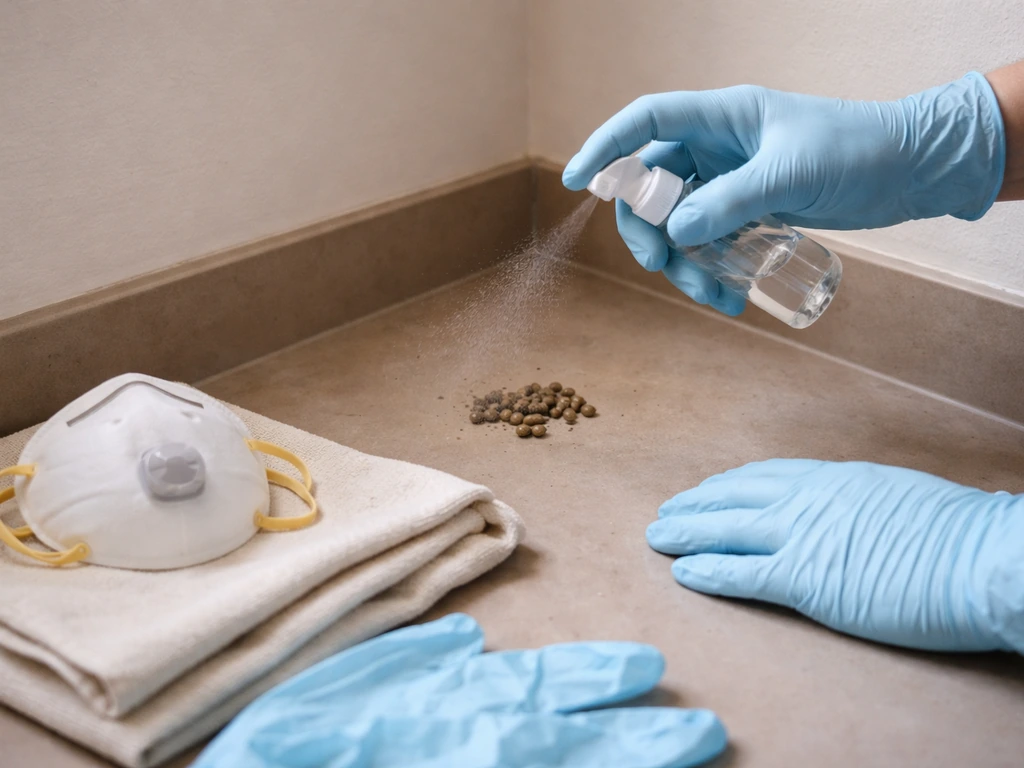
- Wear disposable gloves. A basic dust mask is a reasonable precaution even for small jobs.
- Wet the droppings first with water from a spray bottle or low-pressure hose. This is the key step. Wetting prevents dust from becoming airborne.
- Use paper towels or a disposable scraper to collect the material. Do not use bare hands.
- Seal the waste in a plastic bag and place it in the trash.
- Disinfect the surface with a standard household disinfectant.
- Wash your hands thoroughly with soap and water when done, even if you wore gloves.
For large accumulations or droppings built up over years
This is a different category. Public health guidance, including from the Illinois Department of Public Health, recommends wearing an N95 or HEPA respirator (not just a dust mask), disposable coveralls, gloves, and eye protection. Wet the area thoroughly before any removal, using a low-velocity spray rather than high-pressure water, because high-pressure streams can aerosolize spores before the water has a chance to neutralize them. Remove material into sealed containers. If you are dealing with a serious accumulation in an attic, on a commercial rooftop, or in a building interior, getting a professional remediation company involved is genuinely worth the cost.
One specific situation worth calling out: pools. If bird droppings land in a pool, the CDC recommends removing them with a net and then following up with proper disinfection of the water. Do not vacuum droppings from pool water, since pool vacuums cannot be adequately cleaned and disinfected afterward.
How to stop birds from coming back
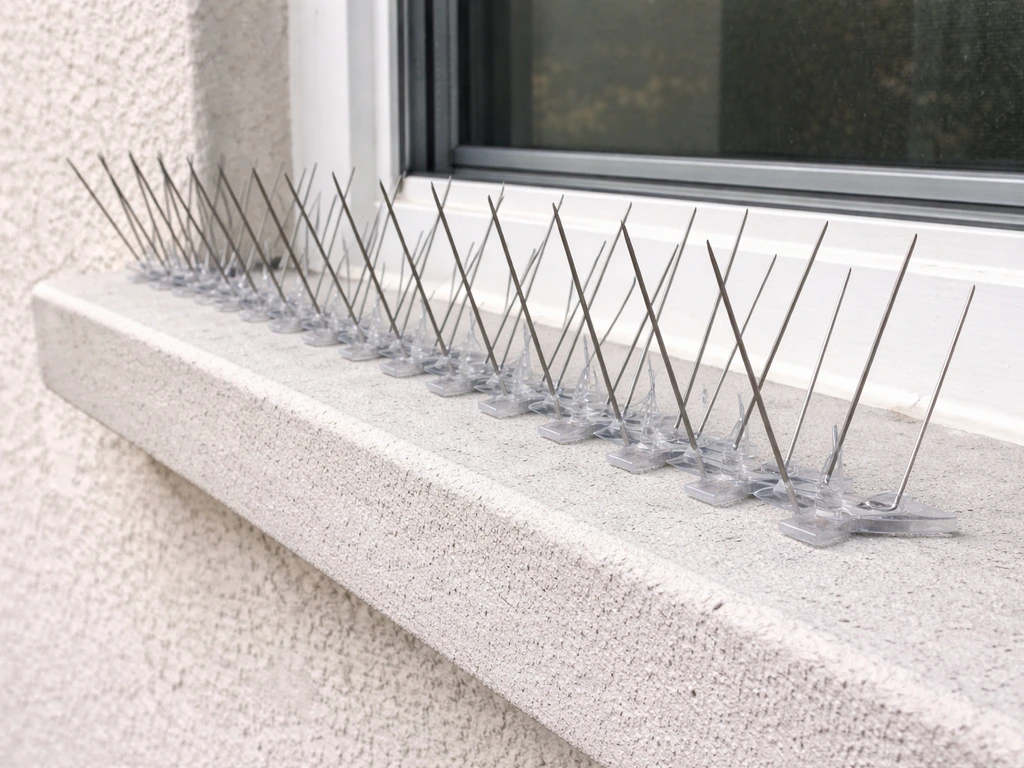
Prevention is far easier than repeated cleanup, and it aligns with CDC guidance that emphasizes eliminating the source of accumulation in the first place. The most effective deterrents work by making a site physically uncomfortable or inaccessible for roosting.
- Bird spikes: stainless steel or plastic spikes attached to ledges, beams, and window sills make landing uncomfortable without harming birds. Effective for pigeons and gulls on flat surfaces.
- Bird netting: the most complete solution for large areas like building facades, rooftops, or under bridges. Properly installed netting completely excludes birds from a space.
- Slope covers: pigeons cannot grip steeply angled surfaces. Adding angled sheet metal or plastic covers to ledges removes flat perching area.
- Reflective deterrents: hanging reflective tape, old CDs, or commercial flash tape near problem roost areas can disrupt birds' comfort, though habituated birds eventually ignore them.
- Habitat removal: the single most sustainable fix. Remove food sources (secure trash, stop inadvertent feeding), remove standing water where geese and gulls congregate, and trim trees used as communal roosts where practical.
- Decoy predators: plastic owls and hawk kites work briefly but birds figure them out quickly unless they are moved regularly.
- Exclusion at nesting sites: block off gaps, eaves, and vent openings before nesting season begins. Once a nest is active, you may need to check local wildlife regulations before disturbing it.
For geese specifically in parks or lawns, planting tall native vegetation along pond edges removes the clear sightlines geese prefer for safety, which discourages them from using the area. Geese do not like landing where they cannot see predators approaching. Combine that with no-feeding policies and you can dramatically reduce a goose problem without any physical barriers.
The good luck myth versus reality
Getting hit by bird poop is widely considered good luck in many cultures, from Russia and Turkey to Italy and parts of the UK. The belief likely has roots in probability: a direct hit from the sky is a rare event, and rare events have historically attracted superstitious meaning. Some interpretations frame it as a sign of incoming wealth or prosperity. There is even a common belief in some Eastern European traditions that the messier the hit, the better the fortune.
The practical reality is somewhat less poetic. Bird droppings are mildly acidic, can carry the pathogens described above, and will etch your car's paint if left too long in the sun. The odds of getting seriously ill from a single incidental exposure are genuinely low for a healthy person, so if the good luck framing helps you stay calm while you find a paper towel, it is not doing any harm. Just follow up with soap and water. The fortune may or may not arrive, but clean hands are a sure thing.
What the superstition does not account for is the difference between a single random splat and an ongoing infestation. One pigeon hit on your shoulder while walking to work is a statistical fluke. A rooftop with two years of accumulated pigeon droppings above your HVAC intake is a real problem that needs real action, regardless of what any folklore says about it.
FAQ
If it is one big splat on my car, how should I clean it without causing damage or exposure?
Treat it as fresh until proven otherwise. Rinse first to remove loose material, then wash with car-safe soap, and dry immediately. Avoid wiping dry, since dried droppings can abrade clear coat. If the spot has been baked on for days, use a dedicated bird-dropping remover or a mild pH-balanced cleaner, and test in a small hidden area first to prevent haze.
How can I tell whether the droppings are from pigeons, starlings, or geese when I only have photos?
Focus on shape and scatter pattern. Pigeon droppings are usually small-to-medium, white-gray, cylindrical, and often layered under the same roost spot. Starling droppings are smaller and splattery, sometimes with a purplish tint when birds eat berries. Goose droppings are long and tubular with a fibrous look and a greenish-brown color, often concentrated across lawns or pathways rather than tight clusters under a ledge.
Can I just hose everything off if I see droppings on a balcony or sidewalk?
You can, but do it safely. Use low-velocity water and keep it directed so you do not blast material into the air. After rinsing, remove residue with disposable towels or a damp mop, then disinfect surrounding high-touch areas. If it is a heavy, old buildup, rinsing alone may not be enough, and the safest approach is professional cleanup.
Why do experts warn against sweeping or vacuuming dry droppings, and what is the safer alternative for small messes?
Dry removal can aerosolize contaminated dust, increasing inhalation risk, and spreading material onto other surfaces. For small fresh spots, dampen first, then wipe with disposable paper and discard. If you must use tools, use only equipment suited for contaminated cleanup, and if vacuuming, use a properly fitted HEPA unit.
How long do droppings remain risky after they dry, and when does it become a bigger problem?
Risk increases with age mainly because dried material becomes dusty and more easily disturbed. Fresh splats are usually a low-risk incidental exposure for healthy people, but years-old accumulations in attics, rooflines, or enclosed spaces become a different situation, especially if you disturb them during cleaning or maintenance.
What is a practical way to confirm there is an active roost before I spend money on deterrents?
Look for fresh signs for at least several days: new droppings near the same spots, droppings that are not yet fully chalky, streaking below a ledge, and bird presence during early morning and late afternoon. Also check for nesting materials or scratch marks on beams or HVAC housings, since active nesting usually means continuous droppings through the breeding season.
If a nest is present, should I assume the area is safe because birds do not foul their own nests?
Do not assume it is safe. Birds typically avoid contaminating inside the nest area, but droppings still fall outside and below the entrance, and active nests can create a persistent cone or streak pattern on the wall. Also, avoid touching nests yourself, since some species are protected and removal rules vary by location.
Is N95 enough for cleanup, or do I really need a respirator with HEPA coverage?
For light, outdoors-only, fresh droppings on a small surface, an N95 may reduce exposure, but it is not the same as a HEPA-filtering approach used for professional remediation. For heavy, old, or enclosed-space buildup, use proper respiratory protection as recommended by public health guidance (often N95 or higher), plus gloves, eye protection, and disposable coveralls, and consider hiring a certified team.
What should I do if droppings get into a car interior, like seats or floor mats?
Do not vacuum dry. Remove loose debris by wiping first after lightly dampening, then clean with appropriate upholstery cleaner and allow thorough drying with ventilation. If droppings soaked into fabric or upholstery foam, repeat cleaning and consider professional detailing for heavy contamination, since surface cleaning may not reach all impacted layers.
How do I handle bird droppings on windowsills or near HVAC intakes?
Keep droppings from blowing into the air vents. Wet the area before removal, then bag residue immediately. For HVAC intakes or rooftop units, treat it as a possible persistent source, since birds roosting nearby can keep creating buildup. Cleaning should ideally include inspecting surrounding surfaces for layers and preventing re-roosting with physical deterrents.
For pools, is nets-only enough, or do I need additional water treatment?
For birds landing in a pool, net removal is the first step, but you still need follow-up disinfection according to pool management guidance. Do not rely on filtration alone. Also, avoid using a pool vacuum to remove droppings from the water, since it cannot be reliably sanitized afterward.
What deterrents work best if pigeons or starlings keep returning to the same ledge or roof edge?
Aim for making the surface physically unsuitable for landing and roosting. This usually means properly installed bird spikes, netting, or enclosed barriers that block access to ledges and rooftop equipment. Deterrents often fail when gaps remain around wiring, railings, or HVAC brackets, so seal access points and recheck alignment after storms.