Bat poop and bird poop can look surprisingly similar at a glance, especially when dried, but there are real differences you can spot. Bat guano comes in small, elongated pellets, dark brown to nearly black, with a crumbly texture when dry and no white component. Bird droppings almost always have that familiar white or cream-colored uric-acid portion mixed with a darker fecal mass. If what you're looking at has no white in it, is pellet-shaped, and crumbles easily when poked, you're almost certainly looking at bat guano.
Does Bat Poop Look Like Bird Poop? Quick ID and Safety

Marcus Fielding
20 May 2026
Quick visual comparison: bat vs bird droppings
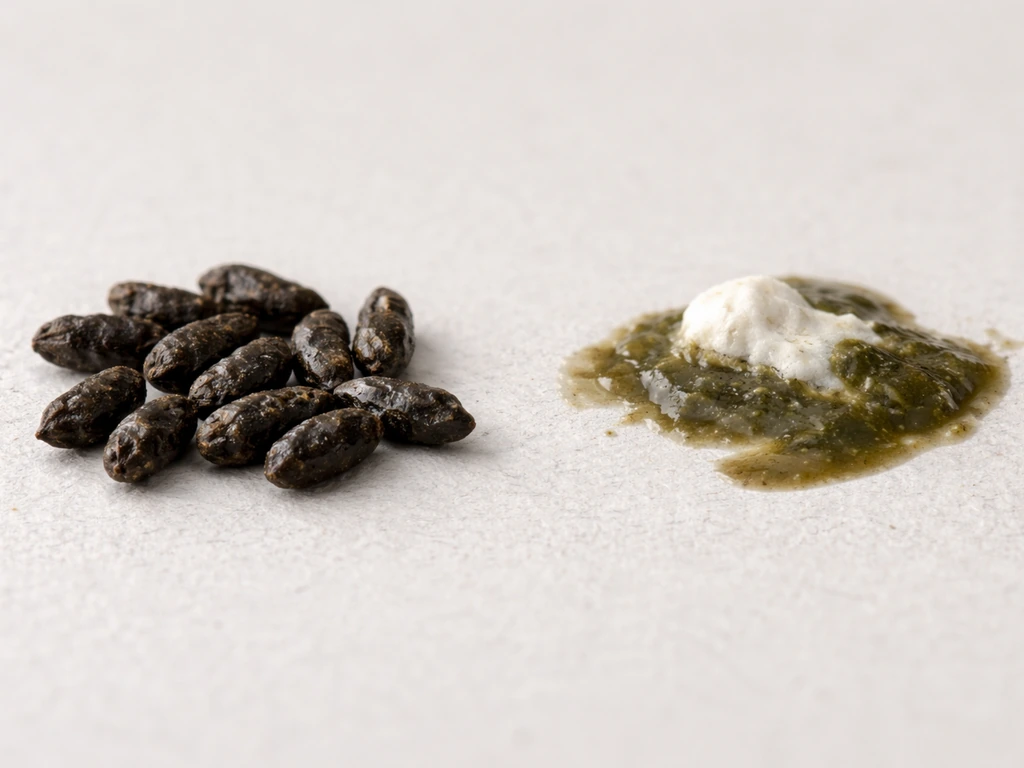
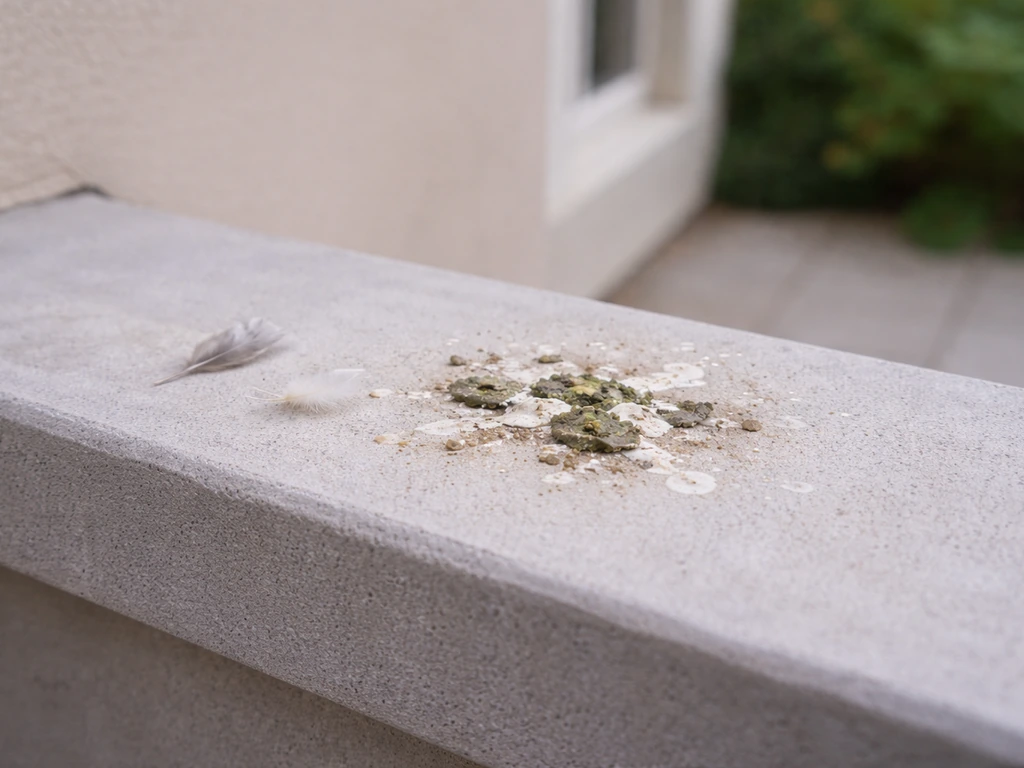
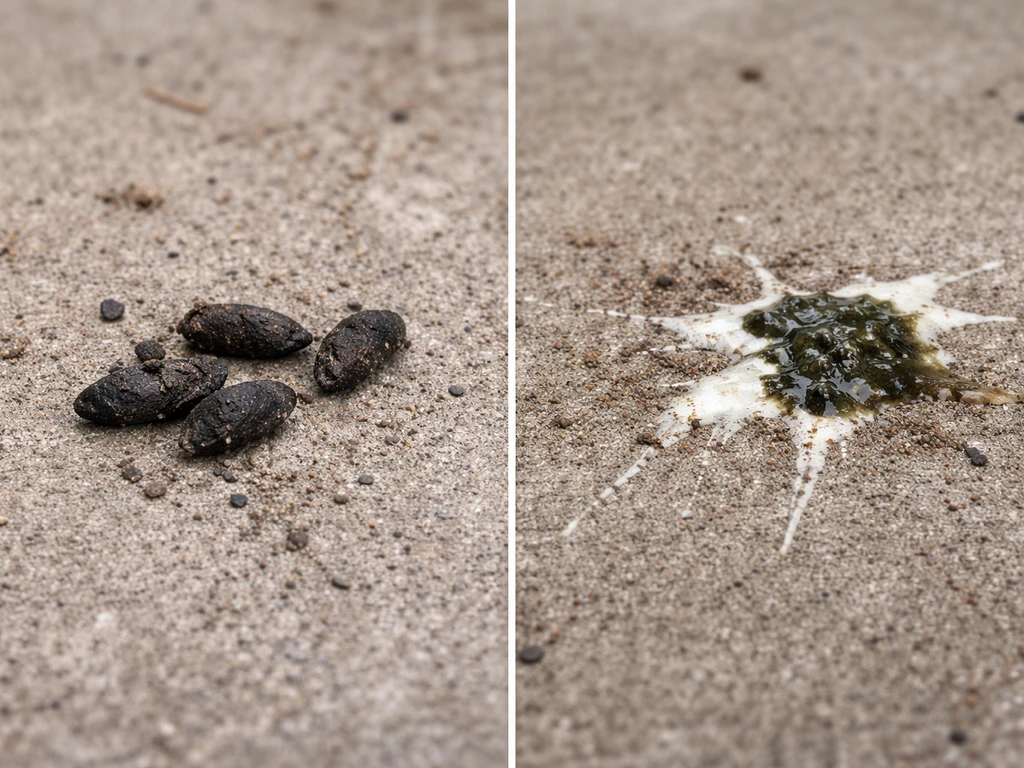
The fastest way to make the call is to look for two things: shape and color split. Bird droppings are typically a splat, with a white or off-white urate section and a darker greenish, brownish, or black fecal center. You can use these visual cues to figure out what bird droppings (bird flu poop) look like and whether they appear two-toned what bird droppings look like. If you want to confirm what black bird poop looks like, focus on the pellet shapes versus the typical two-toned splat with a white urate part. That two-tone look comes from the fact that birds don't urinate separately the way mammals do. Their uric acid crystals and fecal waste mix in the cloaca before being expelled, so you almost always get both parts together in the same drop.
Bat guano, by contrast, looks more like a small, elongated pellet, similar in shape to a mouse dropping but with one key difference: it's crumbly and powdery rather than hard and smooth. Fresh guano is dark, sometimes nearly black, and may have a faint sheen. Older guano is lighter in color and breaks apart easily when disturbed. There's no white portion at all. If you're seeing a pile of tiny dark pellets that crumble when you touch them, bats are the much more likely culprit.
| Feature | Bat Guano | Bird Droppings |
|---|---|---|
| Shape | Small elongated pellet | Splat or blob |
| Color | Dark brown to black (fresh), lighter when dried | White/cream urate portion + darker fecal center |
| White component | None | Yes, almost always present |
| Texture (fresh) | Slightly moist, faint sheen | Wet, pasty, variable consistency |
| Texture (dried) | Crumbly, powdery, breaks apart easily | Chalky, may crack but holds shape better |
| Size | Roughly 5–8 mm long, very small | Varies widely by species, often larger splat |
| Look-alike risk | Similar to mouse droppings | Can be confused with guano when dark/dried |
Key differences in shape, size, color, and texture
Size matters here. A bat guano pellet from a common species like a Little Brown Bat or Big Brown Bat is tiny, roughly 5 to 8 millimeters long and about 2 millimeters wide. Think of a small grain of rice, dark and slightly tapered. Bird droppings scale up considerably depending on the species. A pigeon dropping is a much larger splat than anything a bat produces. If you're dealing with something large and messy, that points toward birds.
Color is your next best clue. Bird droppings get their distinctive white or cream color from uric-acid crystals (urates), which make up the liquid-waste portion. Because birds pass urine and feces through the same opening, the white urate material almost always appears alongside the darker fecal part in the same dropping. Bat guano has no equivalent white portion. If you’re wondering what sick bird poop looks like, focus on changes in color, consistency, and any unusual watery discharge compared with normal droppings what does sick bird poop look like. It's uniformly dark. A dropping that's entirely dark with no white element, and is pellet-shaped, is almost certainly not from a bird.
Texture is the detail that really separates them, especially when you're dealing with an accumulation. Dried bat guano is notably crumbly and powdery. You can break a pellet between your fingers (though you absolutely should not do this without gloves) and it turns to dust. Bird droppings dried on a surface are more like a chalky crust that you can scrape off in flakes but don't pulverize as easily. That powdery quality in bat guano is also exactly why it poses a particular respiratory risk when disturbed.
Fresh vs dried: how time changes the look
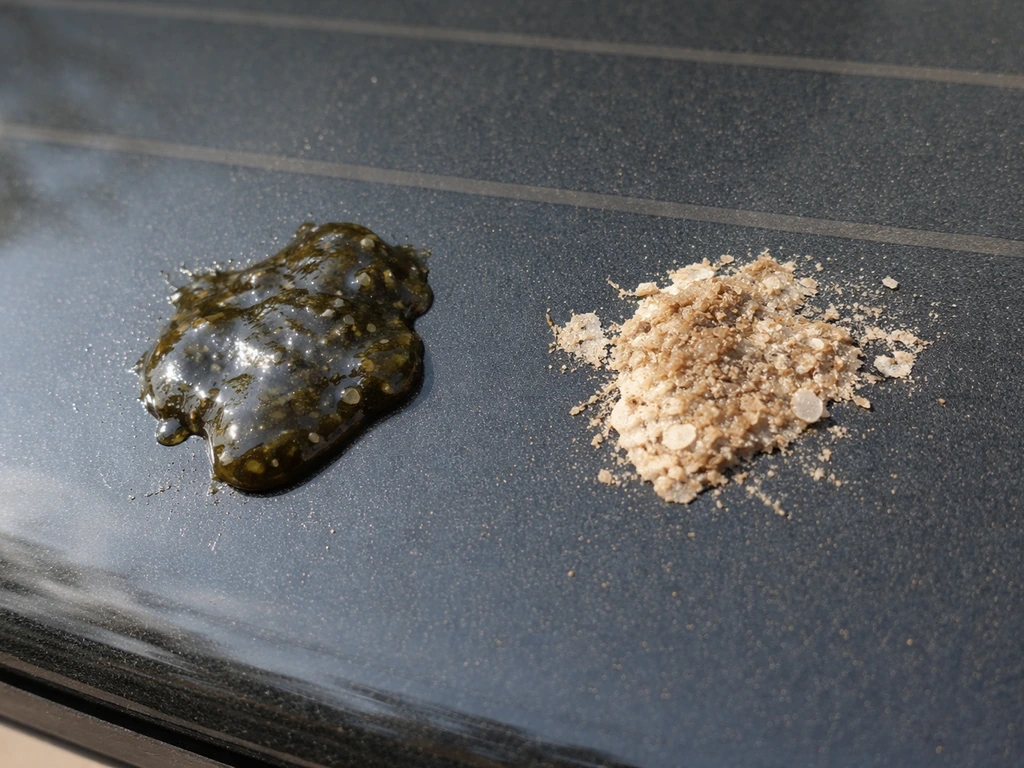
Fresh bat guano is dark, close to black, and has a slight sheen or moisture to it. Within a day or two, depending on temperature and humidity, it dries out, fades to a lighter brown or grayish-brown, and becomes brittle. A pile of guano in an attic over months or years turns into a light, powdery mass that can be hard to identify as individual pellets at all. The pile may look more like dark soil or insulation dust than anything you'd immediately recognize as animal waste.
Bird droppings go through a similar color change. Fresh droppings on a car or windowsill are wet and clearly two-toned. As they dry, the white urate portion becomes chalkier, and the dark fecal center can shrink or blend in. On rough surfaces like concrete, old bird droppings may look like dark smears or stains without much white left. This is a common confusion point, and it's worth acknowledging that old, dark bird droppings on a rough surface can look more like bat guano than they do like fresh bird poop. If you suspect it might be bird droppings but are unsure, the first thing to check is whether there is any white, urate material mixed in. Context and location (more on that next) help you sort it out.
Context clues: where you found it (attic, cave, outdoors, car)
Location does a lot of the identification work for you. Bats roost in dark, enclosed spaces and return to the same spots repeatedly, so you'll find guano concentrated directly beneath their roost site, typically in attics, wall voids, behind shutters, under bridges, or in caves. A pile of small dark pellets directly under a gap or crack in an attic beam is a strong bat indicator. Birds, on the other hand, roost and perch in open or semi-open spaces: eaves, ledges, wires, trees, and rooftops. Bird droppings outdoors on a car, patio, or windowsill are almost always from birds.
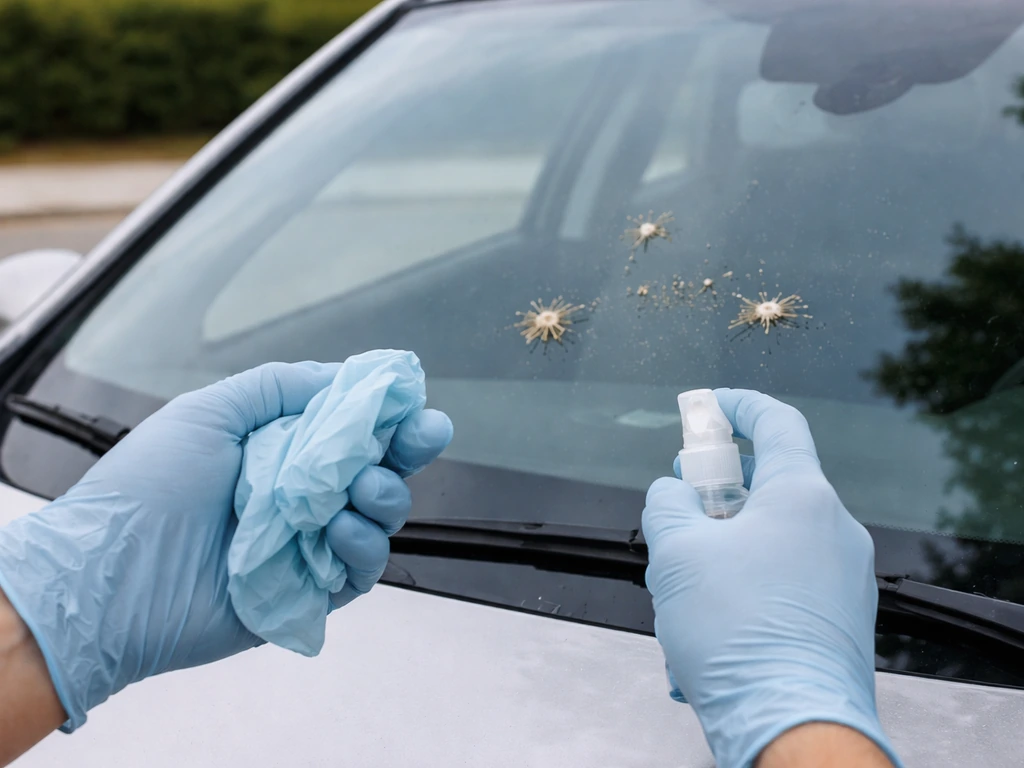
On your car, if you're finding white-splattered droppings with a dark center, that's bird poop. Bats rarely deposit waste directly on vehicles unless you're parked under a roost exit point, and even then you'd find small dark pellets rather than classic splats. In an attic with no visible entry point for birds, dark pellets that crumble equal bats. In a barn or warehouse with open rafters and bird activity overhead, larger dark masses with white mixed in point to birds.
One other look-alike worth mentioning: mouse droppings. Mouse droppings are also small dark pellets, roughly similar in size to bat guano. The crumbly texture is your distinguishing factor. Mouse droppings are harder and more solid; bat guano crumbles and powders. Bat guano may also contain insect fragments, especially wing parts from the insects bats eat, which can sometimes be visible in the pellet material under close inspection.
Health and safety risks: what to know right now
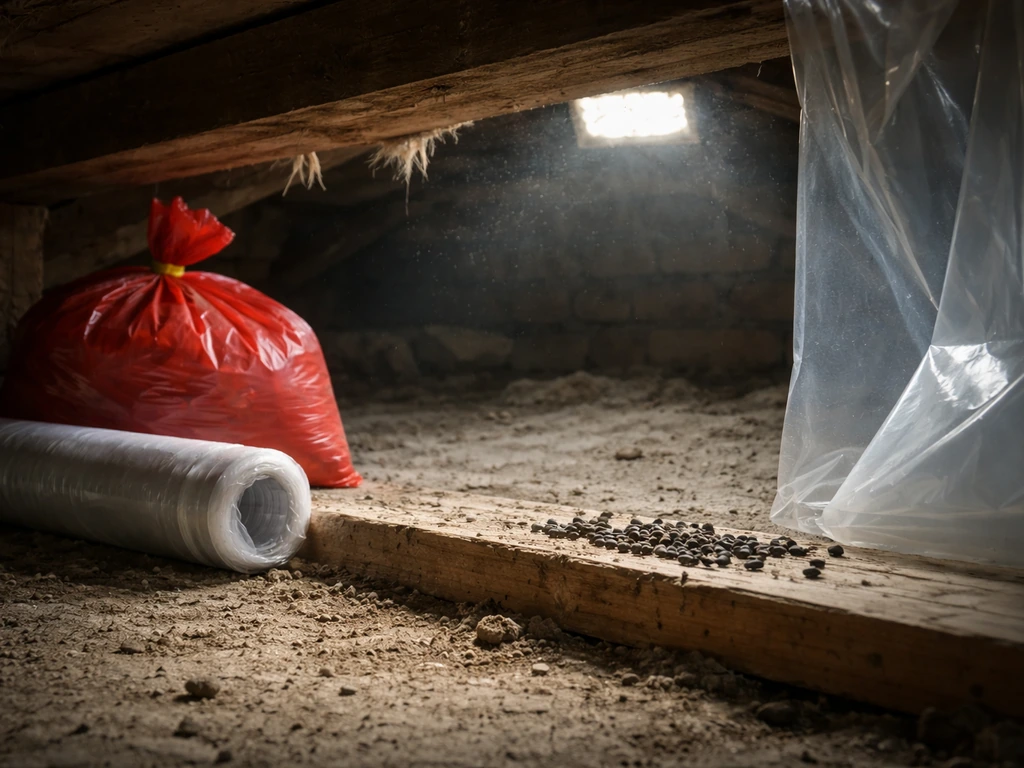
Whether you're dealing with bat or bird droppings, the main health concern is histoplasmosis, a lung infection caused by breathing in spores of the Histoplasma fungus, which grows in soil enriched by bat and bird droppings. The CDC is clear on this: activities that disturb accumulated droppings increase the risk. Symptoms, including fever, cough, malaise, chest pain, and headache, typically appear between 3 and 17 days after exposure, and they can closely mimic other respiratory illnesses or pneumonia. Most healthy people recover without treatment, but it can become serious, especially for immunocompromised individuals.
Bat guano in an attic carries a particularly elevated risk compared to scattered outdoor droppings, because it accumulates over time in an enclosed space. The Louisiana Department of Health specifically calls out accumulated attic guano as a serious health risk. Scattered individual pellets outdoors are lower risk, but you still shouldn't handle them without protection. The bottom line: treat both bat and bird droppings as a potential respiratory hazard, especially when dry and in quantity.
Rabies is a separate concern with bats specifically, but it's transmitted through bites and scratches, not droppings. If a bat has been in contact with a person or pet directly, that's a separate issue requiring immediate guidance from local public health authorities. For the droppings themselves, the respiratory risk from Histoplasma is the primary concern.
Safe cleanup steps and PPE basics
The single most important rule before you do anything: do not dry sweep, dry vacuum, or dry brush droppings. Disturbing dry guano or dried bird droppings without wetting them first sends spores and fine particulate into the air, which is exactly how respiratory exposure happens. This applies whether you're cleaning a small patch on a windowsill or dealing with a bigger accumulation.
For a small, scattered amount of droppings in a well-ventilated outdoor area, here's a practical approach: put on your PPE first, wet the material down thoroughly so it can't become airborne, then collect and bag it for disposal. For indoor situations, especially any accumulation in an attic, take this more seriously.
PPE you need before you start
- NIOSH-approved respirator with HEPA filtration (an N95 at minimum for small, low-risk outdoor cleanup; a P100 half-face respirator for any indoor or larger cleanup)
- Non-latex rubber or nitrile gloves
- Eye protection (safety glasses or goggles)
- Disposable coveralls or old clothes you can bag immediately after, plus disposable shoe coverings
Step-by-step cleanup for small amounts
- Put on all PPE before entering or approaching the area.
- Wet the droppings thoroughly with water or a diluted disinfectant solution (a 1: 10 bleach-to-water mix works for bird droppings on hard surfaces). Let it soak for a few minutes.
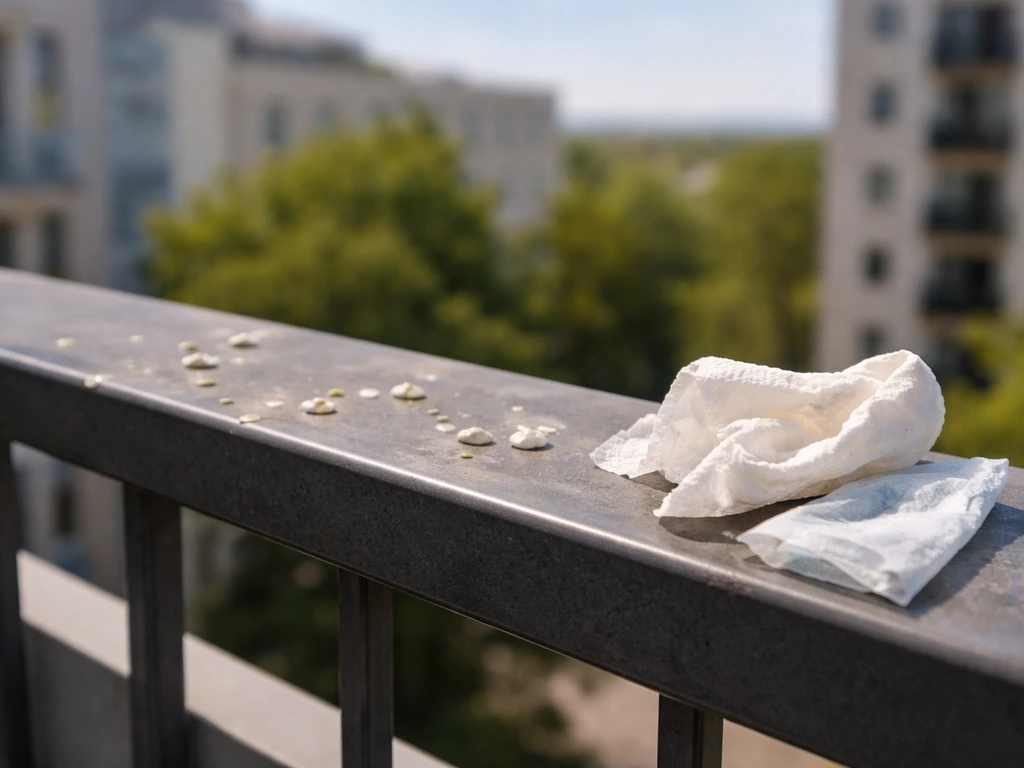
- Carefully scoop or wipe up the wetted material using disposable rags, paper towels, or a disposable scoop. Do not sweep.
- Seal the material in a plastic bag and dispose of it in the regular trash.
- Clean the surface with disinfectant, then remove and bag your PPE.
- Wash your hands thoroughly with soap and water.
If you need to vacuum, use only a HEPA-filtered vacuum. A regular household vacuum will not capture the fine particles and spores and will instead redistribute them into the air. The Government of Québec and Washington State University's EHS guidance both specifically warn against using standard household vacuums on droppings or the dust from droppings.
When to stop DIY: signs you need professional help
There's a clear line between a small, manageable cleanup and a situation that needs professional hazardous-waste or wildlife remediation specialists. The CDC is direct about this: large accumulations of bird or bat droppings should be handled by professional removal companies, not homeowners with a broom.
Call in a professional if any of the following apply. You find a substantial accumulation in an attic, crawl space, or wall void, not just a few pellets but a layer of guano that's built up over time. The area is enclosed or poorly ventilated, making safe respiratory protection harder to maintain. The accumulation is more than a few square feet. You or anyone in the household is immunocompromised, elderly, or has existing respiratory issues. You develop respiratory symptoms (fever, cough, fatigue) within three weeks of potential exposure. There's active bat or bird roosting still happening in the space.
Professionals use truck- or trailer-mounted industrial vacuum systems with high-efficiency filtration for large accumulations, exactly the kind of equipment that prevents spores from going airborne. They also handle the wildlife exclusion side of the problem so bats or birds can't return and the situation doesn't repeat itself. If you've found guano in an attic, the cleanup is really step two. Step one is figuring out how they got in and closing that off properly.
Visual identification of droppings gets you most of the way to an answer in most situations. But if you genuinely can't tell what you're dealing with, if the accumulation is large, or if you're having any symptoms after a cleanup, stop and get expert eyes on it. Local wildlife agencies, pest control specialists, and public health departments are all reasonable first calls depending on your situation. Getting it wrong isn't worth the risk.
FAQ
If I see white bits mixed in, does that automatically mean bird poop?
Not always, but it strongly points to birds. Uric-acid urate typically shows up as an off-white or cream portion in the same dropping. If you only see a few pale flecks, check whether they look like chalky crystals inside a two-toned splat (bird) versus isolated residue on a dark crumbly pellet pile (sometimes from mixed dust or old material).
Can old, dried bird droppings lose the white color and look like bat guano?
Yes. On rough surfaces, aged droppings can become darker and the white urate component can shrink or blend in, making them harder to distinguish. In that case, rely on pellet size and texture, and especially the presence of any consistent white or chalky urate material throughout the accumulation
Are bat droppings always pellet-shaped and crumbly, or can they look different?
They can vary with age and moisture. Fresh guano may be slightly moist and darker, while older accumulations can turn into a powdery mass where individual pellets are hard to see. Even so, bat guano usually breaks down into fine dust more readily than bird droppings, which tend to form flakes or a crust
What if the droppings are on an exterior window ledge or patio, could bats be responsible?
It’s less common, but it can happen if bats are roosting nearby and dropping under an exit point. Look for concentration directly below a gap, crack, or roost area, and expect smaller pellet-like pieces rather than the classic two-toned splat pattern typical of birds
How can I tell bat guano from mouse droppings if both are small dark pellets?
Texture is the main tie-breaker. Mouse droppings are usually firmer and more solid, while bat guano powders and crumbles. Bat pellets may also include insect fragments from the bats' diet, which can appear as tiny pieces inside the droppings
Is it safe to wipe up a small spot with a paper towel?
Usually no, not if the material is dry. Wiping can disturb dust and increase airborne particles. The safer approach is to keep people away, put on appropriate PPE, thoroughly wet the droppings so they don’t aerosolize, then collect and bag
Do I need a mask, gloves, and eye protection, or is a basic cleaning kit enough?
A basic kit is often not enough for dry accumulations. Because the key risk is inhalation of spores from disturbed dust, use respiratory protection appropriate for particulate exposure (not just a loose dust mask), plus gloves, eye protection, and clothing you can contain and clean or discard
How do I clean if I don’t have a HEPA vacuum?
For small outdoor amounts, wetting and careful bagging is the priority, without sweeping or vacuuming. For larger indoor accumulations, avoid DIY vacuuming with standard household units even if you think it is “light” work, and consider professional removal or at minimum consult local guidance on equipment and containment
What should I do if I already disturbed the droppings by sweeping or vacuuming?
Stop further disturbance, ventilate the area if you can do so safely, and let aerosolized dust settle. If anyone develops respiratory symptoms such as fever or persistent cough within the following weeks, seek medical advice and mention potential exposure to bat or bird droppings. For significant indoor contamination, consider professional assessment
Does stepping on droppings spread the risk to other rooms?
Yes, it can. Dust and particles can be tracked on shoes and aerosolized when surfaces are later disturbed. Contain the area, avoid walking through it unnecessarily, and after wet cleanup, clean floors and shoes in a way that doesn’t dry-brush or spread residue
If I suspect bats, should I remove the guano right away or deal with the entry point first?
Deal with entry and exclusion first or at least plan to. Cleaning step one without stopping re-entry often means the problem continues and you end up repeatedly disturbing contaminated material. Professionals typically combine cleanup with exclusion so bats do not return to the same roost
Can bat poop cause rabies just from contact with droppings?
Rabies is not transmitted through droppings. The rabies concern is from bites or scratches from a bat. However, the droppings still pose a respiratory fungal risk, so handle them with appropriate precautions even if rabies is not a concern
When should I seek medical attention after exposure to guano?
Seek medical advice if symptoms appear, especially fever, cough, chest discomfort, fatigue, or feeling unwell within about 3 to 17 days after potential exposure. Get urgent care sooner for severe breathing trouble or chest pain, and inform clinicians about possible bat or bird droppings exposure
Should I test the droppings to confirm bat versus bird?
For most homeowners, visual identification plus safe handling is adequate, but testing can be useful when the material is ambiguous, the accumulation is large, or there are medical concerns. If you pursue testing, use reputable local or professional services, and do not attempt to handle or disturb the material more than necessary while waiting
What makes an attic or wall void cleanup higher-risk compared with scattered outdoor pellets?
Accumulation in enclosed, poorly ventilated spaces increases the amount of contaminated dust and spores that can be released when disturbed. Even if individual pieces look small, a buildup over time can represent a much larger inhalation risk during cleaning
How can I decide between DIY cleanup and calling a professional?
A strong rule of thumb is scale and setting. If it’s more than a few square feet, in an attic/crawl space/wall void, poorly ventilated, or you have immunocompromised or high-risk household members, call professionals. Also choose pro help if active roosting is still occurring, because exclusion is usually part of solving the problem