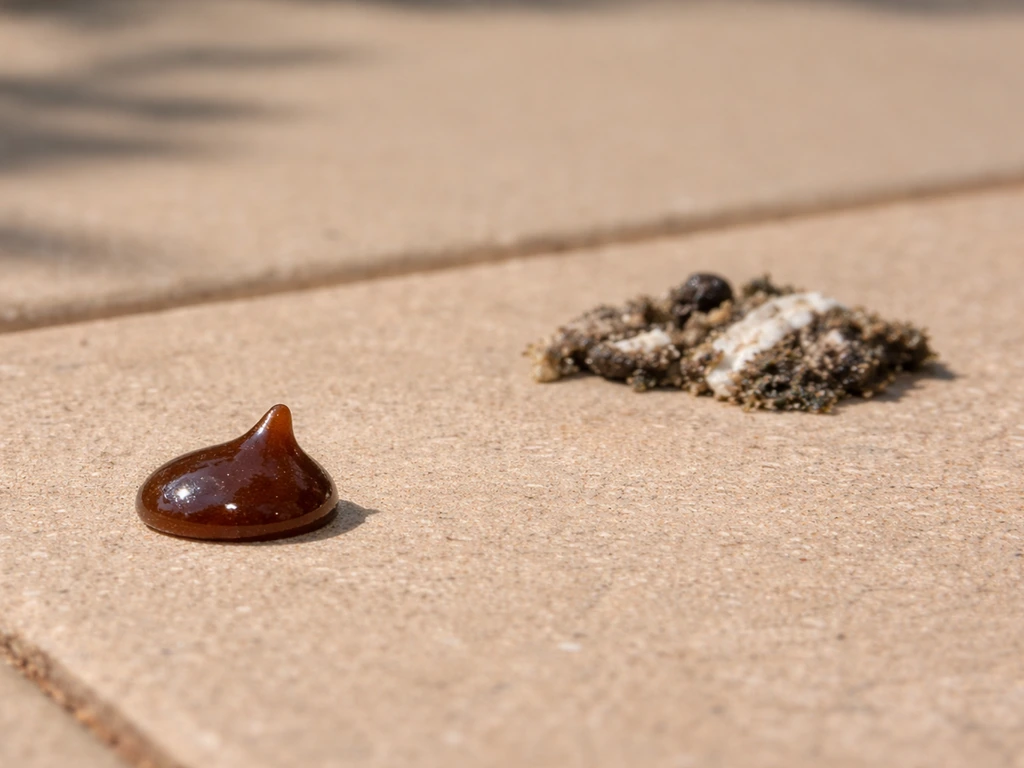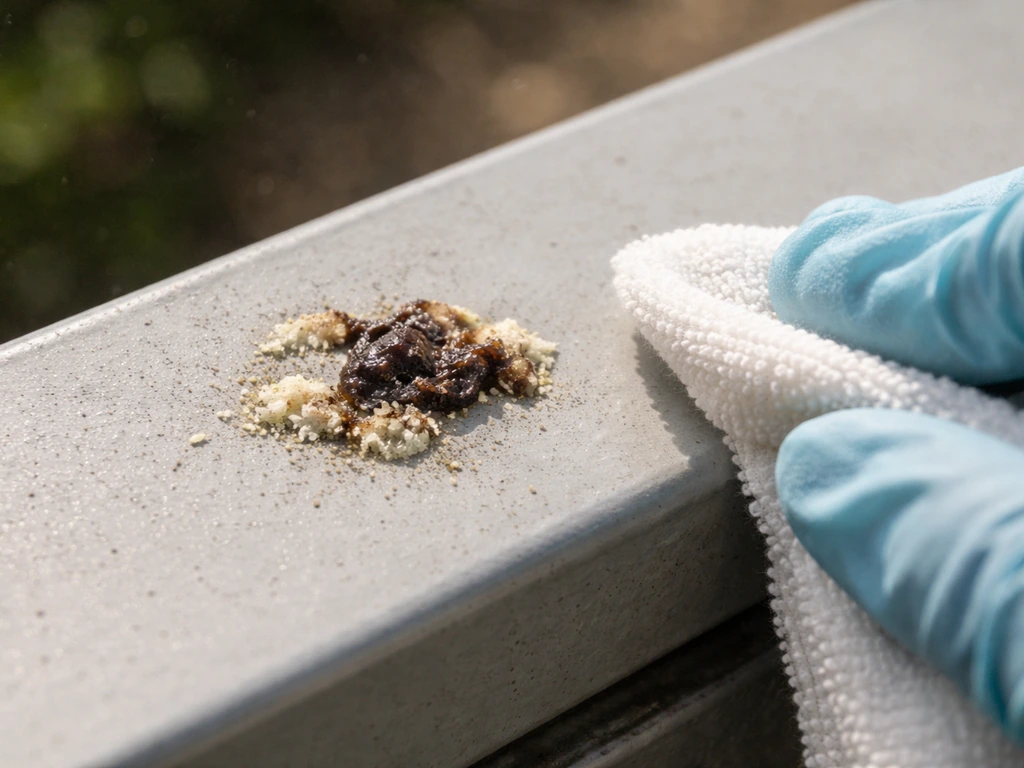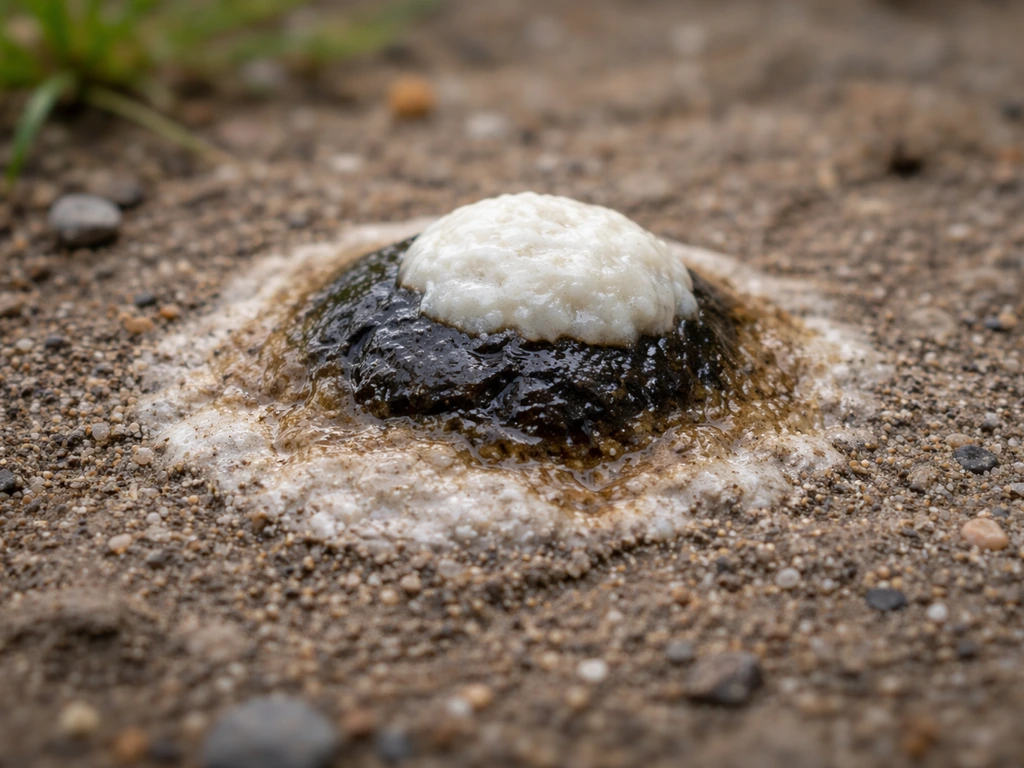
Bird vomit or regurgitated material usually looks like a small wet pile of partially digested or whole food, most often seeds, grain, or mushy plant matter, sometimes mixed with clear or slightly cloudy fluid. If you are wondering whether a real bug can look like bird poop, that description can also fit certain insects and their droppings bug that looks like bird poop. It does not have the classic three-part look of a normal bird dropping (dark feces, white urate cap, clear liquid). If you are specifically trying to figure out what bird diarrhea looks like, look for watery, loose droppings rather than the thicker, food-based regurgitation described here. Instead it tends to be a single-color, food-based mess with no white chalky portion. Depending on the cause, it can range from almost-whole seeds in a puddle of clear slime, to a yellowy or white curd-like paste, to a watery goop with bits of grain. The spot it lands on is usually wetter and less defined than a regular dropping.
What Does Bird Vomit Look Like? How to Tell It Apart

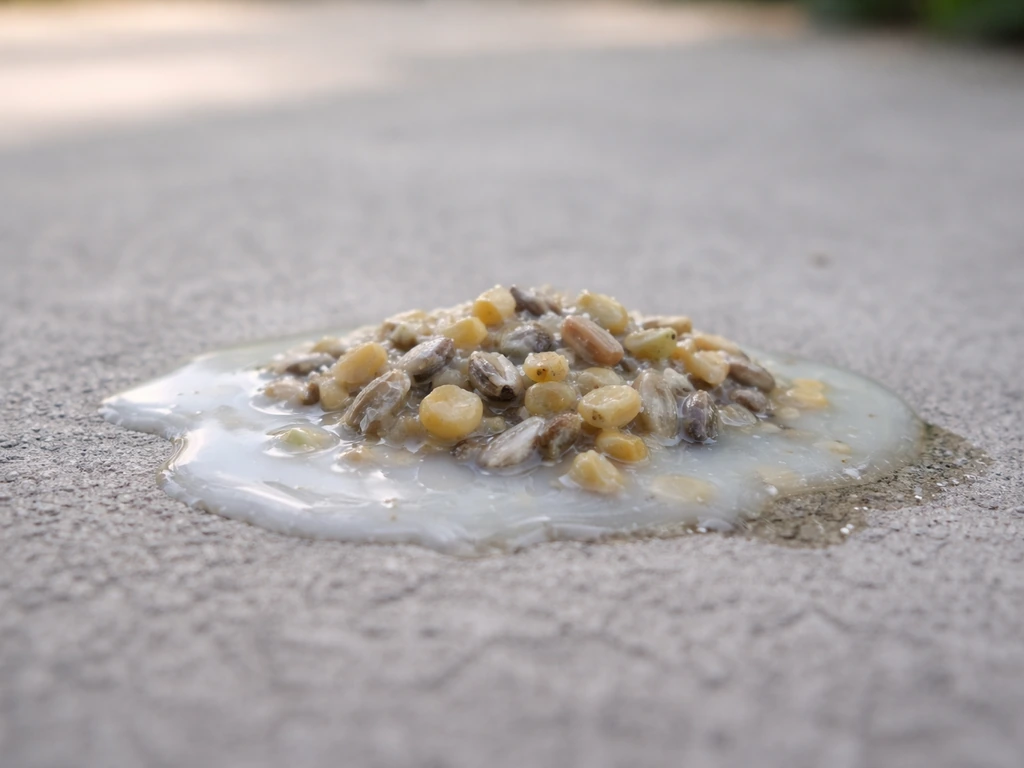
What bird vomit actually looks like up close
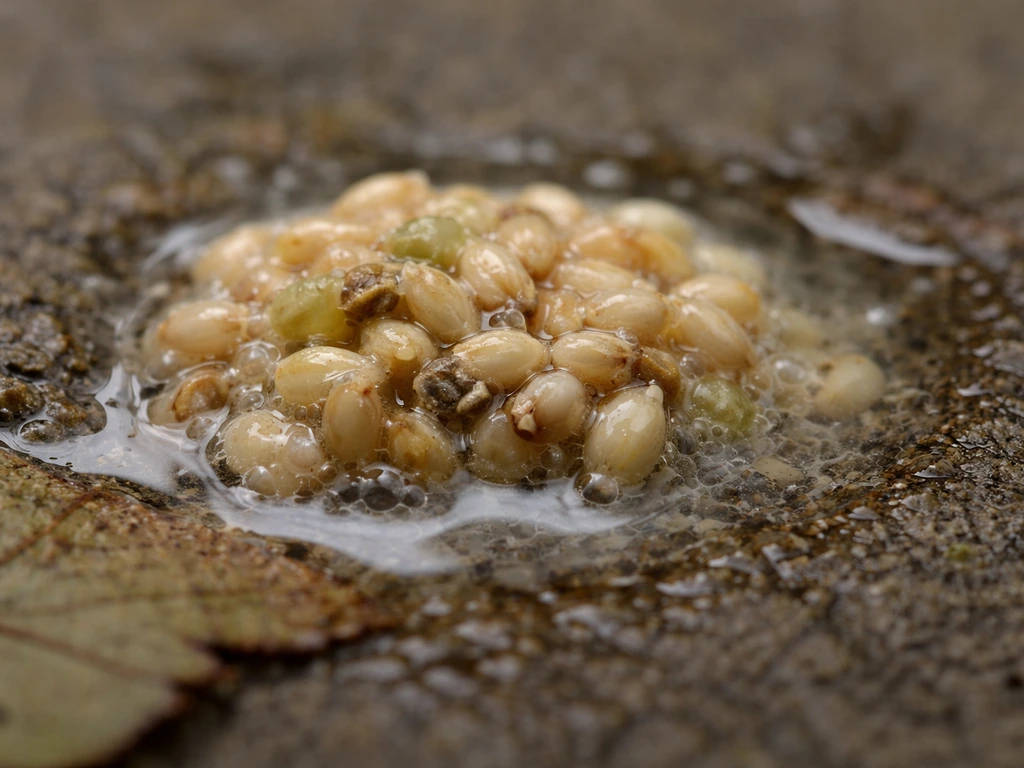
The most common thing people find is a cluster of seeds or softened grain sitting in a small pool of clear or slightly milky fluid. If the bird ate recently and this is regurgitation from the crop, the food can look almost whole and barely digested. Think of it like a bird hit the reverse button before the food got anywhere interesting. The fluid component is usually thin and watery or slightly mucousy rather than the thick, pasty consistency of dried droppings.
Color varies with diet. Seed-eating birds tend to produce pale tan or greenish regurgitated material. Fruit-eating birds may leave something purplish or reddish, which understandably alarms people who think it looks like blood. The smell is usually mild and faintly sour, not as sharp as normal droppings.
When illness is involved, the appearance shifts noticeably. Trichomoniasis (a parasitic infection common in pigeons, doves, and raptors) produces whitish-yellow, cheesy or curd-like masses in and around the mouth and throat, and the material that comes up tends to look like pale yellow-white curds mixed with mucus. Cornell's avian disease researchers describe it as "cheese-like" and note that drooling and regurgitation from this infection often wet the feathers around the beak, so you may see staining on the face feathers as well as the mess below. Yeast infections (Candida) can produce similar white mucousy regurgitation, sometimes with a distended crop visible on the bird. Both look quite different from the normal seed-pile type.
Telling vomit from other bird messes
The fastest way to rule out a normal dropping is to look for the three-component structure. A healthy bird dropping has a dark solid fecal portion, a white or off-white urate section (that is the uric acid crystal part), and sometimes a clear watery ring. A healthy bird dropping is usually recognizable by its normal three-part look rather than food-based regurgitation or vomit. Vomit or regurgitation has none of that. There is no white urate cap, no dark fecal core. It is just food material and fluid.
| Type of mess | Color | Texture | White urate present? | Food particles? |
|---|---|---|---|---|
| Normal dropping | Dark + white cap + clear ring | Firm core, chalky urate | Yes | No |
| Regurgitation (healthy) | Tan, green, or fruit-colored | Wet, mushy, whole seeds possible | No | Yes, often whole or barely digested |
| Illness-related vomit | White, yellow, or pale | Curd-like, cheesy, mucousy | No | Sometimes, mixed with mucus |
| Pellet/cast (owls, raptors) | Gray or brown, dry | Compact, matted fur/bone/feathers | No | Bones, fur, feathers intact |
| Spilled feeder seed | Tan/green | Dry, scattered | No | Yes, dry and loose |
Owl and raptor pellets are worth a separate mention because people often mistake them for vomit. They are dry, compacted, and roughly oval, containing fur, small bones, and feathers bound together. They come out of the beak but are not vomit in any real sense. There is no fluid, no slime, and no food odor. If you find something tightly packed and dry with visible bones or fur, it is a pellet, not vomit.
Spilled feeder seed is another common false alarm. It is dry, scattered loosely, and there is no fluid component at all. If the mess is crunchy underfoot and spreads out like someone knocked over a bag of birdseed, a clumsy feeder or squirrel is the more likely culprit than a sick bird.
Why birds vomit or regurgitate: normal behavior vs real problems
Normal and harmless reasons
Regurgitation is genuinely normal for birds in a lot of contexts. Pigeons and doves feed their chicks by regurgitating crop contents, starting with crop milk and then transitioning to regurgitated seed over about four to seven days. If you find a wet seed pile near a nest, this is usually a feeding mess, not illness. Pet birds, especially parrots, also regurgitate voluntarily as a courtship behavior. A bird doing this may bob its head and stretch its neck before depositing the food, which looks alarming but is basically the bird's version of bringing you flowers.
Dietary irritants and stress
Birds that eat something that does not agree with them, spoiled seed, unfamiliar fruit, or food with mold, can regurgitate it without any underlying illness. Stress from handling, transport, a predator encounter, or a sudden change in environment can also trigger regurgitation. In these cases the bird usually bounces back quickly, resumes normal behavior, and the mess looks like undigested food with clear fluid, not curds or thick mucus.
Infections and parasites
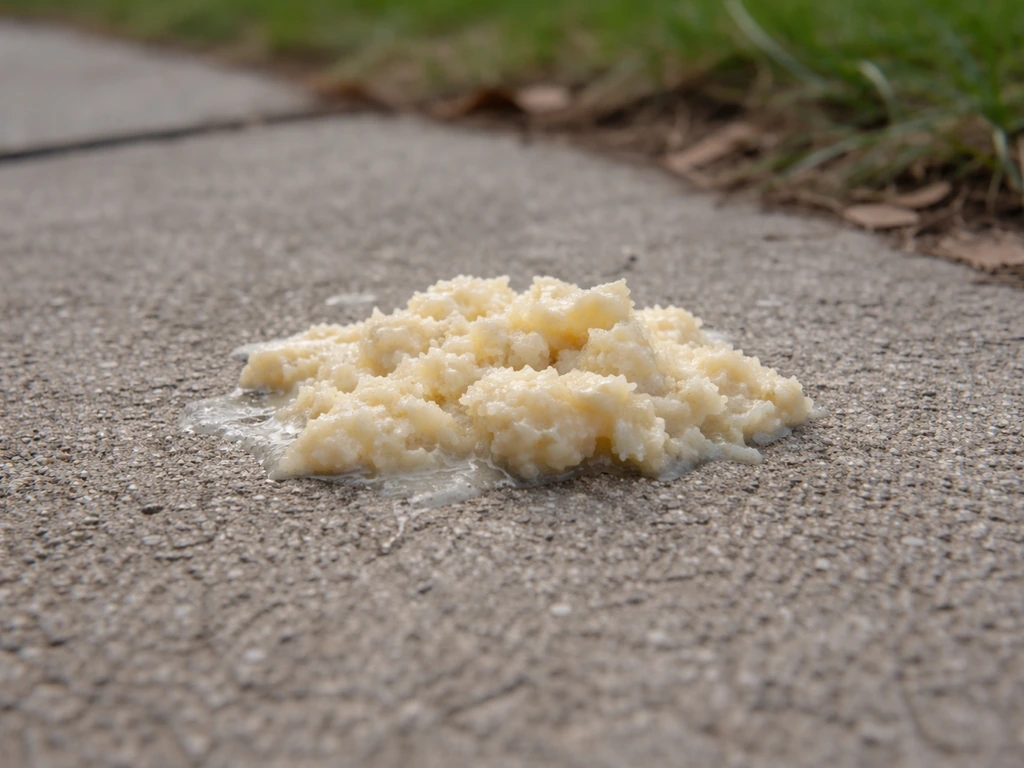
This is where vomit appearance becomes a diagnostic clue. Trichomoniasis produces that curd-like, yellowish-white material described above and is especially common in wild pigeons, doves, and birds of prey. Candida (yeast overgrowth) causes similar white mucousy regurgitation, often with a visibly swollen or doughy crop. Giardia, a parasitic gut infection, tends to show up more in the droppings than in vomit, where it gives stool a "popcorn" texture, which is an odd but useful thing to know if you are trying to track what is wrong. Any of these infections can cause persistent regurgitation, lethargy, and fluffed feathers alongside the unusual appearance of the material.
When it is a health emergency
Red flags in the bird
Single episodes of regurgitation with no other symptoms are rarely an emergency. Persistent or repeated vomiting is a different story. Call a vet if you see any of the following alongside the vomiting:
- The bird has been vomiting repeatedly or cannot keep food down
- Visible curd-like or cheesy material around the mouth or throat
- Feathers around the beak are wet and stained from drooling or regurgitation
- The crop looks visibly distended or fluid-filled
- The bird is lethargic, fluffed up, or sitting on the floor of the cage
- Breathing looks labored or the bird is open-mouth breathing
- You notice blood in the vomit or significant weight loss
- The bird is a wild species that appears unable to fly or stand
Human and pet exposure risks
For most healthy adults, a brief encounter with bird regurgitation is low risk if you clean it up promptly and wash your hands well. The real concern kicks in with specific pathogens. Psittacosis (Chlamydia psittaci) can be transmitted by inhaling dried particles from infected bird droppings or secretions, and this infection can make humans genuinely ill. MedlinePlus notes that psittacosis is caused by Chlamydia psittaci and that infection occurs when you breathe in bacteria from bird droppings or secretions. Avian influenza is another reason not to be casual about cleaning up around sick or dead wild birds. If you found the mess near a dead bird, or if the bird that produced it was visibly sick, treat the cleanup more seriously and consider calling your doctor or local health department if you develop flu-like symptoms within a couple of weeks. Children and immunocompromised people should not be the ones doing the cleanup.
Clean it up safely: what to do right now
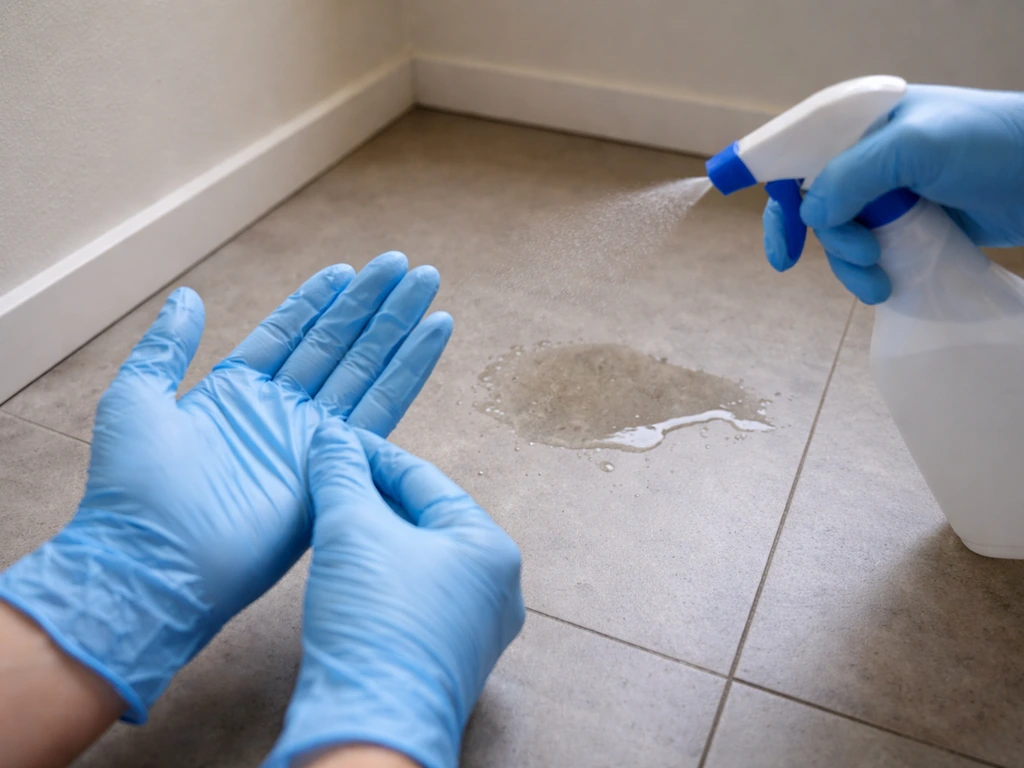
Do not dry-sweep or wipe it up with a dry cloth. That aerosolizes particles and is exactly how psittacosis and bird flu pathogens get inhaled. Wet the area first, always.
- Put on disposable waterproof gloves before touching anything. If there is any chance of splashing (a large or liquidy mess), add safety goggles and an N95 mask, especially if the bird appeared sick or was found near a dead bird.
- Mist the mess with water or a soapy water solution to prevent any dried particles from becoming airborne. Let it sit for a minute.
- Scoop or wipe up the bulk of the material using paper towels or a disposable cloth, and bag it immediately in a sealed plastic bag.
- Scrub the surface with soap and water until visibly clean.
- Disinfect the area using an EPA-approved disinfectant that lists efficacy against influenza A viruses, following the label instructions. A 10% bleach solution (roughly 1 part household bleach to 9 parts water) works on hard non-porous surfaces. Do not mix bleach with any ammonia-based cleaner.
- Bag and seal all used gloves, paper towels, and disposables before binning them.
- Wash your hands thoroughly with soap and water for at least 20 seconds after removing gloves.
On cars or painted surfaces, skip bleach entirely and use a pH-neutral cleaner instead. Bleach will damage paint. A diluted dish soap solution followed by a car-safe disinfectant spray is the safer route there. On fabric or porous surfaces, discard if possible, or use an enzyme cleaner followed by a fabric-safe disinfectant.
Keep children and pets away from the area until it is fully cleaned and disinfected. Dogs in particular tend to investigate messes at ground level, and ingestion of infected material is a realistic risk.
When to call the vet, a wildlife rehabber, or your doctor
If the bird is a pet showing the red-flag signs listed above, contact an avian vet the same day. Not all general-practice vets have avian experience, so look specifically for one who does. Crop infections, trichomoniasis, and candida all respond to treatment but need a proper diagnosis first.
If the bird is a wild species that looks sick or cannot fly, do not handle it with bare hands. Contact a licensed wildlife rehabilitator in your area. In the US, the National Wildlife Rehabilitators Association and the Wildlife Rehabber directory can help you find local resources. Your state or county animal control office can also direct you to the right contact.
For human exposure, see a doctor if you develop fever, chills, headache, or respiratory symptoms within 10 to 14 days of cleaning up a mess from a visibly sick or dead bird. Tell your doctor about the bird exposure specifically, because psittacosis is treatable with antibiotics but only if the doctor knows to look for it. For avian influenza exposure, the CDC recommends monitoring for symptoms for 10 days and contacting your local or state health department for guidance.
Most of the time, what you are dealing with is completely harmless: a bird fed its chick, courted a mate, or ate something that disagreed with it. The key is recognizing when the appearance (curd-like, mucousy, cheesy) or the bird's behavior (repeated vomiting, lethargy, wet face feathers) tells you something more serious is going on, and then acting on it quickly and safely.
FAQ
If I see a white, curd-like blob under a bird feeder, is it always bird vomit?
Not always. A curd-like substance can be regurgitated crop contents from feeding behavior, but if it is thick, cheesy, or comes with wet feathers around the beak, that raises suspicion for infections like trichomoniasis. If there is no fluid component and you find dry compact oval material with bones or fur, it is more likely a raptor or owl pellet.
How can I tell regurgitated food from normal droppings if I did not see the white urate part?
Use the presence or absence of the three-component pattern. Normal droppings have a dark solid core plus a separate white or off-white urate portion, sometimes with a clear ring. Vomit or regurgitation usually lacks any distinct urate cap, and the mess looks like food mixed with watery or mucousy fluid.
What does bird vomit look like if the bird ate seeds long ago and it has dried?
Seed-based regurgitation can dry into a crust that still looks like softened, food-textured bits (often partially whole seeds) rather than a dark fecal pellet with a chalky white cap. The key clue is that it started as a wet pile or slime-like puddle and dries unevenly around the food.
Can bird vomit be red or brown and still not be blood?
Yes. Fruit-eating birds can produce purplish or reddish regurgitated material depending on diet, and spoiled or unfamiliar food can change the color. If you also see clear evidence of blood (persistent bloody droppings, increasing weakness, or a visibly injured bird), treat it as more urgent rather than relying on appearance alone.
Does “dry” material ever count as vomit or regurgitation?
It is less typical. Regurgitation is usually wet at the time it appears, often with clear or slightly cloudy fluid or mucous. If the material is tightly packed, dry, oval, and contains fur or small bones, that pattern points more strongly to a pellet.
What should I do if the mess is on grass or landscaping where I cannot fully disinfect?
For soil or outdoor surfaces, remove visible material with gloves and paper towels after wetting the area, then wash the surrounding spot with water and use an outdoor-appropriate disinfectant only if the surface allows it. Keep kids and pets away until it is cleaned and the area has dried.
Can I safely check the bird for symptoms after cleaning up the mess?
If the bird is alive, approach only if you can do so safely. Look for red-flag signs such as repeated regurgitation, lethargy, fluffed feathers, and wet face or beak staining. Do not handle a wild bird with bare hands, and avoid prolonged close contact if it appears visibly sick.
Is one episode of regurgitation always harmless?
A single, brief event without other symptoms is often low risk, especially after feeding chicks or during normal courtship. It becomes more concerning when it is persistent or repeated, when the bird looks unwell, or when the material is repeatedly curd-like or mucousy.
When should I call a vet or wildlife rehabilitator based on vomit appearance?
Call an avian-experienced vet promptly if a pet bird shows repeated vomiting or regurgitation, lethargy, or wet, stained feathers around the beak. For wild birds that look sick, cannot fly, or show ongoing regurgitation, contact a licensed wildlife rehabilitator instead of handling the animal yourself.
Could I get sick from cleaning up bird vomit/regurgitation, and what is the biggest mistake to avoid?
The biggest avoidable risk is aerosolizing dried particles. Do not dry-sweep or wipe with a dry cloth. Wet the area first, use gloves, and wash hands thoroughly afterward. If the bird was visibly sick, consider medical advice if flu-like symptoms appear within about two weeks.