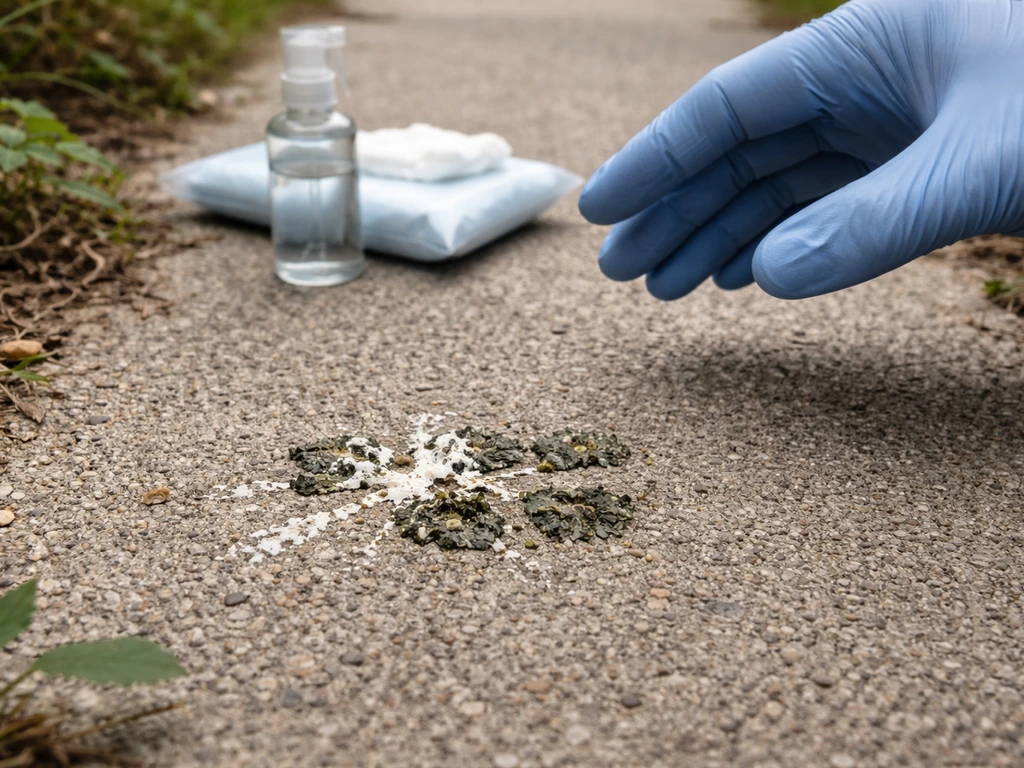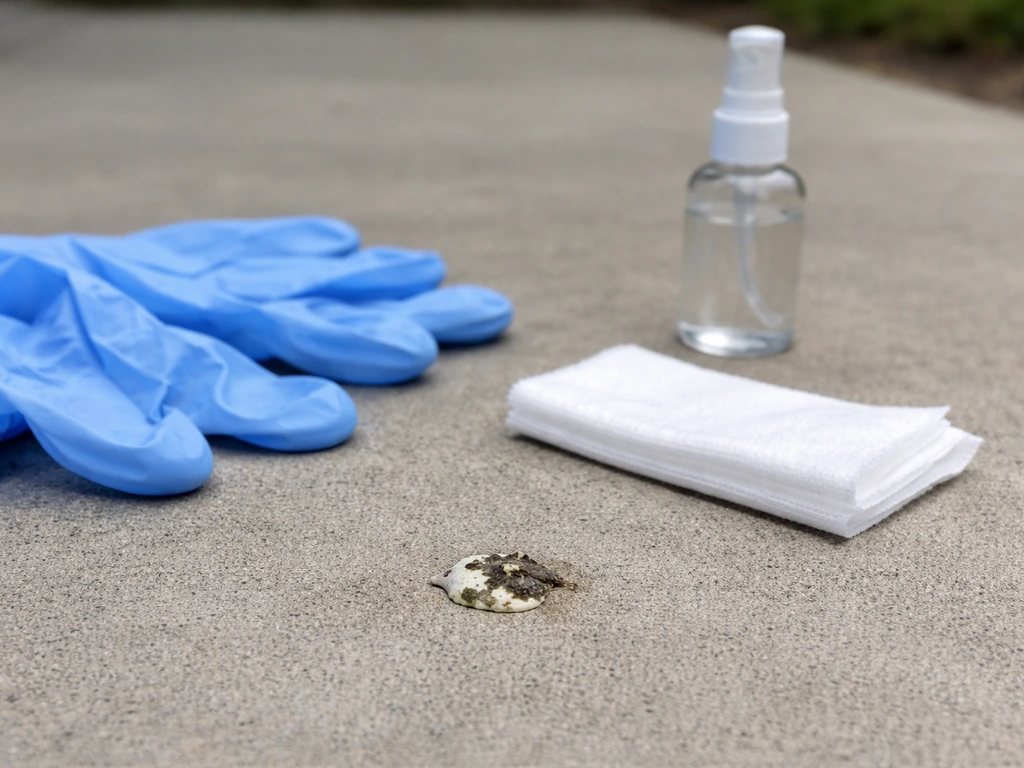
Bird poop is genuinely dirty, not just unpleasant. It contains fecal bacteria, fungal spores, uric acid, and in some cases pathogens like Chlamydia psittaci, Campylobacter, Histoplasma, and Cryptococcus, all of which can pose real health risks, especially when the droppings dry out and become airborne dust. That said, a single splat on your shoe or car hood is not a medical emergency. The risk scales up with how much you're exposed to, how dry and disturbed it gets, and whether you have a compromised immune system. Most healthy people clean it up and move on with no problem at all, as long as they don't handle it barehanded and wash up properly afterward.
How Dirty Is Bird Poop Really? Risks and Cleanup Steps

Marcus Fielding
13 May 2026
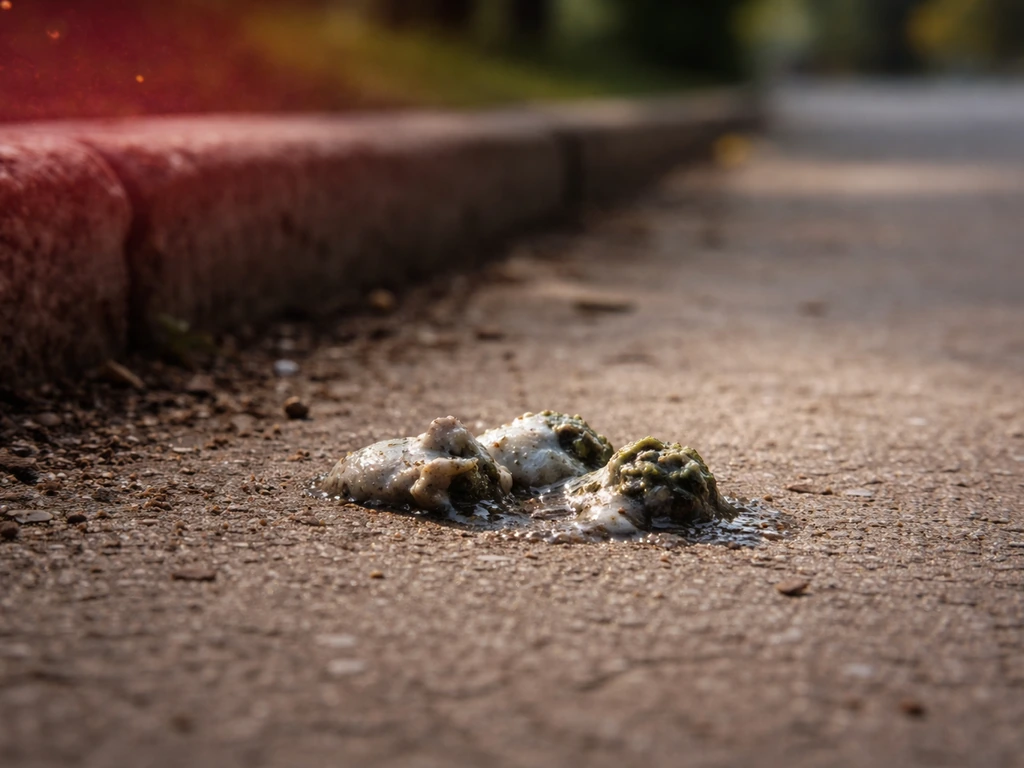
"Clean" vs "dirty": what we're actually talking about
There's a popular saying that bird poop is actually clean, especially compared to mammal waste. That's mostly a myth worth putting to rest. It's true that birds process urine and feces together, so the white chalky part (urates) is actually a concentrated form of uric acid from their kidneys, not a separate liquid. But the fecal portion is still feces. It still contains gut bacteria, undigested matter, and whatever pathogens that particular bird happened to be carrying. Research has isolated E. coli, Campylobacter jejuni, Staphylococcus aureus, Enterococcus faecium, and Chlamydia psittaci from feral pigeon droppings. One 2026 study found zoonotic Chlamydia psittaci in over 20% of pigeon droppings sampled. "Clean" is not the right word here.
What people probably mean when they say it's clean is that fresh bird poop from a healthy bird is lower-risk than, say, raw sewage or rodent droppings. That's fair. A fresh splat on a hard surface, cleaned up promptly, carries minimal health risk for a healthy adult. But dried, accumulated, or aerosolized droppings are a different story entirely, and that's where the real "dirty" label applies.
What bird poop is actually made of
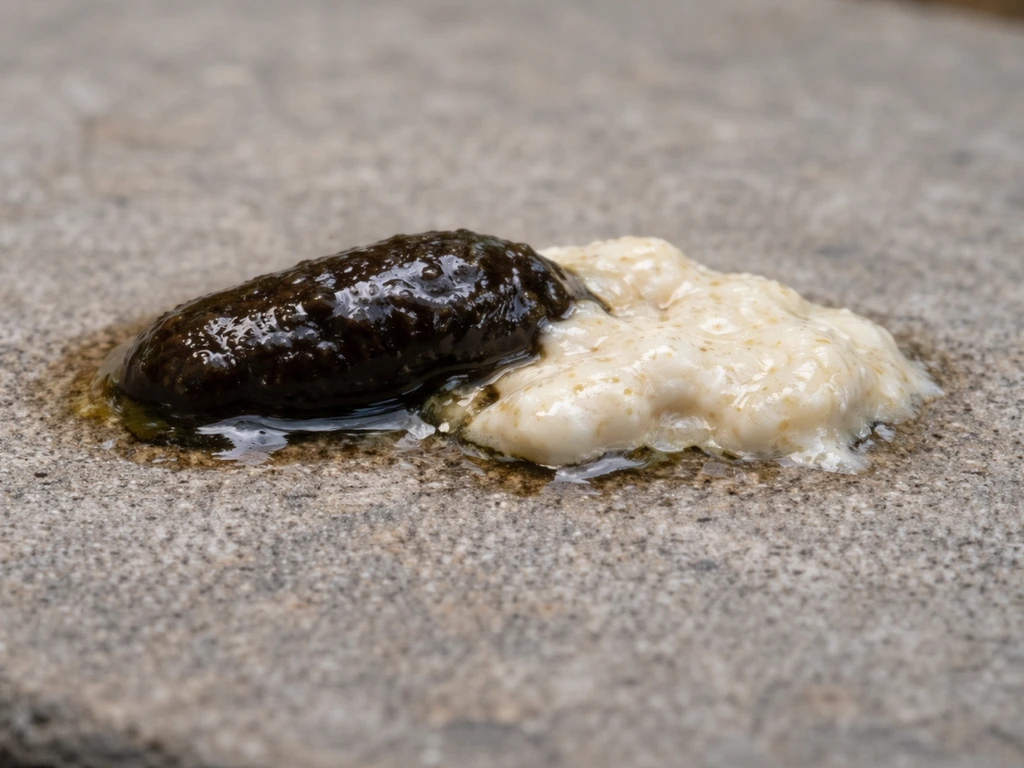
Bird droppings have two main components: the fecal portion (dark-colored, from the digestive tract) and the urate portion (the white or cream-colored paste, from the kidneys). Together they exit through a single opening called the cloaca. The fecal part contains gut bacteria, undigested seeds and insects, bile pigments, and any pathogens the bird was shedding. The urate part is largely uric acid, which is how birds conserve water instead of producing liquid urine like mammals do.
The uric acid in fresh droppings is actually what makes them so damaging to car paint, stone, and metal surfaces. It's mildly acidic and etches finishes if left to bake in the sun. That's a separate issue from health risk, but it's worth knowing because it's the same reason you don't want to let fresh droppings sit on your car for hours.
From a hygiene standpoint, the really concerning stuff in droppings is biological: bacteria like Campylobacter and Salmonella, fungal spores like Histoplasma capsulatum and Cryptococcus neoformans, and the bacterium Chlamydia psittaci (which causes psittacosis, a respiratory illness). These don't exist in every dropping from every bird, but they're common enough in feral pigeon and poultry populations that public health agencies treat bird droppings as a legitimate contamination risk.
How risky is everyday contact, really
For most healthy adults, brushing against a fresh dropping on a park bench or stepping in one on the sidewalk is low risk. If bird droppings are dried and aerosolized, the resulting dust can irritate your eyes and respiratory tract, which is why people ask whether it can lead to vision problems bird poop make you blind. The pathogens in bird poop primarily cause illness through inhalation of dried, aerosolized dust, not through casual skin contact with intact skin. Your skin is actually a pretty effective barrier. The CDC's primary concern isn't touching a fresh dropping briefly; it's breathing in dust from dried or disturbed material, and it's bare-hand contact that then leads to hand-to-mouth transfer.
That changes if you have a cut, a wound, or a compromised immune system. Bacteria can enter through broken skin, and the CDC notes tetanus spores can enter the body through cuts or wounds contaminated with feces. If you have a skin break and make direct contact with droppings, that's worth taking more seriously. Same goes for eye contact, which warrants an immediate 15-minute eye flush with clean water.
Kids and pets are higher-risk simply because they're more likely to touch, mouth, or roll in contaminated surfaces without knowing better. And people with weakened immune systems, whether from illness, age, or medication, can develop serious disease from fungi like Cryptococcus and Histoplasma that a healthy immune system usually handles without symptoms. If you are wondering “can bird poop make you sick,” the incubation timing matters too, and this is why symptoms after higher-risk exposures can show up days later.
| Exposure scenario | Risk level | Key concern |
|---|---|---|
| Stepping in fresh droppings (shoes) | Low | Tracking bacteria indoors; minimal direct risk |
| Droppings on skin (intact) | Low-moderate | Bacteria; wash hands/skin promptly |
| Droppings on skin with cuts/wounds | Moderate | Bacterial entry; clean wound, monitor |
| Dried droppings disturbed indoors | Moderate-high | Inhaling aerosolized spores/bacteria |
| Large accumulation of dried droppings | High | Histoplasmosis, psittacosis, cryptococcosis risk |
| Droppings in a pool or water source | Moderate | Fecal contamination; treat like human fecal incident |
Fresh vs dried, and where the dropping lands matters a lot
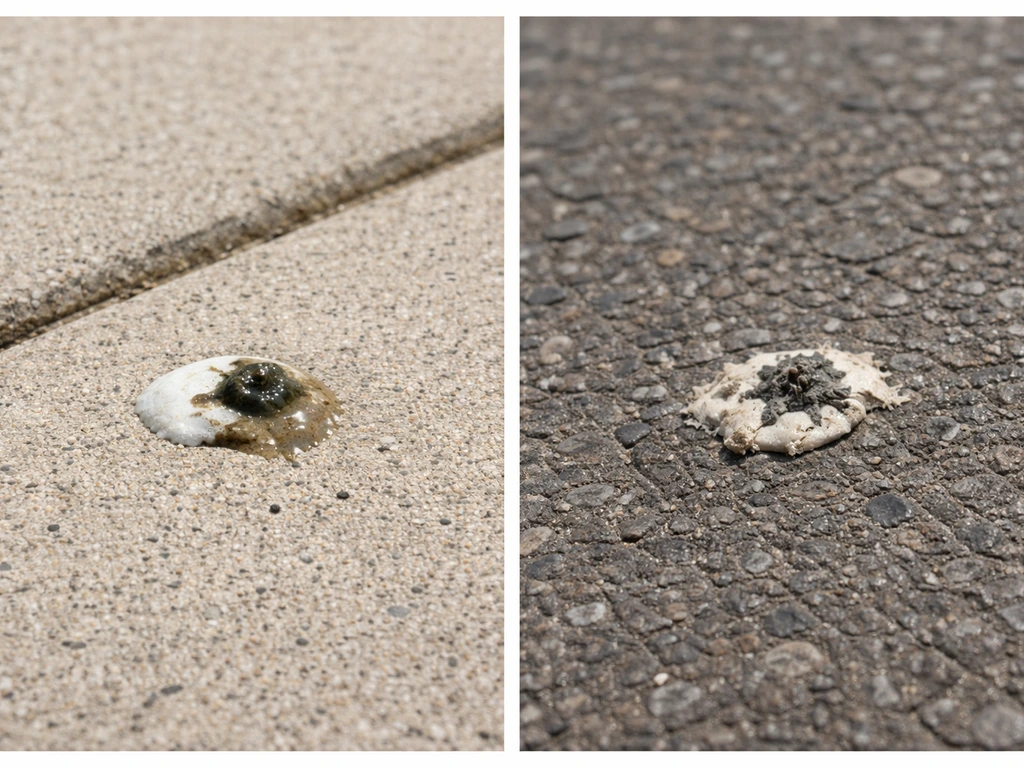
Fresh droppings are sticky, visible, and relatively easy to remove before they bond to a surface. They're also less dangerous in terms of inhalation risk because they haven't dried into dust yet. The main issue with fresh droppings is bacterial contamination from direct contact, and that's managed with basic hygiene.
Dried droppings are a different situation. Once the moisture evaporates, what's left is a brittle, powdery residue. Scraping, sweeping, or vacuuming it without precautions sends that dust into the air, where it can be inhaled. This is the main route for psittacosis, histoplasmosis, and cryptococcosis. The CDC explicitly instructs people to avoid stirring up dust, bird waste, and feathers during cleanup precisely because of this.
Location also changes how you approach cleanup. On outdoor concrete or a patio, hosing down fresh droppings with water is often sufficient. On a car, you want to avoid scrubbing dry because the uric acid and grit can scratch the paint. On a surface near food prep or inside your home, you want to disinfect properly, not just wipe. And if you're dealing with accumulated droppings under a roosting spot, a deck, a vent, or an attic, that's a job that warrants a respirator, not just paper towels.
How to clean it up safely today
The core principle is simple: wet it before you touch it, don't create dust, and wash your hands thoroughly when you're done. CDC also recommends a wet-method cleanup for rodent droppings, such as spraying with a bleach solution or an EPA-registered disinfectant until the droppings are very wet to help avoid creating dust or aerosols wet it before you touch it, don't create dust. Here's how that plays out for the most common situations.
What you'll need
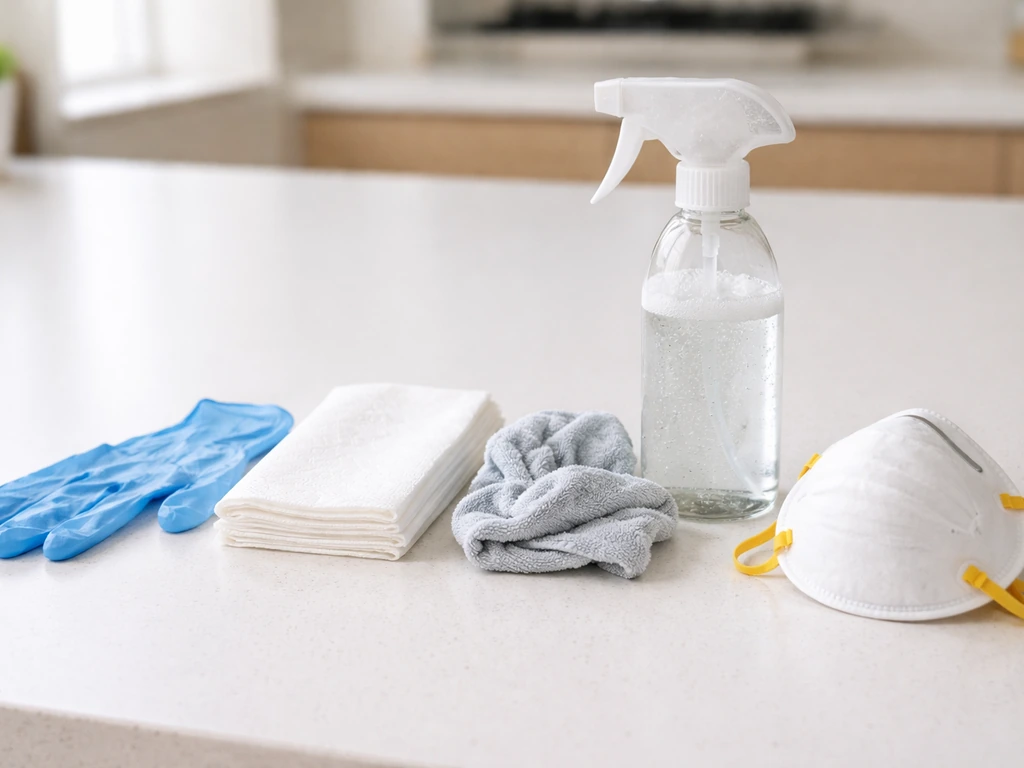
- Disposable gloves (nitrile or latex)
- Disposable paper towels or rags you'll throw out
- A spray bottle with soapy water or diluted disinfectant
- An N95 respirator if dealing with dried, large, or enclosed accumulations
- Soap for handwashing afterward
- A dedicated trash bag for contaminated materials
Step-by-step cleanup
- Put on gloves before touching anything.
- Spray the droppings thoroughly with soapy water or a diluted disinfectant solution to wet them completely. This is the single most important step because it prevents the material from becoming airborne dust when disturbed.
- Let it soak for 30 to 60 seconds, then wipe or scrape gently. Don't scrub aggressively or sweep dry material.
- Dispose of the paper towels or rags directly into a trash bag. Seal and discard.
- Clean the surface again with soapy water to remove any residue.
- Remove gloves by peeling them off inside-out, bag them too.
- Wash your hands with soap and water for at least 20 seconds. Wash forearms if they were exposed.
- If you got any on clothing, change out of those clothes and wash them separately in hot water.
Surface-specific tips
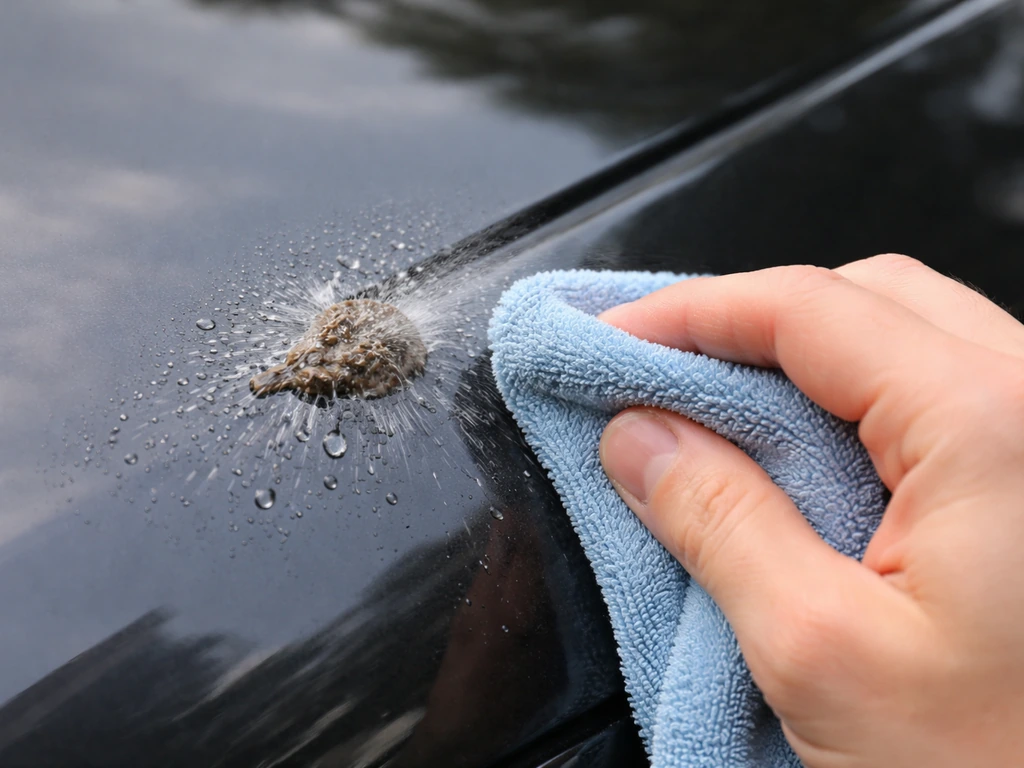
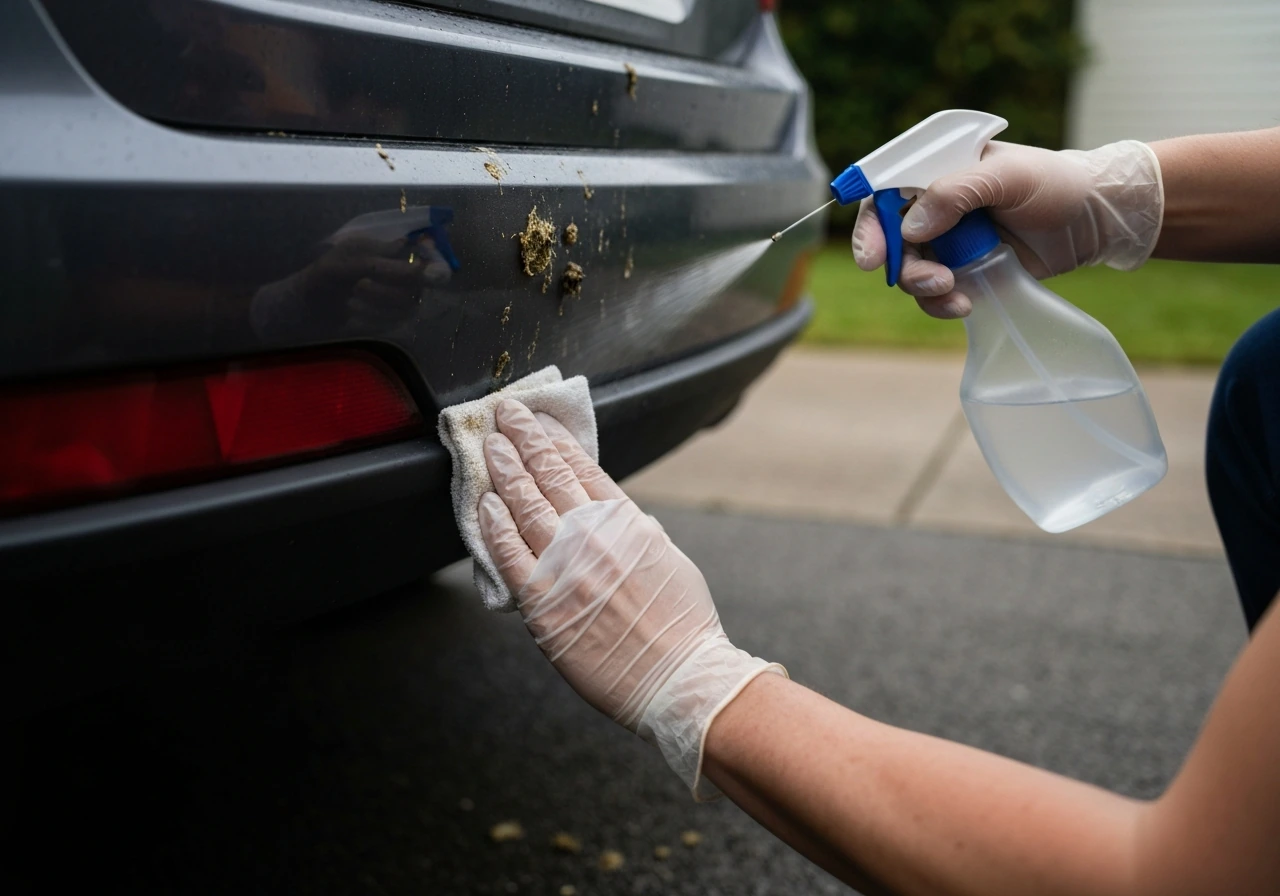
On a car, soak the dropping with water or a dedicated car-safe detailer spray for several minutes before gently wiping. Never scrub a dry dropping on car paint as the grit will scratch the clear coat and the uric acid will accelerate paint damage. On patio furniture or outdoor concrete, a hose-down followed by a soapy scrub is usually all you need for fresh droppings. For indoor surfaces, food-contact surfaces, or children's play equipment, follow up with an EPA-registered disinfectant after the soap-and-water clean.
Disinfecting: what to use and what to avoid
The CDC's recommended approach is a two-step process: clean first with soap and water until visible dirt is gone, then disinfect with an EPA-registered disinfectant that has label claims against influenza A viruses. This two-step sequence matters because organic matter like feces can deactivate disinfectants, so cleaning first makes the disinfection step actually work.
For most hard, non-porous surfaces (concrete, tile, glass, metal, plastic), a diluted bleach solution (1 tablespoon of unscented bleach per quart of water) works well and is inexpensive. An EPA-registered disinfectant from your local hardware or grocery store is equally valid as long as it lists avian influenza A on the label. Always follow the contact time listed on the product label, which is usually 1 to 10 minutes of surface wetness.
Avoid using bleach on car paint, natural stone like limestone or marble, or unfinished wood, as it can cause discoloration or surface damage. For those surfaces, use a pH-neutral cleaner and thorough rinsing instead. And critically: never mix bleach with ammonia-based cleaners (like many glass cleaners). That combination produces toxic chloramine gas.
| Surface | Recommended cleaner | Avoid |
|---|---|---|
| Car paint/glass | pH-neutral soap, dedicated car detailer | Bleach, ammonia, dry scrubbing |
| Outdoor concrete/patio | Soap and water, then diluted bleach or EPA disinfectant | Dry sweeping or high-pressure blasting without wetting first |
| Patio furniture (plastic/metal) | Soap and water, then EPA-registered disinfectant | Mixing bleach and ammonia cleaners |
| Indoor hard surfaces | Soap and water, then EPA-registered disinfectant | Dry wiping, aerosol sprays that create mist over a wide area |
| Natural stone (marble, limestone) | pH-neutral soap and water, thorough rinse | Bleach, vinegar, citrus-based cleaners |
| Children's play equipment | Soap and water, then child-safe EPA-registered disinfectant, rinse | Leaving any disinfectant residue without rinsing |
When to actually worry: symptoms, pets, kids, and getting help
Most people who have a brief contact with bird droppings, clean up properly, and wash their hands will never develop any illness. But there are situations worth taking seriously.
If you were cleaning up a large accumulation of dried droppings, especially in an enclosed space like an attic, basement, or crawl space, and you didn't have respiratory protection, watch yourself for the next 5 to 14 days. Psittacosis, the respiratory illness caused by Chlamydia psittaci, has an incubation period of 5 to 14 days and typically starts as an upper respiratory infection with fever, headache, and muscle aches. It can progress to pneumonia requiring hospitalization in some cases. If you develop respiratory symptoms after that kind of exposure, tell your doctor about it explicitly because it changes the diagnostic picture.
Histoplasmosis and cryptococcosis are fungal infections from inhaling spores in dried droppings. Histoplasmosis often causes mild flu-like symptoms and resolves on its own in healthy people, but it can be severe in immunocompromised individuals. Cryptococcosis is similarly more dangerous in people with weakened immune systems. Again, the key risk factor is disturbing a large, dry accumulation without respiratory protection.
For kids and pets, the main practical concern is keeping them away from surfaces contaminated with droppings until cleanup and disinfection are complete. Kids are more likely to touch contaminated surfaces and then touch their faces. Dogs love to sniff and sometimes eat bird droppings, which can expose them to Campylobacter and Salmonella. A good rule: keep children and pets off a contaminated area until you've completed the clean-and-disinfect process and surfaces are dry.
If there's any eye contact with droppings or cleaning chemicals during the process, flush immediately with large amounts of clean water for at least 15 minutes and seek medical attention. If a wound was contaminated with droppings, wash it thoroughly with soap and water right away and see a doctor if you're unsure about your tetanus vaccination status.
The good-luck thing, and what it actually means for hygiene
Getting hit by bird poop is considered good luck in many cultures, from Russian and Turkish tradition to parts of Western Europe. The logic, loosely, is that something rare and random landing on you must have some cosmic significance. It's a charming piece of folklore, and there's something genuinely disarming about reframing an unpleasant moment as a gift from the universe. Nobody's arguing against that.
But from a hygiene standpoint, a bird dropping landing on you is not clean, and it shouldn't be left there while you wait for the luck to arrive. The same bacterial and fungal risks apply whether the poop lands on your car, your patio, or your shoulder. Wipe it off, clean the area, wash your hands, and then feel free to enjoy whatever cosmic fortune is supposedly coming your way.
The broader myth that bird poop is sterile or hygienic is worth correcting clearly. It's not. The CDC advises against bare-hand contact, recommends precautions during cleanup, and treats bird droppings as a genuine contamination vector in pet-keeping, backyard poultry, and public health contexts. That doesn't mean you should panic every time a pigeon leaves a calling card on your windshield. It means you should clean it up properly rather than dismissing it as harmless.
The bottom line, and a quick cleanup checklist
Bird poop is legitimately dirty. It contains real pathogens, it can cause serious respiratory illness if dried and inhaled, and it should be handled with basic precautions every time. For a single fresh dropping on a hard surface, the risk to a healthy adult is low as long as you don't handle it barehanded and you wash up afterward. For large, dried, or accumulated deposits, especially indoors or in enclosed spaces, treat it like the genuine health hazard it is: wet it first, wear gloves and ideally a respirator, and disinfect properly.
- Gloves on before you touch anything
- Wet the droppings with soapy water before wiping, never dry-scrape or sweep
- Bag and discard used paper towels immediately
- Clean the surface with soap and water, removing all visible residue
- Follow up with an EPA-registered disinfectant on hard non-porous surfaces (follow label contact time)
- Never mix bleach and ammonia-based cleaners
- Wash your hands thoroughly with soap and water afterward
- Wash any contaminated clothing separately in hot water
- Keep kids and pets off the area until cleaned and dry
- For large dried accumulations indoors, add an N95 respirator to your gear
- See a doctor if you develop respiratory symptoms in the 5 to 14 days after significant exposure
FAQ
If bird poop lands on me or my clothes, what’s the fastest safe cleanup?
If it was a single fresh splat on clothing or skin, the practical move is to remove the item from contact with your face, blot or rinse it, then wash hands. If it soaked into fabric, launder normally, and treat shoes by wiping first, then washing the sole and any crevices (don’t skip the edges where grit stays).
Can I just vacuum bird poop (especially dried)?
A vacuum that disturbs dried droppings can spread fine particles, especially in enclosed spaces. If you must use one, use a HEPA vacuum rated for fine dust and avoid disturbing piles by dry scraping first. Otherwise, dampen first and use wet wiping, then clean and disinfect.
Do I need to disinfect everything after a bird poop incident, or just clean it?
You can remove fresh droppings from many outdoor hard surfaces with water plus a pH-neutral cleaner. Save disinfecting for indoor surfaces, food-prep areas, children’s play equipment, and accumulated droppings, where you are more likely to transfer contamination to hands and mouths.
Why does bird poop damage car paint, and what should I avoid doing?
For cars, the biggest mistake is scrubbing dry, because grit scratches clear coat and the urate residue can accelerate etching. For best protection, soak the area long enough to soften residue, wipe gently, then rinse. If you see a white etched spot after drying, use car-safe polishing or a professional detail rather than repeating aggressive scrubbing.
What should I use if the droppings are on stone, metal, or unfinished wood?
Chlorine bleach can discolor metals, some stones (like limestone or marble), and unfinished wood, and it can damage car finishes. For those surfaces, use a pH-neutral cleaner and thorough rinsing, and disinfect only if the surface is also a hygiene-sensitive area (like around food) using a product compatible with that material.
What if bird poop gets in my eye or into contact lenses?
If it contacts your eyes, flush with clean running water for at least 15 minutes right away and seek medical advice. Do not “check quickly” then stop flushing. If you wore contact lenses, remove them during the flush if it’s easy, and bring the information (cleaning agents used) to the clinician.
What if bird poop touches a cut, scrape, or open wound?
If there’s a wound or skin break, treat it as higher risk: rinse thoroughly with soap and water, then cover with a clean dressing. Avoid sealing it with ointments before rinsing. If you are unsure about tetanus status (or you have not had a booster in years), contact a clinician promptly.
How long after cleaning bird droppings should I watch for symptoms?
Incubation timing is a key clue: respiratory symptoms after a large dry cleanup can appear days later (often up to about two weeks for psittacosis). If you develop fever, worsening cough, or shortness of breath after a high-exposure cleanup, tell your doctor you were cleaning accumulated bird droppings and disinfecting in an enclosed area.
What protective gear matters most for bird poop cleanup?
Wear gloves for any cleanup where you might touch residue, and avoid touching your face during and right after. If you used a respirator for dust-heavy cleanup, do not remove it while still dusty, and dispose of filters or waste per local guidance. Handwashing is still required even with gloves.
How do I clean dried bird droppings if they’re stuck to a surface?
For dried droppings on rough surfaces, a common mistake is “wipe-only” cleaning, which can leave residue that keeps contaminating hands. Use a wet-soak step, wipe, then a second clean step. If it’s an area pets or kids can access, follow with an appropriate disinfectant compatible with the surface.
What should I do if my dog or cat ate bird poop?
If your pet ate droppings or is acting sick, call your veterinarian. Dogs can pick up bacteria from droppings, so watch for vomiting, diarrhea, lethargy, and fever. Keep the pet from licking hands or mouth areas if you helped clean nearby.
When is it safe to let kids or pets back on the cleaned area?
You should keep children and pets away until the area is fully cleaned and disinfected (where needed) and completely dry. The “dry” part matters because residue can be tracked or handled. If you see dust during cleanup, stop and re-wet the area before continuing.