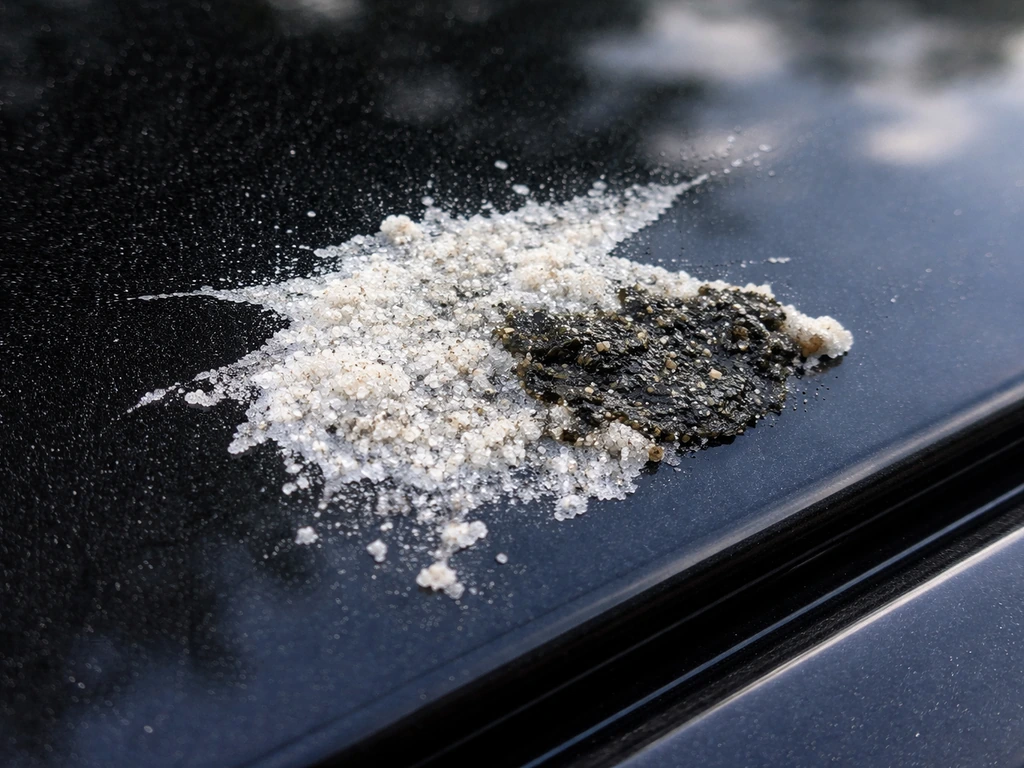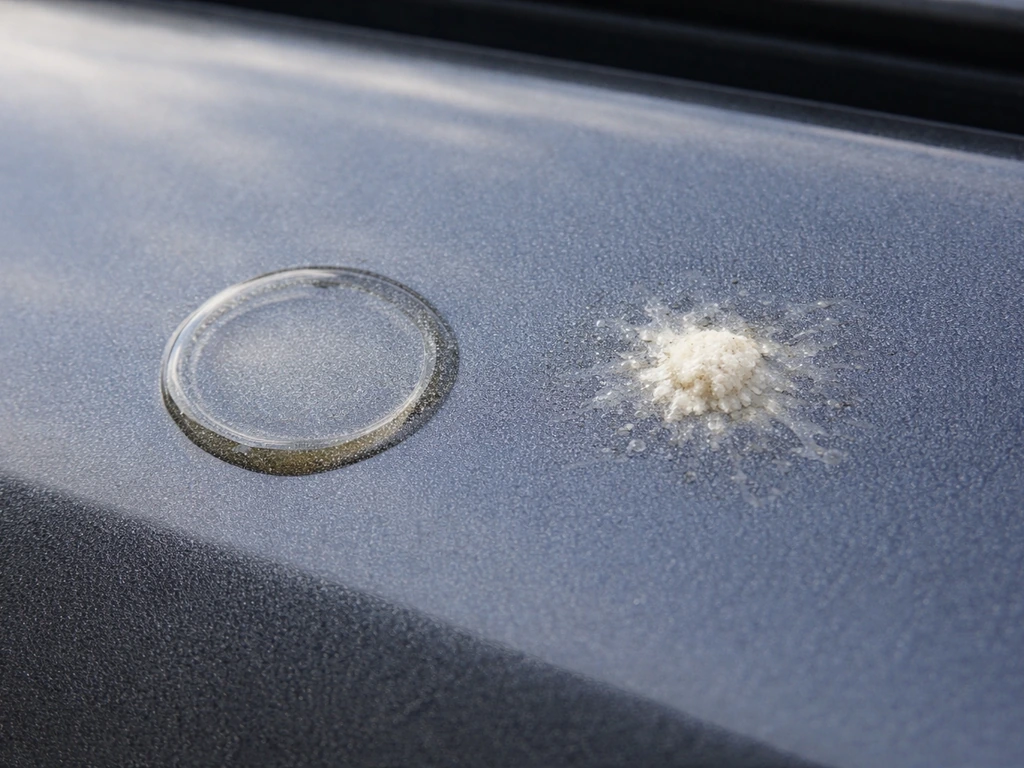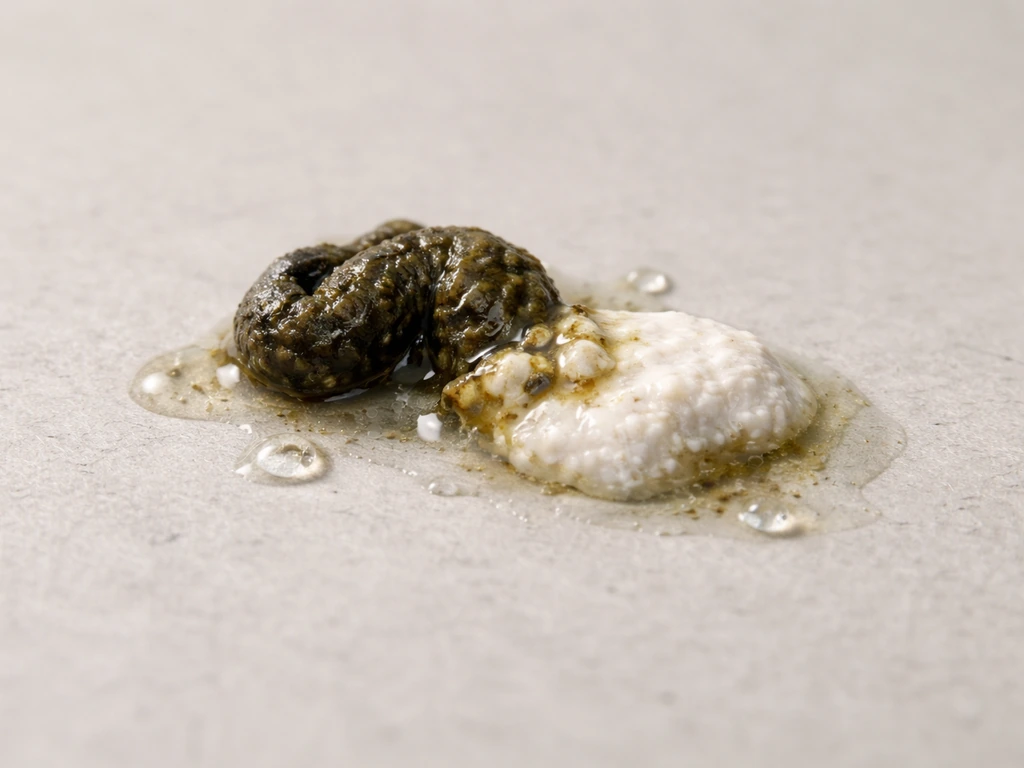
Bird pee is technically clear, but what you're seeing on your car or patio almost certainly isn't just pee. Birds release urine, urates, and feces all at once through a single opening called the cloaca. The urine portion is a small, clear liquid that evaporates fast. The white or cream-colored paste surrounding the darker fecal center is urate, a semi-solid made of uric acid crystals. So a spot that looks 'clear' is most likely a drying or partially dried dropping where the liquid evaporated and left behind faint urate residue. Either way, it carries the same health considerations as any other bird dropping.
Is Bird Pee Clear? How to Tell Urine vs Droppings

Marcus Fielding
12 May 2026
What bird droppings actually look like (and where 'clear' fits in)
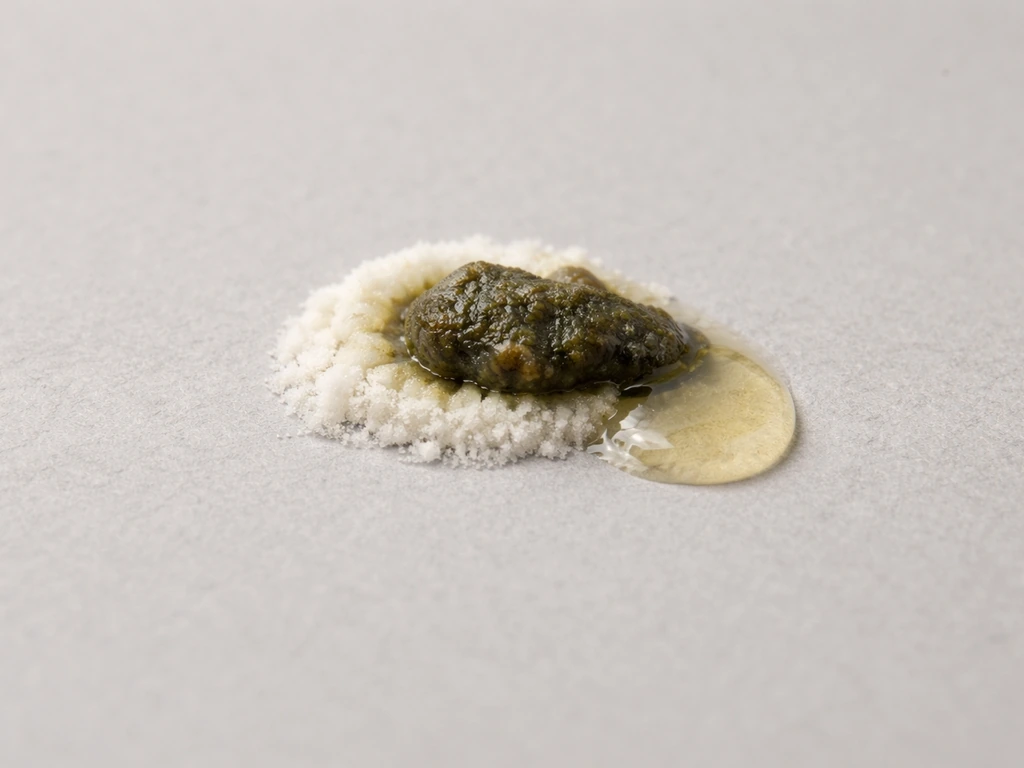
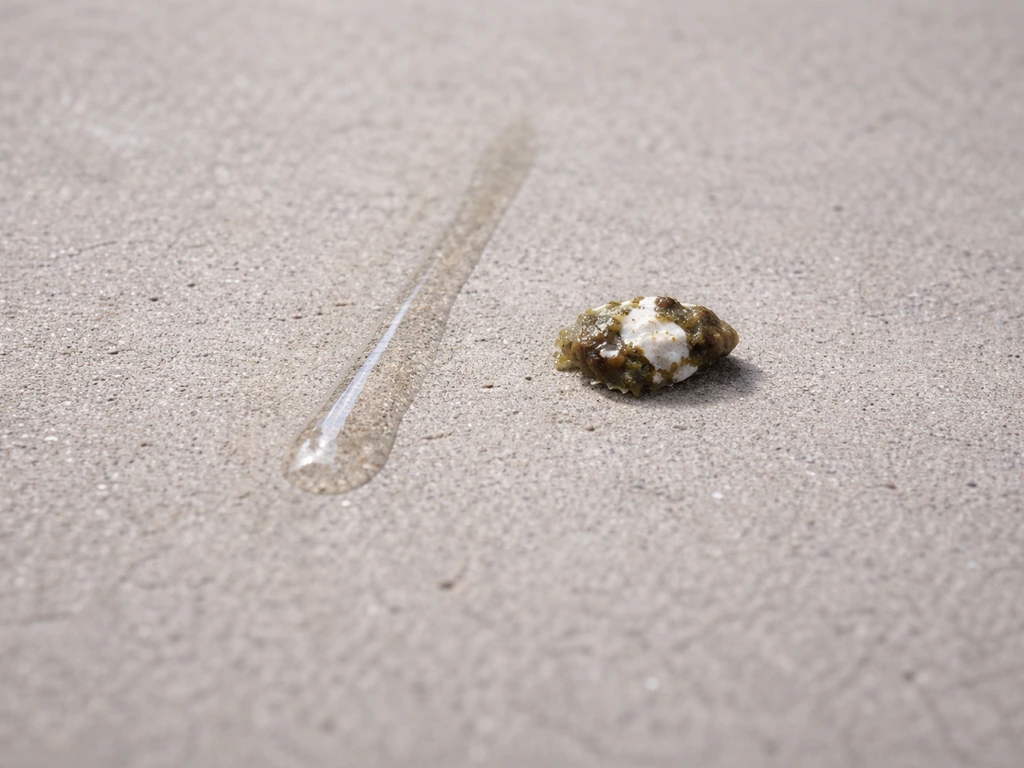
A normal bird dropping has three parts. First, the fecal portion, which is the darker, formed center. Second, the urate portion, which is the white or off-white, chalky, paste-like material you see around or capping the dark center. Third, a small amount of clear liquid urine that usually evaporates so quickly you barely notice it. Most of the 'pee' action in birds is handled by urates rather than watery liquid, because birds are extremely efficient at conserving water. They reabsorb most of it before excretion, so they don't produce a stream of yellow liquid the way mammals do.
That clear liquid component is real, just minimal. On a hot sidewalk or a car hood in summer, it can evaporate within minutes, leaving behind only the white urate residue or sometimes nothing visible at all if the dropping was very watery to begin with. This is why you might find a faint ring or streak with no obvious dark center, or a spot that just looks wet and then dries to almost nothing.
Why a bird dropping can look clear
A few real-world scenarios explain the 'clear' appearance you might be puzzling over.
- The liquid urine evaporated fast, leaving a barely-there urate smear that looks translucent or glassy on a smooth surface like car paint or glass.
- The bird had a higher water intake than usual, diluting the dropping so the urate and fecal portions are spread thinly and the whole splat looks more watery.
- The dropping landed at an angle or as splatter, so the dark fecal center is off to one side and you're looking mostly at the clear liquid halo.
- Rainwater or dew mixed with an existing dropping, diluting it and spreading it into a clear-looking smear.
- On porous surfaces like concrete, the liquid soaks in and only the urate crystals remain on the surface, which can look like a faint chalky mark.
None of these scenarios mean what you're looking at is harmless or categorically different from a 'normal' white-and-brown dropping. It's still bird waste, just in a form where the visible markers are less obvious.
How to tell if it's actually bird waste (and not something else)
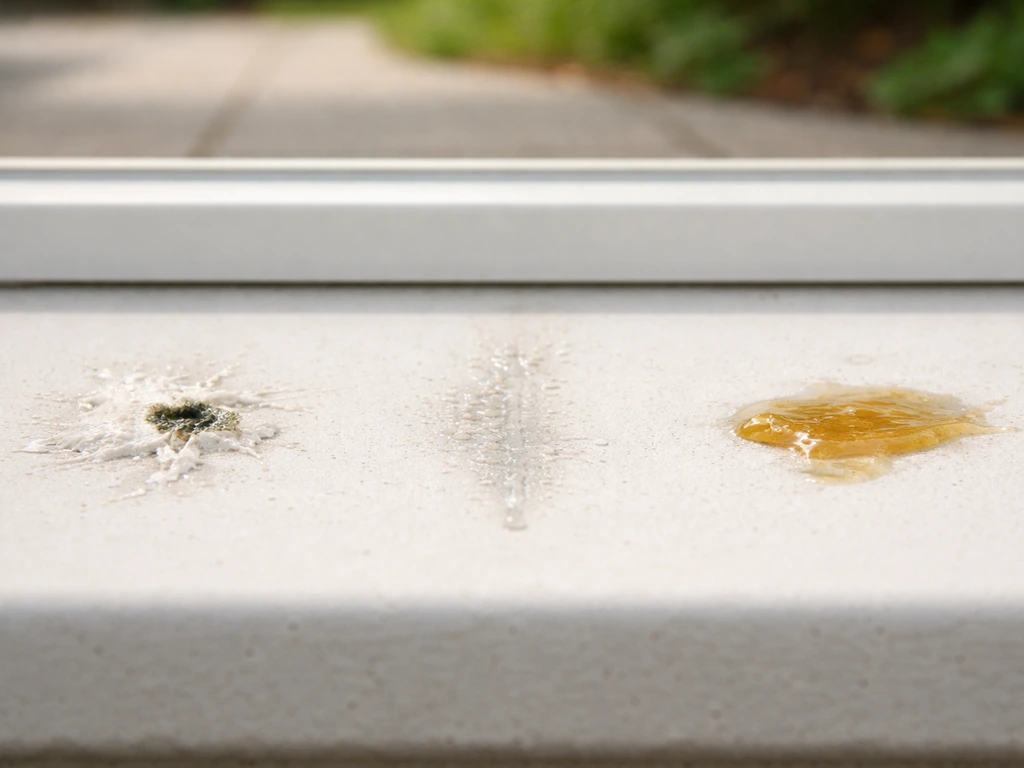
If you're genuinely unsure whether a clear spot is bird waste or something else entirely, like water drip, tree sap, or insect secretion, these clues help distinguish it.
| Feature | Bird Dropping | Water/Rain Drip | Tree Sap/Insect Secretion |
|---|---|---|---|
| Smell | Mild ammonia or musty odor | No smell | Sweet or resinous smell |
| Texture when dry | Chalky, slightly gritty, may flake | No residue | Sticky or hard and glassy |
| Color when dry | Off-white, cream, or faint yellowish ring | No residue | Clear to amber, may yellow |
| Location pattern | Random, often under perches/wires/trees | Follows gravity/drip lines | Directly under leaves or branches |
| Rehydration test | Softens into paste when dampened | Nothing to rehydrate | Stays sticky or hard when wet |
The rehydration test is actually useful here. Drip a little water on the spot and let it sit for 30 seconds. Bird droppings, even dried ones that look like almost nothing, will soften and become slightly pasty. Sap stays sticky. Water marks disappear. This matters not just for curiosity but because dry, powdery bird dropping residue is exactly the form that creates aerosolization risk if you scrub or sweep it dry.
Does 'clear' mean it's less risky to touch?
No. The appearance of bird waste doesn't reliably predict its pathogen load. Whether a dropping looks dark brown, bright white, or almost clear, it can still carry bacteria, fungi, and parasites. The pathogens associated with bird droppings, including Histoplasma capsulatum (the fungus that causes histoplasmosis), Chlamydia psittaci (psittacosis), and Salmonella, are present regardless of what the dropping looks like to you. In fact, the dried and visually unremarkable stage is often the riskier one, because dried droppings can break into dust and become airborne if disturbed.
The clear liquid urine component specifically is mostly water with trace uric acid, which is less likely to carry the same organism burden as the fecal portion. But in practice, the three components are mixed together and you can't separate them by eye. Treat any suspected bird waste as potentially contaminated, clear or not. For a quick sanity check on what this clear material actually is, see what color is bird pee and how it fits with droppings clear or not. If you want a quick answer to “do bird pee,” the key point is that birds do release urine, but the visible spot is often mixed with urates and droppings.
One thing 'clear' or dried urate does affect: your car's paint. Uric acid is corrosive. Even a dried, barely visible urate smear can etch through a car's clear coat, especially in heat and direct sunlight. So a 'clear' spot that doesn't look like much can still cause real paint damage if left to bake.
Cleaning it up safely, no matter what surface you're dealing with
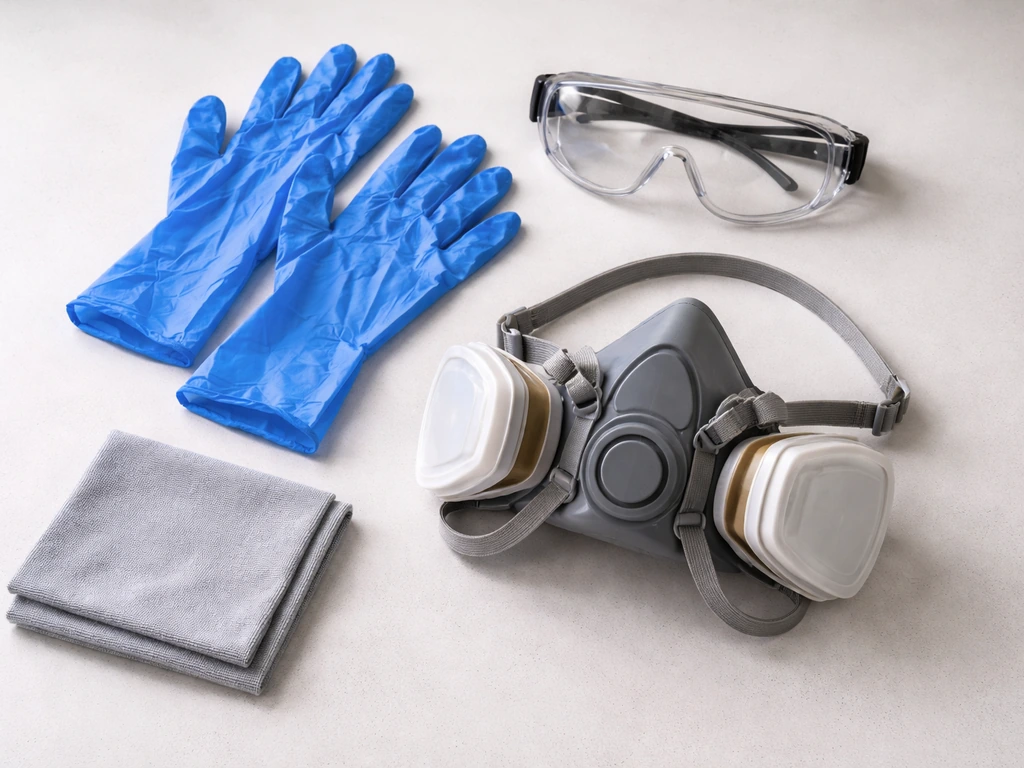
The cleanup rules are the same whether the dropping is dark and obvious or barely visible. The core principle: never dry-scrub or sweep bird waste. Disturbing dry droppings sends contaminated dust into the air, which is how inhalation exposure happens. Wet it first, always.
PPE to have ready
- Disposable gloves (nitrile or latex)
- A face mask, at minimum a disposable surgical mask; an N95 if you're cleaning a large accumulation or enclosed space
- Eye protection if you're scrubbing and could get splatter
- Old clothes or a disposable coverall if you're dealing with a lot of material
Car paint and glass
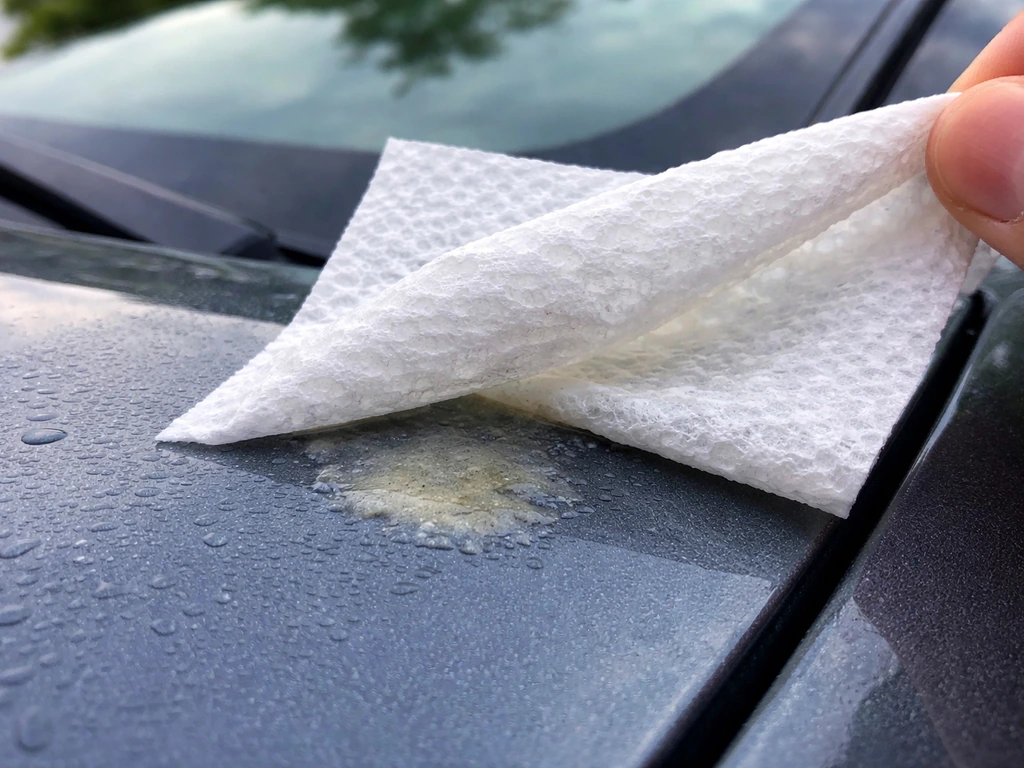
- Soak a paper towel or soft cloth in water and lay it directly over the spot for 30 to 60 seconds to rehydrate the material.
- Gently lift the softened material off the surface without scrubbing. Scrubbing can grind urate crystals into the clear coat.
- Follow with a car-safe pH-neutral cleaner or dedicated bird dropping remover spray.
- For glass, a damp microfiber cloth followed by glass cleaner works fine once the bulk is lifted.
- Dry and apply a spray wax or detailing spray to help protect the area.
Concrete, patios, and sidewalks
- Spray the area thoroughly with water or a diluted bleach solution (about 1 part bleach to 9 parts water) until visibly wet. Let it soak for at least 5 minutes.
- Use paper towels to pick up the softened material. Dispose of the paper towels in a sealed bag.
- Re-apply disinfectant and let the surface stay wet for the full contact time listed on the product label.
- Do not dry sweep. If you need to move debris, use damp paper towels or a damp mop.
- Wash hands thoroughly after removing gloves.
Outdoor furniture, railings, and similar surfaces
- Spray or damp-wipe the area to wet and lift the material.
- Follow with an EPA-registered disinfectant appropriate for the surface material.
- For fabric cushions, check the care label; most can be spot-cleaned with a diluted disinfectant solution and allowed to air dry in sunlight.
- Dispose of all cleaning materials in a sealed bag.
Enclosed spaces (garages, attics, covered porches)
If you're cleaning in an enclosed or semi-enclosed area, open all doors and windows and let the space ventilate for at least 30 minutes before starting work. Leave the area during that time. This reduces your exposure to any aerosolized material that may have already settled as dust. A respirator is a good idea here, not optional.
One important note on bleach: never mix it with ammonia or any other household cleaner. Bleach alone, diluted properly in water, is effective. Mixing it with other products creates toxic gases.
When to take it more seriously and get advice
For most routine encounters with bird droppings outdoors, careful cleanup with gloves and a damp method is enough. But there are situations where you should take extra steps or contact a professional.
Seek medical advice if:
- You disturbed a large accumulation of dry droppings without a respirator and inhaled visible dust. Histoplasmosis symptoms (fever, cough, fatigue) can appear 3 to 17 days after exposure.
- You work in a high-exposure setting, like poultry farming, pest control, or building maintenance with active bird roosts, and you have repeated exposure.
- You are immunocompromised, pregnant, or have a respiratory condition that makes fungal or bacterial infections more dangerous.
- You develop unexplained flu-like symptoms, chest tightness, or eye irritation after cleaning up bird waste.
For pet bird owners:
If your pet bird's droppings suddenly look more watery or clear than usual, that's worth paying attention to. A consistently watery or almost entirely clear dropping can indicate your bird is drinking excessively, has a digestive issue, or is ill. Familiarize yourself with what your bird's normal dropping looks like, and if it changes significantly for more than a day or two, contact an avian veterinarian. A clear urine pool around the urate is normal in small amounts. A very large clear pool, or droppings that are completely liquid with no formed parts, is not.
For wild bird exposures around your property, the general rule is: if you're seeing a few scattered droppings, clean them up with the steps above and move on. If you're dealing with a large roost, years of accumulated material, or nesting inside a structure, that's a job for professional wildlife removal with proper respiratory protection and containment.
And if a bird happens to hit you directly, forget the good luck superstition for a minute and wash it off promptly with soap and water. It's not going to hurt you from a single exposure, but it's not a reason to leave it sitting on your skin either. Clean it, move on, and maybe buy a lottery ticket if the folklore appeals to you.
FAQ
If the spot is totally clear, does that mean it is not bird waste?
Not necessarily. Birds can leave a small urine liquid that evaporates quickly, so a clearing or faint wet ring can still be part of a dropping. The bigger indicator is what happens after you add water, bird material softens within seconds to about 30 seconds, while plain water marks tend to stop changing once re-wetted and wiped.
Can I tell urine versus droppings just by color or texture?
Only partially. The visible spot is usually a mix of urine liquid plus urate, the chalky paste, plus a dark fecal center. If you see no dark center, that often means the fecal portion dried away or was minimal, not that droppings are absent.
Is bird pee safe to touch if it looks clear or dried?
Assume it is not safe, clear or not. Pathogens can be present even when nothing looks obvious, and dried material can become dust if disturbed. Use gloves and a damp cleanup method, then wash hands and any contacted surfaces.
Will wiping a fresh spot with a dry paper towel be okay?
It is better to avoid dry wiping. Dry contact can spread residue and create airborne dust if it has already started to dry. Instead, dampen the area first, then blot or wipe wet, dispose of tissues carefully, and clean with water after.
How long should I let it sit after adding water for the rehydration test?
Start with about 30 seconds. Bird droppings typically soften and look slightly pasty during that window, insect secretions and sap often remain sticky rather than pasty, and plain water marks generally do not turn into a paste.
Does rain remove bird droppings safely?
Rain helps, but it does not make it safe. It can smear residue across a larger area or push contamination into cracks and seams. For high-touch spots like door steps or patios, plan on a damp cleanup even after rainfall.
What is the risk to car paint if the spot looks clear?
Uric acid in urate residue can etch clear coat even when the mark looks subtle. The risk increases with heat and direct sunlight because faster baking accelerates etching, so clean and rinse as soon as possible after noticing it.
What is the best way to protect the area while cleaning bird droppings?
Limit airflow disruption and control spread. Keep the area off-limits, avoid sweeping or brushing dry, wet the residue thoroughly, and wipe from the outside of the spot toward the center. Afterward, rinse the area and wash gloves and tools.
Is bleach the right cleaner for bird waste?
Bleach can be effective when used by itself and diluted in water, but never combine it with ammonia or other cleaners. If you use bleach, ensure ventilation and avoid spraying into the air, apply carefully to keep aerosols low, then follow with a water rinse if appropriate for the surface.
Should I use a mask only if the droppings look dry and dusty?
You should consider respiratory protection whenever you might disturb dried residue, even if the spot is faint or looks clear. The highest dust risk is from scrubbing, sweeping, or removing dried layers, so a respirator is especially important for anything that has dried.
If my pet bird has droppings that look clearer than usual, is that always normal?
Mild variation can happen, but a consistently watery or almost entirely clear appearance is a red flag. It can suggest excessive drinking or a digestive or health issue. If the pattern continues beyond a day or two, or the bird seems unwell, contact an avian veterinarian.
When should I stop DIY cleanup and call a professional?
If there is heavy buildup, a roost or nesting inside walls or vents, or you cannot safely contain and ventilate the area, a pro is a better option. Large accumulations increase dust load, and enclosed spaces require containment and proper respiratory protection.
What should I do if bird droppings get on my skin or clothes?
Wash promptly with soap and water, do not let it sit. For clothing, handle and launder promptly, and avoid shaking items because that can aerosolize dried residue.