If bird poop is stuck on feathers right now, whether on your pet bird, a wild bird you're trying to help, or a feathered item like clothing or gear, the safest move is to moisten the dropping first, let it soften for a minute or two, then gently lift it away without scraping. Do not pick at it dry, do not use harsh chemicals, and always wear gloves. That's the core answer. Everything below explains why that works, what mistakes to avoid, and when you genuinely need outside help.
Bird Poop Stuck on Feathers: Safe Removal Steps

Marcus Fielding
14 Jun 2026
Why bird poop sticks to feathers in the first place
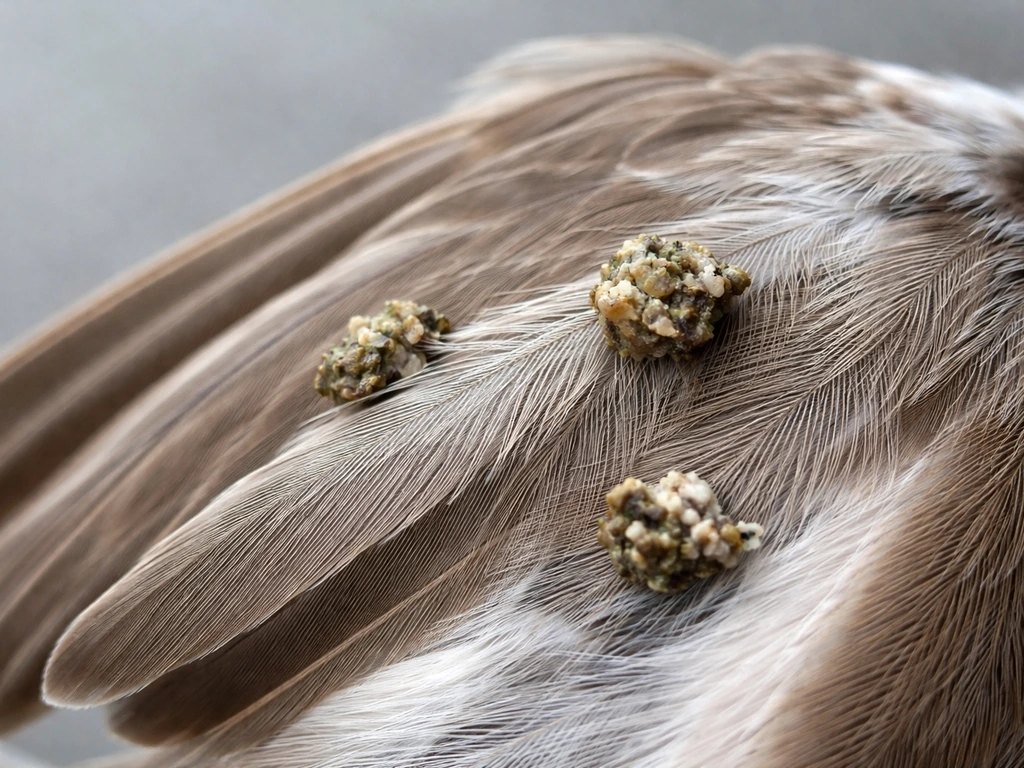
Bird droppings are not just one thing. They contain three components: darker fecal matter, a white or cream-colored semisolid urate portion, and a small amount of clear liquid. That urate fraction is the clingy culprit. It is made mostly of uric acid, which is how birds excrete their nitrogenous waste instead of urea-based liquid urine like mammals do. Uric acid is a smart evolutionary trick because it conserves water, but it also does not dissolve easily in plain water once it dries. That is why a fresh dropping is easy to blot away, while one that has been baking in the sun for an hour bonds like glue.
On feathers specifically, the problem is structural. Feathers have tiny interlocking barbs and barbules, and dried urate material works its way into those gaps. When you try to remove it dry, you are not just scraping off a crust, you are potentially snapping those microscopic barbs and permanently damaging the feather's waterproofing and insulation structure. The longer the dropping sits, the deeper it penetrates and the more force you need, which raises the risk of damage (and aerosol release).
Before you touch anything, do these safety steps
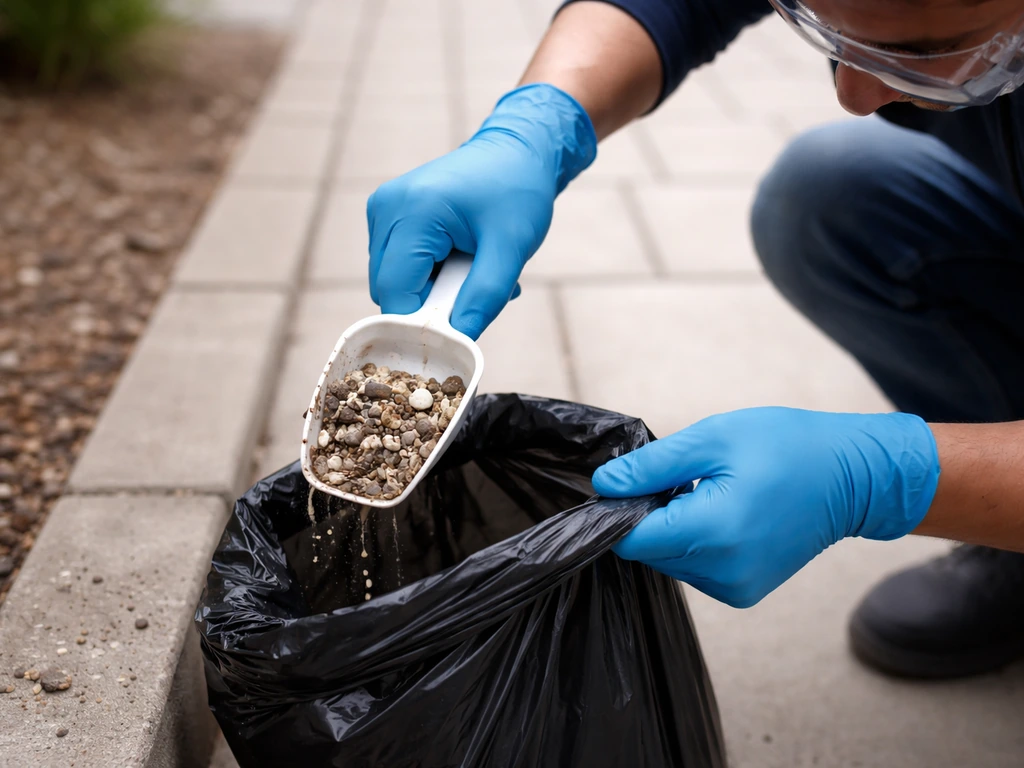
Bird droppings can carry bacteria like Campylobacter (transmitted via the fecal-oral route), fungal spores linked to histoplasmosis, and the bacteria responsible for psittacosis, among other pathogens. If you notice bird poop problems like caked droppings, stubborn residue, or odor, follow the right cleaning and disinfection approach to reduce risk. The CDC is clear that you should not handle bird waste with bare hands, ever. The CDC advises backyard flock owners to wear PPE and to avoid touching bird feces or litter, and sick or dead birds, without proper protection blank" rel="noopener noreferrer">not handle bird waste with bare hands, ever.. That applies whether you are cleaning a birdcage, tending a backyard flock, or helping an injured bird you found in the yard. So before anything else:
- Put on non-latex rubber gloves. If you have them, nitrile gloves are ideal.
- Move to a well-ventilated area or open a window. Dried droppings can release particles into the air when disturbed.
- If you are dealing with a significant accumulation (not just a spot or two), add eye protection and a NIOSH-approved N95 or HEPA respirator mask.
- Keep children and other pets away from the area while you work.
- Have warm water, soap, and a clean towel ready before you start.
A single dropping on a pet bird's tail feather is low-risk if handled carefully. A large patch of caked droppings on a wild bird you picked up, or widespread contamination in an enclosure, warrants the full PPE setup. Know what you are dealing with before you decide how cautious to be.
When to stop and get professional help before you start
If the bird is visibly distressed, injured, or lethargic, or if the droppings are covering the vent area (cloaca) and the bird appears bloated or is straining, do not attempt aggressive home cleanup. That situation likely needs a vet or wildlife rehabilitator, not a damp cloth. Call first. Similarly, if you are immunocompromised, pregnant, or have a respiratory condition, consider delegating this task or using maximum PPE and keeping the session short. If bird poop is stuck on the anus or vent area, pictures can help you compare what you see, but cleaning and symptom care should still follow the safest guidance bird poop stuck on anus pictures.
Cleanup methods for each situation
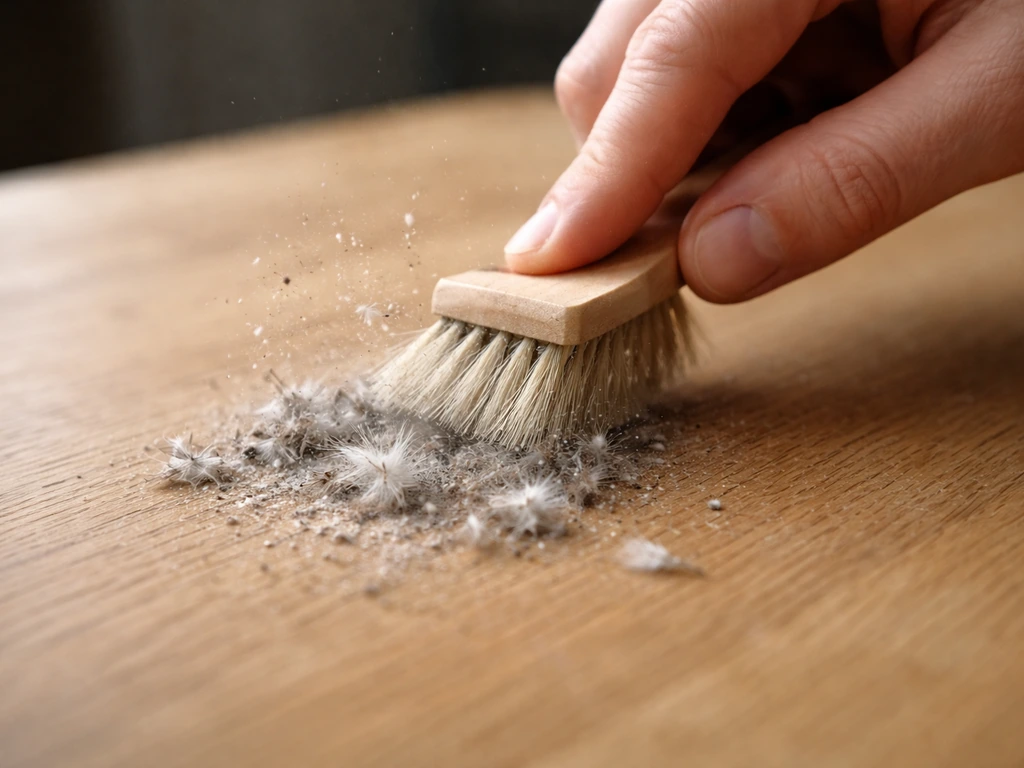
The approach changes depending on whether you are dealing with a live bird, a feathered item, or a surface that has feathers on it. Here is the breakdown.
On a live pet bird's feathers
Soak a clean cloth or cotton ball in lukewarm water (not hot, not cold) and hold it gently against the dropping for one to two minutes. The goal is to rehydrate the urate crust so it releases from the barbs without force. Once softened, use light dabbing and rolling motions to lift the material away. Never rub back and forth vigorously. If the dropping is thick or layered, repeat the soaking step. Finish with a clean damp cloth wipe to remove residue. For birds that tolerate it, a gentle warm-water misting from a spray bottle can help loosen things even further before you begin. Keep the bird warm after any water contact, as wet feathers lose insulating ability fast.
On a wild bird in your care
The same lukewarm-water-and-patience technique applies, but add full gloves and ideally eye protection since wild birds carry a wider range of pathogens than hand-raised pets. Handle the bird with a clean towel to minimize stress and direct skin contact. Minimize handling time overall. If the dropping is around the vent and appears to be causing a blockage (a condition called pasty butt or vent gleet), you need a wildlife rehabilitator or avian vet, not a home remedy.
On feathers attached to clothing, gear, or decorative items
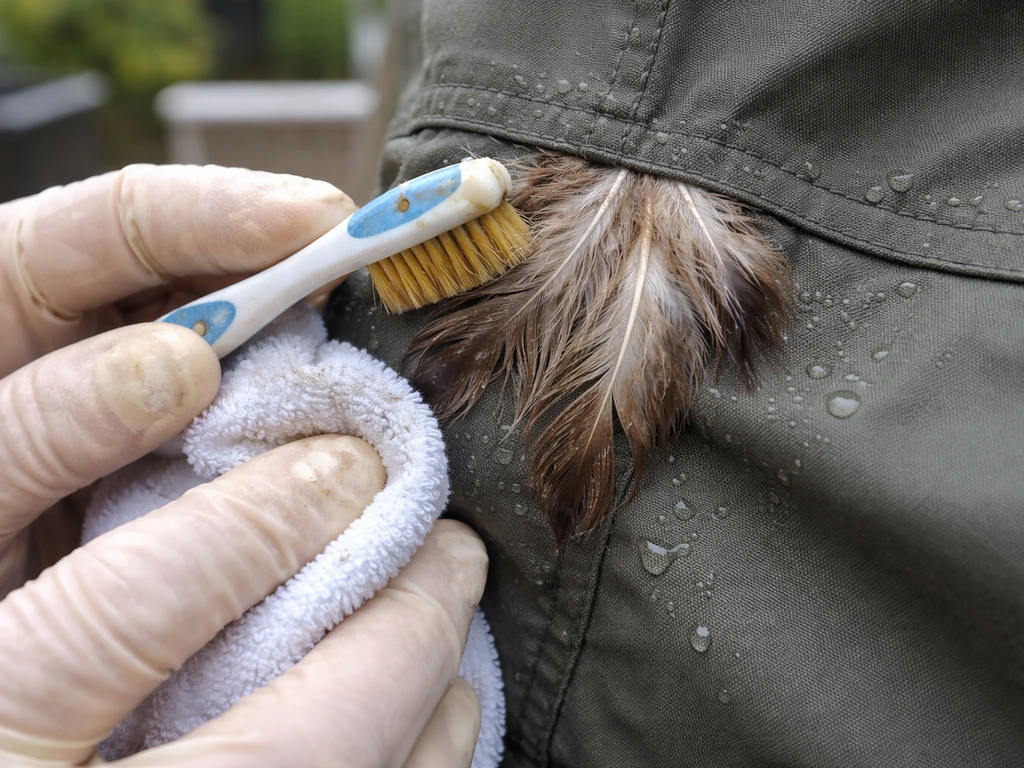
Dampen the affected area with cool or lukewarm water first. Let it sit for a couple of minutes. Then use a soft cloth or old toothbrush with gentle circular motions to work the softened material loose. Avoid rubbing dry fabric around the feather, as this can spread the contaminated material. For washable fabric, follow with a machine wash at the garment's recommended temperature. For non-washable feathered items (like a vintage hat or a costume piece), damp-clean the spot only, then allow it to air dry completely in a ventilated area.
On your car, outdoor furniture, or hard surfaces with feathers present
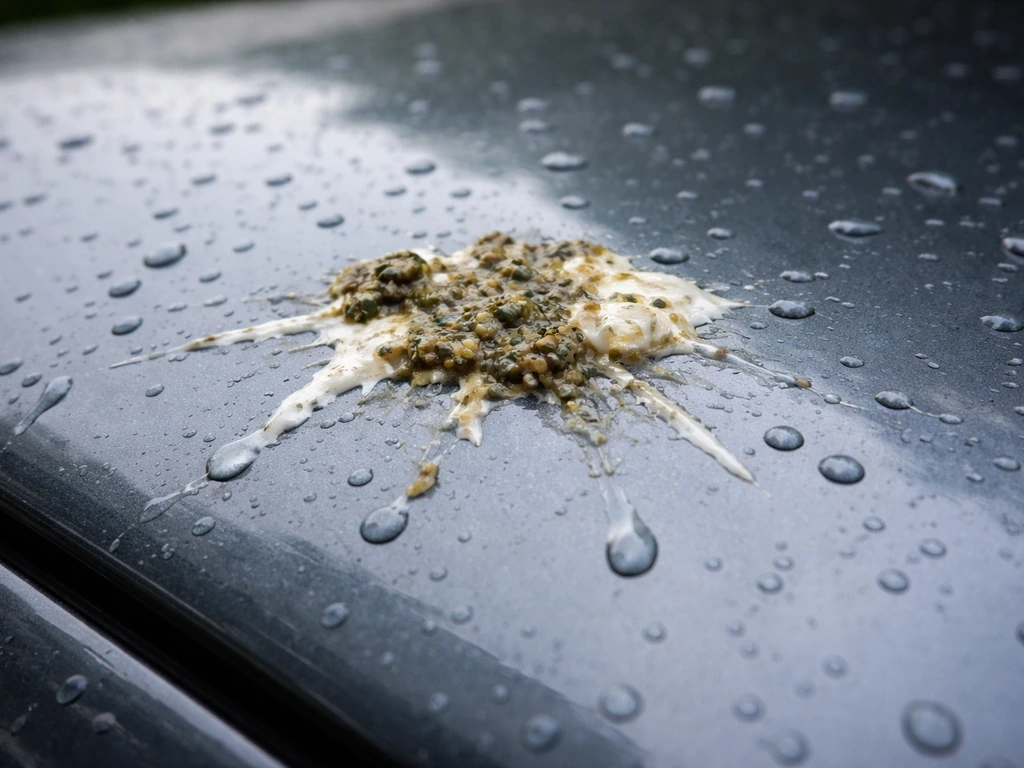
Wet the dropping down first with water or a diluted dish soap solution and let it soak. Do not dry-scrape it off any surface, but this matters especially on car paint where uric acid can etch the finish if left too long or if you scratch while removing. NIOSH/CDC engineering control guidance for histoplasmosis prevention also recommends avoiding shoveling or sweeping dry dusty material and instead carefully spraying to reduce aerosolization, then collecting it for disposal avoid dry-scraping dusty material and instead carefully spray to reduce aerosolization. For feathers that landed in the mess (loose feathers from birds visiting your car or yard), pick them up with gloved hands after soaking and dispose of them in a sealed bag. Feathers with significant fecal contamination are not worth saving and can be a transmission vector.
On your hands after accidental contact
Wash immediately with soap and warm water for at least 20 seconds. The CDC identifies handwashing as one of the most effective protections against pathogens spread through bird waste. Do not touch your face, eyes, or mouth before washing. For eye exposure specifically, see bird poop in eye what to do for the safest immediate steps and when to seek urgent care. If you had contact with a large amount of material, or if you have any open cuts on your hands, that warrants extra vigilance about watching for symptoms in the days that follow.
Mistakes that make things worse
- Dry scraping or brushing: This sends dried particles and potential fungal spores into the air, which is the exact mechanism by which histoplasmosis risk increases. The CDC specifically warns against dry sweeping or disturbing dry droppings without wetting them first.
- Using harsh chemicals on feathers: Bleach, strong degreasers, or alcohol-based cleaners can strip the feather's natural oils, destroy barbule structure, and irritate the bird's skin. Mild soap and water is almost always sufficient.
- Applying heat to speed drying: Heat guns or hair dryers can warp or break feathers and, on a live bird, cause burns or dangerous temperature spikes.
- Rubbing vigorously: This pushes the material deeper into the feather structure and can snap the delicate interlocking barbs that give feathers their function.
- Cross-contaminating other surfaces: Working on a contaminated feather while resting it on a clean surface, then not disinfecting that surface afterward, spreads pathogens to new areas.
- Skipping gloves because 'it's just a small spot': Even small amounts of droppings can carry Campylobacter, Salmonella, or fungal spores. The size of the mess does not determine the risk level.
Disinfecting and controlling odor after cleanup
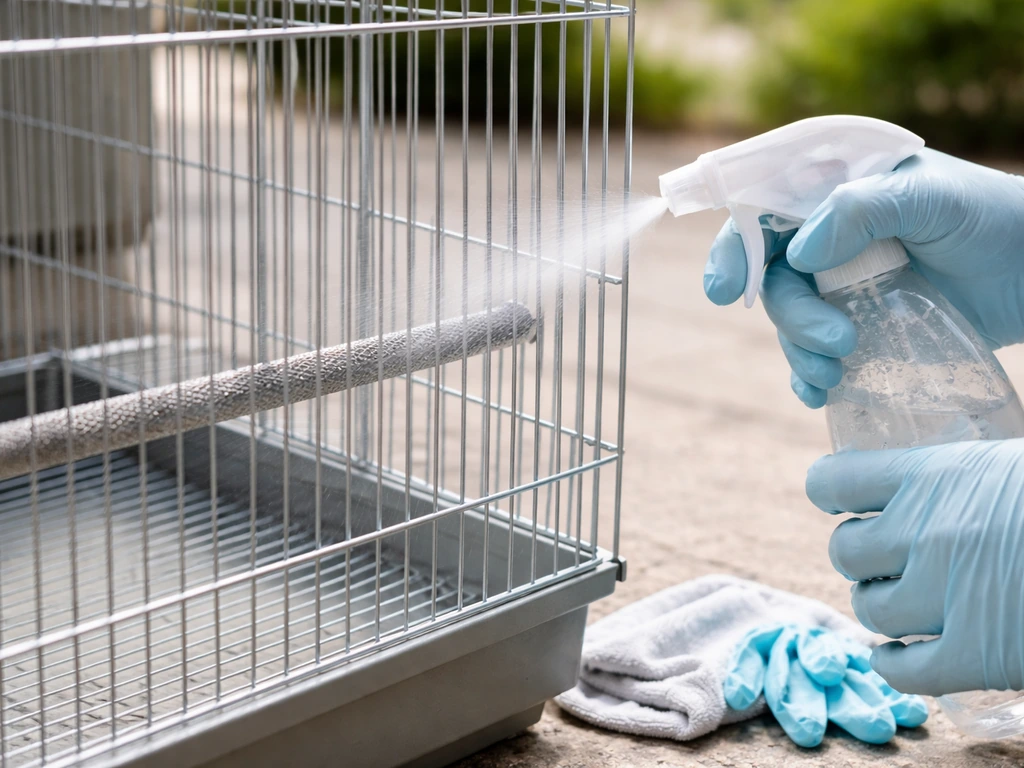
Once the visible material is removed, the surface or item still needs disinfection. For hard surfaces like perches, cage bars, or countertops, use an EPA-registered disinfectant and follow the label's contact time exactly. EPA guidance is clear on this: the surface needs to remain visibly wet for the full contact time listed (often between one and ten minutes, depending on the product) for disinfection to actually work. Spray it on, leave it, then wipe or rinse. Do not rush this step.
For fabric and clothing, a normal machine wash with detergent is usually sufficient if the item is washable. Adding an enzymatic laundry booster helps break down the uric acid residue that plain detergent can miss, and it tackles odor at the source rather than masking it. For non-washable items, a diluted vinegar solution (one part white vinegar to two parts water) applied with a cloth and allowed to air dry will neutralize odor reasonably well. Vinegar is not a disinfectant in any meaningful sense, so for items where pathogen kill matters, an appropriate disinfectant spray followed by airing out is a better approach.
Ventilate the area thoroughly after cleaning. Open windows, run a fan, and allow surfaces to air dry before bringing birds or children back into the space.
Health risks to know about, for both you and your pets
Most casual encounters with bird droppings, a spot on your hand that you wash off immediately, for example, do not lead to illness. But it is worth knowing what the realistic risks are so you can watch for the right symptoms if you had more significant contact. It is also smart to understand the bird poop health risks so you know which symptoms to watch for after cleanup.
| Disease | Source in droppings | Symptoms to watch for | Onset timing |
|---|---|---|---|
| Histoplasmosis | Histoplasma fungal spores in droppings | Fever, cough, chest pain, fatigue, chills (can mimic flu) | 3 to 17 days after exposure |
| Psittacosis (parrot fever) | Chlamydia psittaci bacteria | Abrupt fever, chills, upper respiratory symptoms, can progress to pneumonia | 5 to 14 days typically |
| Campylobacteriosis | Campylobacter bacteria via fecal-oral route | Diarrhea (sometimes bloody), stomach cramps, nausea, fever | 2 to 5 days after exposure |
| Avian influenza (bird flu) | Virus present in infected bird droppings and secretions | Fever, cough, sore throat, respiratory difficulty | 2 to 5 days after exposure |
Histoplasmosis is often misdiagnosed because it looks like a standard respiratory illness. If you disturbed a large accumulation of droppings and develop flu-like symptoms within a couple of weeks, mention the exposure specifically to your doctor, because it changes what tests are appropriate. Psittacosis is usually mild but can escalate to pneumonia, and the same rule applies: tell your doctor about any bird contact if you get sick.
For your pets, particularly dogs that sniff around or mouth feathers or bird waste in the yard, Campylobacter is the main concern. If your dog develops diarrhea, vomiting, or lethargy after contact with bird droppings or a sick bird, call your vet and mention what happened. The fecal-oral transmission route that affects humans works the same way in dogs.
One thing worth putting into context: bird poop has a longstanding reputation in many cultures as a sign of good luck, which is a fun piece of folklore but obviously not a reason to skip washing your hands. Bird poop can also be a useful fertilizer for plants when it is composted properly and handled safely bird poop good for plants. The cultural symbolism does not change the biology. Take the practical precautions and you can happily keep whatever meaning you assign to the experience.
When to call a professional or wildlife rehabilitator
Some situations go beyond what home cleanup can safely address. Here is when you genuinely need to escalate.
- The bird is injured, lethargic, or clearly unwell: A sick bird needs an avian vet or licensed wildlife rehabilitator, not amateur cleaning. Attempting to handle a compromised wild bird also increases your own exposure risk significantly.
- Droppings are caked around the vent and the bird seems distressed or is not defecating normally: This is a medical issue. A blocked vent is a potentially life-threatening condition that needs professional intervention.
- The droppings are too extensive for the bird to handle through normal preening: A healthy bird preens itself constantly. If the feather damage or fecal buildup is severe enough that normal preening cannot address it, and the bird is a pet, get an avian vet involved.
- You are dealing with a large accumulation, not just a spot: NIOSH guidance is clear that extensive bird or bat dropping accumulations pose elevated histoplasmosis risk and should be handled with professional-grade PPE and methods, or by a professional remediation service.
- You or a family member had significant unprotected exposure and develop symptoms within two weeks: Consult a doctor and mention the exposure specifically. Do not just wait it out if symptoms are progressing.
- You found a dead wild bird with obvious disease signs: Do not handle it with bare hands. Contact your local animal control or wildlife agency for guidance on safe disposal.
If you are unsure whether a wild bird needs a rehabilitator, most regions have wildlife hotlines or local Audubon chapters that can advise over the phone. The National Wildlife Rehabilitators Association is a good starting point for finding a licensed rehabber near you. When in doubt, make the call before you attempt anything yourself.
FAQ
Can I use alcohol, hydrogen peroxide, or bleach to loosen bird poop stuck on feathers?
Avoid harsh chemicals on feathers and on the bird. Alcohol and peroxide can irritate skin and may damage feather structure if they soak into barbs. Bleach is especially risky because it can discolor and weaken feathers, and it can release irritating fumes. If you need disinfection for a surface, use an EPA-registered disinfectant on the surface only and respect the label contact time.
What’s the best way to tell if the dropping is fully removed, or if urate residue is still stuck?
After dabbing and wiping, look for a faint chalky or cream film at the feather gaps, not just the original crust. Run a gloved fingertip lightly along the feather (no pressure) to feel for gritty spots. If you still detect texture or white residue, repeat the lukewarm-soak step rather than rubbing harder.
How long should I hold the lukewarm cloth or cotton ball on the poop before trying to lift it?
Use one to two minutes at a time, then try a gentle lift. If it does not loosen, do not escalate immediately to scraping, repeat with a fresh damp cloth for another one to two minutes. For hardened, sun-dried material, multiple short softenings are safer than one long soak with friction afterward.
Will repeated water exposure ruin a bird’s feathers or make the bird cold?
Wet feathers lose insulating ability quickly, so limit how long the bird stays wet. After cleaning, keep the bird warm (a controlled, safe heat source and a calm environment) until feathers look dry. Also minimize handling time overall to reduce stress.
Is it safe to use a hair dryer or heat gun to dry feathers after cleaning?
Do not use high heat devices near a live bird. If you are cleaning a feathered item, let it air dry fully in ventilation rather than using direct heat that can warp or dry out feather barbs. For live birds, prioritize gentle warmth and ensure the bird is fully stabilized before returning it to its environment.
What should I do if bird poop stuck on feathers is near the vent area and the bird seems backed up?
If fecal material appears to be blocking the vent, the situation can become urgent, pasty butt, or vent gleet. Do not try prolonged home soaking or aggressive removal. Contact an avian vet or wildlife rehabilitator for instructions, and keep handling brief while you wait.
Can I clean my own clothes or a blanket with the same steps I use for feathers on a bird?
For washable fabric, normal machine washing with detergent is usually enough after you remove visible material without dry-scraping. Consider an enzymatic laundry booster for lingering odor or residue. For non-washable feathered items, spot-dampen and air dry completely. Do not treat fabric as if it needs feather-safe chemical soaking.
How do I safely remove a poop spot from a washable hat, costume, or upholstery without spreading it?
First dampen the affected area and let it sit for a couple of minutes. Use blotting and gentle circular working only where the material is, then avoid scrubbing outward. After lifting, wipe with a clean damp cloth and allow full drying. If the item cannot be disinfected adequately, focus on containment and thorough cleaning rather than trying to “sanitize” everything.
Is rinsing under running water enough, or do I still need disinfection after cleaning?
Rinsing removes visible contamination, but disinfection depends on the surface and the exposure level. For hard surfaces, apply an EPA-registered disinfectant and keep the surface visibly wet for the full label contact time. If it was a tiny spot and you washed immediately, thorough soap-and-water plus proper hand hygiene may be sufficient, but disinfect when there was widespread contamination.
What are the most common mistakes that cause feather damage during removal?
Scraping dry residue, rubbing back and forth aggressively, and using stiff tools without first softening are the biggest problems. Another frequent mistake is trying to “finish” the job with friction after the visible crust is gone, leaving chalky urate deeper in the barbs. Stick to soak, gentle lift, then dab-wipe.
Can I save loose contaminated feathers from my car or yard for crafts?
If feathers are heavily contaminated with feces, they are not worth saving because they can act as a transmission vector. If you do keep any, only handle them with gloves after soaking to loosen material, then bag and discard the heavily soiled parts. For any crafts, do not use heat-setting methods that aerosolize residue.
If I got bird poop on my skin, do I need to see a doctor?
Most single small exposures that are washed off promptly do not lead to illness. Seek medical advice if you develop symptoms after significant exposure, like flu-like illness after disturbing droppings, persistent eye pain after eye exposure, or gastrointestinal symptoms after likely contact. If you have open cuts, monitor more carefully and consider contacting a clinician if symptoms appear.
What if the bird poop is on my pet bird’s feathers but the bird is stressed or tries to pull away?
Minimize handling time and use a clean towel to stabilize the bird. If the bird is struggling to the point where you might poke or rub harshly, stop and reassess, an avian vet or rehabilitator can guide you. Using calm, short soften-and-dab sessions is safer than forcing the cleanup in one attempt.