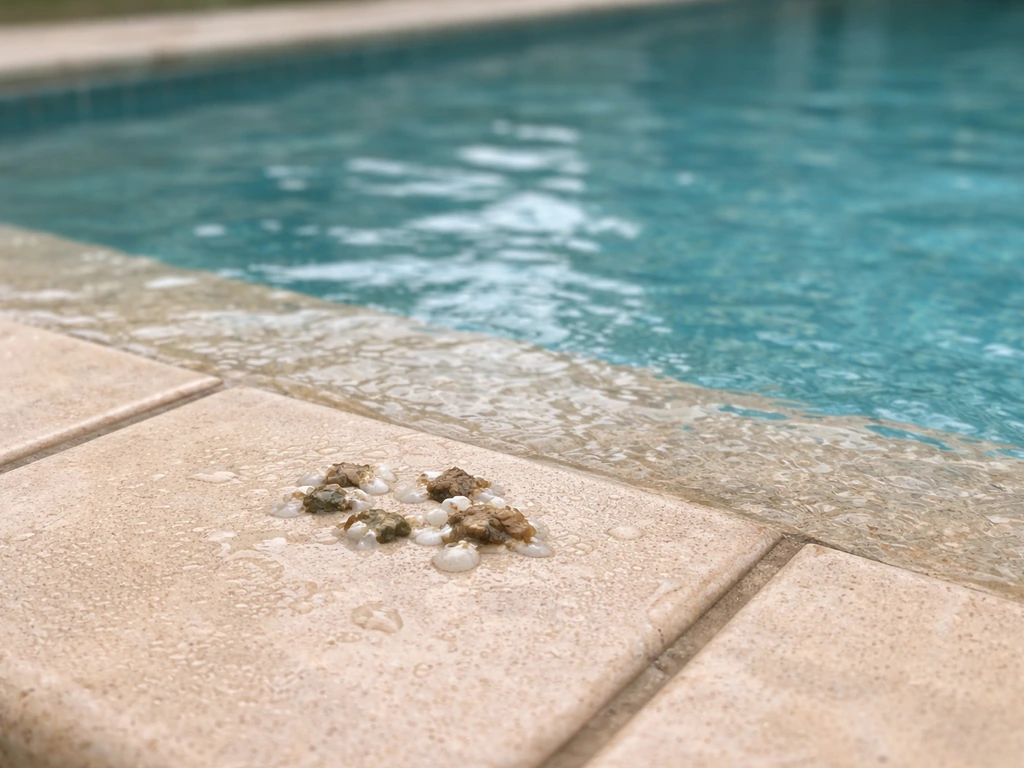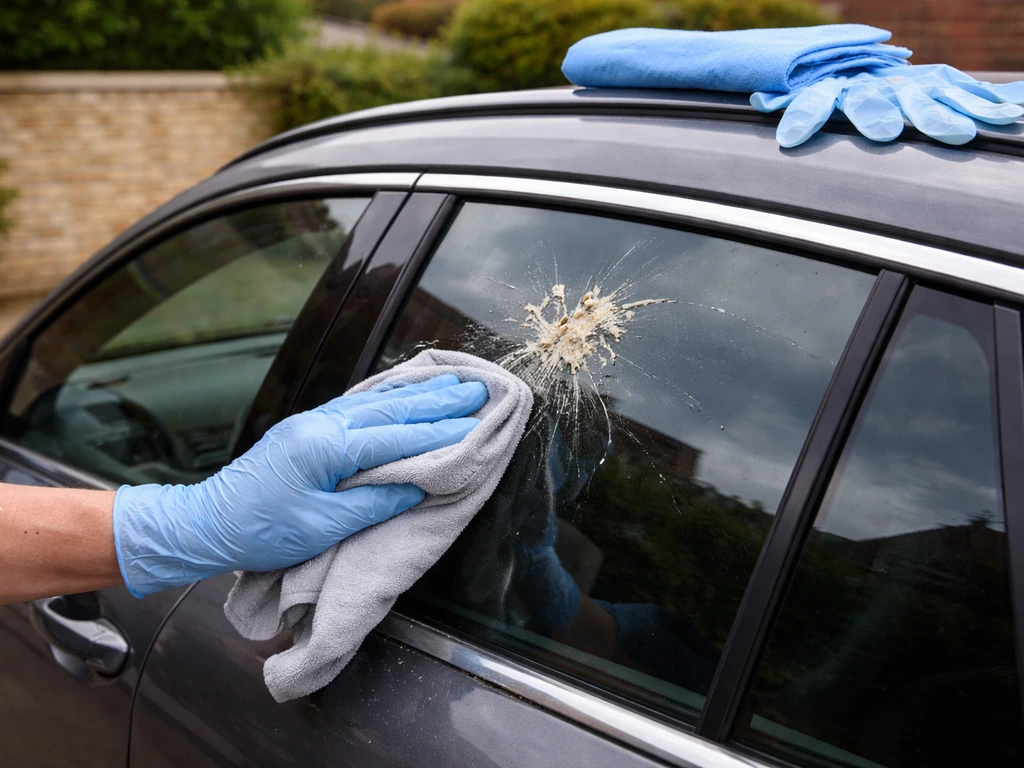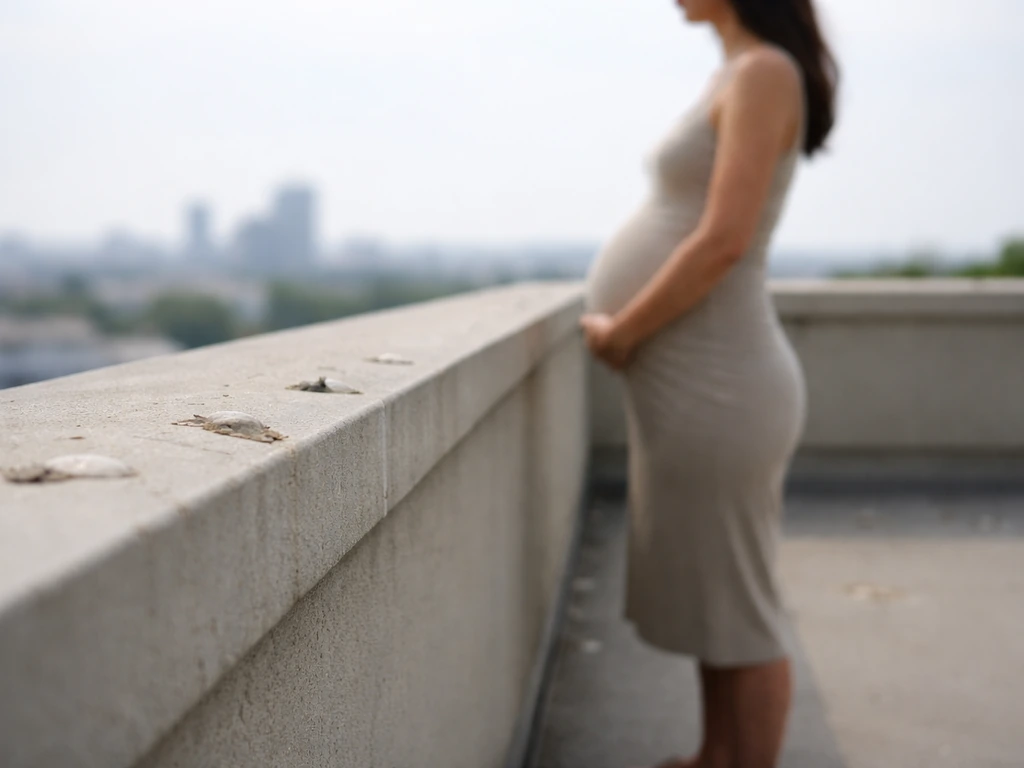
Bird poop is mostly a nuisance, not a genuine health threat for most healthy adults dealing with the occasional splat on a car hood or patio chair. For routine, small-scale contact, basic hygiene (wash your hands, wipe the surface, move on) is all you really need. That said, the risk is not zero, and there are specific situations where bird droppings deserve more respect: large accumulated piles, dried dust getting stirred into the air, or exposure affecting kids, pregnant people, pets, or anyone with a weakened immune system. Know which situation you're in, and you'll know exactly how careful to be.
How Bad Is Bird Poop? Risks, Cleanup Steps, and Safety

Marcus Fielding
17 Jun 2026
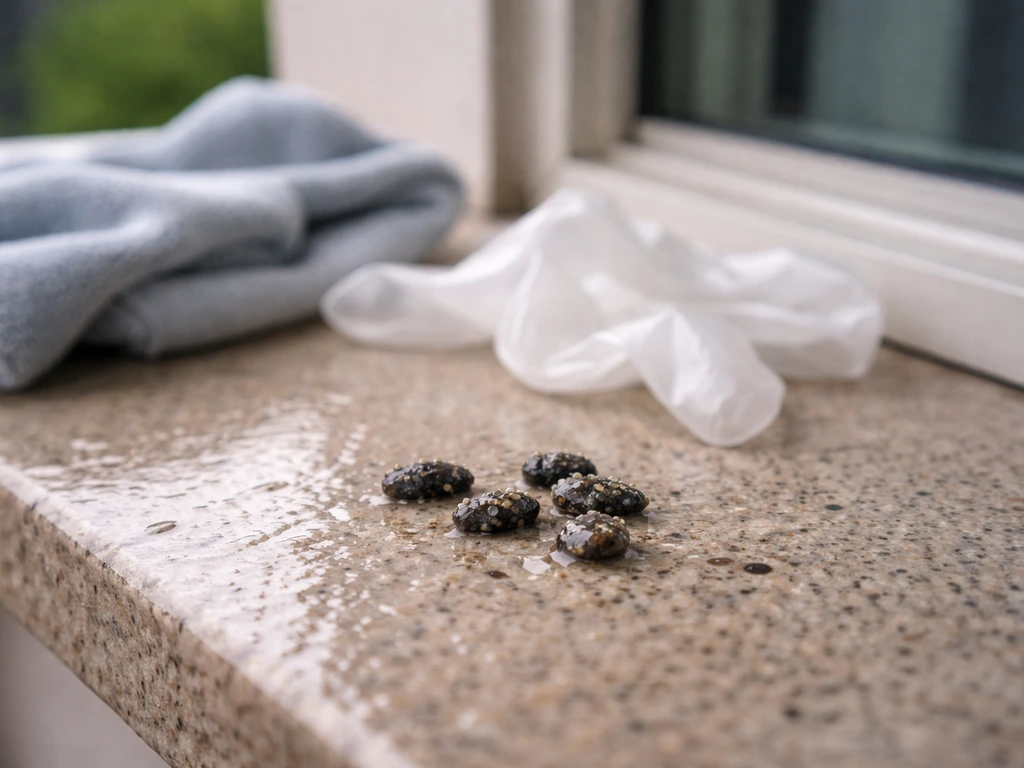
The real risk level: usually low, sometimes not
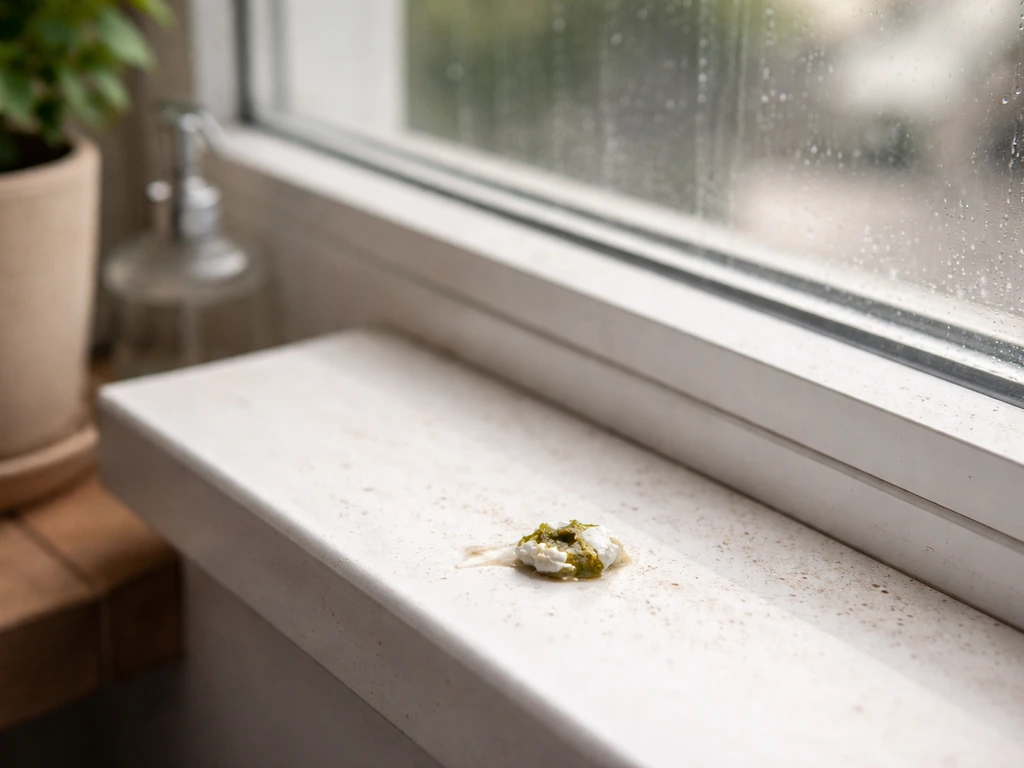
A single fresh dropping on your windowsill or car roof is not a crisis. NYC Health is pretty direct about this: routine cleaning of a small amount of droppings does not pose a serious health risk to most people. The biology backs that up too. The fungus most associated with bird droppings (Histoplasma) lives in soil where droppings have accumulated over time, not typically in a fresh splat on a hard surface. The CDC's own guidance on histoplasmosis notes that fresh droppings on surfaces like sidewalks and windowsills likely do not pose a significant risk.
The risk picture shifts when you're dealing with large quantities, dried material that can turn to airborne dust, or heavily contaminated roosting areas. That's when the same droppings that are harmless on your car become a legitimate respiratory hazard. The key variable is almost always whether particles become airborne during cleanup. Keep that principle in mind and most of the guidance below will make intuitive sense.
When bird poop gets more dangerous
The environment matters a lot
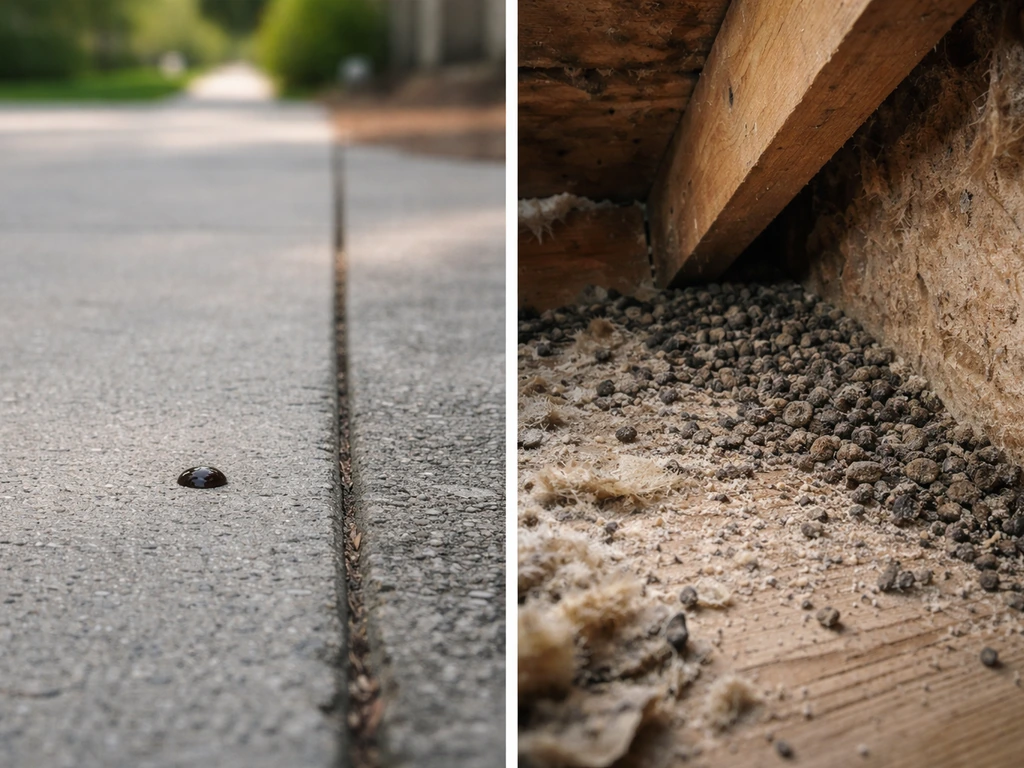
A pigeon dropping on an open sidewalk is very different from an attic packed with years of accumulated droppings under an old roost. Enclosed spaces concentrate dried particles. Older buildings, lofts, barns, and spaces under large nesting colonies can have genuine fungal spore loads in the air, especially if the material is disturbed. The Florida Wildlife Commission notes that risk increases specifically with activities that create dust or disturb accumulated droppings, like cleaning, remodeling, or digging in contaminated soil. The same logic applies to heavy buildup around bird feeders or under roosting spots in your backyard.
Who is more vulnerable
For most healthy adults, the immune system handles incidental exposure without any symptoms at all. But some groups genuinely need to be more careful. The Washington State Department of Health specifically advises that people with weakened immune systems should avoid activities that disturb accumulated droppings altogether. The Mayo Clinic flags people with compromised immunity or certain chronic lung conditions as being at higher risk for severe histoplasmosis. Young children who play on contaminated ground, pregnant people (more on that in a dedicated piece on the site), and anyone currently immunocompromised should treat even moderate accumulations with more caution than a healthy adult would. Pets, particularly birds and small animals, can also be exposed to pathogens from wild bird droppings, which is worth keeping in mind around feeders and outdoor areas.
Health risks worth knowing about
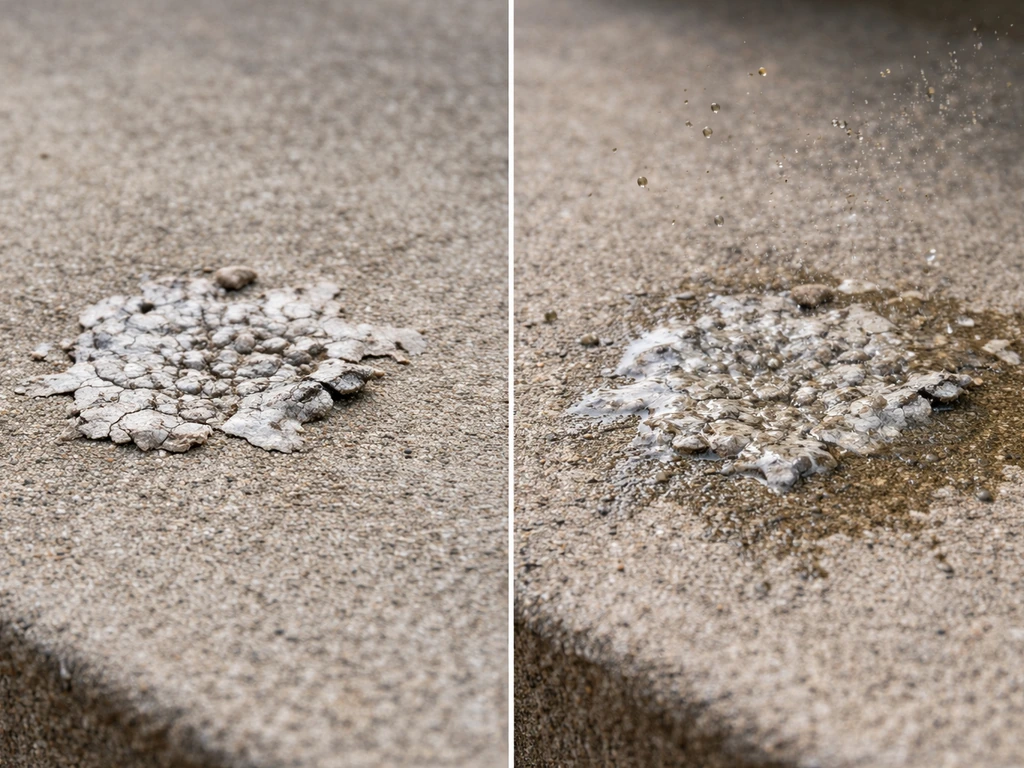
There are three main health concerns that actually come up in real-world exposure to bird droppings. None of them are common from casual contact, but they're worth understanding so you can recognize when to take a situation more seriously.
| Condition | Cause | Main Risk Factor | Who's Most at Risk |
|---|---|---|---|
| Histoplasmosis | Histoplasma fungus in soil with bird/bat droppings | Inhaling disturbed dust or spores from large accumulations | Immunocompromised people, chronic lung disease |
| Psittacosis | Chlamydia psittaci bacteria from infected birds | Inhaling dried dust from infected bird droppings or secretions | Pet bird owners, people with regular bird contact |
| Salmonella / E. coli | Bacterial contamination in droppings | Hand-to-mouth contact after touching contaminated surfaces | Children, anyone skipping handwashing |
Histoplasmosis is a fungal lung infection caused by Histoplasma, which thrives in soil enriched by years of bird or bat droppings. Most healthy people who inhale spores experience mild or no symptoms and never know they were exposed. It only becomes severe in people with certain immune conditions.
Psittacosis is a bacterial infection caused by Chlamydia psittaci. It is most associated with parrots and other pet birds, but wild birds can carry it too. Both the CDC and the UKHSA describe inhalation as the primary transmission route: breathing in dust from dried droppings or respiratory secretions of infected birds. It can cause a flu-like respiratory illness in humans, and in some cases it's more serious. The UK's Health Security Agency reported cases in 2025 linked to household pet birds, feeding wild birds in public, and occupational exposure, which gives you a real-world sense of the risk contexts.
Bacterial contamination from droppings (including Salmonella) is a more straightforward risk: it's a contact and hand-hygiene issue. Touch droppings, don't wash your hands, touch your face or food, and you've created a transmission pathway. This is the most preventable of all the risks and the one basic handwashing handles completely.
How germs actually spread from bird droppings
Understanding the actual transmission routes makes the cleaning advice below much easier to follow. There are four main ways exposure happens in real life.
- Direct contact: touching droppings with bare hands, then touching your mouth, eyes, or food without washing first
- Aerosol inhalation: dry sweeping, blowing with a leaf blower, or pressure washing without wetting first can launch dried particles into the air you breathe
- Shoe and foot transfer: walking through contaminated areas and then tracking material indoors, onto kitchen floors, or into areas where children crawl
- Contaminated surfaces: droppings on food prep surfaces, garden tools, or children's play equipment that are touched without cleaning first
The UK's Health and Safety Executive is blunt about the aerosolization risk in work contexts, noting that breathing dust or water droplets from contaminated droppings is how diseases like psittacosis are transmitted in construction and maintenance settings. The principle applies just as much at home. The moment you create dust or a fine spray from dried droppings, you're creating an inhalation risk. That's why the "what not to do" list below matters as much as the cleaning steps themselves.
How to clean bird droppings safely: step by step
General principles before you start
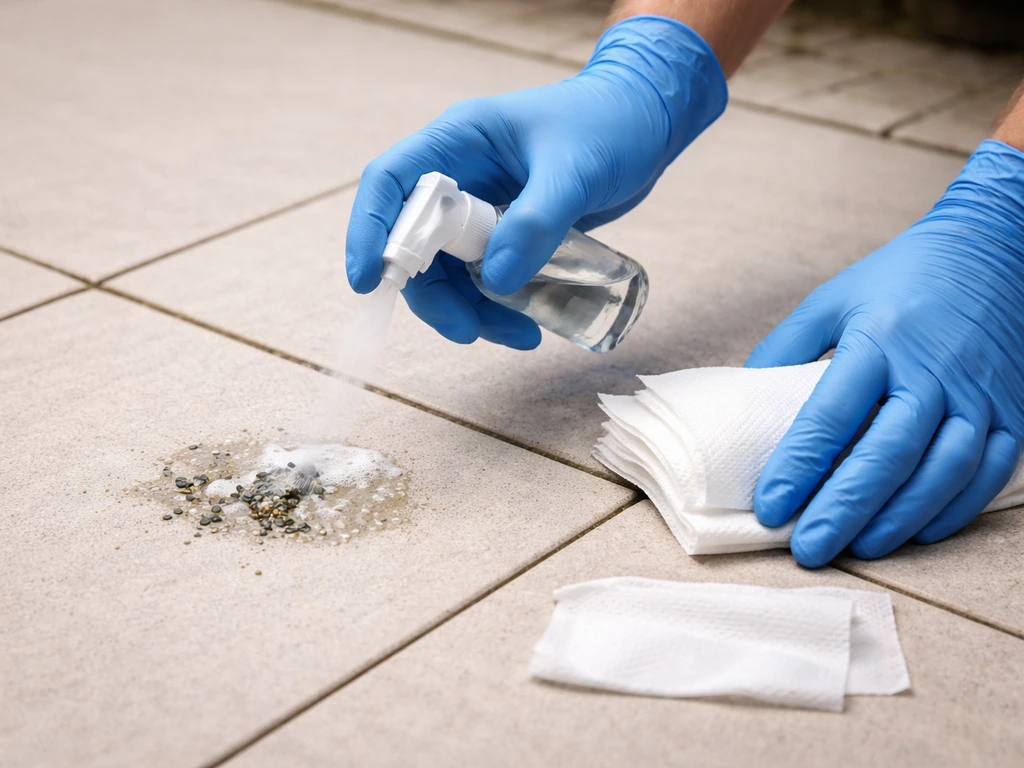
The core rule is: wet before you wipe, never dry sweep. This keeps particles from becoming airborne. For small cleanups (a few droppings on a hard surface), disposable gloves and a paper towel are usually sufficient. Mass.gov also notes that when buildings are contaminated with bird waste, cleaning with a sodium hypochlorite solution can be an effective approach for situations involving several droppings, citing CDC guidance For small cleanups (a few droppings on a hard surface), disposable gloves and a paper towel are usually sufficient.. For larger or older accumulations, add an N95 mask. The Washington State Department of Health specifically recommends gloves and an N95 for any situation involving accumulated droppings.
Cleaning bird droppings at home and on outdoor surfaces
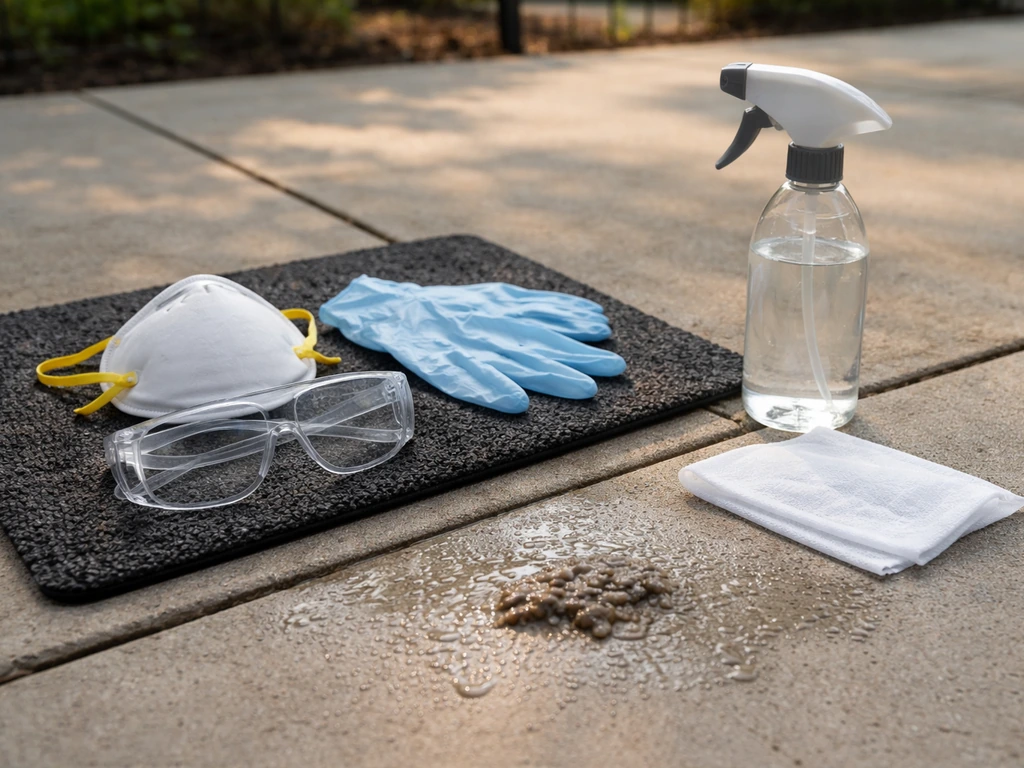
- Put on disposable gloves before touching anything. Add an N95 mask if you're dealing with more than a few fresh droppings or any dried/dusty material.
- Wet the droppings thoroughly before touching them. Use a spray bottle with water or a dilute disinfectant solution. This is the single most important step for preventing dust.
- Wipe up with disposable paper towels, working from the outside of the area inward to avoid spreading contamination.
- Place used paper towels directly into a plastic bag, seal it, and put it in the trash. Don't leave used wipes sitting out.
- Clean and disinfect the surface. For hard, non-porous surfaces, a sodium hypochlorite (bleach) solution is effective. Massachusetts public health guidance recommends this method for surfaces with several droppings. Follow label dilution instructions (typically 1 part bleach to 10 parts water).
- Remove and bag your gloves without touching the outside surfaces. Wash your hands thoroughly with soap and water for at least 20 seconds.
Large accumulations (under roosts, in attics, or around feeders)
Large buildup is a different category. Cal State University's Environmental Health and Safety protocol for large bird dropping cleanups adds important extra steps: keep the material continuously wet throughout the process, double-bag all waste before disposal, and clean rubber boots, gloves, and tools with a 10% bleach solution after the job. The CDC's prevention guidance for histoplasmosis also emphasizes eliminating accumulated droppings and avoiding any activities that disturb them without protection. If you're dealing with a substantial accumulation in an enclosed space (an attic, a crawlspace, an old barn), seriously consider hiring a professional remediation service rather than doing it yourself.
Cleaning bird poop off your car
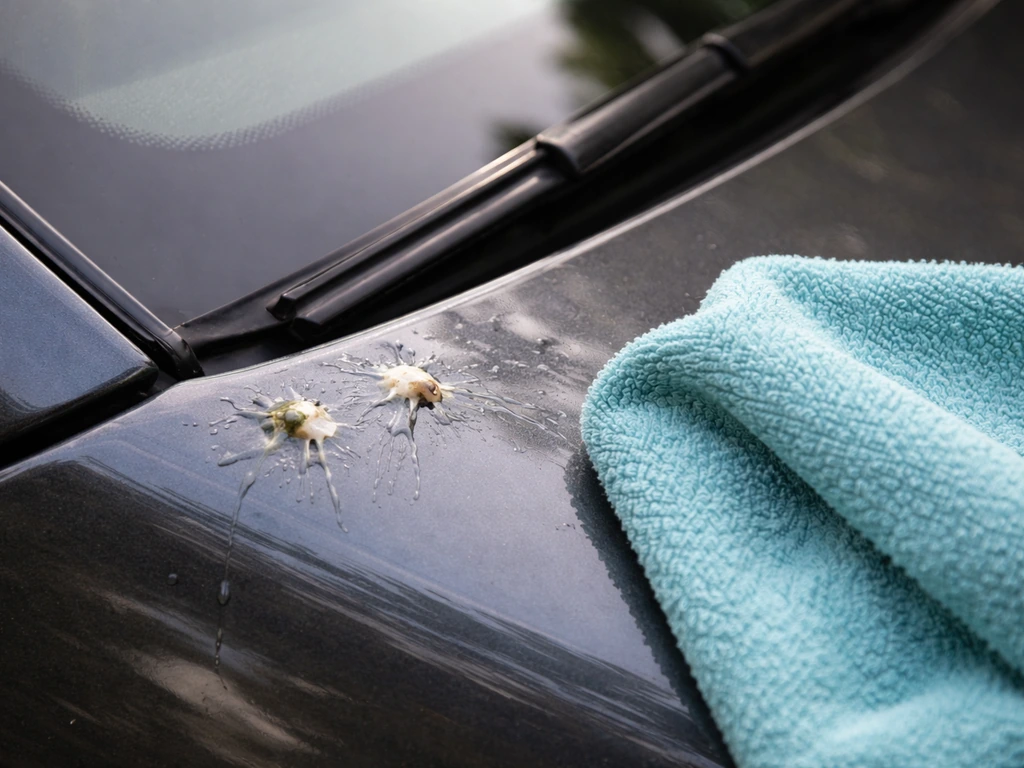
Bird droppings on vehicle paint are genuinely damaging, and the damage accelerates fast: the uric acid in droppings etches into clear coat, especially in heat. From a health standpoint, the same wet-before-you-wipe principle applies. Soak a microfiber cloth or paper towel with water, let it sit on the dropping for 30 to 60 seconds to soften it, then wipe gently in one direction. Don't scrub dried droppings dry, both because the grit can scratch paint and because it turns dried material into a fine dust. Follow up with a rinse and a quick wipe with an automotive detailer spray. For bird poop that has baked on in the sun, a waterless car wash spray or a dedicated bug-and-tar remover softens it without aggressive scrubbing.
What not to do: cleanup mistakes that make things worse
- Dry sweeping or using a broom on dried droppings: this sends particles directly into the air you're breathing. The CDC's psittacosis guidance specifically says to avoid dry sweeping or vacuuming for this reason.
- Using a leaf blower or compressed air on contaminated areas: same problem, dramatically amplified. This is one of the most common and dangerous mistakes in outdoor cleanup.
- Pressure washing without wetting the area first or without controlling runoff: high-pressure water can aerosolize dried material and spread contaminated water across a wider area.
- Using a standard household vacuum without a HEPA filter: standard vacuums can exhaust fine particles back into the air.
- Skipping gloves because 'it's just a little bit': the amount doesn't change what's in it, only the exposure level. Gloves cost almost nothing and the habit matters.
- Disposing of contaminated material in open trash or compost without bagging: droppings can contaminate compost or attract other animals.
- Touching your face, phone, or food before washing your hands after any droppings contact.
When to get medical help or call a professional
After an exposure incident
If you had routine contact with a small amount of droppings and you washed your hands thoroughly, you almost certainly don't need to do anything beyond normal monitoring. Most healthy adults exposed incidentally never develop any illness at all. If you inhaled dust from a dry cleanup or worked in a heavily contaminated enclosed space without protection, it is worth paying attention to symptoms over the following one to three weeks.
Symptoms to watch for include fever, cough, chest tightness, shortness of breath, or flu-like illness that doesn't resolve. These could indicate histoplasmosis (which can take 3 to 17 days to appear after significant exposure) or psittacosis (typically 5 to 14 days after exposure). If you develop these symptoms after a known exposure to large amounts of bird droppings, tell your doctor specifically about the exposure. This helps them consider the right diagnoses rather than treating it as generic flu.
When to skip DIY and call a professional
- Any large accumulation in an enclosed or poorly ventilated space (attic, basement, barn, crawlspace)
- Visible mold growth alongside droppings in an enclosed area
- You or someone in your household is immunocompromised, has chronic lung disease, or is pregnant
- A roosting or nesting infestation that keeps regenerating (you may also need a licensed wildlife or pest control service to address the source)
- Commercial or rental properties where occupant safety and liability are concerns
The good luck thing: what superstition gets right and wrong
If you've just had a bird poop on you and someone nearby cheerfully announced that it means good luck, you were probably not in the mood to hear it. But this belief is genuinely widespread across many cultures. In Turkish, Russian, Italian, and several other cultural traditions, being hit by bird droppings is considered a lucky omen, often connected to unexpected financial windfall. The reasoning is partly about rarity (the odds of getting hit feel astronomical in the moment) and partly about finding a way to feel good about an objectively unpleasant situation. As coping mechanisms go, there are worse ones.
What the superstition gets right, accidentally, is the implication that the event is mostly harmless. For the vast majority of people, getting hit by a bird dropping outdoors is not a health event. If you’re asking, “is bird poop dangerous in the UK,” the risk is usually low for small, fresh droppings but rises when you disturb large or dried accumulations is bird poop dangerous uk. It's an annoyance. Wash the area with soap and water, wash your hands, change your shirt if needed, and you're done. No medical treatment required, no panic necessary.
What the superstition gets wrong is any implication that the poop itself is benign or that hygiene doesn't matter. It's not a badge of honor to leave it sitting. Wash up promptly, especially before eating, because the actual content of bird droppings (bacteria, potential pathogens) doesn't care about folkloric symbolism. Think of the good luck narrative as a reasonable attitude adjustment, not a reason to skip handwashing. The luck, if there is any, comes from the fact that it usually amounts to nothing if you handle it sensibly.
The bottom line on bird poop is that the risk scales with volume, dryness, and how you handle it. A fresh splat on a hard surface, cleaned up promptly with wet material and followed by handwashing, is genuinely low risk for most people. A dry, dusty accumulation in an enclosed space, disturbed without protection, is a real hazard. Most everyday situations fall firmly in the first category. Treat it with basic hygiene, not fear, and you'll be fine.
FAQ
If I got bird poop on my skin, do I need to disinfect it or just wash normally?
For a fresh, small spot, washing with regular soap and water is enough. Disinfectants are rarely necessary for skin contact and can irritate or damage skin if overused. The priority is removing residue promptly, then washing again before eating or touching your face.
What should I do if I accidentally wiped bird poop with a dry paper towel?
If you dry-wiped dried droppings and there was visible dust, assume you may have created airborne particles. Avoid breathing the area in close range, ventilate if you can, then wet the spot before re-cleaning. Wear gloves for the second pass and consider an N95 mask if the area is dusty or you do not feel you can keep it fully wet.
Is it safe to clean bird poop while wearing just gloves, or do I also need eye and mouth protection?
Gloves are the main barrier for hand contamination, but eye and breathing protection becomes important when material is old, dried, or likely to aerosolize. In enclosed or dusty situations, an N95 (and basic eye protection if you expect splatter) reduces inhalation exposure risk.
How long can I leave a small amount of bird droppings before cleaning?
Even though a fresh splat is usually low risk, delaying cleanup increases the chance that it dries, collects dust, or gets distributed around the area. A practical rule is to clean it the same day when possible, and definitely before it dries and hardens or when it is in a place people will walk through or sit on.
Can my pet get sick from bird poop even if I never touch it directly?
Yes, especially with birds and small animals that may peck or groom near contaminated areas. Keep pets away from bird-dropping sites (under feeders, near roosts, and around barns) until cleaned, and prevent them from rummaging where droppings have accumulated.
Should I be worried about bird poop on outdoor furniture cushions or fabric?
Fabric can trap residue and become a dust source when you shake or vacuum dry. For small spots, dab or blot with water first (soften, do not scrub dry), then clean according to the fabric care instructions. If the area is large or heavily soiled, laundering or professional cleaning is safer than dry agitation.
Is it safer to hose down bird poop or should I wipe first?
If droppings are dried or you want to minimize aerosolization, wet-first is generally better. Drenching from a distance can still create splatter, so the safer approach is to moisten the area (gently) and then wipe with gloves, working from outer edges toward the center.
I cleaned up bird poop and now I’m seeing lingering smell or dust. Does that mean there’s still a hazard?
Lingering odor can happen and does not automatically mean disease risk, but visible dust or ongoing dirt suggests incomplete wetting or residue left behind. Re-clean with the wet-before-wipe approach, and if it is an enclosed space with years of buildup, consider professional remediation rather than repeated DIY disturbance.
When is bird poop cleaning a “call a professional” situation?
Call a pro if it involves years of accumulation, an enclosed space (attic/crawlspace), large roosting areas, or any cleanup that would require disturbing dried material. If you cannot keep it continuously wet and you anticipate dust-generating work, professionals are more likely to use the right controls.
If I got bird poop on my car paint, can I just wash it later like normal car soap?
Better not to wait. Uric acid can etch paint faster when it bakes on, especially in heat and sun. Soften first with water on a cloth or towel, wipe gently in one direction, rinse, then use an appropriate automotive detailer step to finish.
Do I need to get medical care for minor exposure, like a single fresh droplet?
Usually no. For most healthy adults who washed promptly after incidental contact, watching for symptoms is enough. Seek medical advice if you developed respiratory symptoms after exposure to large amounts or dust-producing cleanup, especially fever, cough, chest tightness, or shortness of breath within the following weeks.
Does bird poop in the same area for months mean I’m guaranteed to be exposed to infections?
Not guaranteed, but it raises the risk if you disturb dried accumulations. Infections depend on factors like how much material is present, whether spores or bacteria become airborne, and your immune status. The decision aid is simple: the more dust and the more disturbance, the more you should protect yourself or avoid DIY cleanup.