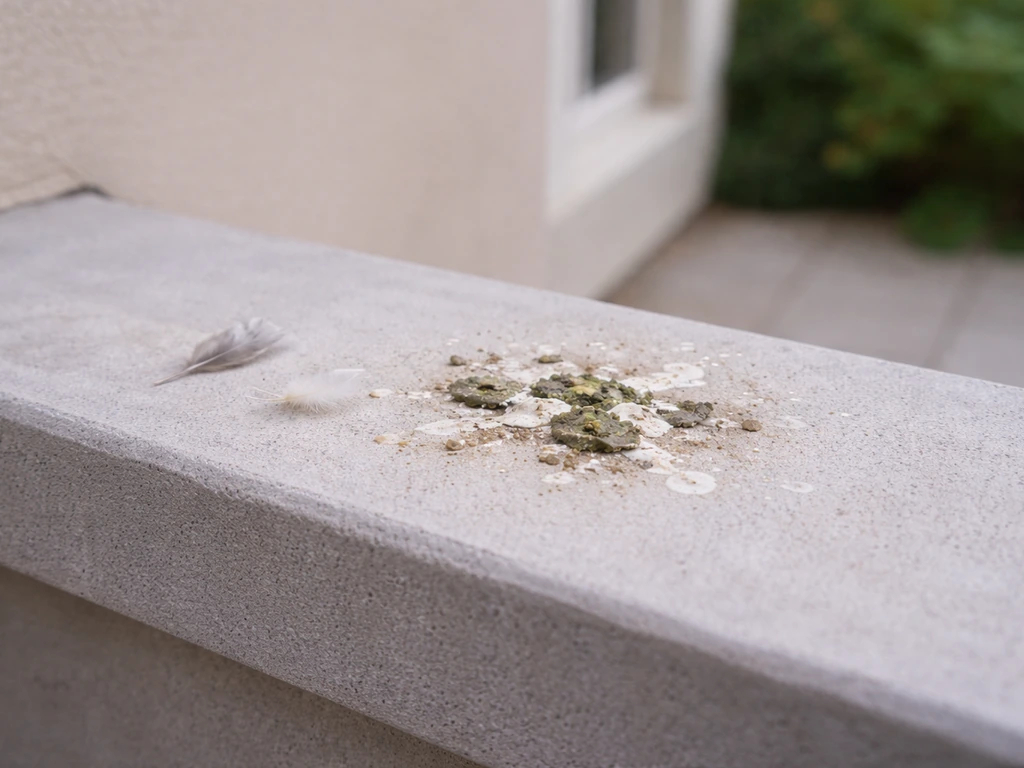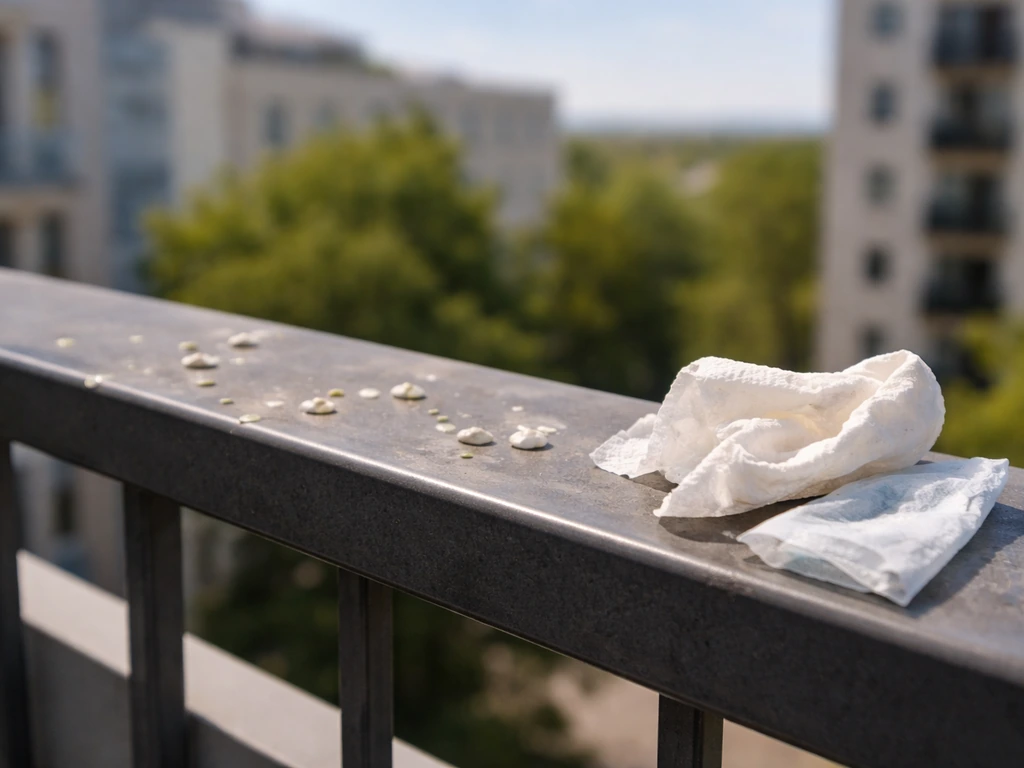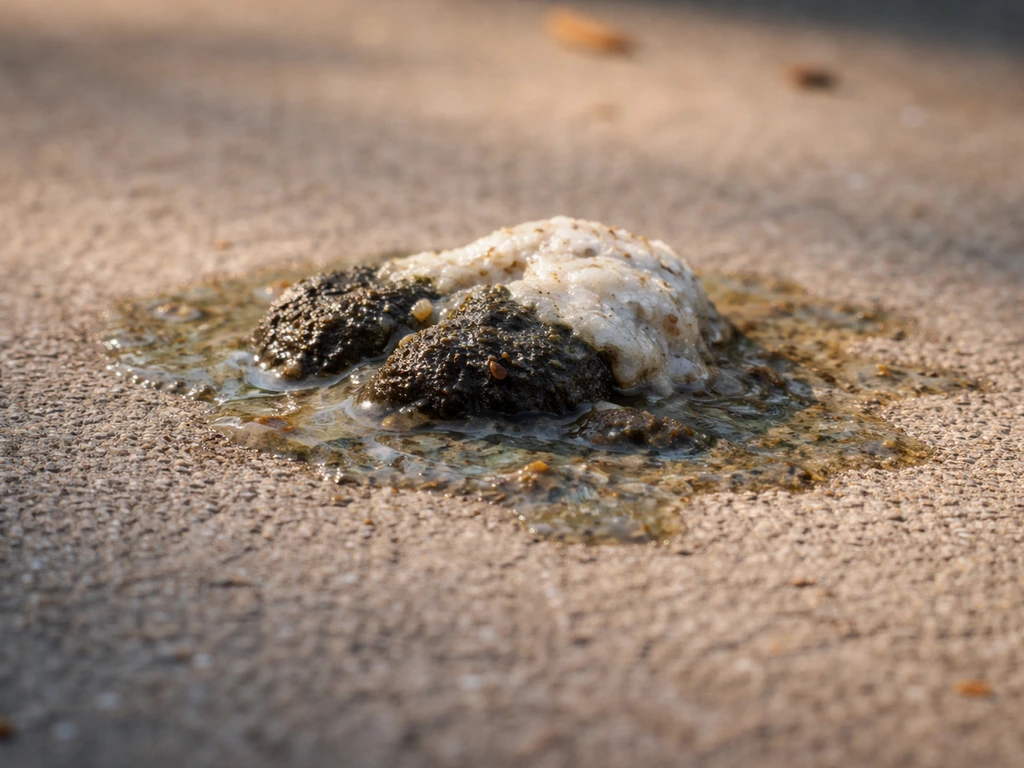
Bird droppings are white because birds excrete their nitrogenous waste as uric acid rather than liquid urine. That chalky white paste you see is urates, the semi-solid, salt-crystal form of uric acid, and it comes out mixed with feces through a single exit called the cloaca. So what looks like one white blob is actually three things at once: feces, urates, and a small amount of liquid urine. The white part is specifically the urates, and understanding that single fact answers most of the questions people have about what are bird droppings called and why bird poop looks the way it does. bird droppings are a mixture of feces and
Why Are Bird Droppings White? Causes and Color Variations

Marcus Fielding
23 Mar 2026
What that white part actually is
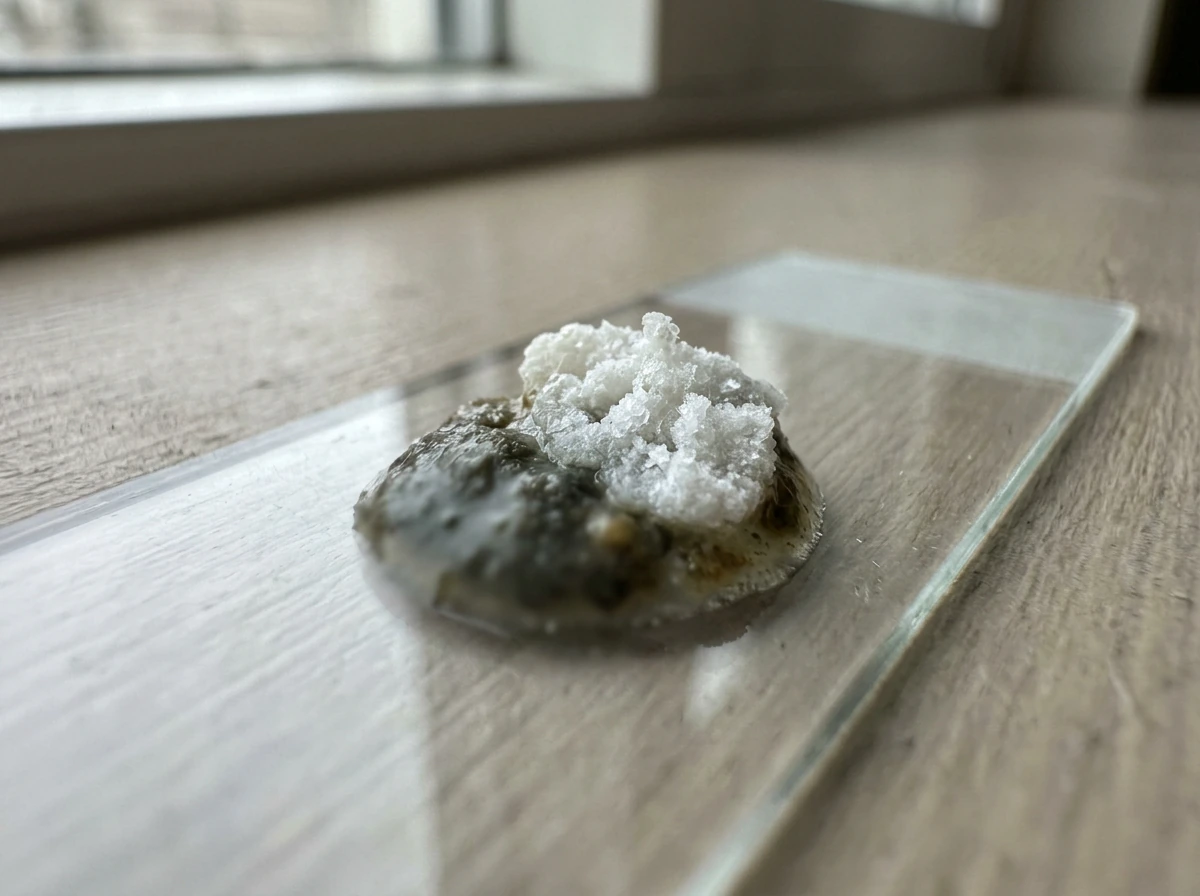
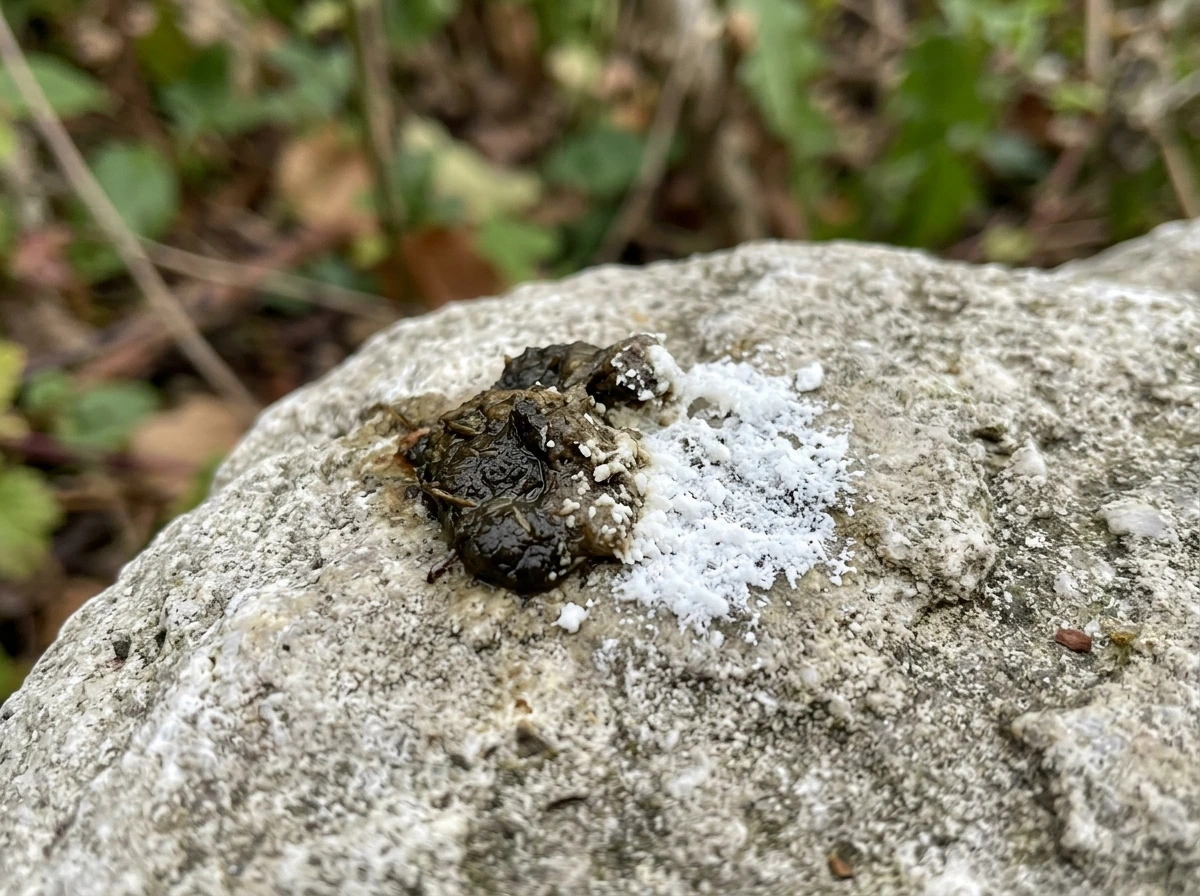
The white substance in bird droppings is urates, which is uric acid in its excreted, crystallized form. Unlike mammals, birds do not produce liquid urine the way we do. Their kidneys process nitrogenous waste (the byproduct of breaking down protein) and convert it into uric acid rather than urea. That uric acid is then passed through the ureters directly into the intestine, where it mixes with digestive waste and exits as a thick, semi-solid paste. The result is that crisp white or off-white chalky cap you see sitting on top of, or wrapped around, the darker fecal material.
Clinical avian medicine references describe normal droppings as having three distinct components: the feces (the darker, solid part), the urates (the white to cream-colored semi-solid), and a small amount of clear liquid urine. In a healthy bird, the urate portion should be bright white to slightly off-white and slightly moist. If you have ever looked closely at a pigeon dropping on a car hood, you have seen exactly this: a dark greenish-brown center with a white, almost chalky ring or cap around it.
Why bird droppings look white: the uric acid explanation
Birds are what biologists call uricotelic animals, meaning their primary method of excreting nitrogen is as uric acid This is an evolutionary adaptation for water conservation. Producing liquid urine the way mammals do requires a lot of water to dilute soluble waste like urea. Uric acid, by contrast, is nearly insoluble in water, so it can be packed into a semi-solid paste and expelled without wasting much moisture. For animals that need to stay light enough to fly, not carrying a bladder full of liquid urine is a significant advantage.
Birds do not have a bladder at all. Waste from the kidneys goes straight to the cloaca, which is the single chamber that handles digestive, urinary, and reproductive waste all at once. Because uric acid is naturally white and forms as tiny crystals or a paste, the urate portion of a dropping appears white or pale cream. That is not pigment, not paint, and not a reaction to the surface it lands on. It is simply what concentrated, semi-solid uric acid looks like.
Are all bird droppings white? When it's white vs. brown
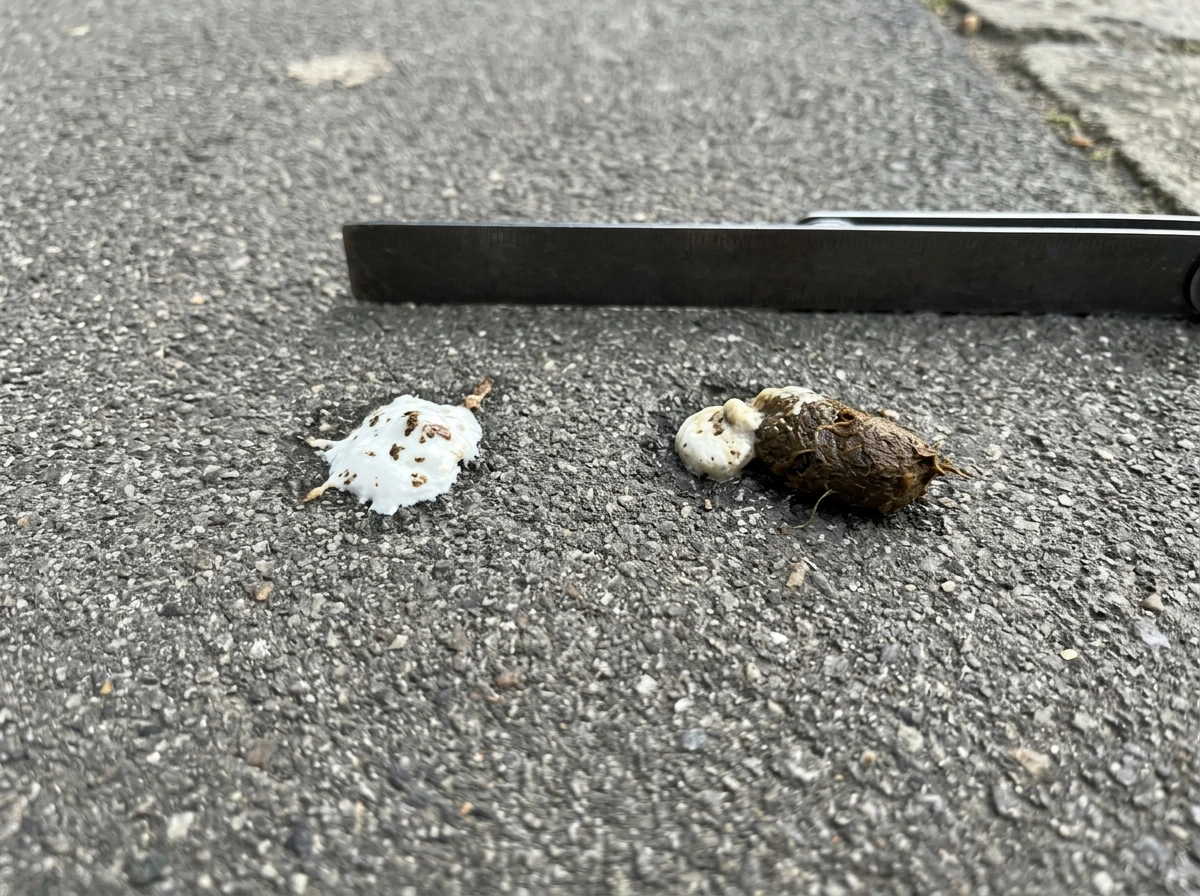
No, not all bird droppings are purely white, and the answer to whether bird poop should be white or brown depends entirely on which part of the dropping you are looking at. The urate portion is white to off-white. The fecal portion can range from brown to green to black, depending on the bird's diet. A bird eating pellets or seeds will typically produce brownish feces. A bird eating lots of fruit, leafy greens, or insects may produce darker or more greenish feces. The overall dropping looks like a combination of these two components layered together, which is why you almost never see a dropping that is one single uniform color.
When people ask whether bird poop is white or brown, the honest answer is: usually both at the same time. The white you see is urates, the brown (or dark green) you see is feces. On a pelleted or seed diet, the fecal component tends toward brown. On a diet heavy in fresh greens or insects, it trends darker or greener. The urate component stays mostly white regardless, though diet and health can nudge it toward yellow, green, or beige, which is worth paying attention to if you keep pet birds.
Why droppings can be black-and-white or white-and-brown
The black-and-white or white-and-brown appearance of droppings comes down to that same two-component structure. The white is urates, and the darker portion (whether it reads as black, dark brown, or dark green) is feces. In large birds like pigeons or crows, the contrast between the white urate cap and the dark fecal center is especially pronounced, which is why their droppings so often look dramatically two-toned. Smaller birds like sparrows or finches may produce droppings where the components are less visually separated, making the whole thing look more uniformly pale or cream.
If you see a dropping that is almost entirely white with very little dark material, that is often a sign the bird is eating a low-pigment diet or excreting a high volume of urates relative to feces. If the dropping is mostly dark with only a small white streak or tip, the bird likely ate something with strong pigmentation (dark berries, for example) or has a diet that produces a lot of fecal bulk. Neither of these is necessarily a health problem in a wild bird. In pet birds, a sudden shift toward mostly-white or mostly-dark droppings can signal dietary issues or illness, which is worth a vet visit.
What makes the color change
Species and diet
Different bird species eat very different things, and diet is the biggest driver of fecal color variation. Seed eaters tend toward brownish feces. Fruit eaters can produce purple, red, or very dark droppings depending on the fruit. Insectivores often produce darker, more compact feces. The urate portion tends to remain white across species, but even that can shift slightly based on what the bird is eating and how efficiently its liver and kidneys are functioning.
Hydration
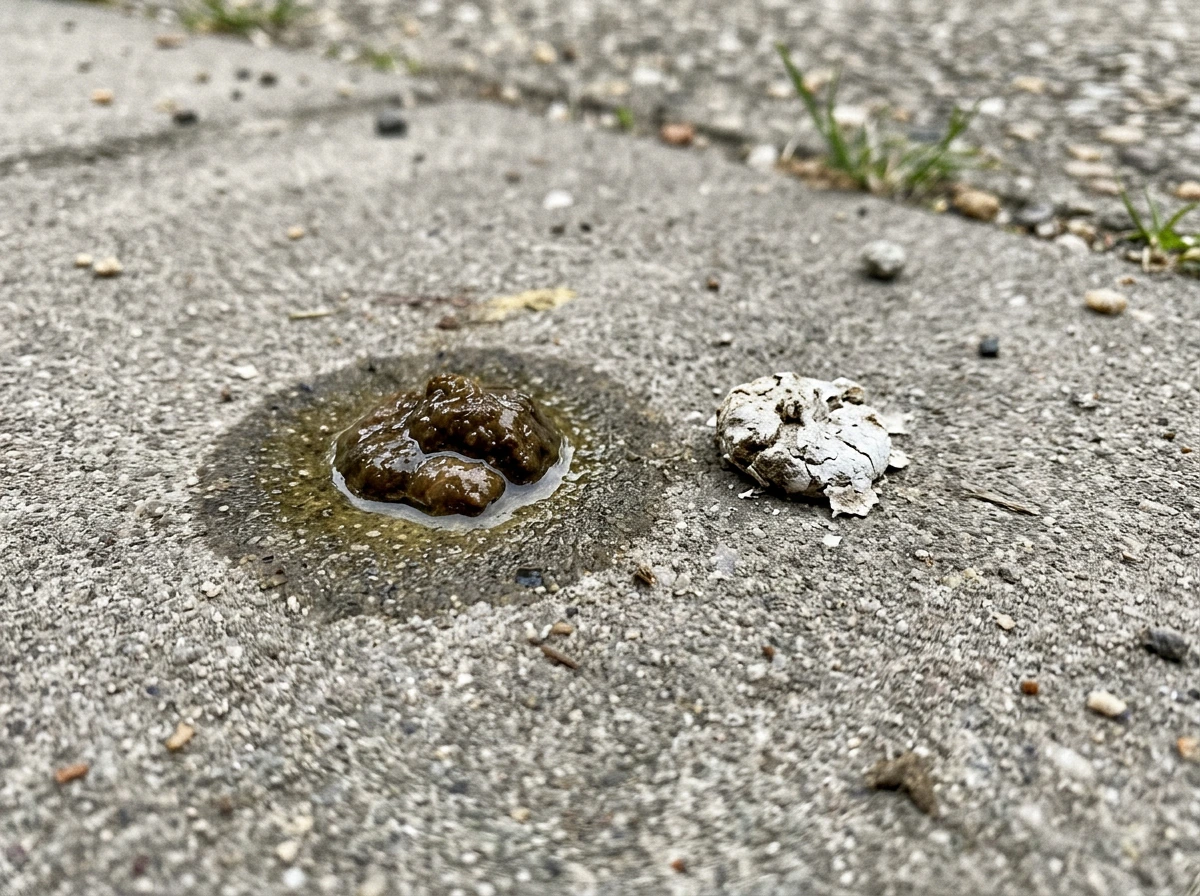
A well-hydrated bird produces droppings with a visible liquid urine component, so you might see a clear or slightly yellowish liquid spreading around the dropping. A dehydrated bird produces drier, more compact droppings. In severely dehydrated birds, the urate portion can become beige or brownish rather than bright white. If you keep pet birds, dry, discolored urates alongside reduced dropping frequency can be an early sign of dehydration or kidney stress.
Health and liver function
The most clinically significant color change to know about is green urates. Normally, urates are white. When liver function is impaired, bile pigments (specifically biliverdin) can leak into the urate portion, turning it greenish or yellowish-green. This is called biliverdinuria and it is a flag for potential liver disease in pet birds. Avian vets specifically look for this during physical examinations. So if you have a pet bird and its urates look lime green rather than white, that is worth a call to your vet rather than a shrug. For wild birds, color shifts in droppings are harder to track but follow the same underlying biology.
| Color of Urates | What It Typically Means |
|---|---|
| Bright white to off-white | Normal, healthy urate excretion |
| Cream or pale yellow | Often normal; can indicate slight dietary variation or mild dehydration |
| Green or yellow-green | Possible bile pigment leakage (biliverdinuria); consider liver health in pet birds |
| Beige or brownish | May indicate dehydration or kidney stress |
| Very watery or absent white | Could signal polyuria (excess liquid urine production); worth monitoring in pet birds |
The white bird poop superstition: what's true vs. just funny
Most people who have been hit by a bird dropping have heard someone nearby say "that's good luck!" with a grin. This belief is genuinely widespread. In Russian folklore, being defecated on by a bird (especially on your car) is considered a sign of incoming wealth or good fortune. USC folklore archives document the same belief circulating in North America. The joke version is that it is "nature's way of telling you it's your lucky day," usually delivered by someone who is very glad it did not happen to them.
Is any of it true? There is no scientific evidence that bird droppings predict financial outcomes. The superstition likely evolved as a way to soften the annoyance of an unpleasant and random event, which is actually a pretty sensible psychological coping mechanism. Getting splattered by a bird is so arbitrary that the mind wants to assign it meaning. The good-luck framing is more comforting than "you were just in the wrong place under the wrong branch." So enjoy the joke, appreciate the folklore, and then go wash it off properly, because the uric acid in that white paste will etch your car's clear coat if you leave it sitting.
Safe cleanup and health risks when you find bird droppings today
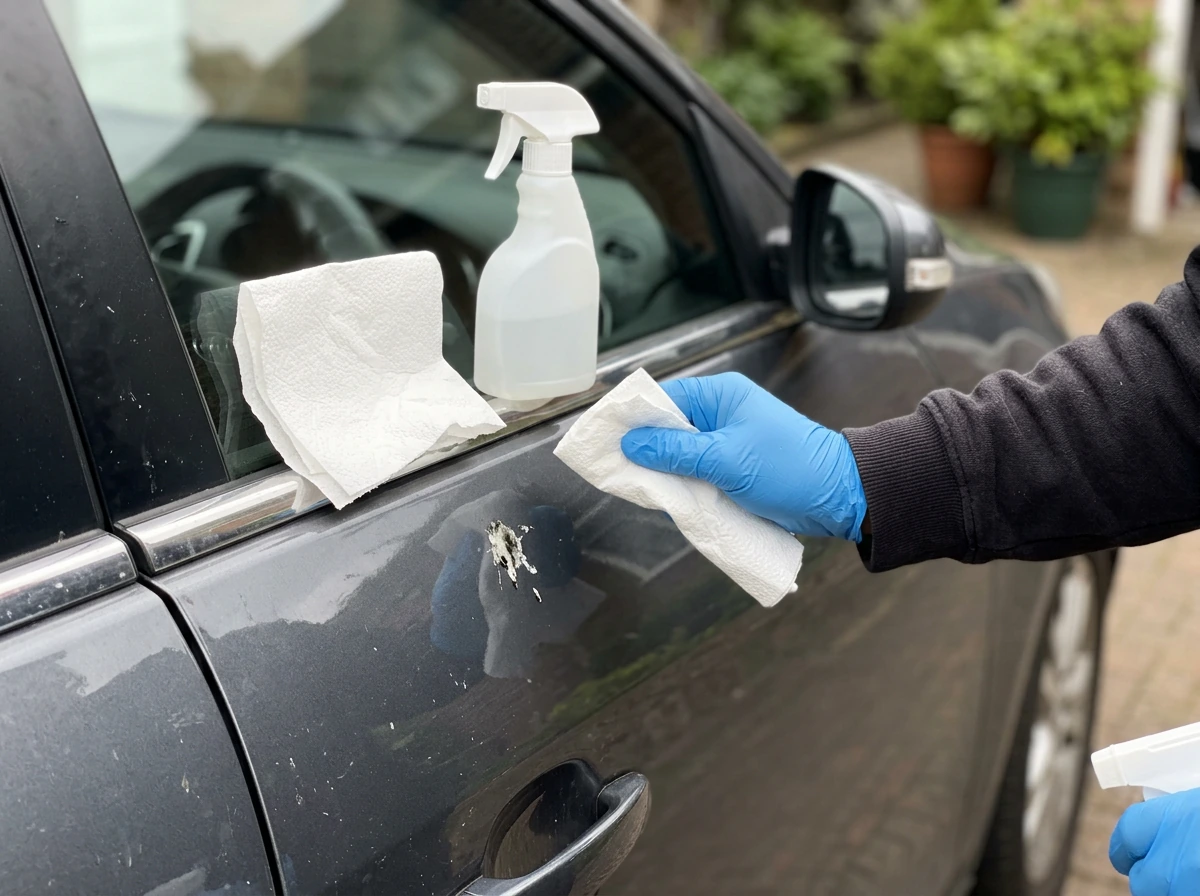
For a single dropping on your car, jacket, or windowsill, the health risk is low for most healthy adults. NYC Health notes that routine cleaning of small amounts of droppings (like on a windowsill) does not typically pose a serious risk. That said, bird droppings can carry pathogens including Histoplasma capsulatum (the fungus behind histoplasmosis), Cryptococcus neoformans (cryptococcosis, which can cause meningitis), and Chlamydophila psittaci (psittacosis). The key risk is not touching or even seeing droppings: it is inhaling dust or aerosolized particles when droppings are disturbed, dried out, or scraped.
For a fresh single dropping on your car, a damp cloth or a car-safe spray and paper towels is all you need. Do not dry-scrape dried droppings, because that sends particles into the air. Wet the area first to keep the material from becoming airborne. Wash your hands thoroughly afterward.
For larger accumulations (a roost under a balcony, a garage with a lot of dried droppings, or nesting areas), the risk profile changes and you need to take it more seriously. The Illinois Department of Public Health and CDC/NIOSH both recommend disposable gloves, protective coveralls, shoe covers, and a properly fitted respirator (not just a dust mask) when cleaning up significant accumulations. Wet the area down before disturbing it, bag the material in sealed bags, and clean the area with a dilute disinfectant solution.
- For a single fresh dropping: wet it, wipe it, wash your hands. Done.
- For dried droppings on a surface: wet thoroughly before wiping to avoid aerosolizing dust.
- For accumulated droppings (roosts, attics, garages): wear disposable gloves, coveralls, shoe covers, and an N95 or better respirator.
- Never dry sweep or use a leaf blower on accumulated droppings. This launches fungal spores directly into breathing air.
- Bag all waste in sealed plastic bags before disposal.
- Wash all exposed skin and clothing after any cleanup job.
- If you have a compromised immune system, asthma, or a respiratory condition, avoid cleaning large accumulations yourself and call a professional service.
Pet bird owners have a slightly different concern: psittacosis (also called parrot fever) can be transmitted from infected birds through dried droppings and respiratory secretions. CDC guidance for pet bird owners emphasizes not handling droppings with bare hands, cleaning cages regularly, and washing hands after any contact with birds or their environment. If your pet bird's droppings change significantly in color, consistency, or smell, that is worth a vet call on its own terms, separate from any human health concern.
The bottom line is this: the white in bird droppings is uric acid, it is normal, it is the result of a fascinating evolutionary adaptation for water conservation, and it is not something to panic about when you find it on your car. Know what you are looking at, clean it up the right way, and if you keep pet birds, use the color of those urates as a health monitoring tool. The biology is genuinely interesting, the folklore is worth a laugh, and the cleanup protocol is simpler than most people think.
FAQ
If bird poop looks different colors, how do I tell what part is normal?
Because you are not seeing “one color,” people often look at the wrong part. The white or off-white cap is the urates, while the brown, green, or dark center is feces. If the dropping is mostly dark with only a small white edge, that can still be normal (especially for birds eating dark-pigmented foods).
Can white urates turn yellow, beige, or brown, and is that always bad?
Yes, urates can shift slightly, especially with dehydration or illness. A change from bright white to beige or brownish urates, combined with drier droppings or reduced frequency, is a reason to consider dehydration or kidney stress in pet birds.
My pet bird has greenish-white droppings, what does that usually mean?
Greenish urates are not just “diet color.” Lime green or yellow-green urates can indicate biliverdinuria, linked to impaired liver function. For pet birds, that warrants a vet call rather than waiting to see if it passes.
Why do some bird droppings look almost one uniform color?
Birds can produce droppings that look nearly uniform when the fecal portion is small or visually mixed with urates, such as in smaller birds. Also, certain diets can darken feces so much that the white cap is less distinct. Still, you should be able to pick out a paler urate component on closer inspection.
Does the amount of white in droppings tell me what the bird ate?
Don’t assume “more white equals more protein” or anything like that. The urate portion primarily reflects how birds excrete nitrogen and their hydration status. Diet mainly changes the fecal (dark) part, while urates stay the main white component.
What’s the most common cleaning mistake people make with bird droppings?
Fresh droppings are usually wetter and less aerosol-prone, but risk depends on whether material dries. The main mistake people make is scraping or brushing dried droppings, which can create airborne dust. For safety, wet first, wipe, and then disinfect.
What’s the safest way to clean a fresh dropping from a car or window?
For small spots, wetting the area first helps prevent particles from going airborne. Use paper towels and a gentle spray or damp cloth, then wash hands. Avoid dry scraping and avoid high-pressure sprays that can splash contaminated material.
What other signs should I monitor besides white versus off-white urates?
Yes. If you keep pet birds, monitor more than color alone. Watch for changes in urate consistency (very watery or unusually thick), droppings drying out, straining, appetite changes, and foul smell. Any significant combined change is a good reason to call an avian vet.
If I got hit by one bird dropping, how worried should I actually be?
In humans, the bigger issue is inhaling dust or aerosolized particles when droppings are disturbed, not the momentary contact with a single small spot. If you wear gloves, avoid wiping dry material, and handle cleanup promptly, the risk for most healthy adults is low.
Do the same urate color rules apply to wild birds and pet birds?
Wild bird droppings are harder to track, but the same biology applies. If you repeatedly see very abnormal urate color (especially greenish) in a pet bird, that is more actionable medically than occasional changes from wild birds.