If you want the pet bird that poops the least, finches and canaries are your best bet. They are small, produce tiny droppings, and their waste dries quickly and stays compact. Budgies (parakeets) are a close second. Cockatiels produce noticeably more, doves produce a fair amount throughout the day, and larger parrots like conures or Amazons produce significantly more volume overall. That said, no pet bird is a low-poop bird in any absolute sense. Every bird poops frequently, every single day, because birds have fast metabolisms and no ability to hold it. What you can control is how messy, how smelly, and how much cleanup is involved, and that comes down to species, diet, cage setup, and daily routine more than anything else.
What Pet Bird Poops the Least: Compare Mess and Care Tips

Marcus Fielding
5 Jun 2026
Which pet bird species produce the least droppings
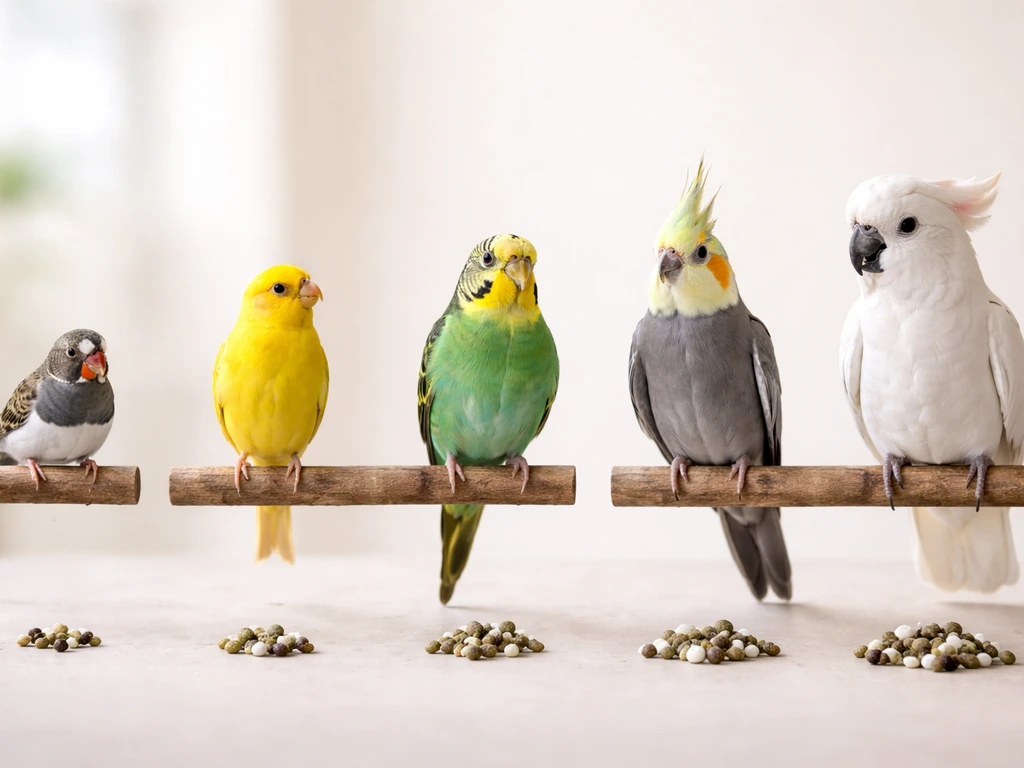
Bird poop volume scales almost directly with body size and metabolic rate. Smaller birds eat less, digest faster, and produce smaller, more contained droppings. Here is a practical ranking of common pet species from least to most droppings produced in a typical home setting.
| Species | Typical Size | Dropping Size/Volume | Frequency | Mess Level |
|---|---|---|---|---|
| Finches / Canaries | 10–20 g | Very small, dry pellets | High but tiny | Low |
| Budgie (Parakeet) | 25–35 g | Small, firm | High but manageable | Low–Moderate |
| Cockatiel | 80–100 g | Medium, wetter | Moderate–High | Moderate |
| Dove / Pigeon | 100–200 g | Medium, softer | Throughout day | Moderate–High |
| Small Parrot (Conure, Lovebird) | 50–150 g | Medium, often liquid-heavy | High | Moderate–High |
| Medium/Large Parrot (Amazon, African Grey) | 300–600 g+ | Large, very wet | Moderate but voluminous | High |
Finches and canaries genuinely win here. Their droppings are so small and dry that cage cleanup is fast, odor is minimal, and the mess stays contained. A pair of finches in a clean cage barely registers as a poop problem. Budgies are almost as tidy, and they are far more interactive, which is why they are the most popular pet bird in the world. Cockatiels are a step up in mess, partly because their diet tends to include more fruit and vegetables which increases the liquid component of droppings. Doves eat and pass stool throughout the day in a fairly steady rhythm, and while individual droppings are not huge, the constant output adds up. Larger parrots are genuinely messy, with large, wet droppings that require daily cage cleaning without exception.
What actually determines poop volume in your home
Species is the starting point, but four factors in your specific home situation determine how much poop you are actually dealing with every day.
Body size and metabolism
Smaller birds have faster metabolisms relative to their size, so they digest food and eliminate waste quickly. This means they poop often, but each individual dropping is tiny. Larger birds poop less frequently but each dropping is much larger and wetter. The total daily waste volume by weight is actually higher in large birds, even though you see individual droppings less often.
Diet composition
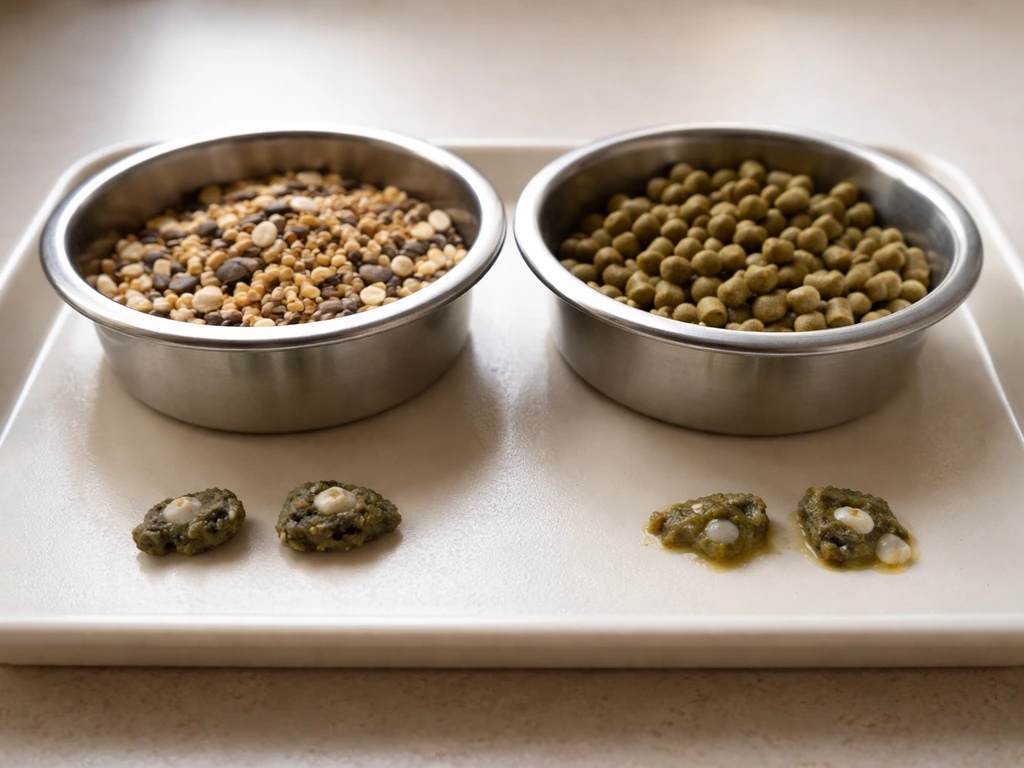
What a bird eats changes droppings dramatically. A seed-heavy diet tends to produce firmer, drier, more compact droppings that are easier to clean. A diet high in fruits, vegetables, or watery foods produces wetter droppings with more urine component, which spreads further and can stain. Pellet-based diets, which are recommended as the nutritional foundation for most pet birds, tend to produce droppings that are somewhere in the middle: more consistent, predictable, and easier to monitor for health changes.
Hydration and stress levels
A well-hydrated bird produces more liquid in its droppings, which is normal. A stressed bird, or one in an uncomfortable temperature, may produce more frequent and wetter droppings temporarily. If your bird suddenly produces significantly wetter or more frequent droppings than usual without a diet change, that is worth paying attention to, not just as a mess issue, but as a health signal.
Activity level and out-of-cage time
Birds that spend a lot of time outside the cage distribute droppings across more surfaces in your home. This does not increase total poop volume, but it dramatically increases cleanup surface area and effort. A bird that spends most of its time in its cage concentrates the mess in one manageable spot.
What 'least poop' actually means in practice
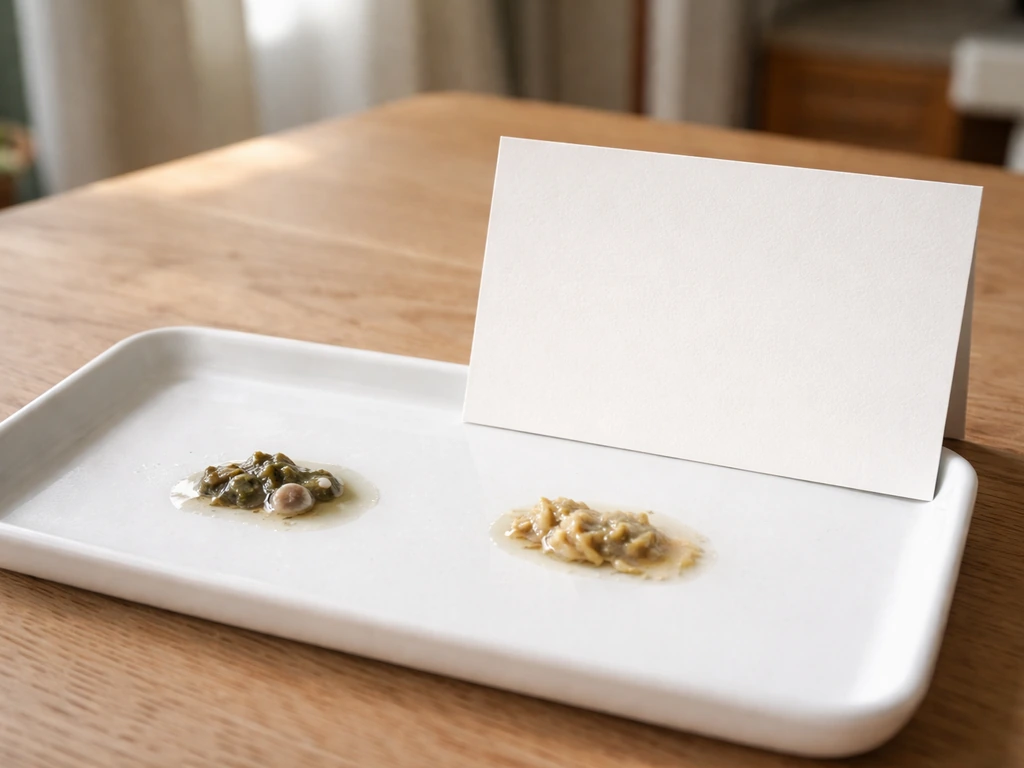
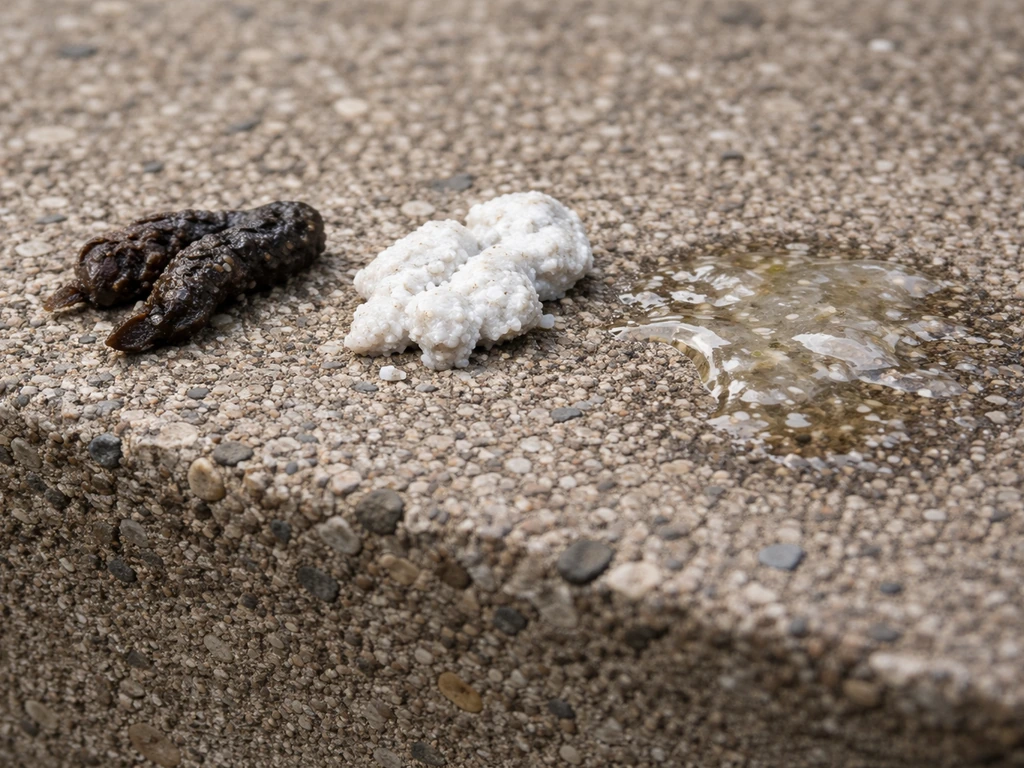
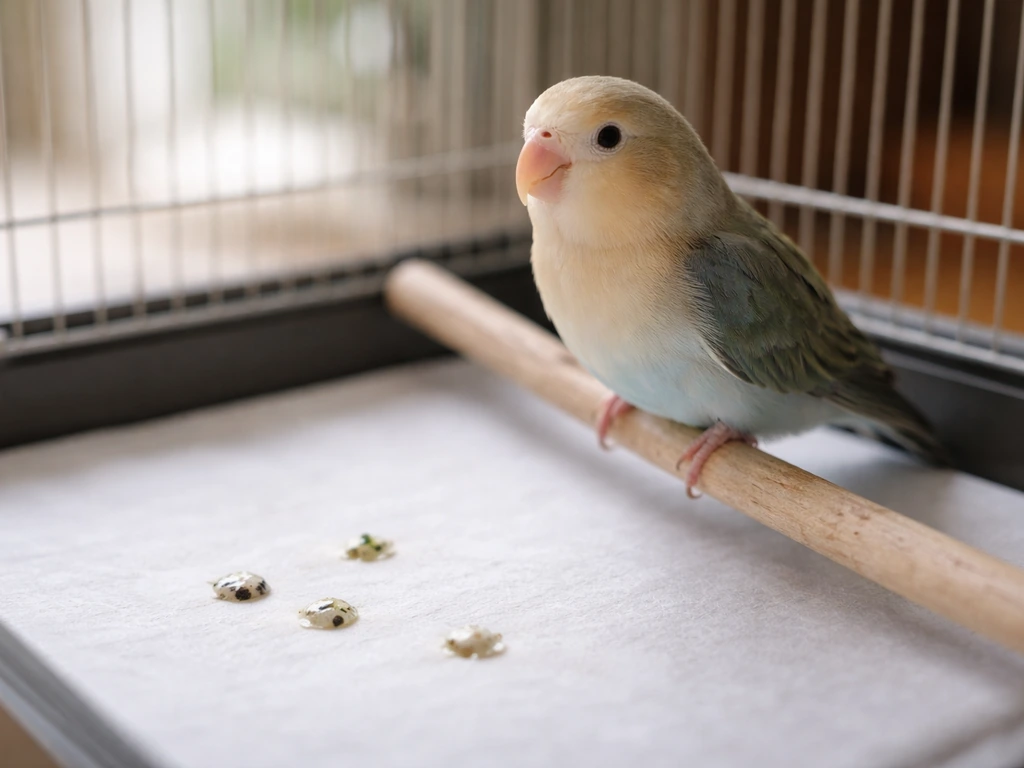
It helps to understand what a normal bird dropping actually looks like before you start comparing. A healthy bird dropping has three visible components: the dark green or brown fecal portion, the white or cream-colored urate portion (the solid byproduct of kidney filtration), and a small amount of clear liquid urine around it. All three are normal. When people say a bird 'poops less,' they usually mean one of three things: fewer individual droppings per day, smaller droppings, or droppings that are firmer and less smeared. Finches and canaries score well on all three. Cockatiels and doves score poorly on the smearing issue because their droppings have a higher liquid-to-solid ratio.
Frequency is high for all pet birds, and that is just biology. A budgie might produce 40 to 50 droppings per day. A budgie might produce 40 to 50 droppings per day. A finch produces similar numbers. A cockatiel might produce 25 to 40. None of these birds can control when they go, and they do not hold it the way mammals do. If you are reading about what birds can or cannot control in terms of their bathroom habits, that topic goes deeper than most people expect. The practical upshot is: plan for daily cleaning, pick a species where individual droppings are small and dry, and build a cage system that makes cleanup take five minutes rather than thirty.
How to reduce droppings mess immediately
You can cut your cleanup time significantly without changing your bird at all. It is mostly about cage setup and where you put the cage in your home.
Use a grate and layered paper system
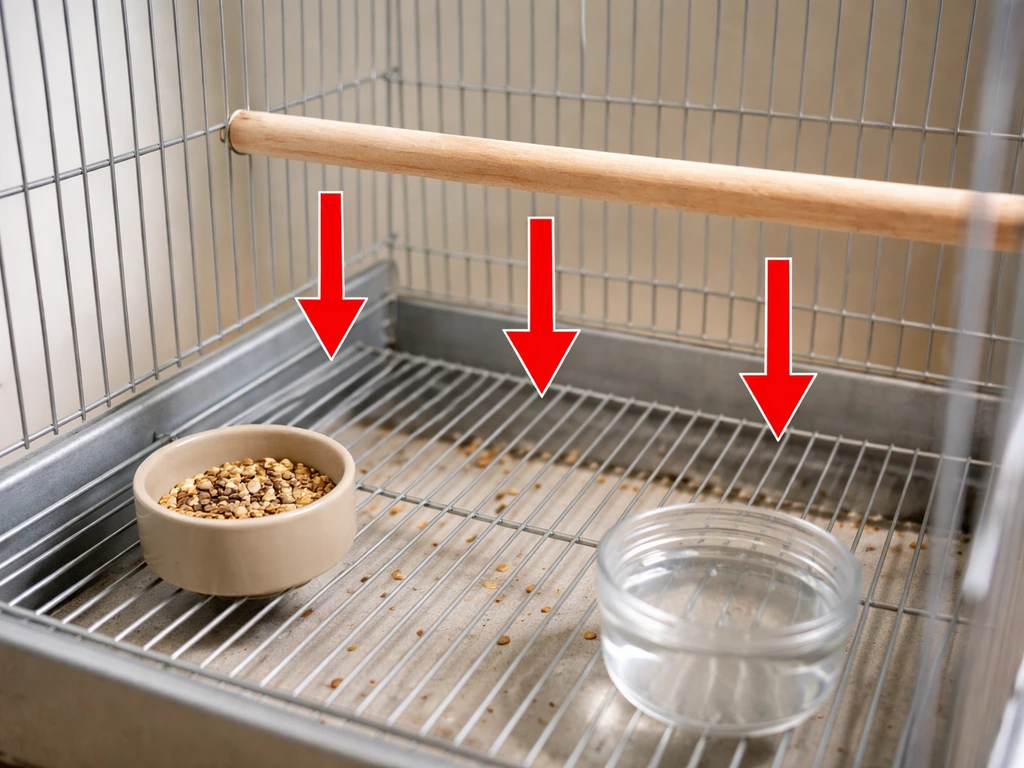
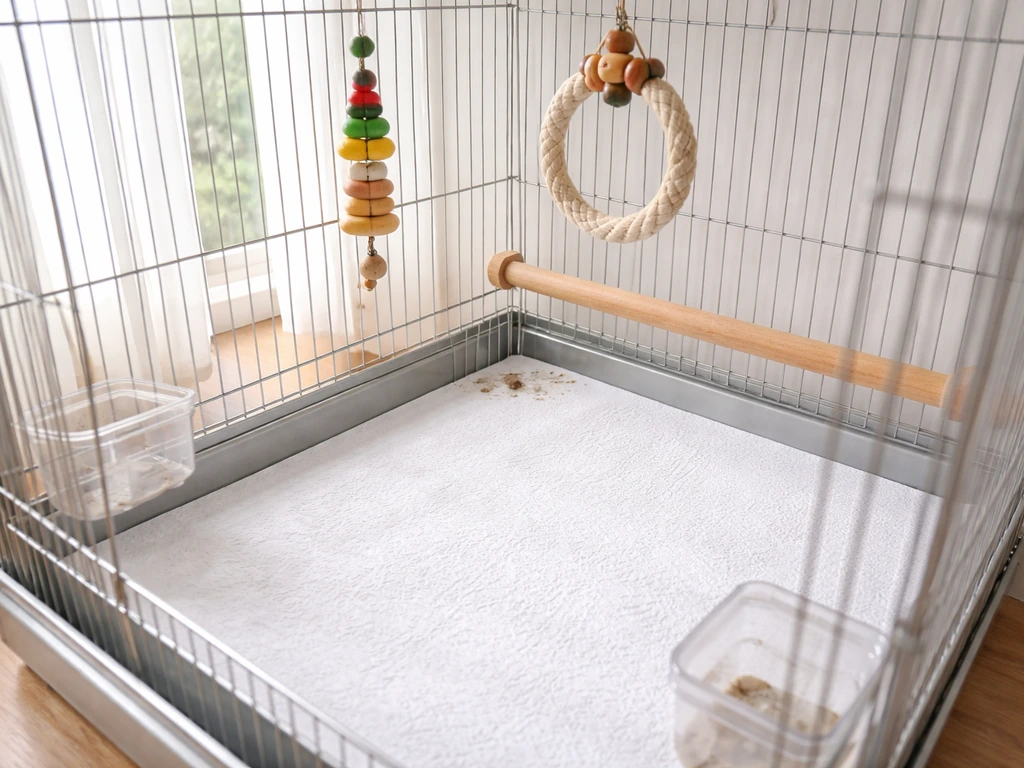
A cage with a wire grate above the floor tray is genuinely useful. Droppings fall through the grate into the tray below, away from the bird's feet, food, and water. The bird does not walk through its own waste, and you simply pull out the tray to clean it. For the tray itself, the most practical system is multiple layers of plain unbleached kraft paper or newspaper. Each day you pull off the top layer and dispose of it, exposing fresh paper underneath. This takes about 60 seconds and keeps the cage looking and smelling clean. Avoid sandpaper cage liners entirely. Birds may ingest the grit, which can cause serious gastrointestinal problems.
Strategic perch placement
Droppings fall straight down from wherever a bird perches. Place perches so that droppings land in the tray, not on food bowls, water dishes, or cage accessories. Keep the highest perches away from food and water stations. Droppings on perches are a cleaning annoyance; droppings in food or water are a health issue.
Cage placement in your home
Put the cage against a wall or in a corner, not in the center of a room, so that droppings that miss the tray (which happens, especially with larger birds) land on a hard, easy-to-clean surface. Hardwood or tile is far easier to wipe down than carpet. If your cage is on carpet, use a waterproof mat underneath with a generous margin on all sides.
Safe cleaning products and ventilation
This matters more than most new bird owners realize. Bleach and ammonia are both toxic to birds. So are most scented sprays and strong disinfectants. For routine daily spot cleaning, warm soapy water with good ventilation is genuinely the safest and most effective option. For weekly deep cleaning, use bird-safe disinfectants specifically formulated for bird enclosures, rinse thoroughly after the disinfection contact time, and let everything dry completely before the bird goes back in. Always move the bird to another room during cleaning to keep it away from any fumes, even mild ones. Birds have extremely sensitive respiratory systems, and what seems like a minor cleaning product smell to you can cause serious irritation or worse for a bird.
Diet and hydration strategies that keep birds healthy and reduce soiling
A pelleted diet as the foundation, making up at least 60 to 70 percent of what your bird eats, produces more consistent and manageable droppings than a seed-only diet. Seeds are high in fat and low in nutrients, which leads to nutritional deficiencies over time, but they also produce different (often wetter) droppings than pellets. Switching to a quality pelleted diet as the base is one of the most impactful things you can do for both your bird's long-term health and for cleaner, more predictable droppings.
Fresh fruits and vegetables are genuinely important nutritionally but they do increase the liquid content of droppings noticeably. If mess is your priority, offer fresh foods in smaller quantities and earlier in the day so the wetter droppings happen while you are awake and can spot-clean easily. Avoid overhydrating with very watery produce like cucumber or melon every single day. Balance is the goal: good nutrition does not have to mean constant wet droppings if you are thoughtful about portions and timing.
Fresh water should always be available, but position water dishes where accidental splashing does not wet the cage floor excessively. A wet cage floor combined with droppings creates the exact conditions for bacterial growth that you want to avoid.
Health and safety: what bird droppings can actually do to you
Bird droppings carry real health risks, and they are worth taking seriously without panicking about them. The three main concerns with pet bird droppings are psittacosis, histoplasmosis, and cryptococcosis, all of which can be transmitted via inhaling dried, aerosolized droppings particles. Psittacosis, caused by the bacterium Chlamydia psittaci, is the most relevant risk for pet bird owners. It can cause flu-like illness, and it is serious enough to be a reportable disease in many states. Histoplasmosis and cryptococcosis are fungal infections more commonly associated with large outdoor accumulations of droppings (like those from wild birds or pigeons) rather than a single pet bird kept indoors, but the mechanism of transmission, breathing in dried dust from droppings, is the same.
The practical prevention is straightforward. Wash your hands with soap and water every time you handle your bird, touch its cage, or handle anything that has been near its droppings. When cleaning the cage, especially doing a deep clean where you are scrubbing dried material, wear a mask and do it in a ventilated area or outdoors. Do not blow droppings off surfaces with air or dry-sweep them in a way that creates dust. Dampen before wiping. The CDC also advises keeping hands away from your face during handling and cleaning, which is good general hygiene regardless.
- Wash hands with soap and water after every contact with your bird, its cage, or its droppings
- Wear a mask when doing deep cage cleans or scrubbing dried droppings
- Dampen droppings before wiping to avoid creating airborne dust
- Keep cage cleaning areas ventilated, ideally outdoors or near an open window
- Never eat, drink, or touch your face while handling a bird or cleaning its enclosure
- Keep children and immunocompromised family members away during cage cleaning
When to call a vet about your bird's droppings
Droppings are one of the best health monitoring tools you have as a bird owner, because birds hide illness instinctively. Changes in droppings are often the first visible sign that something is wrong. The key is knowing what normal looks like for your specific bird, which is why daily spot-cleaning is actually useful beyond just hygiene: it forces you to look at droppings every day and notice when something changes.
Call a vet if you notice any of the following, especially if they persist for more than a day or two without an obvious dietary explanation like a new food you just introduced.
- Blood in or around droppings
- Droppings that are completely unformed or liquid (true diarrhea, where feces are indistinguishable from urine)
- Sudden dramatic decrease or increase in the number of droppings per day
- Droppings that are an unexpected color (very dark black, bright red, or pure yellow/lime green consistently when no new food explains it)
- Strong or unusual odor from droppings when the diet has not changed
- Pale or foamy droppings
- Droppings changes combined with other symptoms: fluffed feathers, lethargy, loss of appetite, labored breathing
One practical note: using particulate bedding like loose substrate or corn cob litter on the cage floor makes it nearly impossible to see and evaluate droppings accurately. Plain paper on the cage floor is not just easier to clean, it is genuinely better for monitoring your bird's health. If you cannot see the droppings clearly, you cannot catch a problem early.
Superstitions about bird poop vs. what is actually happening
The idea that being pooped on by a bird brings good luck is one of those widespread folk beliefs that shows up across cultures in Europe, Russia, and Turkey among others. The logic tends to be that it is such an unlikely and unpleasant event that it must mean fate is balancing the scales somehow in your favor. It is charming, and if it helps you feel better about a ruined shirt, there is nothing wrong with embracing it.
The biological reality is less mystical. Birds poop frequently because their digestive systems are optimized for flight: keeping body weight low by eliminating waste quickly, rather than storing it. This is also why bird nests are not covered in poop all the time, since birds are shedding waste while keeping the nest as clean as their situation allows why birds poop frequently. Whether a bird poops on you has nothing to do with fortune and everything to do with physics and timing. You were under the bird, the bird needed to eliminate, and there was no delay between the two events.
What the superstition does not account for, and what is worth taking seriously, is the actual health dimension. A single dropping on intact skin and clothing is a low-risk event for a healthy person. Wipe it off promptly, wash the area with soap and water, and launder the clothing. Do not rub it in, do not let it dry and flake, and do not ignore it if you have an open wound nearby. The superstition is harmless fun. The cleanup is a genuine health recommendation.
Your next steps: which bird and what setup, decided today
If you are shopping for a pet bird right now and minimum mess is your top priority, get a pair of finches or canaries. They are genuinely the lowest-mess pet birds commonly available, they are beautiful and entertaining to watch, and their droppings are small, dry, and easy to manage with a simple daily paper-layer system. If you want a more interactive bird that you can handle and bond with, a budgie is the next best option for low mess. If you already have a cockatiel or dove and want to reduce your current cleanup burden, the biggest immediate gains come from switching to a layered paper floor system, moving perches away from food and water, and reviewing your bird's fruit and vegetable intake if droppings are consistently very wet.
There is no truly no-poop pet bird. Anyone who suggests otherwise is either joking or selling you something. But the difference between a finch and a large parrot in terms of daily cleanup effort is genuinely large, and the difference between a poorly set up cage and a well-designed one is almost as significant. Pick the right species for your tolerance level, set up the cage intelligently from day one, watch the droppings as a health monitor, and clean safely. That is the whole playbook.
FAQ
Why do some finches or canaries seem messier than other owners’ birds?
If you want the least mess in a real home, prioritize small species first (finches or canaries). Then choose a setup that forces droppings to fall onto a removable tray (wire grate plus layered paper). Even a “low-poop” bird becomes messy if the cage is placed on carpet, perches are positioned over food or water, or you use liners that smear.
What if my “low-mess” bird suddenly has much wetter droppings?
Not necessarily. A wetter look usually comes from diet (more fruit or watery foods), hydration changes, stress, or recent illness. Check whether the liquid portion increases and whether the change persists. If wetter droppings last more than a day or two without an obvious food change, contact an avian vet.
Does cage liner choice affect how much poop I deal with and how easy it is to monitor?
Yes, it is often about cage architecture. If the cage floor is lined with something that absorbs and hides droppings (loose bedding or corn cob litter), you lose the ability to judge amount and consistency. Swap to plain paper layers so you can see color and texture and spot when droppings change.
Will letting my bird out of the cage reduce cleanup?
If your bird spends time outside the cage, the total droppings do not disappear, they move to more surfaces. The main “extra mess” is increased cleanup area. To reduce work, keep the bird’s play area small, use an easy-to-wipe mat, and plan for frequent quick wipe-downs.
How can I offer fruits and vegetables without making droppings runny and harder to clean?
Try timing and portioning rather than removing fruits entirely. Offer fresh produce earlier in the day so you can spot-clean while you are awake, and keep portions smaller if you notice frequent wet droppings. Avoid making very watery items a daily staple.
Can I train a pet bird to poop in one spot?
Yes, but not by “training” in the bathroom-holding sense, birds cannot hold it like mammals. The practical alternative is placement. Position the highest perches so droppings land in the tray, keep feeding and watering areas below the grate line, and use a tray that is easy to pull and replace.
What causes droppings to smear more than expected, even with a good cage?
If droppings smear or stick, it often indicates higher urine component (liquid content), which is usually diet-related or stress-related, or it can indicate improper airflow and drying. For practical improvement, ensure the tray stays dry, use the layered paper system, and avoid strong disinfectants that leave residues that make cleanup harder.
Is a single bird-dropping mess on my skin or clothes dangerous?
Yes, you should clean up promptly, but it is not a reason for panic. Wash intact skin with soap and water, launder clothing, and avoid letting droplets dry and flake. If you have an open wound nearby, keep it protected and follow your clinician’s guidance.
How often should I do daily cleaning versus a deep clean?
Scrubbing is the deep-clean portion, daily is for removing fresh droppings and replacing the top paper layer. If you regularly wipe dried buildup, you may miss early health changes. Stick to daily spot-cleaning, watch droppings daily, and reserve deep cleaning for when the tray needs it.
What’s the safest way to disinfect a bird cage without creating breathing risks?
A key best practice is ventilation and residue control. Move the bird to another room during cleaning, avoid bleach-ammonia combinations and scented sprays, and rinse thoroughly after any bird-safe disinfectant contact time. Let everything fully dry before the bird returns.