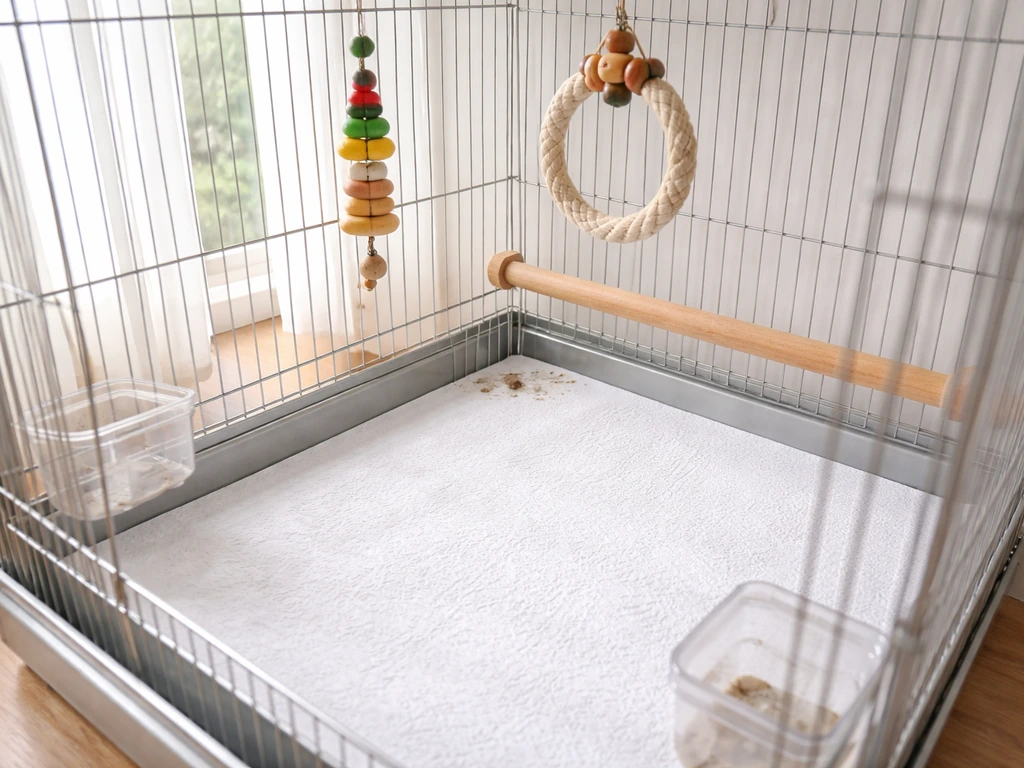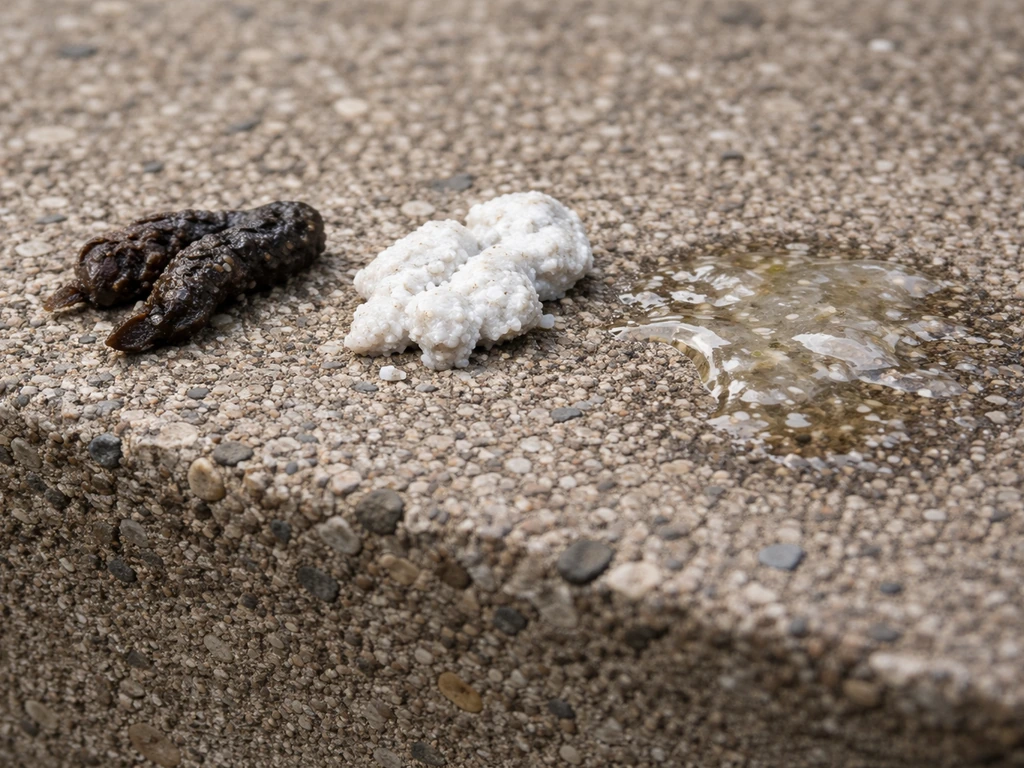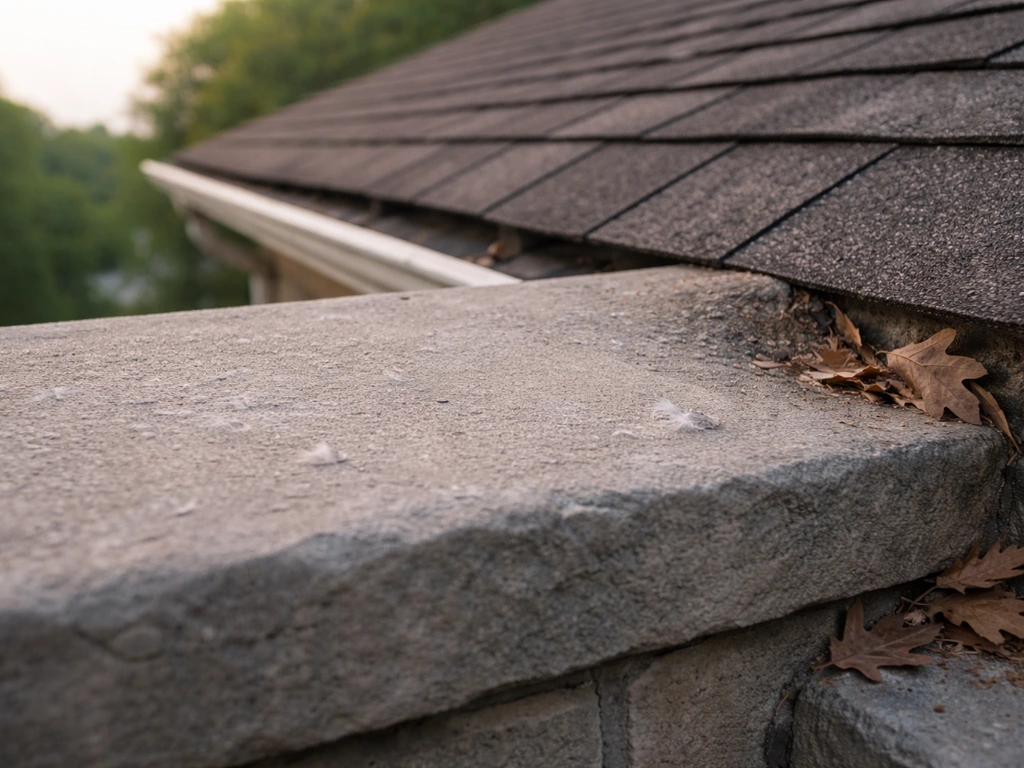
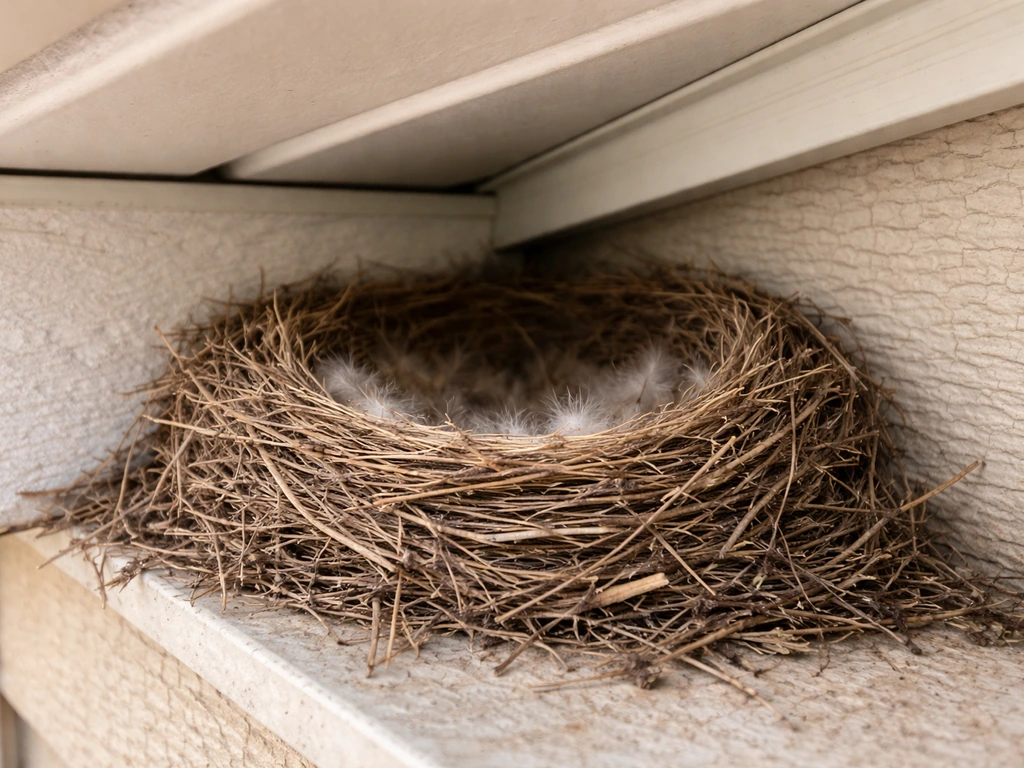
Bird nests look surprisingly clean because parent birds actively remove nestling waste in sealed membrane packets called fecal sacs, carrying them away from the nest rather than letting droppings pile up inside. It's one of the tidier things birds do, and it's also why the mess you notice is almost always on the ground, your car, or the ledge below the nest rather than inside the cup itself.
Why Bird Nests Aren’t Covered in Poop: Real Reasons

Marcus Fielding
7 Jun 2026
What people actually mean when they ask this question
The confusion usually comes from two different observations colliding. On average, most birds poop many times throughout the day, but the exact number depends on species and age. You see bird droppings everywhere: on sidewalks, car hoods, windowsills, patio furniture. If you are really trying to figure out which species creates the worst buildup, the question of what bird poops the most can be a helpful comparison point. Then you look at an actual nest and notice it doesn't look like a disaster zone. So the question becomes: why isn't the nest coated in the same stuff that's all over your windshield?
There's also a second meaning worth addressing. Some people searching this question are dealing with a nest on or near their property and wondering whether the nest itself is a mess or health hazard, separate from the droppings they can already see below it. Both questions are worth answering directly.
To be clear about terms: bird droppings are the familiar white-and-dark splats birds deposit wherever they happen to be. A bird nest is a constructed structure made from plant fibers, twigs, mud, feathers, and other materials. The nest itself isn't excrement, but nestlings produce waste inside it, and what happens to that waste is where things get interesting.
Why droppings get all the attention (and nests mostly don't)
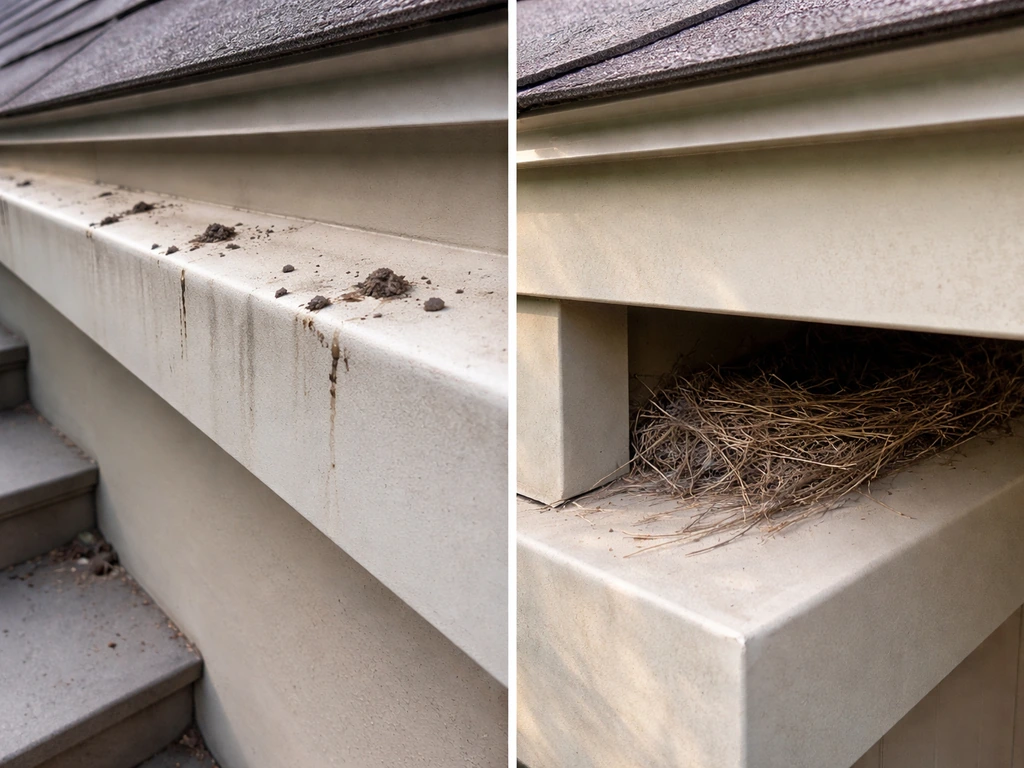
Droppings are visible, acidic, smelly in large amounts, and show up exactly where people don't want them: on cars, stairs, rooftops, and building eaves. Starling colonies, for example, produce accumulations that can corrode building materials and generate a real odor problem. That's the kind of thing that gets people searching for solutions, calling pest control, and reading articles like this one.
Nests, by contrast, tend to be tucked into corners, eaves, or tree branches. They're structurally interesting but don't usually create an immediate, visible mess on surfaces where people spend time. The mess associated with nests comes from droppings that fall below them, not from the nest structure itself. That's why FWS and Washington state wildlife guidance both specifically recommend placing newspaper or a board under active swallow nests to catch droppings and debris rather than trying to deal with the nest directly.
The fecal sac system: why nests stay cleaner than you'd expect
Most songbird nestlings produce waste enclosed in a gelatinous membrane: the fecal sac. If you are choosing a pet bird for minimal droppings, focusing on species with naturally cleaner waste patterns can make daily cleanup easier fecal sac. Parent birds pick these up and either carry them away from the nest or sometimes swallow them entirely. This isn't just about tidiness.
There are real evolutionary reasons for it: removing fecal sacs reduces the buildup of parasites and pathogens around nestlings, and it also removes scent cues that could attract predators to the nest location. Unlike the fecal sac system that keeps nests cleaner, you may wonder whether birds can control their poop in the first place, and the answer depends on the species and what stage of nesting they are in can bird control their poop.
In common starlings, parents remove fecal sacs while chicks are young. Around six days after hatching, as chicks start regulating their own temperature, removal tends to taper off. If you were to inspect a nest at that later stage, it would look noticeably less pristine than in the first week. So nest cleanliness is somewhat dynamic and species-dependent, not a fixed characteristic.
The nest lining itself also plays a role. The inner cup of most nests is built from fine plant material, feathers, or down that can absorb moisture. What homeowners often see when they pick up an old nest is layered structural material rather than active waste, which can make the nest look and feel relatively dry and clean even after the season is over.
How nests are actually handled in real life
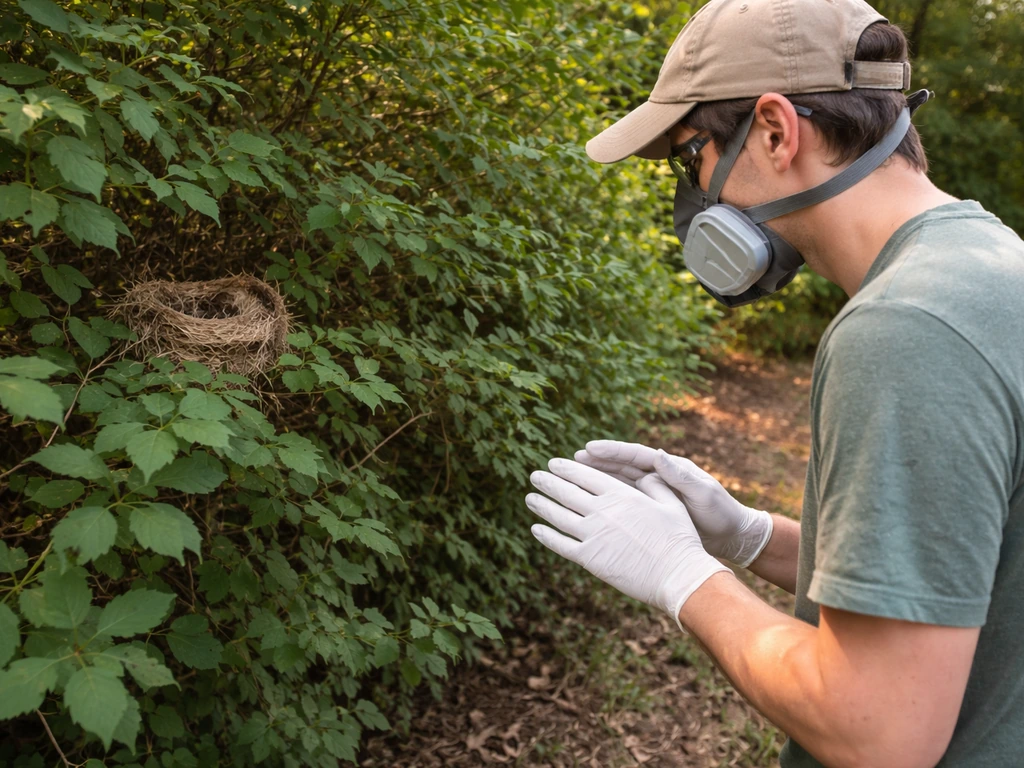
Here's where things get practical and also where a lot of people make avoidable mistakes. In the U.S., most wild birds are federally protected under the Migratory Bird Treaty Act. That protection extends to their nests and eggs. Destroying an active nest (one containing eggs or live birds) is against the law, full stop. The nesting season for most birds runs roughly from April 1 through July 31, though some species nest outside that window.
The practical guidance from the U.S. Fish and Wildlife Service is to act before a nest becomes active. Once you see birds starting to build, that's the window to discourage or redirect them. Once eggs are laid, your legal options shrink significantly, and removal requires a permit in most cases.
For dealing with droppings accumulating below an active, legally protected nest, the recommended approach is physical capture: newspaper, a drop cloth, or a board installed below the nest to catch falling material. Frequent washing of droppings off surfaces (while the nest remains intact) is also recommended. Covering your car with a tarp during nesting season is genuinely effective if the nest is near where you park.
After nesting season ends and the nest is unoccupied, removal is generally legal but should still be done carefully, with proper protective equipment, especially if there's visible soiling or the nest has been in place for multiple seasons.
Real health risks: droppings vs. nest materials
Not all bird-related health risks are equal, and it helps to know which ones are actually worth worrying about.
Risks from droppings
- Histoplasmosis: caused by the fungus Histoplasma, which can grow in soil enriched by bird and bat droppings in endemic areas. Breathing in disturbed spores can cause a lung infection. Large accumulations of old droppings carry the most risk, especially when dry material gets stirred up.
- Psittacosis (parrot fever): caused by Chlamydia psittaci, transmitted by breathing in dust from dried bird secretions or droppings. More commonly associated with parrots and other pet birds but can occur with wild birds.
- Corrosion and surface damage: bird droppings are acidic and can damage car paint, roofing materials, and masonry when left to accumulate.
Risks from nest materials
- Bird mites: nests can harbor mites that, once the birds leave, may migrate into the surrounding area and bite people or pets.
- Bacteria and fungal spores: nest materials that have been soiled over multiple seasons can carry similar pathogen concerns as droppings, particularly if disturbed without protection.
- Allergens: feathers, dander, and plant material in nests can trigger respiratory allergies in sensitive individuals, especially during dry removal.
The honest summary: droppings, particularly large dry accumulations, carry the most well-documented disease risk. A single small nest removed carefully at the end of the season is a much lower-stakes situation than clearing out years of buildup under a roosting flock. But both deserve basic protective precautions.
| Risk | Main source | Concern level for small nest/droppings | Concern level for large accumulations |
|---|---|---|---|
| Histoplasmosis | Bird/bat droppings (dry, disturbed) | Low | High |
| Psittacosis | Dried droppings/secretions | Low to moderate | Moderate to high |
| Bird mites | Nest materials | Moderate (after birds leave) | Moderate to high |
| Allergens | Feathers, dander, plant material | Low to moderate | Moderate |
| Surface corrosion | Droppings | Low | High |
How to clean up safely today: step-by-step
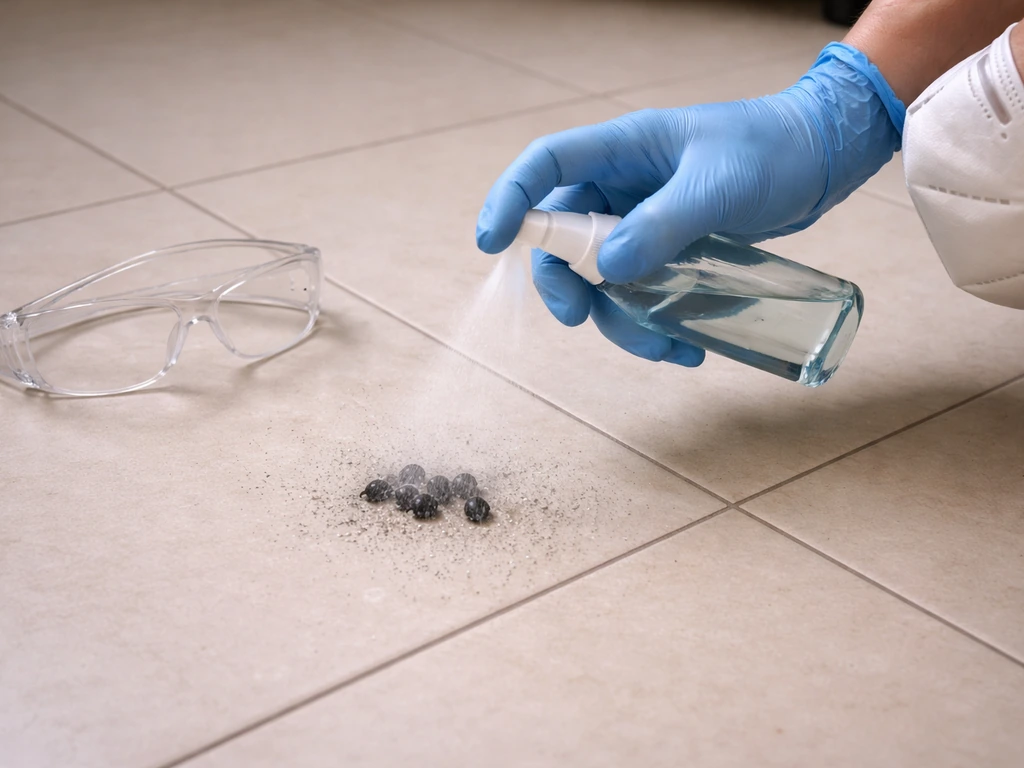
Whether you're cleaning droppings off a surface or removing an old unoccupied nest, the core principle is the same: never dry-sweep or vacuum contaminated material. An institutional bird droppings clean up procedure for concentrated accumulations specifies “no dry sweeping or dry clean up” and requires continued wetting during cleanup never dry-sweep or vacuum contaminated material. Disturbing dry droppings or nest debris launches particles into the air, and that's how you inhale what you don't want to inhale.
Cleaning droppings from surfaces
- Put on an N95 respirator, disposable gloves, and eye protection before you start.
- Ventilate the area if you're working indoors: open windows and doors.
- Wet the droppings thoroughly with a 10% bleach solution (1 part bleach to 9 parts water) or an EPA-registered disinfectant. Let it soak for a few minutes.
- Wipe up the wetted material with disposable paper towels or cloths. Do not sweep or scrape dry.
- Double-bag the waste in heavy-duty plastic bags before disposal.
- Disinfect tools and any reusable equipment with bleach solution after use.
- Remove gloves without touching the outer surface, bag them, and wash hands thoroughly.
Removing an unoccupied nest
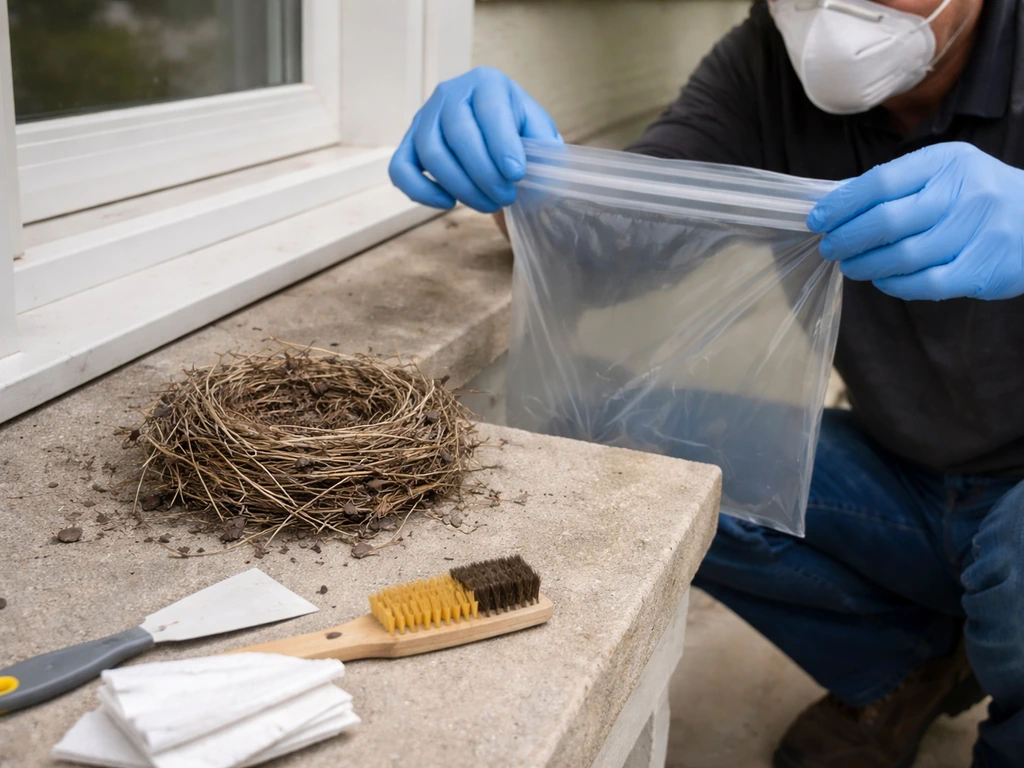
- Confirm the nest is truly inactive: no eggs, no birds, and outside the April 1 to July 31 primary nesting window if possible.
- Wear an N95 respirator, gloves, and old clothes or a disposable coverall.
- Lightly mist the nest with water or diluted disinfectant to reduce dust before handling.
- Place the nest directly into a heavy-duty plastic bag without shaking it.
- Seal and double-bag before disposal.
- Wash hands and any exposed skin with soap and water. Change clothes if you had significant contact.
- Clean and disinfect the surface where the nest was attached.
For very large accumulations (think years of droppings under a starling roost or a heavily soiled attic), these DIY steps are not enough. That's a professional job, covered in more detail below.
Preventing birds from nesting again without harming them
The most effective prevention is exclusion, and the best time to do it is before nesting season starts, ideally in late winter or early fall. Once birds have settled on a spot they like, deterring them becomes harder.
- Seal gaps and entry points: birds commonly nest in vents, roof gaps, soffits, and open eaves. Hardware cloth, metal flashing, and vent covers with screens close off these entry points permanently.
- Install physical deterrents on ledges: bird spikes, slope boards, or wire systems on flat ledges make landing and nest-building physically difficult without harming birds.
- Use visual and audio deterrents as a supplement: reflective tape, predator decoys, and sound devices can discourage birds from specific areas, though they work best in combination with physical exclusion rather than alone.
- Remove existing attractive features: clear away old nesting material promptly after the season, because birds often return to the same spot the following year.
- Manage nearby food and water sources: bird feeders and open water containers can concentrate bird activity near your home. Relocating or removing them reduces the incentive to nest nearby.
- Install a nest board or drop cloth proactively: for problem areas near active swallow nests you cannot legally remove, a board or newspaper below the nest catches droppings and makes cleanup much easier.
Whatever you do, avoid methods that could directly harm birds, disturb active nests, or destroy eggs. Beyond being illegal under the Migratory Bird Treaty Act, those approaches tend not to solve the underlying problem anyway. Birds will simply relocate a short distance and try again.
When to call a professional instead
There are a few situations where a professional wildlife control or remediation company is the right call, not just a convenient one.
- Large droppings accumulations: if you're dealing with more than a few square feet of accumulated droppings, particularly in an enclosed space like an attic, crawlspace, or barn, the histoplasmosis and psittacosis risk is real and NIOSH guidelines call for respiratory protection, HEPA filtration, and proper disposal that goes beyond consumer-level cleanup.
- Active infestations in enclosed spaces: birds nesting inside a wall cavity, attic, or HVAC system require professional extraction to avoid trapping birds or creating a larger contamination problem.
- Permit and legal uncertainty: if you're not sure whether a nest is active, whether you're dealing with a protected species, or whether you need a depredation permit for removal, a licensed wildlife professional can navigate that for you and protect you from liability.
- Persistent reinfestation: if birds keep returning to the same spot despite your deterrent efforts, a professional assessment can identify entry points or attractants you've missed.
- Mite infestation spreading indoors: if bird mites have migrated from a nest into your living space, pest control intervention is faster and more effective than DIY approaches.
A licensed wildlife control operator will know which species are in play, what permits apply in your area, and how to handle removal and cleanup without running afoul of federal and state protections. For large contamination jobs, a remediation company with biohazard experience is worth the cost.
Your quick-action checklist
Here's a practical summary you can work through right now depending on your situation.
- Check whether the nest is active (eggs, chicks, or birds present) before touching anything.
- If active and it's nesting season: leave it alone legally. Place newspaper or a board below it to catch droppings, and wash surfaces frequently.
- If inactive and outside nesting season: remove it using PPE (N95, gloves, mist first, double-bag), then disinfect the surface.
- Clean droppings by wetting first with bleach solution or disinfectant, wiping (not sweeping) with disposable materials, and double-bagging waste.
- After removal, seal entry points, install physical deterrents on ledges, and clear away any old nesting material nearby.
- Call a professional if accumulations are large, the space is enclosed, birds have entered your structure, or you're unsure of the legal situation.
- If you're working in an enclosed space with heavy contamination, wear an N95 minimum, consider a P100 half-face respirator, and get adequate ventilation before starting.
The big picture is this: nests look clean because birds are actually pretty deliberate about keeping them that way, at least early in the nesting cycle. The real mess is almost always on the surfaces below and around the nest, not inside it. That's good news for cleanup, because it's usually a more contained and manageable problem than it first appears. The health risks are real but preventable with basic precautions, and the legal framework around nests is manageable as long as you pay attention to timing. If you are wondering what bird doesn’t poop, the answer depends on how people define “poop” and which species you mean.
FAQ
Can birds sometimes poop inside the nest, and why doesn’t it always look messy?
Yes. Bird droppings can still land in the nest area, especially in species that do not remove fecal sacs as aggressively, nests that are very open, or nestlings that are older when waste-removal tapers off (starlings are a common example). What usually makes the nest look clean is that a lot of the waste is carried away quickly or falls outside the nest cup, so the visible “mess” ends up below rather than inside.
Does nest cleanliness stay the same throughout the whole nesting season?
It depends on the bird and the timing. During the first week, fecal-sack removal is often strongest, so nests can look unusually pristine. After chicks grow and start thermoregulating, removal may decrease, so an inspection later in the nesting cycle can show more visible soiling in or around the cup.
If I’m trying to reduce droppings at home, is nest cleanliness a reliable guide for my overall bird-mess problem?
Pet-feeding birds do not follow the same “fecal sac” strategy as wild nestlings, so you should expect more frequent, more visible droppings. Even with wild birds, droppings volume varies by species and age, so focusing only on “the mess level” of a nest might not predict the odor or buildup you will see below it.
Why do some nests seem to create lots of droppings on nearby surfaces, even if the nest itself looks clean?
The biggest difference is placement and height. Rooftops, balconies, and ledges catch falling material and create a steady accumulation, while nests that are high in trees may show less buildup on your surfaces even if the local droppings are heavy. A nest that is not over a frequently used area can still be contributing to a “mess” problem that shows up on the ground or on lower structures.
What’s the safest way to handle droppings below an active nest without disturbing the birds?
You can often reduce buildup by catching what falls, but avoid trying to clean while the nest is active if it requires reaching close to the birds. If the nest is active and legally protected, use passive capture below (board, drop cloth, or newspaper) rather than direct handling of the nest or nestlings.
What’s the most common cleanup mistake that increases health risk?
Never dry-sweep or vacuum contaminated droppings or nest debris because they aerosolize fine particles. If you are doing DIY cleanup, use wet methods (spraying or damp wiping), bag waste promptly, and wear basic respiratory protection like an N95 or better if you anticipate stirring dust.
If I want to stop a nest, when should I take action, and what changes after eggs are laid?
Start with timing. Once birds begin building, deterrence is most effective before eggs are laid, because after egg-laying your options become much more limited and usually require permits. If you are seeing eggs or live nestlings, pause and verify what you can legally do in your area before attempting removal or relocation.
If the nest is unoccupied, is it automatically safe to remove it and clean normally?
For unoccupied nests after nesting ends, removal is often possible, but you still should handle it carefully if there is visible multi-season soiling. In areas with heavy contamination, PPE and wet-cleaning methods matter because the risk is not just “fresh droppings,” it is also dust and dried material that has accumulated over time.
How do I know when the droppings problem is too big for DIY cleanup?
Yes, especially if you have a roosting flock rather than a single nest. Large dry accumulations under repeated use sites (common with starlings and some other colonial birds) can create a level of contamination where DIY capture and cleaning is not enough, and professional biohazard-style cleanup and sanitation may be needed.
What should I do if I’m not sure whether a nest is active?
A nest can be protected even if you are not sure it is active, because the presence of eggs or live birds is the key factor. If you find eggs, chicks, or frequent adult activity, assume it is active and treat it as protected until you confirm otherwise. When in doubt, contact a licensed wildlife control operator to avoid accidental illegal disturbance.