Not everything white, splotchy, or crusty on your car, porch, or sidewalk is bird poop. Tree sap, insect frass, bat droppings, lizard waste, mildew, paint transfer, and even berry stains can look convincingly like the real thing, and knowing the difference matters, both for how you clean it up and whether you need to worry about your health at all.
What Looks Like Bird Poop But Isn’t: How to Tell and Clean It

Marcus Fielding
16 Jun 2026
Don't assume it's bird poop just yet
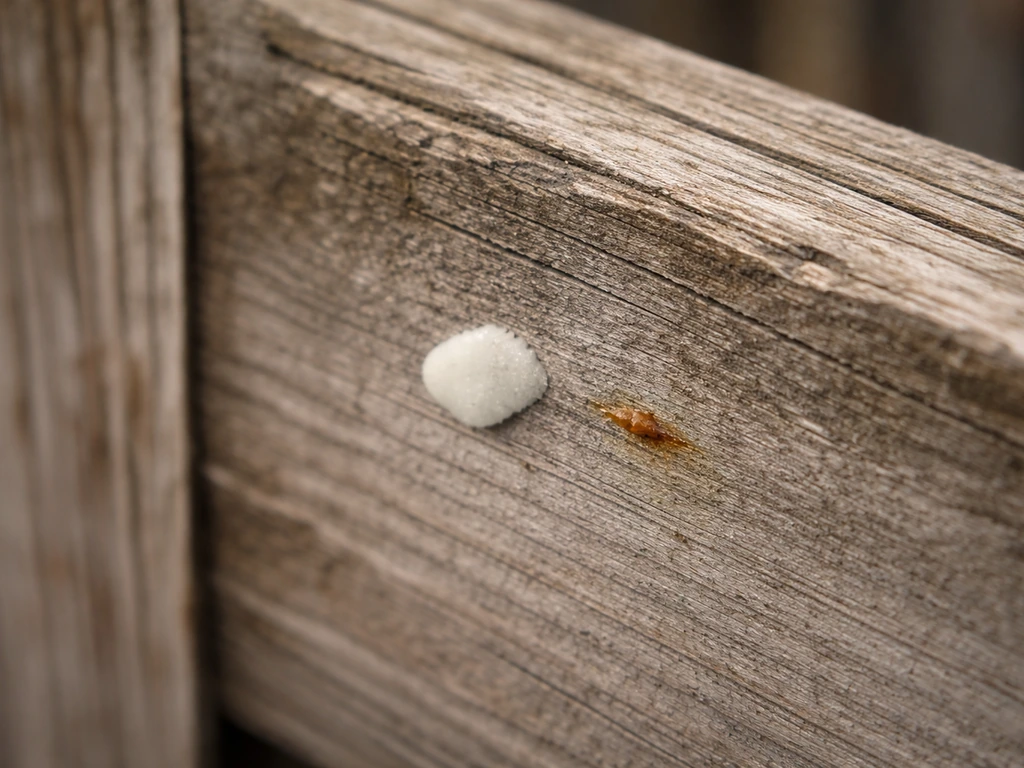
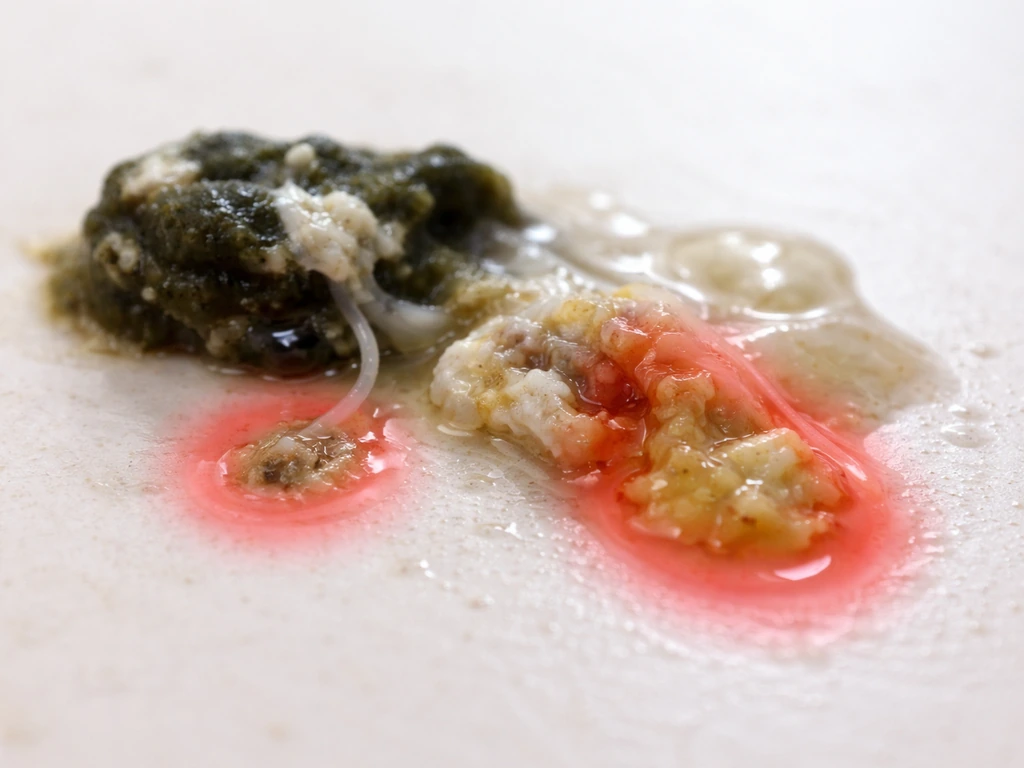
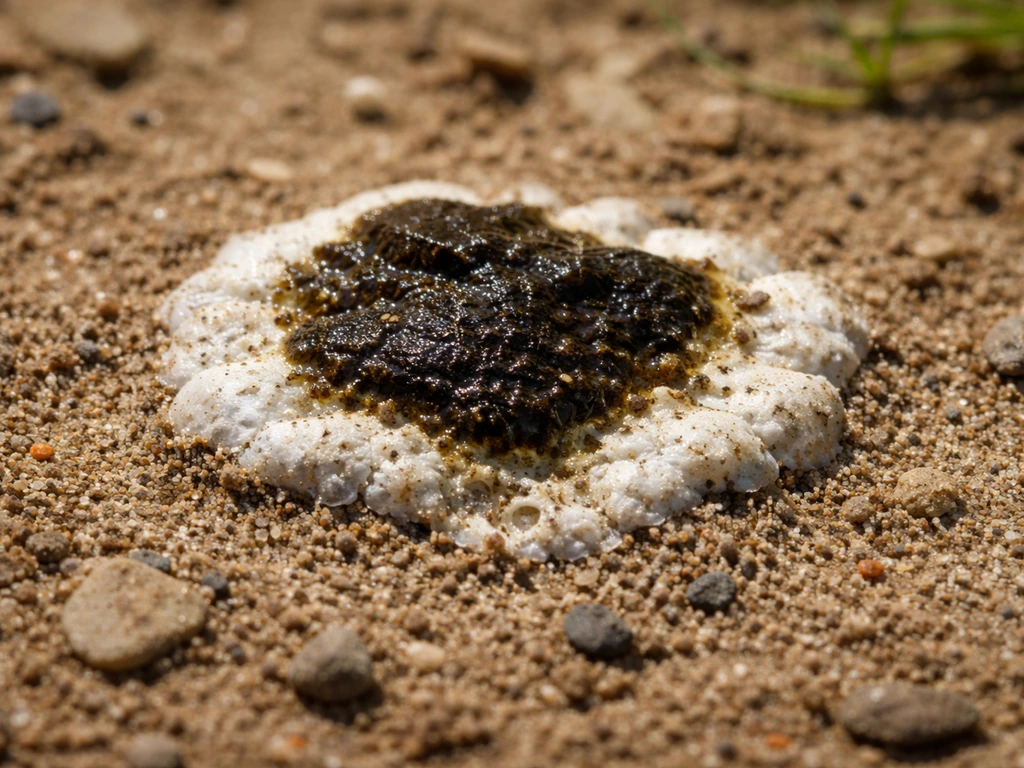
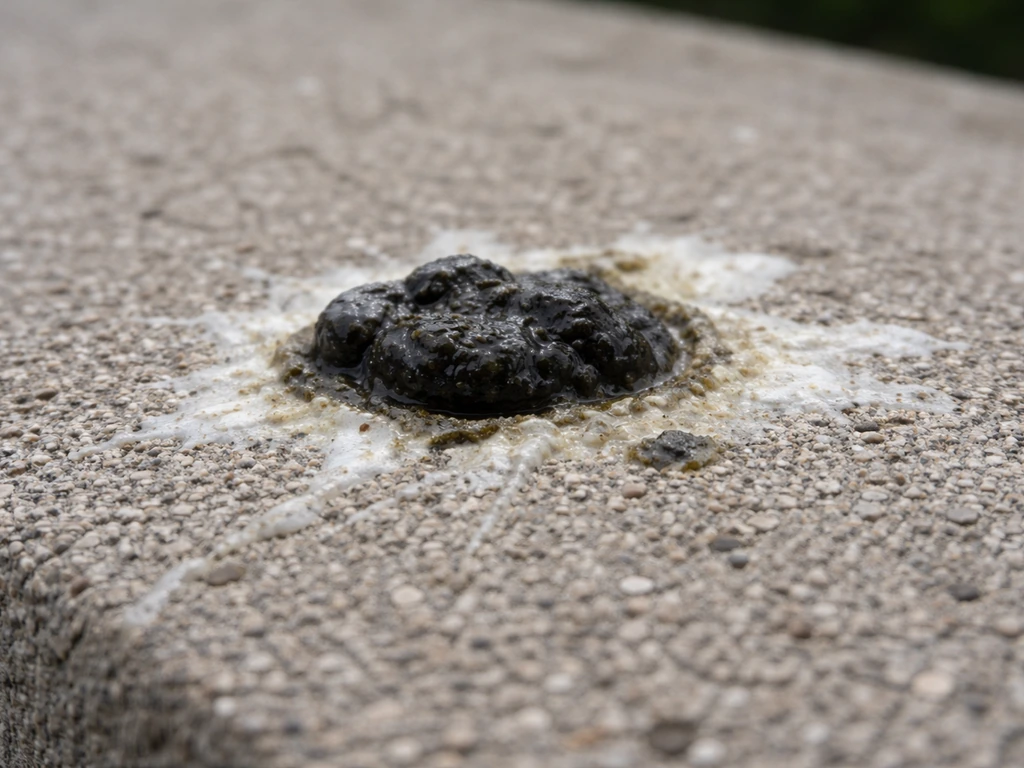
The classic assumption, white blob, must be a bird, skips a lot of other very plausible explanations. If you meant bird blood, its appearance depends on whether you're seeing fresh spotting, dried smears, or staining mixed with droppings what does bird blood look like. Bird droppings have a pretty specific look: a dark urate center (the greenish or brownish solid waste) surrounded by a white or off-white uric acid ring, often with a watery fringe.
If you’re trying to figure out what sick bird poop looks like, look for unusual colors, consistency changes, and clumping that doesn’t match typical droppings. Fresh drops are wet and glossy; dried ones go chalky and flake. If what you're looking at doesn't match that pattern even loosely, it's worth reconsidering before you grab paper towels or, worse, start scrubbing dry.
This matters for more than just curiosity. Scrubbing dry bird or bat droppings without wetting them first can aerosolize fungal spores linked to histoplasmosis, a serious lung infection. But some lookalikes carry their own hygiene concerns. And some are completely harmless. The fastest way to protect yourself is to identify first, then act.
The most common lookalikes and how to tell them apart
Here are the substances most often mistaken for bird droppings, and the clues that separate them from the real thing.
Bat droppings
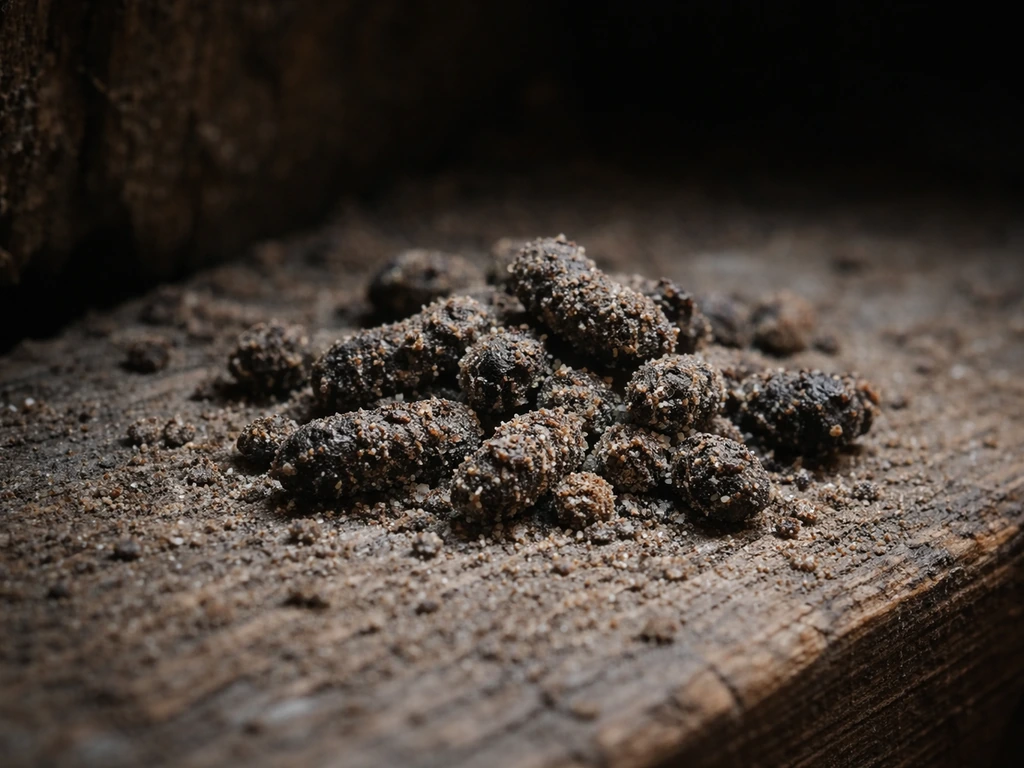
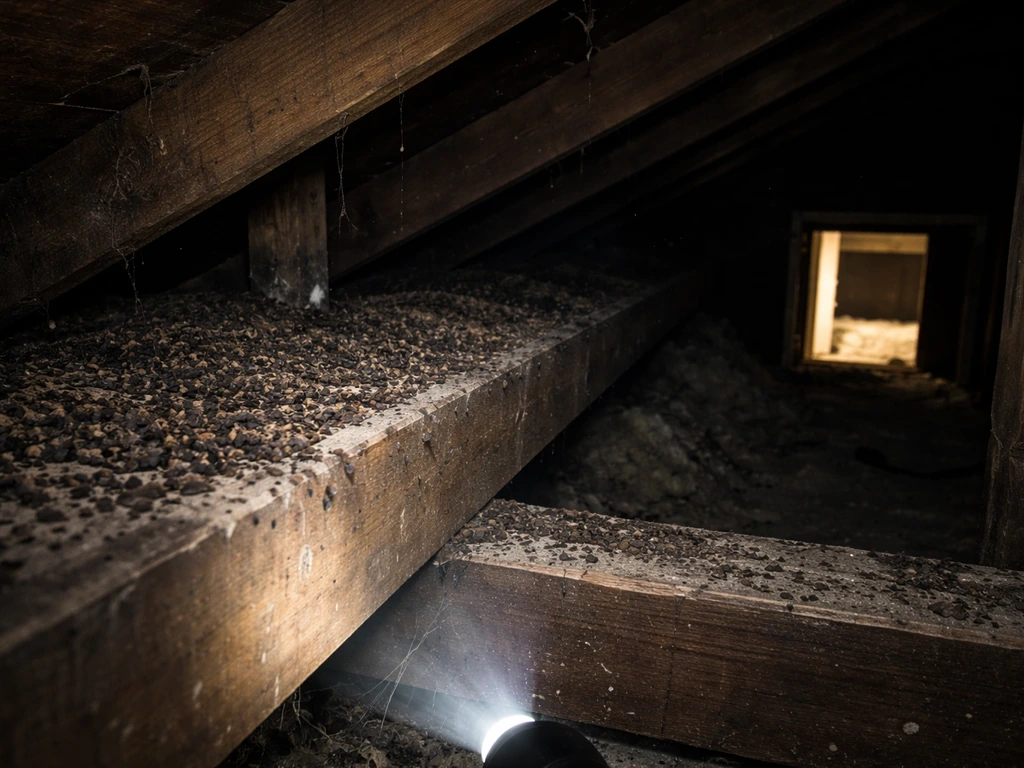
Bat guano is probably the most important lookalike to get right because the health stakes are similar to bird droppings. Does bat poop look like bird poop? The short answer is yes, which is why you should check for the key visual differences before cleaning. Bat droppings are small, elongated, and dark brown to black, they look a bit like large mouse droppings but tend to crumble into a powdery grit when dry.
You won't see the white uric acid component that's characteristic of bird waste. They accumulate in piles directly below a roost (attic beams, eaves, shutters), and you'll often find insect wing fragments mixed in because bats eat bugs. If the pile crumbles to powder and there's no white coloring, think bat, not bird.
Lizard and reptile droppings
Lizard droppings actually look a lot like small bird droppings, dark elongated pellet with a white tip. That white tip is also uric acid, since reptiles, like birds, excrete urates rather than liquid urea. The main difference is size and shape: lizard droppings are smaller, more cylindrical, and usually found low to the ground near warm flat surfaces like patio stones, window sills, or outdoor furniture. If you're in a region with geckos or anoles, lizard waste on the porch is extremely common and often gets misread.
Insect frass (caterpillar and other insect waste)
Caterpillar frass is the one that surprises people most. During heavy feeding seasons, caterpillars feeding in trees above can produce so much frass, tiny dark pellets, that it looks like a shower of droppings hit a car or deck. Caterpillar frass is uniformly dark (brown, green, or black), granular, and comes in consistent small pellet shapes with no white component at all. It often falls in a pattern directly under a tree canopy. Other insect waste, like aphid honeydew, comes out as sticky clear or pale yellow droplets that leave a shiny, tacky residue, nothing like a bird dropping, but still frequently blamed on birds.
Tree sap, berry stains, and plant material
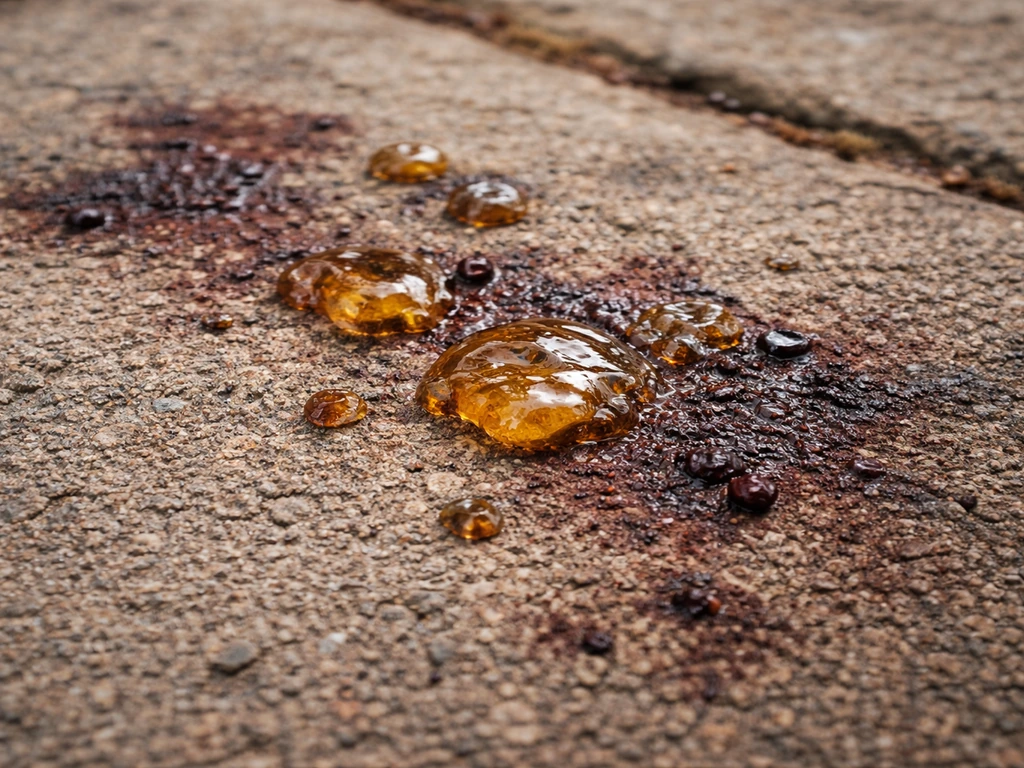
Tree sap lands as sticky, translucent drops that dry into hard, amber-colored spots. They're often found in a pattern matching the tree's drip line and have no white coloring whatsoever. Berry stains are the other common culprit, dark purple, red, or blue splatters that look like something was dropped from above, especially on cars parked under fruiting trees like mulberry or serviceberry. Smear a bit with a damp cloth: berry stains bleed color, sap stays tacky and amber, while real bird droppings smear chalky white.
Mildew, lichen, and paint
White or gray patches on roofs, wooden decks, or concrete walls are regularly mistaken for old dried bird droppings. Lichen on roofing is a flat, irregular crust that's firmly attached and won't scrape off cleanly the way dried droppings do. Mildew is more powdery and usually spreads in diffuse patterns rather than discrete splatters. Paint transfer from overhanging structures or low branches can leave white or gray marks on cars that look exactly like a bird hit, but paint transfer has sharp edges and no center texture. Running a damp cloth over it first tells you a lot: droppings soften and smear, paint doesn't.
| Substance | Color | Texture when dry | White component? | Key giveaway |
|---|---|---|---|---|
| Bird droppings | White/off-white with dark center | Chalky, flakes off | Yes — uric acid ring | Dark center surrounded by white; watery fringe when fresh |
| Bat droppings | Dark brown to black | Crumbles to powder | No | Powder + insect wing fragments in pile below roost |
| Lizard droppings | Dark with white tip | Firm pellet | Yes — small white tip | Cylindrical shape, much smaller than bird droppings |
| Caterpillar frass | Brown, green, or black | Dry pellets | No | Uniform pellet size, falls directly under tree canopy |
| Aphid honeydew | Clear to pale yellow | Sticky, shiny | No | Tacky feel, no solid component |
| Tree sap | Amber/clear | Hard and sticky | No | Sticky when scratched, amber color |
| Berry stains | Purple, red, or blue | Flat stain | No | Bleeds color when wiped with damp cloth |
| Mildew/lichen | White, gray, or green | Powdery or crusty | Sometimes | Attached firmly to surface, diffuse spread |
| Paint transfer | Varies (white/gray common) | Hard, flat | No | Sharp edges, doesn't soften with water |
How location, timing, and surface type change the odds
Context is your best diagnostic tool. A single white splotch on a car parked under a tree in summer? Could genuinely be a bird, but caterpillar frass, aphid honeydew, or berry stains are just as likely depending on your tree species. Multiple dark powdery clusters below your eaves that have been there for weeks? That points strongly to bats. A crusty white patch spreading across your concrete wall that's been growing for months? Lichen or mildew, not birds.
Timing matters too. Bird droppings appear suddenly as individual fresh splatters. Mildew, lichen, and tree sap accumulate gradually. Insect frass has a seasonal spike tied to caterpillar feeding periods, often spring and early summer. If you suddenly notice a lot of it during a short window, insects feeding overhead are a strong bet.
Surface type helps too. Droppings on a car hood directly under a wire or branch are classic bird territory. The same-looking substance on the underside of your deck, concentrated in one corner near a gap in the fascia board, is almost certainly bat guano. Flat roofs with no overhanging trees that develop spreading white patches are dealing with mildew or lichen, not an unusual amount of bird activity.
Health risks: when lookalikes still matter
Most of the lookalikes above are completely harmless, caterpillar frass, berry stains, and tree sap don't pose any real health risk. But bat droppings and, to a lesser extent, large accumulations of bird droppings are a different story. The CDC links histoplasmosis, a fungal lung infection caused by inhaling Histoplasma spores, specifically to soil and environments enriched by large amounts of bird or bat droppings.
In soil enriched by large amounts of bird or bat droppings, Histoplasma can be present in the environment, and exposure typically occurs after disturbance that aerosolizes spores soil and environments enriched by large amounts of bird or bat droppings. The risk isn't from casual contact; it comes from disturbing dried material and breathing in the dust.
If you're dealing with a significant buildup (not just a spot on your car), that distinction matters.
The CDC also flags psittacosis, caused by Chlamydia psittaci bacteria, which humans can get by breathing in aerosolized dried droppings or respiratory secretions from infected birds, particularly parrots, pigeons, and poultry. And Cryptococcus neoformans, a fungus associated with bird droppings (especially pigeon roosts), can cause serious infection in people with weakened immune systems. None of these risks are reasons to panic over a single dropping on your windshield, but they are good reasons to wet things down before wiping, avoid dry-scraping large accumulations, and wear a mask if you're dealing with anything significant.
Lizard droppings carry minimal health risk in most cases. Insect frass is essentially harmless, though people with severe allergies or respiratory sensitivities should still avoid breathing in clouds of it. Mildew and mold on surfaces carry their own respiratory concerns if disturbed in large amounts, but that's a different issue from zoonotic disease.
One more thing worth knowing: the good luck superstition around bird droppings landing on you has real cultural staying power. If it turns out what landed on you actually was bird poop and not caterpillar frass, you're free to take the omen, just wash your hands after the celebration.
Step-by-step cleanup for confirmed and uncertain cases
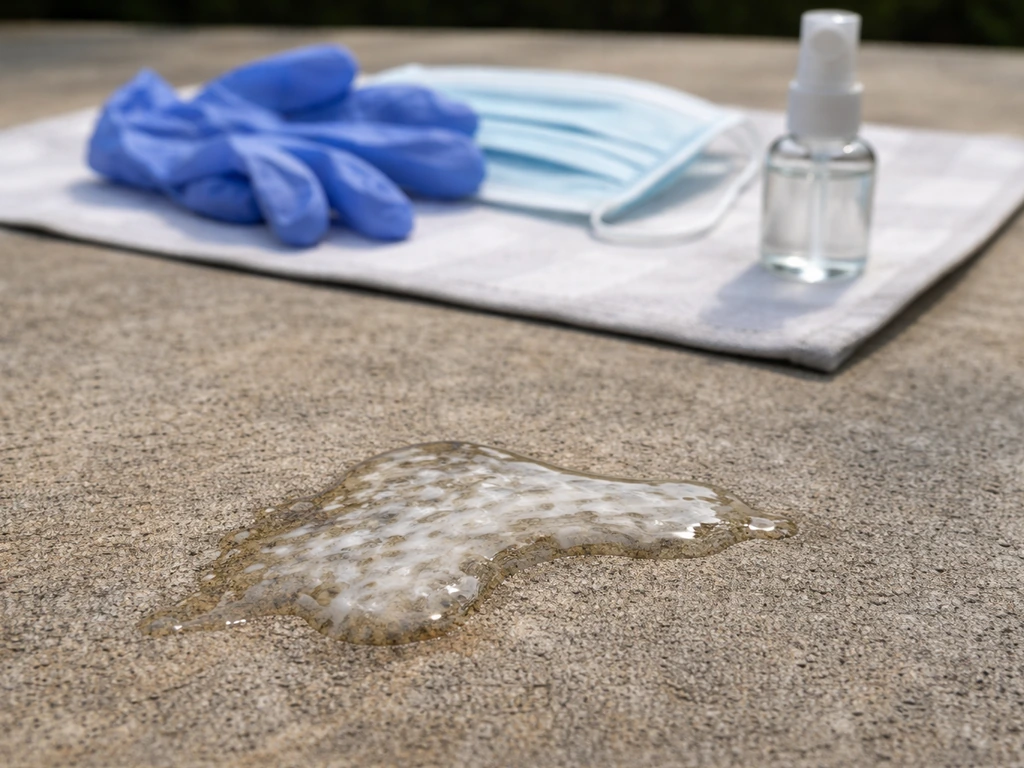
The core rule, borrowed directly from CDC guidance on handling droppings of biological origin: never scrub or sweep dry material. Always wet it first. This dramatically reduces the chance of aerosolizing anything harmful.
If it's probably just a bird dropping (small, isolated spot)
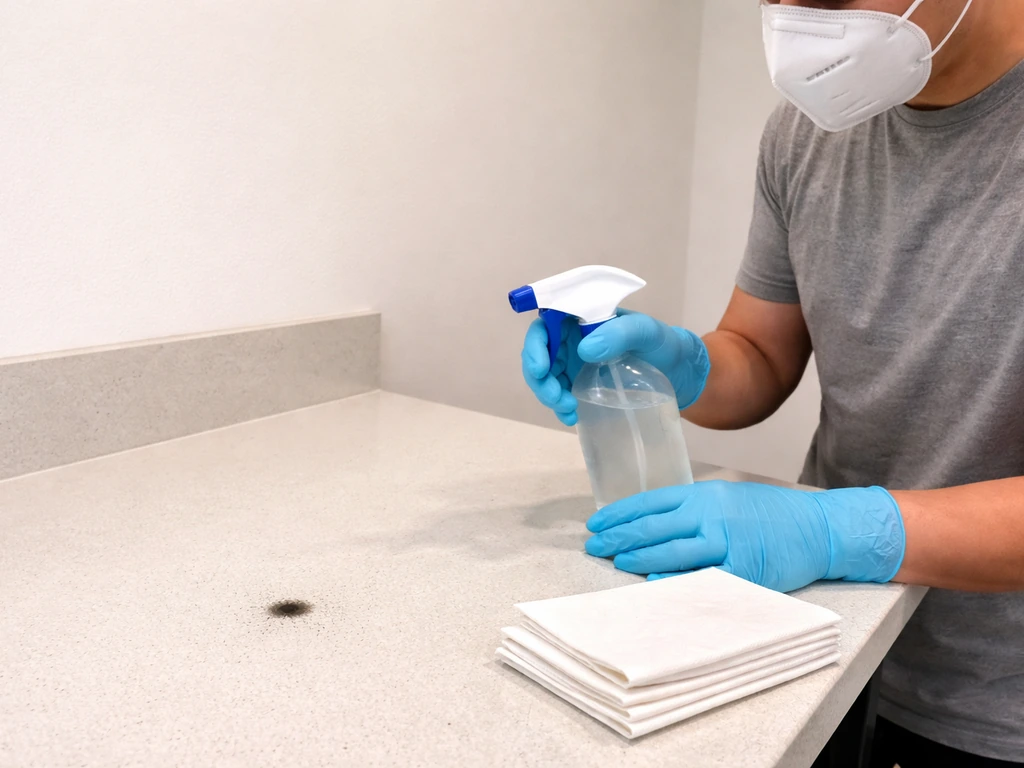
- Mist the spot lightly with water or a diluted disinfectant spray and let it soak for 30 to 60 seconds.
- Wipe with a disposable cloth or paper towel. Don't scrub vigorously — lift and blot.
- Dispose of the cloth in a sealed bag.
- Wash your hands thoroughly with soap and water.
- Disinfect the surface if it's one people regularly touch (a handrail, patio chair).
If you're uncertain what it is or there's a meaningful amount of it
- Put on disposable gloves and an N95 mask before getting close.
- Wet the material thoroughly with a diluted bleach solution (1 part bleach to 10 parts water) or an EPA-registered disinfectant. Let it sit for several minutes.
- Collect the softened material using damp paper towels or disposable rags — no dry sweeping, no vacuuming without a HEPA filter.
- Seal everything in a heavy-duty garbage bag and dispose of it.
- Mop or wipe down the surface with disinfectant again.
- Remove and bag your gloves carefully, wash your hands, and consider changing clothes if there was significant contact.
- If the material crumbles and looks like bat guano (dark, powdery, with insect debris), stop and read the bat section below before proceeding further.
Surface-specific removal tips
Car paint
Car paint is the surface where people panic most, and rightly so, bird droppings are acidic and can etch clear coat if left to bake in the sun. But aggressive dry scrubbing is the other way people damage their paint. Soak the spot first with a microfiber cloth dampened with warm water, or use a dedicated car detailing spray. Let it sit for at least 30 seconds. Then lift gently with a clean microfiber cloth. If there's etching already, a clay bar or light polish can help, but that's a detailing step, not a health safety issue.
Concrete and pavers
Concrete is porous, so dried droppings can stain and embed. Wet the area well, let the disinfectant soak in for a few minutes, then scrub with a stiff brush. A diluted bleach solution works well here. For large areas, a garden sprayer makes wetting uniform and keeps you further from the material. Rinse thoroughly after scrubbing.
Natural stone (granite, slate, bluestone)
Avoid bleach on natural stone, it can discolor or etch certain types. Use a pH-neutral stone cleaner or just warm water, wet the spot thoroughly, then lift gently. For stubborn stains, a paste of baking soda and water left on for a few minutes before wiping is usually safe. Rinse well.
Wood decks and outdoor furniture
Wet and lift as usual. For finished wood, use a mild soap and water solution rather than bleach, which can strip sealant. Unfinished or weathered wood can handle a more diluted bleach solution, but rinse well and let it dry completely. Check for lichen while you're at it, lichen on wood spreads slowly and is much easier to remove when young than when it's established.
Roof surfaces
Work from a stable ladder and never dry-scrape a roof. Wet the area first. For asphalt shingles, a low-pressure hose and diluted bleach spray work well for droppings and mildew. For tile or metal roofs, be careful with bleach concentration, dilute further (1:20) and rinse thoroughly. Don't pressure wash, it can damage shingles and drive water under tiles.
When to call a professional and skip the DIY
There's a clear threshold where doing it yourself stops being sensible. Here's when to make the call instead.
- You've found what appears to be a bat roost with accumulated guano — bat droppings carry histoplasmosis risk, and a significant buildup requires professional wildlife exclusion and remediation, not just a cleanup.
- There's a large accumulation of any droppings in an enclosed or poorly ventilated space (attic, crawl space, garage). The CDC notes that in some cases, leaving the material undisturbed is actually the safest option if people don't regularly access the area — a professional can assess that judgment call.
- You or someone in your home is immunocompromised, pregnant, or has a respiratory condition. The risk from aerosolized spores is higher for these groups, and professional remediation with proper containment is worth the cost.
- The accumulation covers a large area (multiple square feet) on a roof, in an attic, or around nesting sites. This is beyond a DIY situation both for health and for effective removal.
- You're unsure whether you're dealing with bird droppings, bat guano, or something else entirely, and the location suggests wildlife access to your home's structure. A pest or wildlife inspector can identify the source, which matters for both cleanup and prevention.
- You notice illness symptoms (fever, cough, chest tightness) after dealing with what you thought was ordinary bird poop cleanup. See a doctor and mention the exposure.
The bottom line: a single spot on your car or patio is almost never a serious health event, and identifying it accurately just takes a few seconds of observation. But when there's accumulation, an enclosed space, or any chance bats are involved, err hard on the side of caution. The cleanup guidance from the CDC is consistent on one point, don't disturb dry material, and if in doubt, get help. That advice applies whether what you're looking at is the real thing or just a very convincing caterpillar.
FAQ
How can I tell if it is droppings versus paint or white residue without scraping it dry?
Use a damp white microfiber cloth test in a small spot. Droppings and frass usually soften and smear as residue, berry stains bleed color, sap stays tacky and amber, and paint transfer tends to lift with sharper edges and no granular texture.
What should I do if I think it might be bat guano but I am not sure yet?
Treat it like a possible biohazard until confirmed. Keep people and pets away, avoid blowing dust, wet the area before touching anything, and if it is in an attic, ceiling, or large cluster, consider professional removal instead of DIY.
Is it safe to wipe a single spot on a windshield or car hood with a dry paper towel first?
Prefer not to. Even a small amount can dry out and create dust if you rub it. Wet first, let it sit about 30 seconds, then lift gently with a clean microfiber. Wash hands afterward.
Can bird droppings damage car paint if I clean it later the same day?
Yes, delay can matter. Bird droppings can be acidic and may etch clear coat when they are left to bake in sun. If it has been sitting awhile or looks etched, use gentler detailing steps (soak and lift first) rather than aggressive scrubbing.
What is the best way to clean droppings from concrete if the stain is old and set in?
Wet thoroughly, let a suitable disinfectant soak briefly, then scrub while it stays wet. Rinse well after. Concrete is porous, so old spots may require repeated wetting and cleaning rather than one pass.
Should I use bleach everywhere if I am worried about germs?
Not everywhere. Avoid bleach on natural stone because it can discolor or etch. For stone, use warm water and a pH-neutral cleaner, then rinse thoroughly. On finished wood, use mild soap and water rather than bleach.
How do I handle lichen or mildew that looks like dried droppings spreading over time?
If it scrapes off cleanly, it is more likely droppings. If it is firmly attached and irregular, that points to lichen. Mildew usually looks like diffuse powder or film. Wetting and a light cleaning test helps you avoid disturbing something larger than you think.
What does “never scrub or sweep dry material” mean in practice if I already disturbed it?
If it already got dusted, stop brushing or vacuuming dry and switch to wet methods. Wear a mask if you must enter the area, ventilate, wet down again, and remove residue with damp cloths. Avoid actions that kick up visible dust.
When should I stop DIY and call for help?
Call a professional if there is significant buildup (not just a single splat), it is in an enclosed space like an attic, or you suspect bats. Also get help if you have asthma or significant respiratory sensitivity and cannot safely ventilate or wear appropriate protection.
Can insect waste or tree sap still cause skin or allergy issues even if it is “harmless”?
Yes. Tree sap and honeydew can be sticky irritants for some people, and frass clouds can aggravate respiratory sensitivities even without infectious disease risk. Wear gloves if you have sensitive skin and avoid inhaling during cleanup.
How can I avoid confusing caterpillar frass with bird poop when both look like small dark specks?
Look for uniformity and the absence of a white urate component. Caterpillar frass tends to be consistently dark and granular, with small pellet shapes and no white ring. It often appears in a pattern directly under canopy feeding areas.