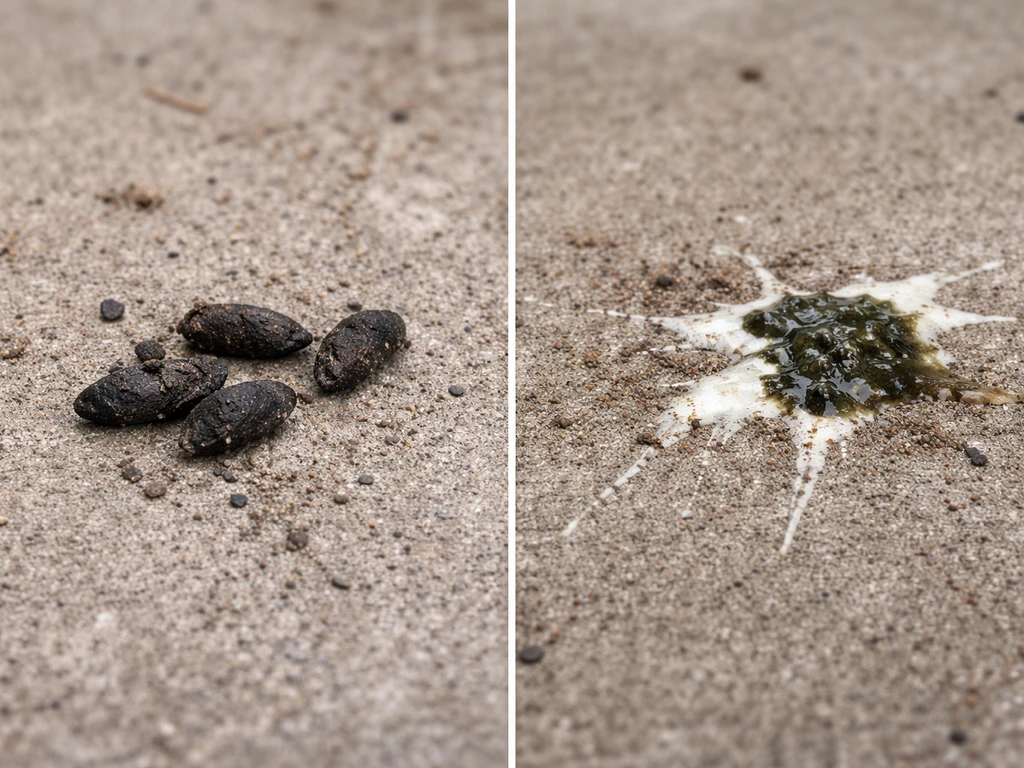
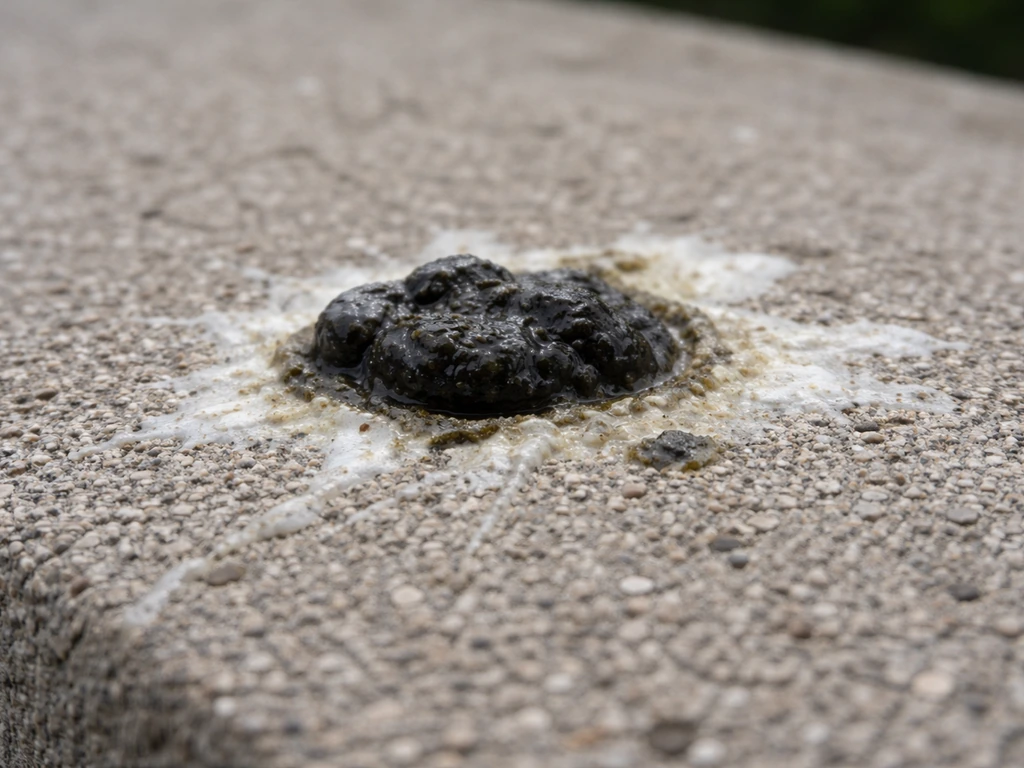
Black bird droppings typically look like a dark, smear-shaped or splat-shaped blob, ranging from charcoal gray to near-true black, often with a white or off-white cap of urate material on top. The fecal portion is the dark bit, the white chalky part is uric acid, and there's sometimes a thin clear liquid around it. When you see a dropping that looks almost entirely black with little or no white, it usually means the white portion dried separately, got washed away by rain, or the bird ate something very dark like berries or insects.
What Does Black Bird Poop Look Like? Color, Shapes, Safety

Marcus Fielding
27 May 2026
Quick visual ID: what black bird droppings actually look like
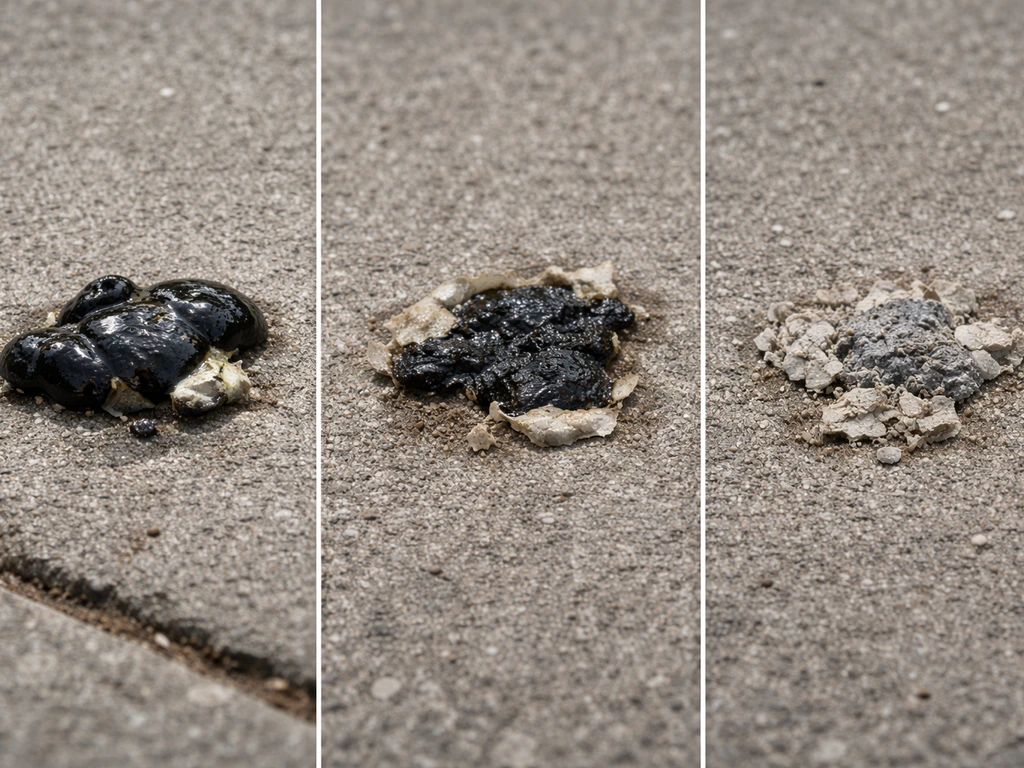
The most common black birds leaving droppings in yards, parking lots, and roosting areas are species like common grackles, starlings, crows, and blackbirds. Grackles, for example, are larger than robins with long tails and dark bills, and their droppings reflect that body size: they're noticeably bigger than a sparrow's and often land as a defined splat with a distinct fecal core.
In shape, expect one of a few common patterns. A fresh dropping usually has a rounded or elongated fecal mass (dark center) with a white urate cap, similar to a dark blob with white paint splashed on it. When it dries, the white part can flake or blend in, leaving what looks like a nearly black stain. On hard flat surfaces like a car hood or sidewalk, it spreads outward into a thin splat with irregular edges.
- Fresh: dark olive, brown-black, or black fecal center with a soft or wet white urate cap, sometimes with a small clear ring of liquid around it
- Semi-dried: the white portion starts to harden and chalk over, the dark center shrinks and deepens in color, sometimes looking almost charcoal
- Fully dried: flattened, crusty, and dark gray to near-black, with the white urate either crumbled off or fused into the surface
- Roosting accumulations: layered, paste-like masses that range from black-brown to greenish-black depending on diet and age
- Rain-washed: white component gone, leaving only a dark smear or stain that looks almost entirely black
Size varies with the bird. A grackle or crow dropping might be 1 to 2 centimeters across when fresh, while a starling produces something closer to half a centimeter. At a roost site with dozens or hundreds of birds, individual droppings merge into dark streaks and layered crusts that can look more like paint than individual spots.
Color vs. diet: why some droppings look truly black
Bird droppings aren't naturally black by default. The fecal portion gets its color from what the bird ate, and the urate portion is almost always white or cream. When droppings appear truly black or dark charcoal, it's usually one of a few things going on with diet or the oxidation process.
- Dark berries (mulberries, elderberries, pokeweed): produce droppings that can be deep purple, nearly black, or even bright purple-red, often with a very dark and runny fecal portion
- Insect-heavy diet: darker, denser fecal material that dries almost black, especially in summer when grackles and starlings eat a lot of beetles and grubs
- Seed diets: tend to produce firmer, browner droppings, less likely to look truly black
- Oxidation after drying: even a brown dropping will darken significantly as it dries and oxidizes on a surface, shifting toward charcoal or near-black
- Rain washing away the white cap: when only the dark fecal stain remains, the whole spot looks much darker than the original dropping
So when you're looking at a truly black smear on your car or patio, you're most likely seeing either an oxidized fecal stain that's lost its white component, or the aftermath of a berry-eating bird. Either way, the mechanics are the same: dark fecal core, white urate that may or may not still be visible, and some degree of drying or environmental change that shifted the color darker.
Texture and consistency: fresh, dried, and the layered mess in between
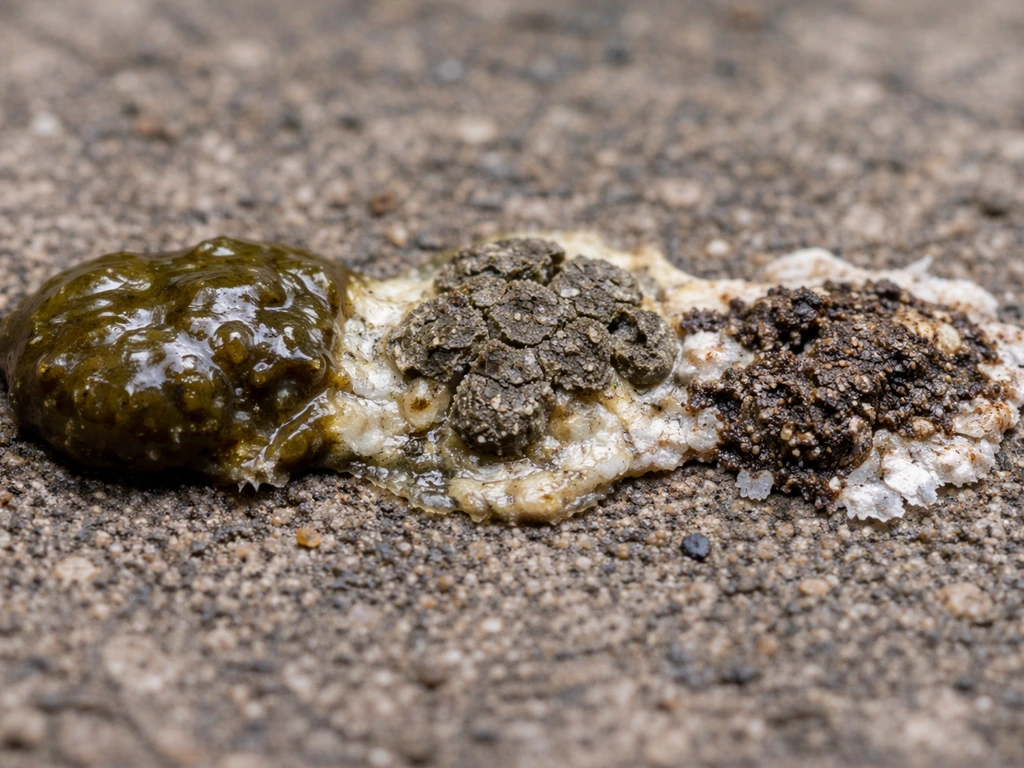
Texture tells you a lot about how long ago the bird was there and how big the cleanup job will be. Fresh droppings are soft and wet, with a slightly glossy surface on the fecal portion and a thicker, pastier texture to the white urate cap. They wipe away relatively easily within the first hour or two.
As they dry, the outer edges of the white portion start to harden and curl or crack. The dark center contracts and gets denser. After a few hours in sun and heat, a fresh dropping becomes a flat, crusty disc that grips the surface underneath. At this stage, dry scraping will chip it into fine dark dust, which is exactly what you don't want to inhale.
Accumulated roost droppings are a different texture entirely. When birds return to the same perch or structure repeatedly, the layers build up into a thick, dark paste with a foul ammonia-like odor. Fresh material on top stays wet and smearable, while older layers underneath become hard, chalky, and powdery. This layered material crumbles when disturbed and throws fine particles into the air, which is the main health hazard.
Where black bird droppings show up most
Black birds tend to roost communally, which means their droppings concentrate in specific spots rather than spreading evenly. If you're trying to trace a source or identify what you're dealing with, here's where to look.
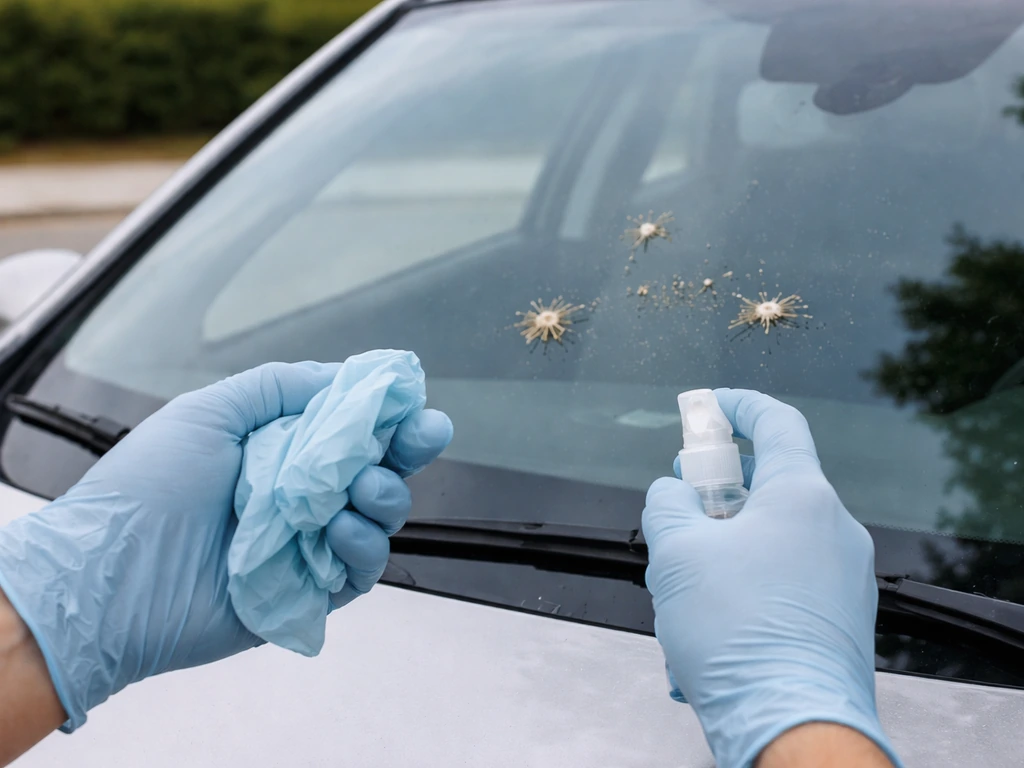
- Cars parked under trees or power lines: dark splats and streaks on the hood, roof, and windshield, often with a patchy black stain pattern if the white urate has dried or been washed off
- Power lines and fence posts: long whitish-dark streaks below the perch point, with older marks appearing as dark stains on the surface underneath
- Rooftops, ledges, and eaves: thick crusted accumulations that look almost black-brown from a distance, with powdery edges where material has dried and broken off
- Nest sites: a concentrated ring or mat of droppings directly below an active nest, mixing fecal material, feathers, and debris into a dark, compressed mass
- Sidewalks and parking lots under roosting trees: scattered individual splats that weather into dark stains over time, especially after rain washes away the white urate
- Building siding and gutters: streaked dark marks running vertically where droppings have hit and slid, often with a black-green tint from accumulated organic material
The pattern matters for identification. Widely scattered individual spots suggest birds passing through or foraging. Concentrated dark streaking directly below a fixed point, especially with feathers or nest debris nearby, means a regular roost or nest site where the exposure is ongoing and the accumulation is higher.
Are black droppings more dangerous than other colors?
The color itself doesn't determine the danger level. What matters is the volume, how dry the material is, and whether you disturb it in a way that sends particles airborne. That said, very dark or nearly black droppings from berry-eating birds can be a signal that the material is wetter and more liquid, which means it spreads further on contact but is actually less risky to inhale because it hasn't dried into dust yet.
The real health risks from bird droppings apply regardless of color. The two most common concerns are histoplasmosis, a fungal lung infection caused by Histoplasma capsulatum spores that grow in accumulated bird and bat droppings, and psittacosis, a bacterial infection spread by breathing dust contaminated with infected bird feces. The CDC and NIOSH both flag inhalation of disturbed, dried droppings as the primary exposure route. Symptoms of histoplasmosis typically appear 3 to 17 days after breathing in spores, and can include fever, chest pain, and trouble breathing. Psittacosis symptoms usually show up 5 to 14 days after exposure.
Small, occasional droppings on your car or patio carry very low risk for a healthy adult. The risk goes up significantly with large accumulations like those found under a long-established roost, in attics, or on commercial buildings where birds have been nesting for years. If you're dealing with that kind of volume, treat it like a hazmat job, not a weekend cleanup project.
It's also worth noting that if the droppings look unusual in other ways beyond just being dark, such as having a greenish tint, being very watery, or appearing alongside a sick or dead bird, that's a different concern. If you’re seeing symptoms of illness in a bird, it’s important to compare what sick bird droppings look like so you can handle the mess more carefully what sick bird poop look like.
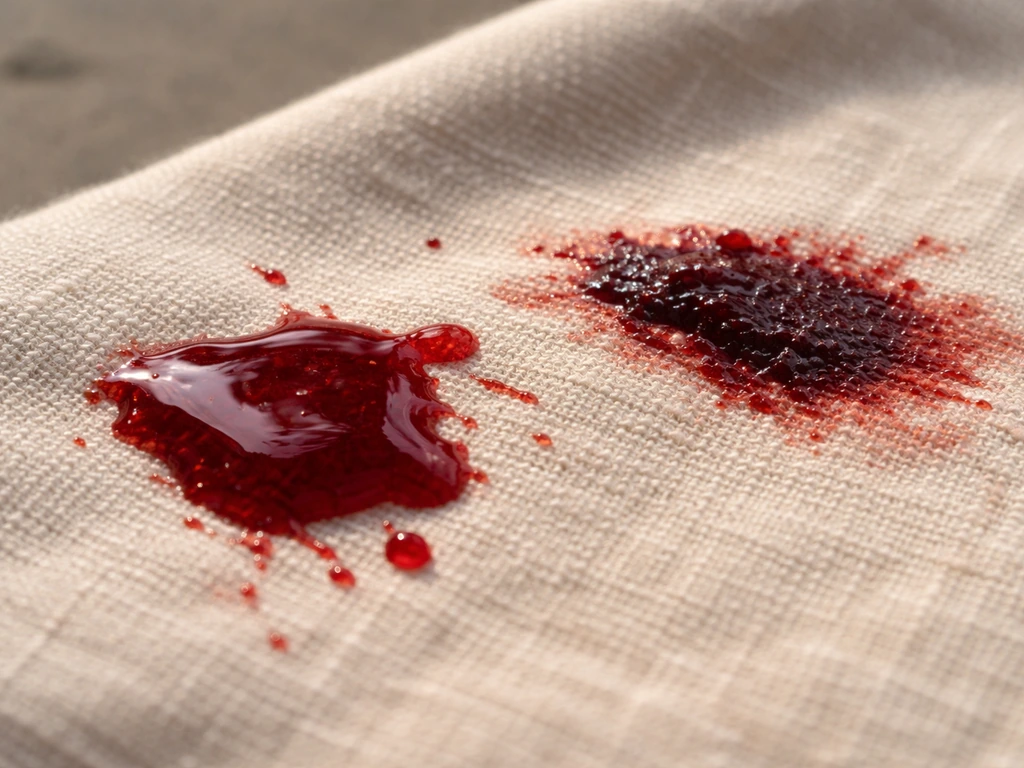
If you’re wondering what bird blood looks like, it can be red or dark and may appear as smears, spots, or residue mixed with moisture what does bird blood look like. What sick bird droppings look like and what bird flu droppings look like are related questions worth knowing about if you're seeing anything beyond the typical pattern.
What sick bird droppings look like and what bird flu droppings look like are related questions worth knowing about if you're seeing anything beyond the typical pattern.
How to safely clean up black bird droppings
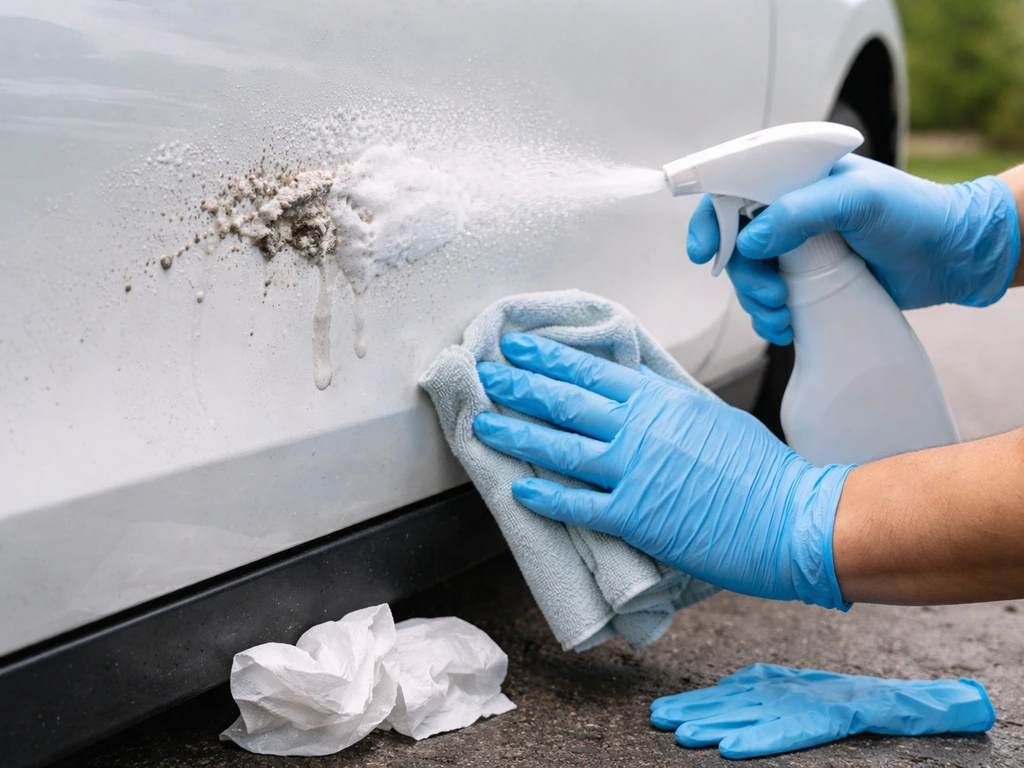
The golden rule is: never dry sweep or scrape dried bird droppings without wetting them first. Dry material breaks into fine particles that hang in the air and get inhaled. This is the advice from CDC, NIOSH, and occupational health programs across the board. Wet it down, then clean it up.
For small amounts on cars, patios, and siding
- Put on disposable gloves. If you're cleaning a larger area or you're in an enclosed space, add an N95 respirator.
- Wet the droppings thoroughly with a soapy water spray or a dilute bleach solution (about 1 part bleach to 9 parts water). Let it soak for at least 5 minutes.
- Wipe up with paper towels or a disposable cloth. Don't scrub in a way that sprays the material around.
- Bag the used towels and dispose of them immediately.
- Clean the surface again with a disinfectant spray or car-safe cleaner.
- Wash your hands thoroughly even though you were wearing gloves.
For car paint specifically, act as fast as you can. Bird droppings are acidic and can etch clear coat within hours in hot weather. Wet the spot first, let it soften, then blot (not rub) it away. Rubbing a dry or semi-dry dropping across car paint causes micro-scratches.
For larger accumulations at roost sites or under nests
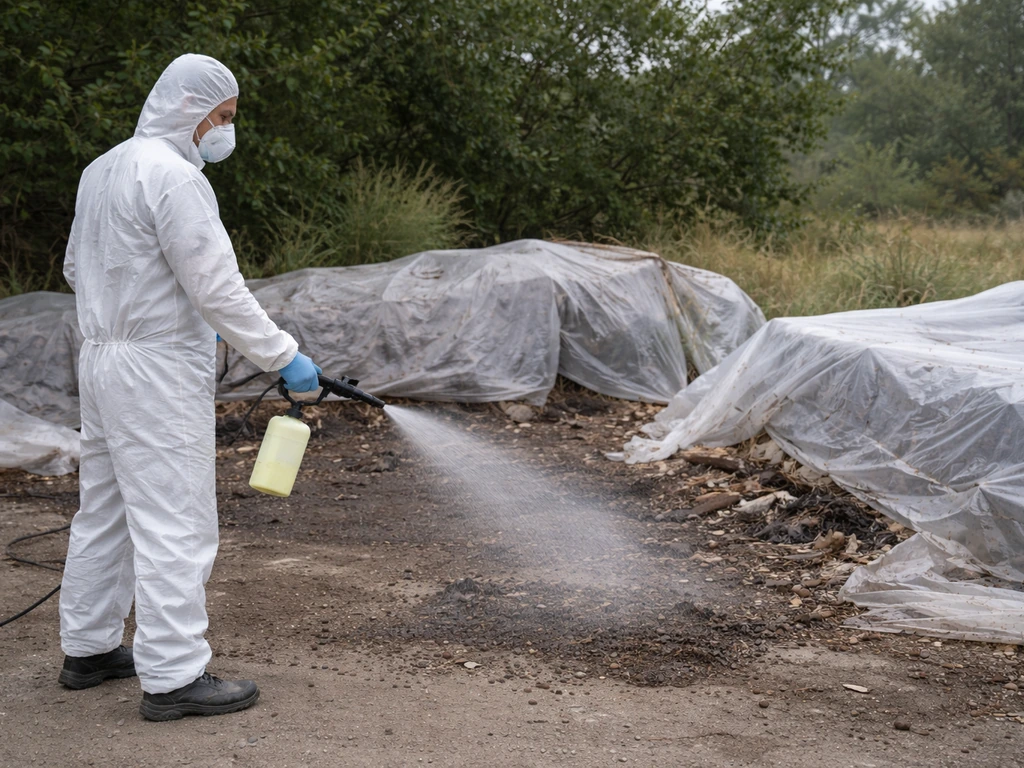
If you're dealing with a significant accumulation, the approach needs to be more careful. NIOSH specifically warns against shoveling or sweeping dry, dusty material. The guidance from CSU Channel Islands and Washington State University's EHS program both call for continuous wetting with a soapy water spray throughout the cleanup, not just at the start.
- Wear an N95 respirator (or better), disposable coveralls if available, gloves, and eye protection.
- Spray the entire accumulation with a soapy water or disinfectant solution until thoroughly wet. Do not skip this step.
- Keep wetting as you work so material never dries back out during cleanup.
- Use a mop, sponge, or damp rag to collect the material rather than a broom or shovel.
- Seal waste in heavy-duty bags for disposal.
- Clean the surface once cleared with a disinfectant solution.
- Bag and dispose of all PPE. Shower and change clothes before entering living areas.
- Consider hiring a professional remediation service for large indoor accumulations like attic deposits.
What to do if you're exposed
Exposure happens. You lean in to look at something on your car, disturb droppings accidentally, or realize after the fact that what you scraped off the fence post was drier than you thought. Here's what to do for each scenario.
| Exposure type | Immediate steps | When to seek medical care |
|---|---|---|
| Skin contact | Wash the area thoroughly with soap and water for at least 20 seconds. Remove and wash any contaminated clothing. | If skin is broken or irritated, or if you develop a rash, see a doctor. |
| Eye contact | Flush the eye immediately with clean running water for 15 minutes. Remove contact lenses first if wearing them. | If irritation, redness, or pain persists after flushing, get medical evaluation. |
| Inhalation (dust/particles) | Move to fresh air immediately. Avoid going back into the area until it has been properly wetted and cleaned. | If you develop flu-like symptoms (fever, chest pain, difficulty breathing) within 3 to 17 days, contact a healthcare provider and tell them about the exposure. |
| Ingestion (e.g., hand-to-mouth contact) | Rinse your mouth with water. Wash hands and face thoroughly. | Contact a healthcare provider or poison control if you feel unwell, especially if you have a compromised immune system. |
The most important thing to communicate to a doctor is that you were exposed to bird droppings, roughly how much, and whether it was fresh or dried and dusty. That context helps them consider histoplasmosis or psittacosis as possibilities if you develop respiratory symptoms, rather than just treating it as a generic flu. The Mayo Clinic advises contacting a healthcare professional if you develop flu-like symptoms after any significant exposure to bird or bat droppings, and that's solid advice to follow.
One last thing worth knowing: if you're uncertain whether what you're looking at is even bird droppings at all, it's a fair question. Some insect deposits, plant residue, and even bat guano can look very similar to bird droppings on surfaces. If something looks like bird poop but isn’t, it could be insect deposits, plant residue, or even bat guano, which have different textures and cleanup risks what looks like bird poop but isn’t. Bat droppings can sometimes look very similar to bird droppings at a glance, so checking the texture and shape helps. Bat droppings in particular have a different texture and composition than bird droppings, and the distinction matters for cleanup and health risk assessment.
FAQ
Why do some black bird droppings look almost solid black, with no white cap at all?
The white urate portion may have been washed away by rain, rubbed off when the bird landed, or simply dried and blended into the dark fecal core. You may also see this when the bird’s diet is heavily pigmented (for example, berries), which makes the fecal portion look darker for longer.
Does “black” automatically mean the droppings are more dangerous to breathe in?
Color alone is not a good predictor. The main risk driver is whether the material is dried and dusty (particles become airborne when disturbed). Fresh, wet-looking droppings are usually less likely to generate inhalable dust than crusted, long-accumulated layers.
How can I tell if a stain on a sidewalk or car is old bird poop versus something else?
Old bird droppings tend to be crusty and may flake into fine dark dust when you lightly moisten and wipe a small spot. Plant residue and many insect deposits usually smear differently, and bat guano often looks more granular or pellet-like and can darken unevenly with moisture.
What should I do if I already dry-swept or dry-scraped the droppings before realizing the risk?
Avoid further dry disturbance. Ventilate the area, dampen any remaining residue, and clean using wet methods. If you developed respiratory symptoms after a large amount was disturbed, contact a clinician and mention exposure to bird or bat droppings and whether the debris was dried.
Is it safe to use a pressure washer on a driveway or patio with bird droppings?
Usually no, because high pressure can aerosolize dried particles and spread contamination. Wetting with soapy water and wiping or scraping gently after softening is safer than blasting, especially under roosts where layers are thicker.
How do I clean car paint if the dropping has already dried?
Soak first, do not rub. Wet the area thoroughly, let it soften, then blot with a microfiber cloth. Rubbing dried residue can cause micro-scratches or clear coat etching that looks like haze or tiny pits later.
What’s the difference between a small mess on a car and a bigger roost cleanup in terms of precautions?
For a single spot, you can typically use careful wetting and glove-and-wipe cleanup. For accumulated droppings under a roost or along a structure, treat it as a higher exposure job, maintain continuous wetting during removal, and avoid any action that creates dust clouds.
Can black bird droppings be “watery” and still be normal?
Occasionally, especially after certain diets or when birds are feeding on insects or fruit. Still, watery droppings spread and can run further across surfaces, increasing how much needs cleanup, so focus on containment (wetting and wiping) rather than just color assessment.
What protective gear should I use for cleanup if I’m worried about inhaling particles?
At minimum, use disposable gloves and avoid dry disturbance. For thicker, dried accumulations that are likely to crumble when disturbed, a properly fitted respirator rated for particulate exposure is a prudent choice, and eye protection helps if material smears during wetting.
When should I call a professional or escalate the cleanup?
Consider professional help if there is heavy buildup over a large area, persistent odor and layered crusts at a roost site, droppings in enclosed spaces like an attic, or any situation where you cannot prevent dust from forming during removal. These scenarios raise both cleanup difficulty and inhalation risk.