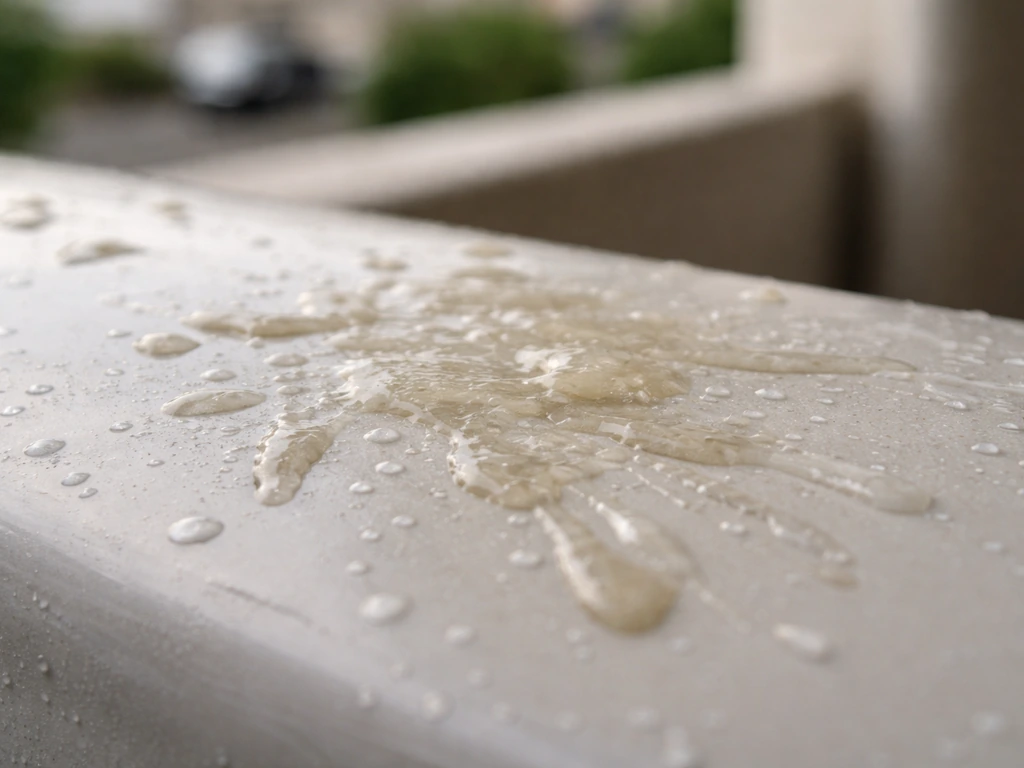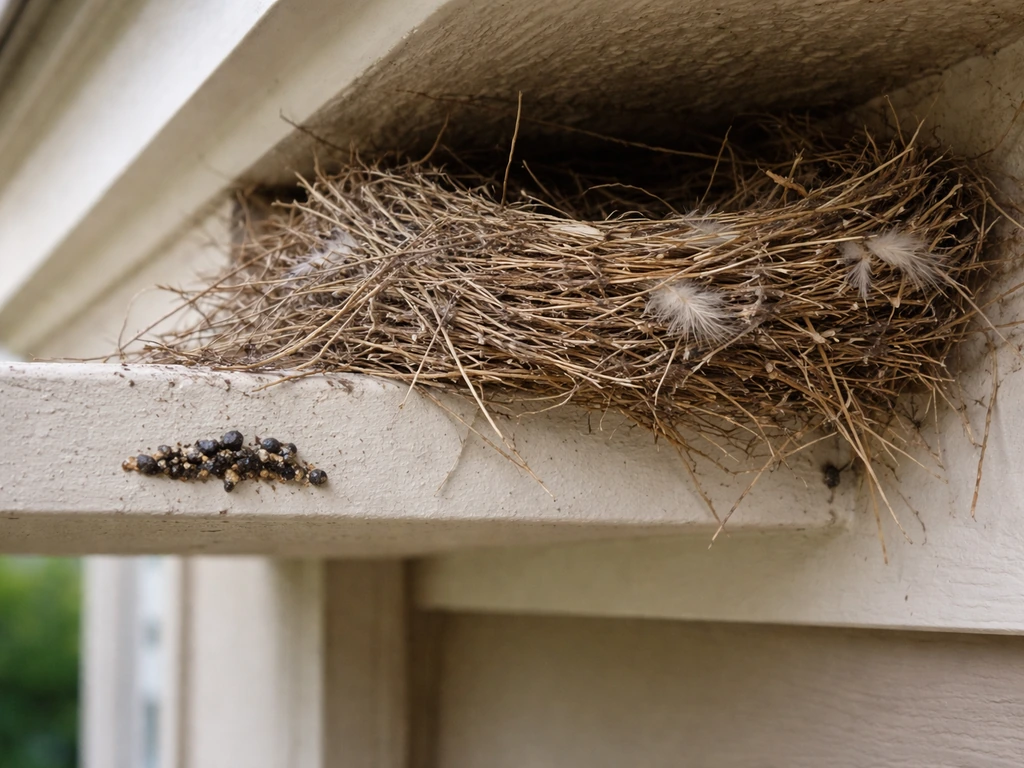
When people search for "bird saliva how do they get it," they usually aren't asking about anatomy. They've just found something wet, slimy, or crusty near a bird dropping or a nest, and they want to know what it actually is and whether they should be worried. Here's the direct answer: what you're seeing is almost never true saliva in the way mammals produce it. Here's the direct answer: what you're seeing is almost never true saliva in the way mammals produce it is bird nest bird saliva. What is bird saliva made of? Usually it is not true saliva, but instead regurgitated crop fluid, respiratory secretions, and preen gland oil mixed with droppings. It's more likely regurgitated crop fluid, respiratory secretions that dried onto a surface and mixed with droppings, or preen oil from feather maintenance. Birds deposit all of these fluids on perches, car hoods, patio furniture, and rooftops constantly, and your main exposure risk comes from inhaling dust when dried material gets disturbed, not from direct contact with fresh spit.
Bird Saliva: How Birds Get It and How You Get Exposed

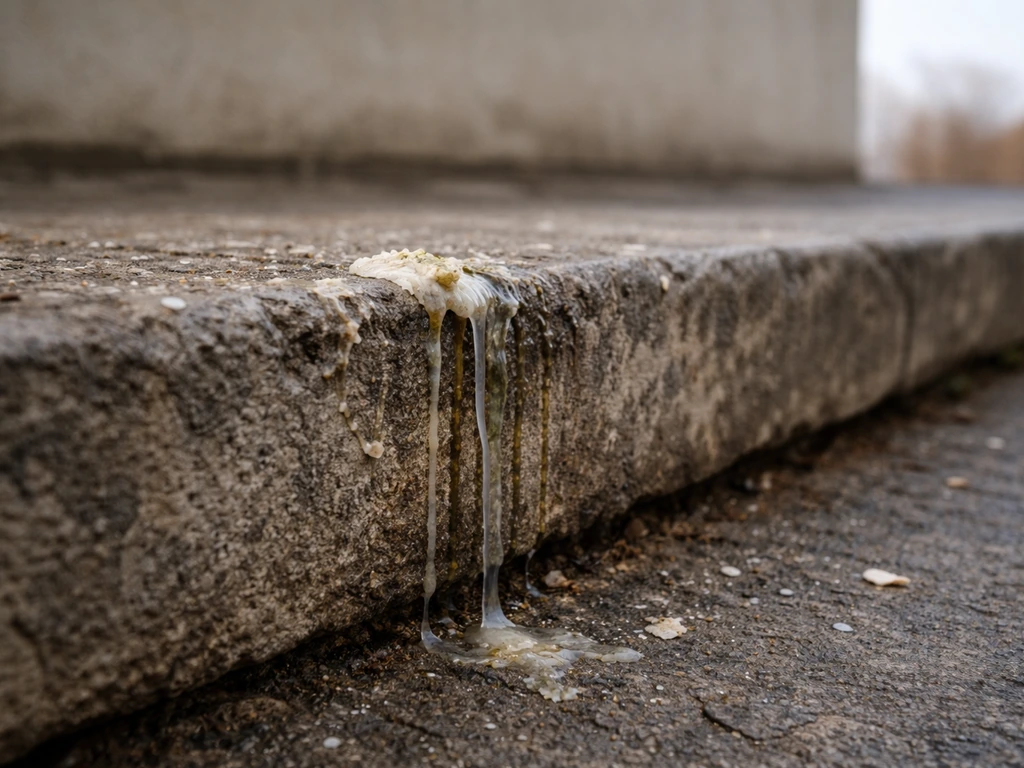
What people actually mean when they say "bird saliva"
"Bird saliva" is a catch-all phrase that gets applied to several completely different things, which is why it creates so much confusion. Birds do produce some saliva, but it's minimal compared to mammals and mostly serves to lubricate food going down the throat. What people usually notice around birds falls into three categories: regurgitated crop fluid, respiratory secretions, and the white paste of urates in droppings that people mistake for spit.
Regurgitation is the big one. Birds like pigeons, doves, and parrots regularly bring partially digested food or crop secretions back up through the esophagus to feed chicks or, during courtship, to feed a mate. This looks exactly like thick spit. Respiratory secretions are the mucus and moisture from a bird's airways, which can land on surfaces near where birds perch or sneeze. And then there's the classic white splat everyone recognizes: that white portion is actually uric acid (the bird equivalent of urine), not saliva at all. Birds combine their digestive waste and nitrogenous waste into one dropping, so what looks like a multi-component mess is entirely excretory.
If you're curious about the deeper biology, the topic of whether birds even produce true saliva the way we do is worth its own look. The short version for practical purposes: treat any wet material associated with birds as a potential carrier of the same pathogens you'd associate with droppings, because on most real-world surfaces, these fluids mix together before they dry.
How birds produce these fluids and why
Understanding where the fluid comes from helps you figure out where to expect it. Birds generate and deposit saliva-like moisture through four main behaviors.
Feeding and regurgitation
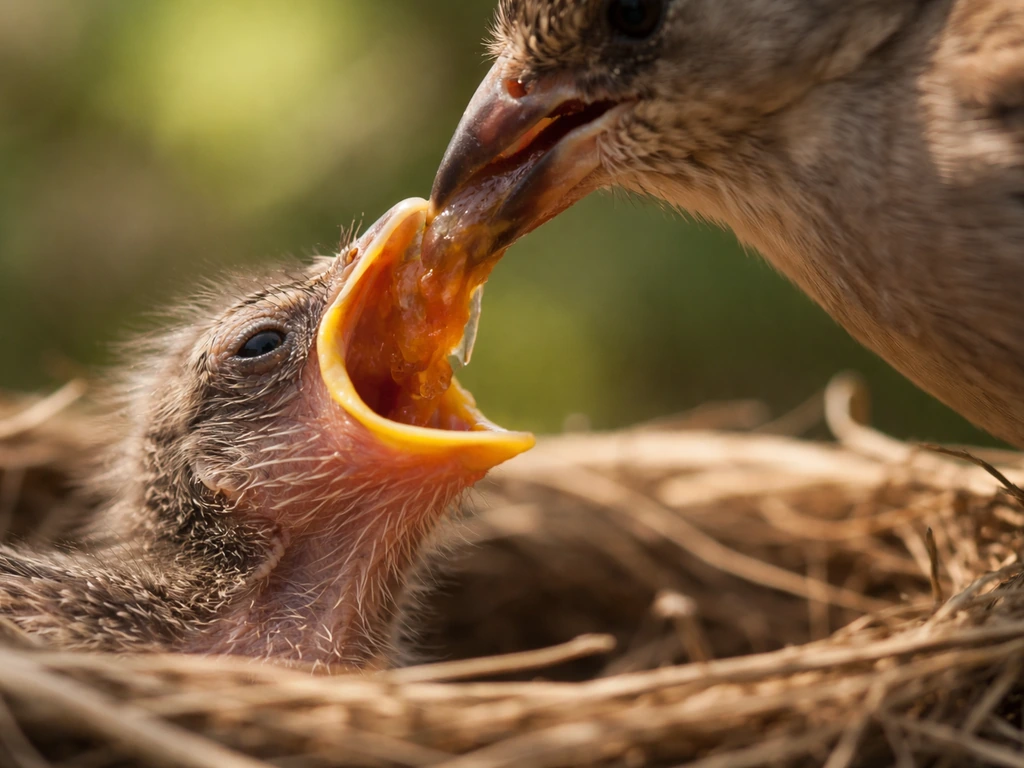
Parent birds regurgitate crop contents to feed their chicks, and this is probably the most dramatic "bird spit" you'll ever see. What does bird spit do for you? In most cases it is not something you benefit from, but rather a mix of fluids that can pose health risks if they dry into dust and you inhale it. In pigeons and doves, this goes even further: both parents produce what's literally called crop milk, a curd-like substance made from sloughed cells of the crop lining, triggered by prolactin (the same hormone involved in mammalian lactation). blank" rel="noopener noreferrer">Production starts about two days before the first egg hatches. The chick gets this thick secretion regurgitated directly into its beak. It looks like lumpy whitish paste and absolutely nothing like what you'd expect from a bird. This material can end up on nest edges, nearby surfaces, and anything below the nest.
Courtship feeding
Many bird species practice courtship feeding, where one adult delivers food (sometimes regurgitated, sometimes carried in the bill) to a mate. This transfers crop fluid and beak moisture between birds and deposits small amounts of wet material on whatever surface they're perched on. If that surface is your fence post, car antenna, or window ledge, you're collecting the residue.
Preening and preen gland oil
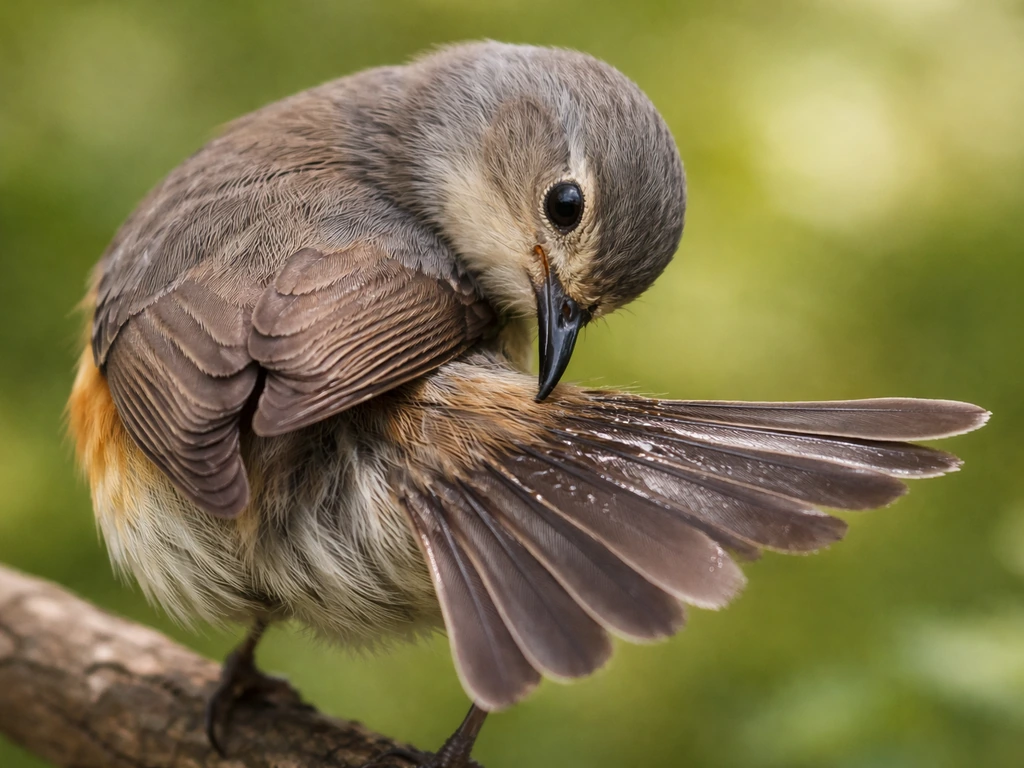
Birds spend a significant chunk of their day preening, and this involves rubbing their bill against the uropygial gland (sometimes called the preen gland) at the base of the tail, then spreading the secreted oil or wax across their feathers. This is not saliva, but it's a fluid that moves through the beak and onto surfaces the bird contacts. The oil has antimicrobial properties and maintains feather structure. On dark surfaces like car paint, it can leave a greasy film around or between droppings.
Respiratory secretions and drinking
Birds also shed respiratory secretions, essentially mucus and moisture from their airways, through normal breathing and occasional sneezing. This is the pathway that matters most from a health perspective. The CDC points out that for psittacosis (caused by Chlamydia psittaci), infected birds shed the bacteria in both droppings and respiratory secretions. When those secretions dry on a surface and mix with droppings, they become part of the dust that poses an inhalation risk. Birds drinking from shared water sources can also leave beak-derived fluid in the water and on the rim, creating another low-level contamination point.
How birds spread these fluids onto surfaces
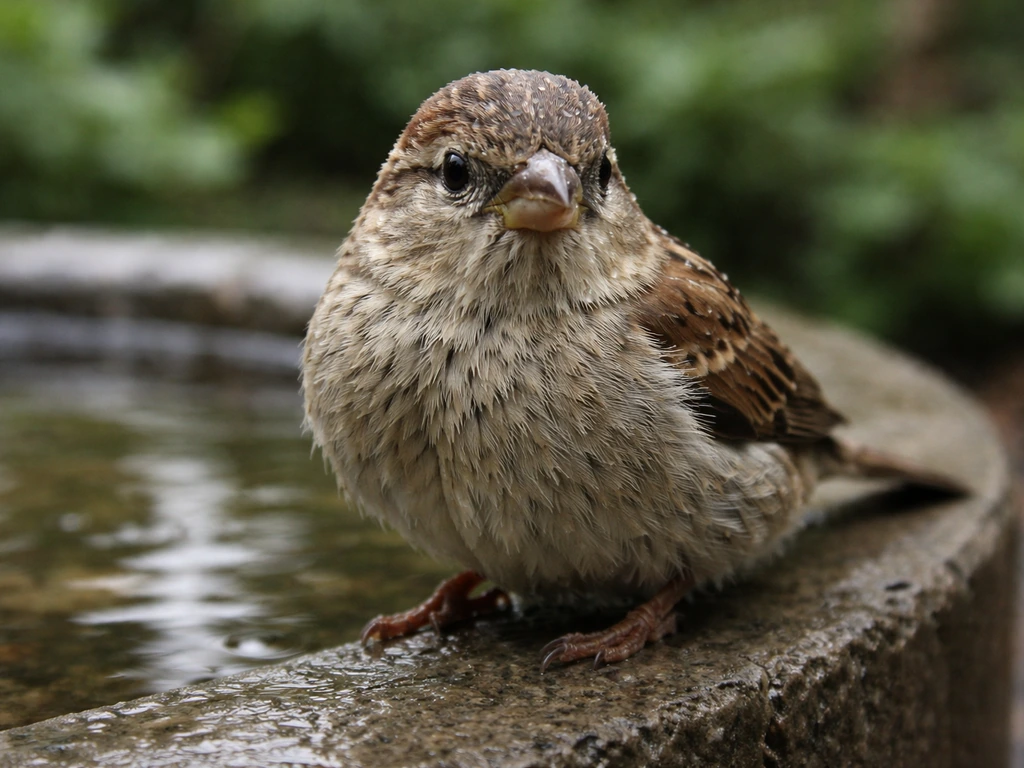
Birds are not tidy creatures, and they deposit fluid constantly without any particular intention. Perches are the most obvious hotspot: any surface a bird lands on regularly gets coated over time with droppings, preen oil, and whatever moisture was on the bill during a recent drink or feeding bout. Nesting sites accumulate the most concentrated mix because you have droppings, crop milk residue, and respiratory secretions all in one place over weeks or months.
Rooftops, ledges, and ventilation openings are especially problematic because birds return to the same spots repeatedly. Each new visit adds material on top of what's already drying. When wind or foot traffic disturbs the accumulated material, it becomes airborne. Birdbaths and communal drinking spots collect beak-deposited moisture directly in water that other birds (and sometimes pets) then contact. Cars parked under trees or near roost sites get the full package: droppings that contain uric acid (which etches paint within hours in hot weather), preen oil residue, and whatever dried respiratory moisture came along for the ride.
How you actually end up exposed
Most people encounter bird-derived fluids through completely ordinary situations. Pet bird owners are probably the highest-risk group for actual saliva-adjacent exposure because they handle birds directly, get beak contact on skin, and clean cages routinely, often without gloves or masks. A parrot that regurgitates on your hand as a sign of affection (it's a bonding behavior) is giving you a direct deposit of crop fluid. That's warm, fresh, and unlikely to cause illness in a healthy person, but it's worth washing off promptly.
For everyone else, exposure is more indirect. Car owners find deposits on hoods and roofs. Homeowners deal with contaminated patios, decks, and roof gutters. Anyone cleaning up a pigeon roost or disturbing old nesting material is at the highest risk because drying converts moist secretions into fine particles that become airborne dust. CDC is explicit on this: psittacosis infection most often happens when someone breathes in dust containing dried bird secretions or droppings, not through direct fresh contact. The same mechanism applies to histoplasmosis from accumulated droppings. The act of cleanup, if done carelessly, is often riskier than the original exposure.
Health risks worth knowing (and what's unlikely)
Let's be straight about what's actually risky and what's just unpleasant. Brief skin contact with fresh bird droppings or regurgitated material from a healthy bird is low risk for most people. Wash it off, move on. The genuine risks come from repeated or heavy exposure, especially through inhalation.
| Condition | Pathogen | Main exposure route | Realistic risk level |
|---|---|---|---|
| Psittacosis | Chlamydia psittaci | Inhaling dried droppings/secretion dust | Low-moderate; higher for pet bird owners and bird handlers |
| Histoplasmosis | Histoplasma capsulatum (fungus) | Inhaling disturbed dry droppings (large accumulations) | Low for casual contact; higher for cleanup without protection |
| Salmonellosis | Salmonella spp. | Direct contact with droppings, hand-to-mouth | Low with basic hand hygiene |
| Campylobacteriosis | Campylobacter spp. | Fecal-oral contact, contaminated water | Low with hand hygiene and clean water |
| Cryptococcosis | Cryptococcus neoformans (fungus) | Inhaling dried pigeon droppings dust | Low; primarily a risk for immunocompromised individuals |
The pattern you'll notice: almost every significant risk runs through inhalation of dust from dried material, not from touching fresh droppings or getting peck contact from a healthy bird. If you develop flu-like symptoms, a dry cough, or a persistent fever within 5 to 14 days of a significant cleanup exposure, psittacosis is worth mentioning to your doctor. It's treatable with antibiotics (typically doxycycline) when caught. Immunocompromised individuals, pregnant people, and those with chronic respiratory conditions should be more cautious across the board.
How to clean up safely right now
Whether you're dealing with droppings on your skin, a car, outdoor furniture, or a heavily contaminated area like a roost or attic, the cleanup principle is always the same: wet it before you touch it, protect yourself from dust, and disinfect after removing the bulk material.
If it got on your skin
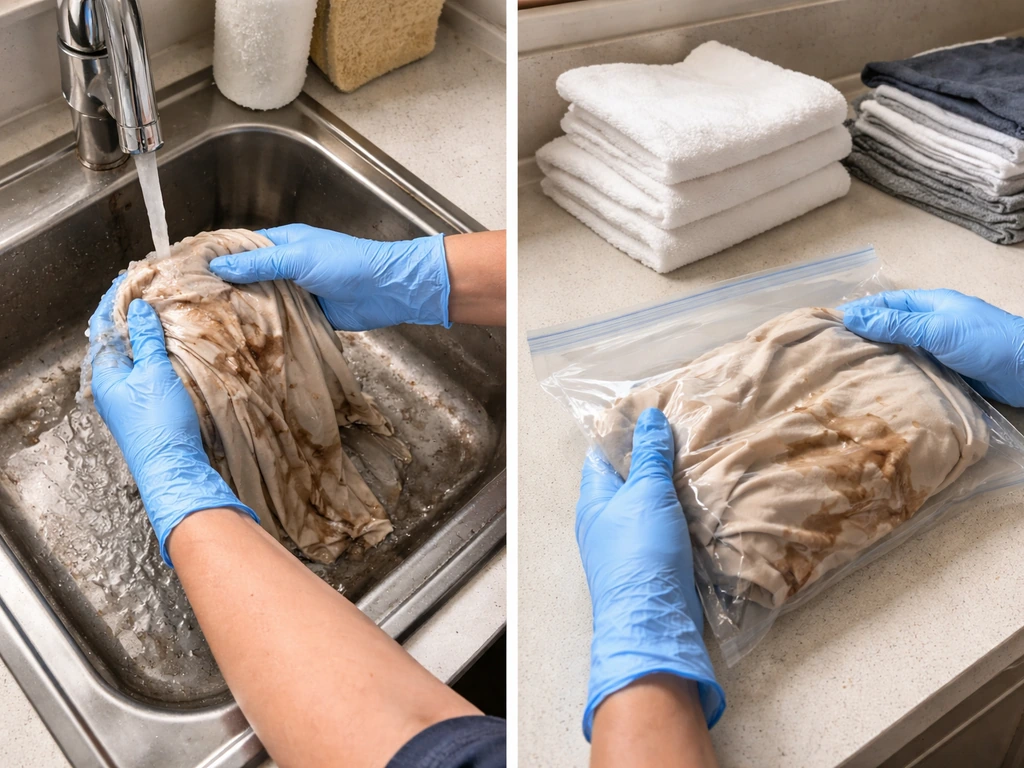
- Rinse immediately with running water for at least 20 seconds.
- Wash thoroughly with soap and water.
- Avoid touching your face, especially eyes and mouth, before washing.
- If you have a cut or open wound that was directly contaminated, clean it well and consider contacting a healthcare provider.
If it landed on clothes
- Remove and bag contaminated clothing before entering your home if possible.
- Wash separately in hot water with your regular detergent.
- Wash your hands after handling the clothing.
Car paint
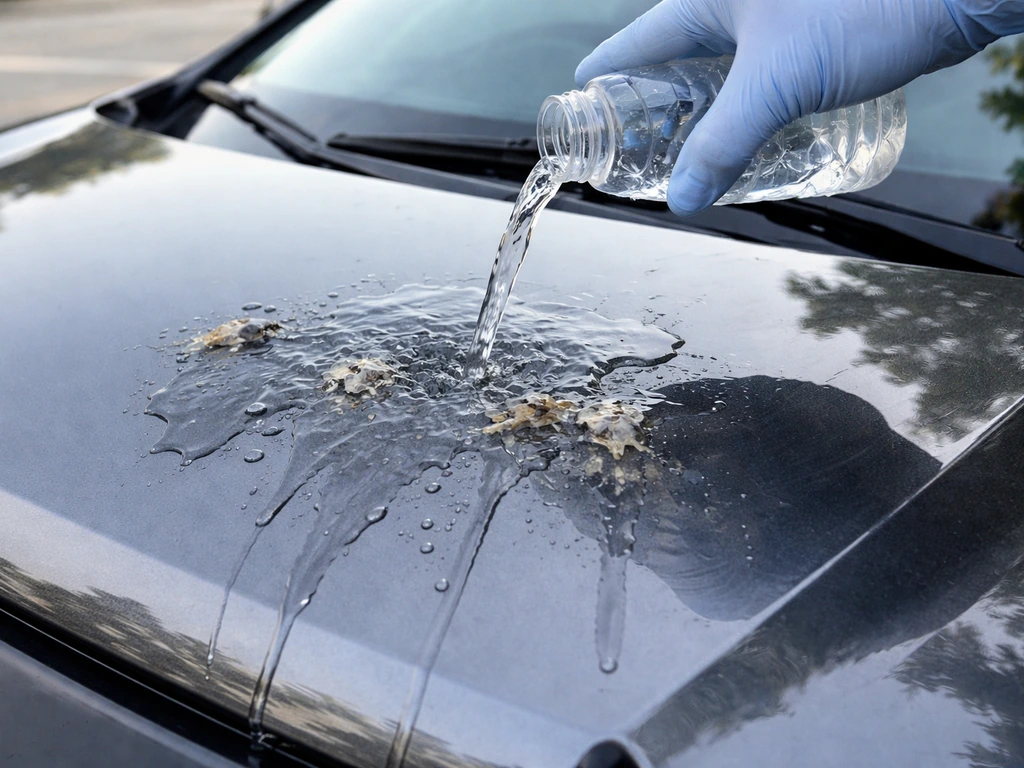
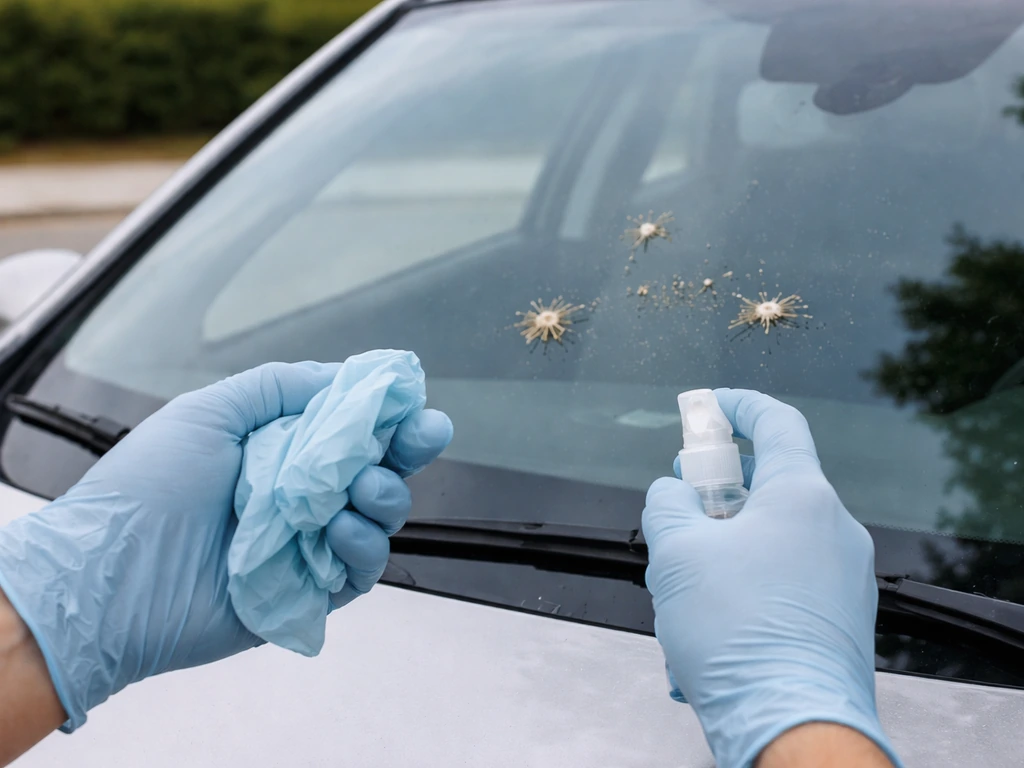
Bird droppings are corrosive on car paint because of their uric acid content, and the preen oil component can penetrate clear coat. Soak the spot with water or a dedicated car-wash spray first, let it soften for 30 to 60 seconds, then blot (don't scrub) with a microfiber cloth. Scrubbing grinds grit into the paint. Rinse thoroughly and dry. For older, hardened deposits, a diluted car-safe detailing spray helps. Do not use household bleach on car surfaces.
Outdoor hard surfaces (patios, decks, rooftops, ledges)
- Put on gloves (nitrile or rubber) and, for any significant accumulation, an N95 respirator and eye protection.
- Wet the area with water or a disinfectant solution before disturbing anything. The CDC explicitly recommends this wet method to suppress dust.
- Use a disposable cloth or mop to remove bulk material. Do not use a dry broom or leaf blower, which aerosolize dried particles.
- Dispose of material in sealed bags.
- Disinfect the surface with a household disinfectant or a diluted bleach solution. For bleach, follow label instructions for dilution; a common general-surface ratio is about 1/3 cup of 5% to 6% bleach per gallon of water, but check your product label. Do not mix bleach with ammonia-based cleaners.
- Wash hands thoroughly after removing gloves.
Pet bird cages and perches
- Wear gloves and, ideally, a mask when cleaning.
- Wet cage surfaces and perches with water or a bird-safe disinfectant before wiping or scraping.
- Do not pick up droppings with bare hands.
- Wash cage components and allow them to dry fully.
- Wash your hands thoroughly after cleaning, even if you wore gloves.
- Use hand sanitizer if a sink is not immediately available.
Heavy accumulations (attics, roosts, large outdoor deposits)
If you're dealing with significant buildup from a long-term roost, this crosses into professional territory. The histoplasmosis and psittacosis risks from aerosolizing large amounts of dried material are real enough that CDC and NIOSH guidance recommends engineering controls and appropriate respiratory protection (at minimum an N95, and for large-scale jobs, a half-face respirator with HEPA filters). Wetting everything before disturbing it is non-negotiable. If the accumulation is large and you're not equipped to handle it safely, hire a pest or remediation company familiar with bird dropping cleanup.
Preventing re-contamination going forward
Cleaning up once doesn't solve the problem if birds keep returning. Prevention is about making the spot less attractive and physically harder to use.
- Install physical deterrents on preferred perching spots: bird spikes on ledges, window sills, and roof edges work well for most larger birds. Tension wire systems create an unstable landing surface.
- Use bird netting to exclude birds from enclosed spaces like balconies, eaves, and under solar panels.
- Remove food and water attractants: uncovered compost, pet food left outside, and open birdbaths near your home all draw birds in and keep them returning.
- Cover or move your car if you park under known roost trees or near ledges that birds use regularly. A car cover is cheaper than paint correction.
- For outdoor patios and decks, reflective tape, predator decoys (owls, hawks), or motion-activated sprinklers can discourage repeated visits. Decoys work better when moved regularly so birds don't habituate.
- Establish a regular cleaning schedule for gutters, ledges, and any surface where droppings accumulate, so material never gets a chance to dry and build up into a larger problem.
- For pet bird owners: clean cages at least weekly, use the wet method every time, and wash hands before and after handling birds.
The bottom line is that bird saliva, in the way most people mean it, is a mix of fluids that birds produce and deposit as a natural part of feeding, preening, nesting, and breathing. It's mostly harmless in small amounts with brief contact, genuinely risky when it dries into dust and you inhale it without protection, and completely manageable with the right cleanup approach. Wet it down, protect your lungs, disinfect properly, and reduce the conditions that invite birds back. That covers the immediate problem and keeps it from becoming a recurring one.
FAQ
If I touched what looked like bird saliva, do I need to worry about getting sick from skin contact alone?
For most healthy people, brief skin contact with fresh material is low risk if you wash it off promptly with soap and water. The bigger concern is inhaling dust after cleanup, so wear eye and respiratory protection if you disturb dried buildup, even if you feel fine afterward.
Is it safer to hose droppings right away, or should I wait before cleaning?
Soak or lightly wet first. Waiting can let dried material turn into dust when you move it, dry brush it, or scrape it. Wetting for 30 to 60 seconds helps reduce airborne particles before you blot or remove.
Can bird droppings on food or dishes mean I will get an infection just by eating?
Infection risk is still mainly tied to inhalation of dried particles, but contamination of food or cookware can spread germs if it is not cleaned correctly. If droppings land on dishes, discard any porous items that cannot be effectively sanitized, wash nonporous items in hot soapy water, and sanitize after removing visible residue.
What should I do if a bird regurgitated crop fluid directly onto me or my child’s face?
Rinse the area right away with clean running water, wash with soap if it is on skin, and avoid rubbing eyes. If material got into eyes, rinse with sterile saline or clean water for several minutes. Seek medical advice if there is persistent eye irritation, breathing symptoms, or fever within the following 5 to 14 days after a heavier exposure.
Does using a mask at home eliminate risk during cleanup?
It greatly reduces risk, but correct use matters. Use a properly fitted respirator, not a loose cloth over the nose. For larger roost cleanups or dusty attics, an N95 is often the minimum, and HEPA-filtered respiratory protection and engineering controls are better if buildup is heavy or old.
Is N95 enough for cleaning a small balcony, or do I need a half-face respirator?
For a small, promptly wetted cleanup of limited material, a well-fitted N95 may be sufficient for most people. If there is thick, long-term buildup, visible dust clouds, enclosed spaces, or you cannot keep surfaces wet, move up to a half-face respirator with HEPA filters or hire professional help.
How long after cleanup should I watch for symptoms related to psittacosis?
If symptoms develop after a meaningful dust-disturbing cleanup, monitor for about two weeks. Pay attention to flu-like illness, dry cough, and persistent fever, especially within 5 to 14 days after the exposure.
Can I use bleach on windowsills or floors if bird residue is present?
Avoid bleach on areas like car paint and many outdoor finishes because it can damage surfaces and it does not necessarily solve inhalation risk. For general surfaces, focus first on wetting to prevent aerosolization, remove bulk residue, then use an appropriate disinfectant for the surface material per the product label.
Does drying time make bird residue more dangerous?
Yes. Wet material is more manageable, while dried residue breaks into fine particles that can become airborne during sweeping, scraping, or even windy conditions. The practical rule is wet first, then remove, minimize disturbance, and clean with protection.
What’s the safest way to clean birdbaths or water containers contaminated by beak fluids?
Empty the water completely, remove any visible debris, then scrub and sanitize the container after it has been cleaned of residue. Keep pets away while you clean, and avoid splashing that can aerosolize droplets. Rinse thoroughly after sanitizing and refill only with clean fresh water.
Do automatic air fresheners, fans, or opening windows reduce the risk from dried droppings dust?
They can make things feel better but they do not reliably control airborne particles. Fans may spread dust to other rooms, and air fresheners do not remove contaminants. If you have to ventilate, do it while keeping surfaces wet and using respiratory protection, and limit movement that stirs dust.
When should I stop DIY cleanup and call a professional?
If the buildup is extensive, in hard-to-reach enclosed spaces like attics or crawlspaces, or if you cannot safely keep dust from becoming airborne, professional remediation is the safer option. If you see multiple layers of old droppings, signs of nesting for weeks or months, or you are immunocompromised, do not attempt large-scale cleanup yourself.