For most birds, no: their nests are built from twigs, grass, mud, moss, feathers, spider silk, and bark, with saliva playing little or no role. The big exception is swiftlets, small cave-dwelling birds whose nests are made almost entirely from solidified salivary secretions, a concentrated mucin glycoprotein that hardens into the cup-shaped structure famously used in bird's-nest soup. So when people ask 'is bird nest bird saliva,' the honest answer is: it depends entirely on the species, and for the birds most people encounter around their homes, the answer is no.
Is Bird Nest Bird Saliva? What Nests Are Made Of and Safety

Marcus Fielding
24 May 2026
What bird nests are actually made of
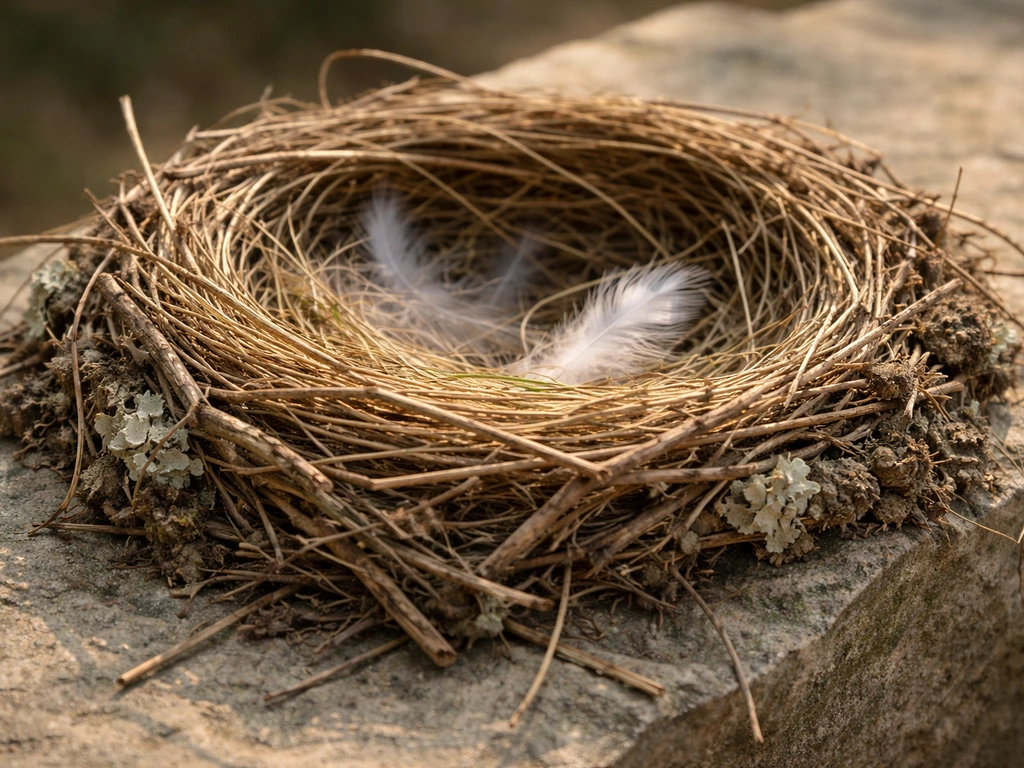
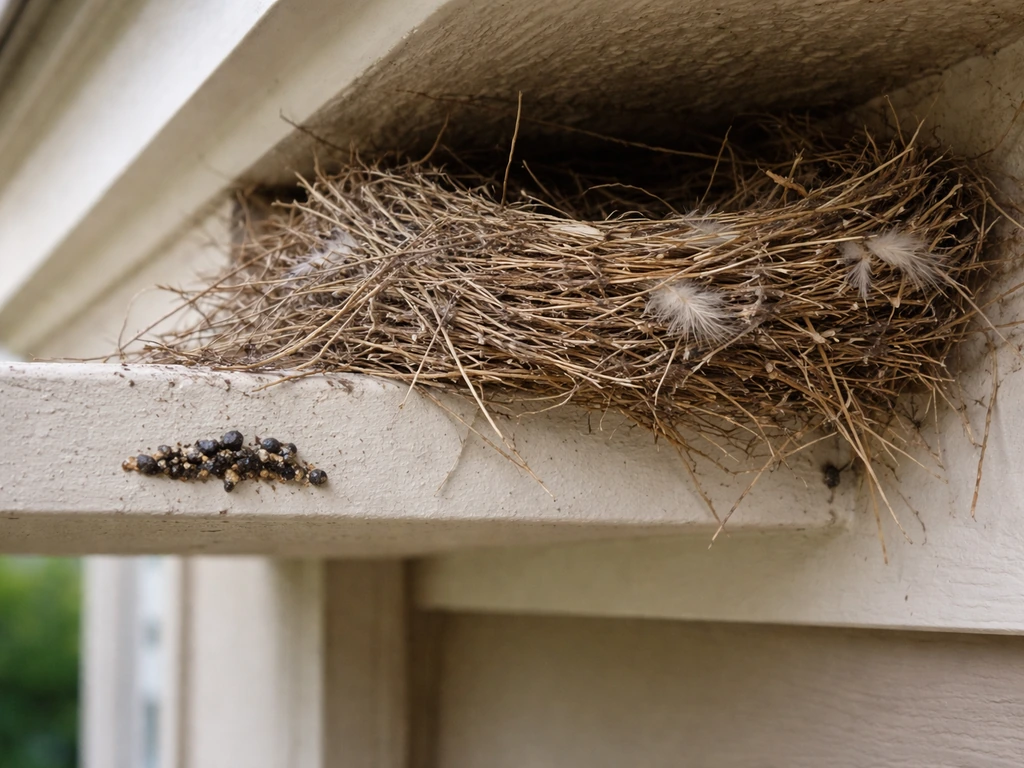
The vast majority of birds are natural engineers who gather whatever structural materials work best in their environment. The Natural History Museum describes a wide toolkit: sticks, lichen, spider silk, bark, mud, grass, leaves, moss, hair, and feathers. Cliff swallows build with mud pellets. Hummingbirds use spider silk to bind plant fibers and make their tiny cup nests expandable. Robins layer grass over mud. Eagles stack sticks into platforms that can weigh hundreds of pounds over decades of reuse.
What most of these nests have in common is that saliva is not the main ingredient. Some birds may use saliva incidentally to help press materials together, but it is not the functional glue. The structure comes from weaving, layering, and the physical properties of the materials themselves.
Is bird saliva involved, and where
This is where swiftlets stand completely apart from every other bird most of us will ever encounter. A transcriptome study discussed in BMC Genomics describes edible bird’s nest as produced from [solidified saliva secretions of swiftlets during the breeding season](https://link. springer. com/article/10.
1186/s12864-017-3861-9). If you are asking how swiftlets collect and use saliva for nesting, they are producing a specialized salivary secretion rather than using saliva the way most other birds do. If you are wondering what “bird saliva” actually means, it usually refers to the specialized saliva-based nest material used by swiftlets bird saliva meaning.
Edible-nest swiftlets (genus Aerodramus/Collocalia) produce nests made from salivary gland secretions that are so highly concentrated in sialylated mucin glycoprotein that the saliva solidifies into a rigid, translucent structure with almost no other material involved. Peer-reviewed characterization studies confirm that this secretion is the functional basis of the 'salivary glue.
' Britannica ties this directly to the edible bird's nest industry: the nests are harvested from cave walls across Southeast Asia and dissolved into broth for bird's-nest soup, which has been a luxury ingredient in Chinese cuisine for centuries.
Every other bird you find nesting in your eaves, on your balcony, in your gutters, or in a backyard tree is using physical construction materials, not saliva. If you are cleaning up a nest from a house sparrow, pigeon, starling, or robin, you are dealing with twigs, dried grass, feathers, and, critically, a significant amount of dried droppings mixed into and under the nest structure. That last part is where the real health conversation starts. If you are wondering what bird spit or saliva-based nests do for you, it mainly refers to swiftlets and their nutrient-rich edible nests, which are marketed for potential health benefits That last part is where the real health conversation starts..
Health risks from touching nest material vs. breathing the dust
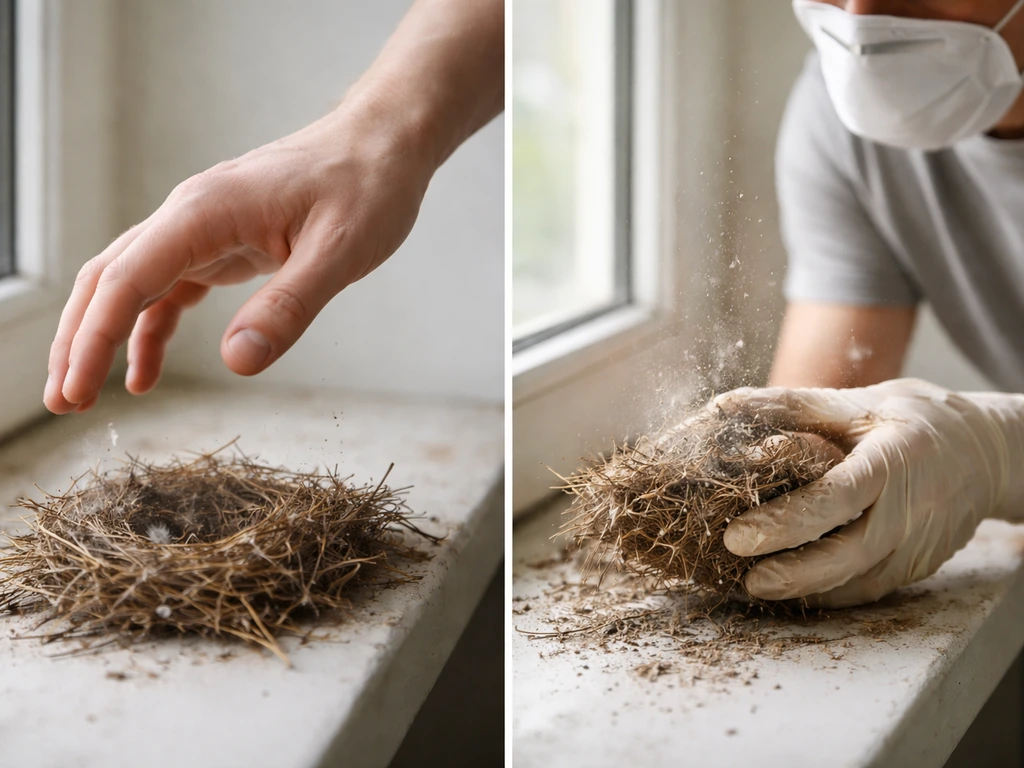
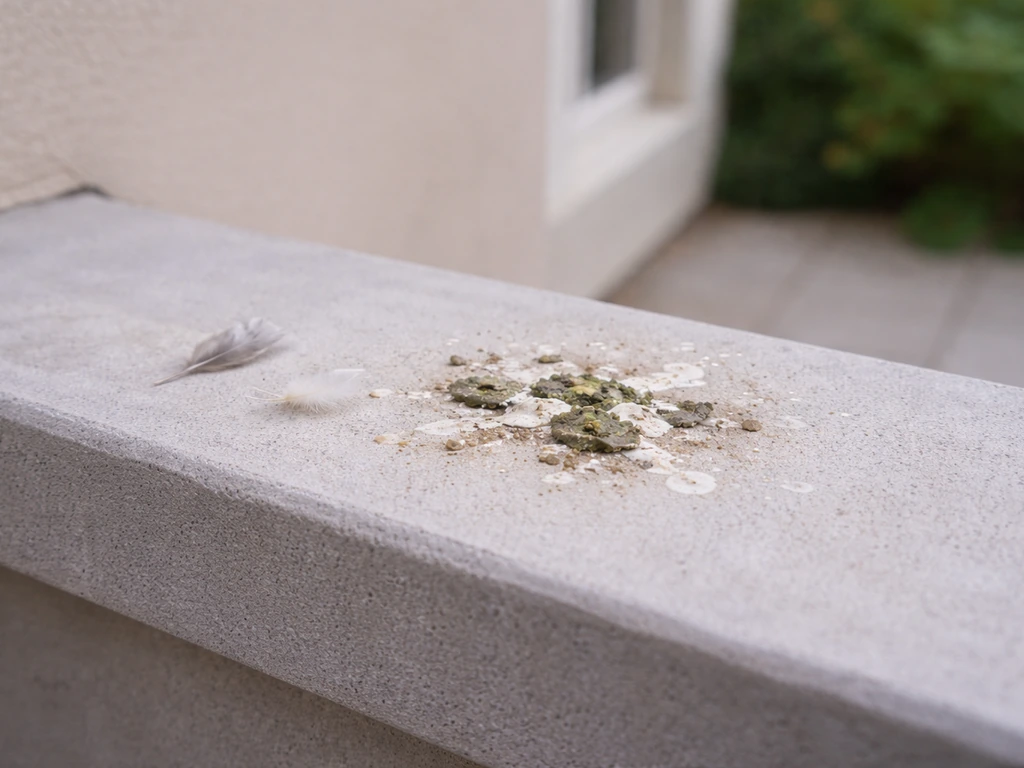
There is an important distinction between skin contact with nest material and inhaling airborne particles from it. Touching a nest with bare hands is not ideal, but for most healthy people, a thorough hand wash afterward reduces risk considerably. The bigger concern is what happens when you disturb dried droppings mixed into or under the nest without respiratory protection.
The CDC identifies histoplasmosis as a lung infection caused by breathing in spores of the fungus Histoplasma, which can be found in environments associated with bird and bat droppings, particularly in certain regions of the United States. Histoplasma spores are 1 to 5 micrometers in diameter, meaning they are tiny enough to travel deep into lung tissue. The National Park Service notes that stirring up dust from areas with large accumulations of bird droppings is how exposure typically happens. You do not have to be doing professional excavation work: sweeping a dry, crusty nest off a windowsill without a mask is enough.
Psittacosis (from Chlamydophila psittaci) and avian influenza are two other transmission risks linked to bird droppings and respiratory secretions. OSHA guidance on avian flu control specifically calls out contaminated surfaces and advises against stirring up dust, feathers, or bird waste without protection. The CDC's psittacosis prevention guidance similarly warns against dry sweeping or vacuuming surfaces contaminated with bird waste, for the same reason: it launches infectious particles into the air you are about to breathe.
NYC Health offers a useful calibration point: routine cleaning of a few droppings from a windowsill does not pose a serious health risk to most people. The risk scales up with the quantity of material, how dry and dusty it is, how enclosed the space is, and whether you have a compromised immune system.
How to clean up a nest or droppings safely
The single most important rule is: do not dry sweep, do not dry scrape, and do not blow dust around with a leaf blower or compressed air. Everything else flows from that. Here is a practical approach that draws on CDC, NIOSH, OSHA, and WorkSafe Queensland guidance.
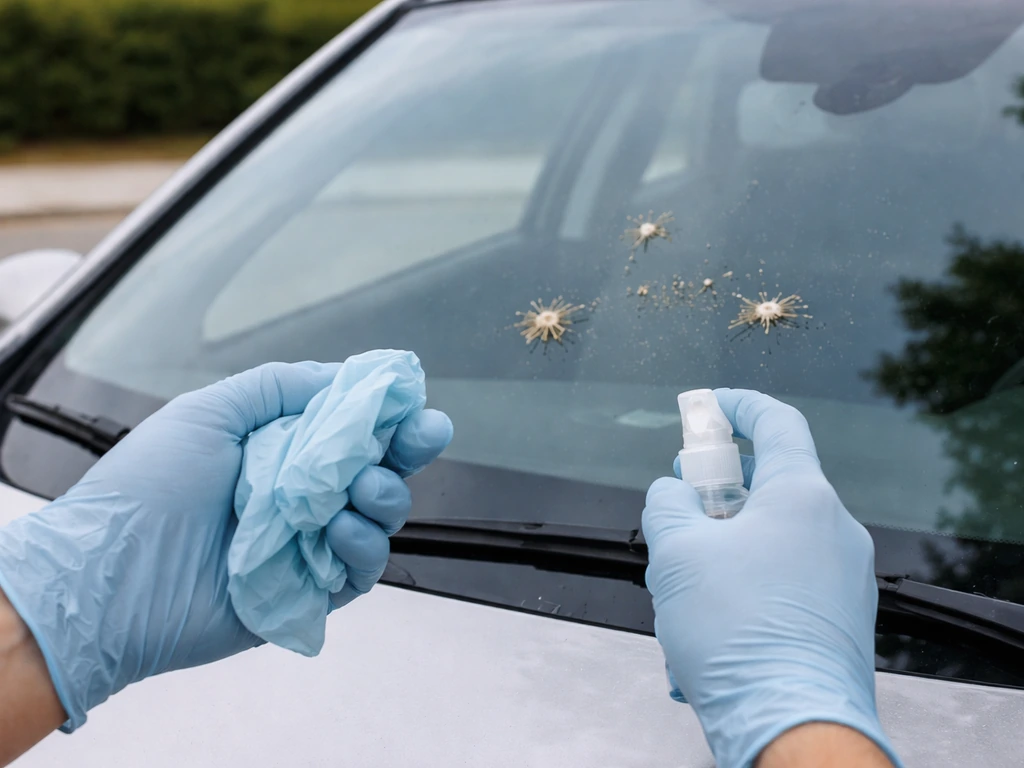
- Put on nitrile or rubber gloves before you touch anything. Add eye protection (safety glasses or goggles) if you are working overhead or in a confined space.
- If you are disturbing dried droppings or a nest with visible dried material, wear a properly fitted NIOSH-approved particulate respirator (N95 or better). A cloth mask or surgical mask is not adequate for fine fungal spores.
- Ventilate the area: open windows and doors before you start if you are working indoors. If it is an enclosed space like an attic or shed, consider waiting for a breezy day.
- Wet the material down first. Use a spray bottle to mist the nest or droppings with water (plain or lightly soapy) until the material is damp throughout. WorkSafe Queensland specifically recommends keeping droppings wet during the entire removal process to prevent them from drying back out and releasing dust.
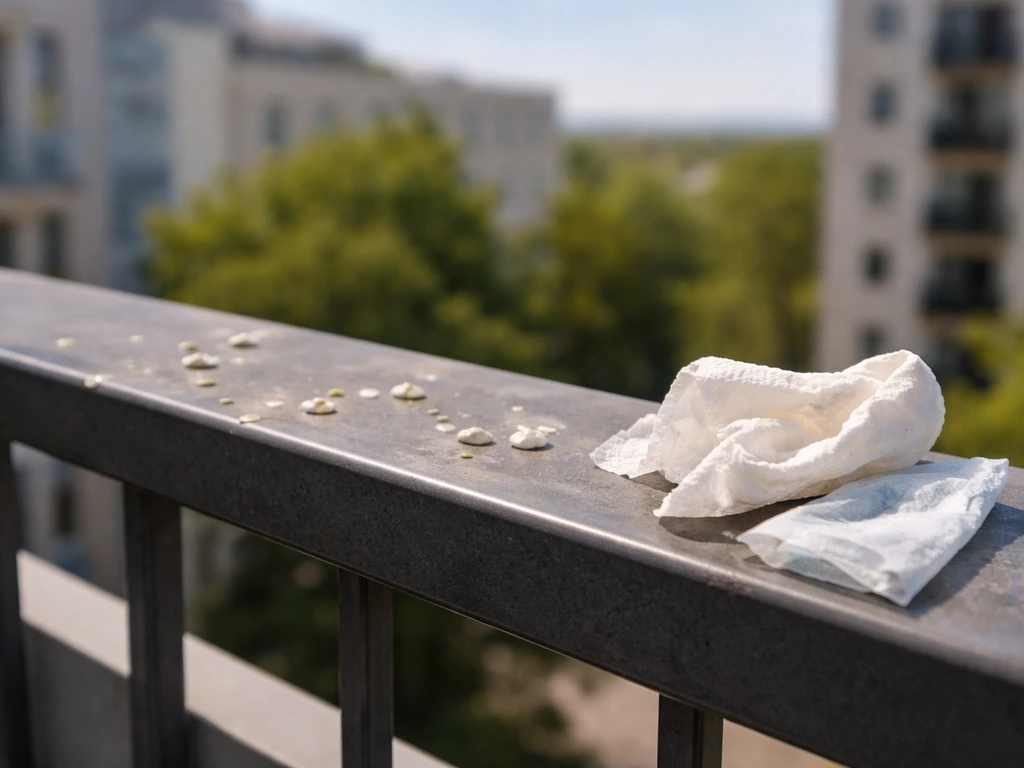
- Wipe or scoop, do not sweep. Use damp paper towels or a damp cloth to lift material, or a damp scraper to loosen hardened deposits. Place everything directly into a sealed plastic bag.
- Disinfect the surface after removal. A diluted bleach solution (roughly 1 part bleach to 10 parts water) or an EPA-registered disinfectant sprayed onto the surface and left for several minutes is appropriate. The CDC's guidance on cleaning contaminated surfaces recommends saturating the area rather than a quick wipe.
- Double-bag the waste, seal it, and dispose of it in an outdoor bin.
- Remove gloves by peeling them inside out, then wash your hands thoroughly with soap and water. OSHA guidance on avian flu cleanup emphasizes hand hygiene after removing PPE as a critical final step.
For large accumulations, anything that has been building up for months or covers a significant area, this is genuinely a job for professionals with full respiratory protection and hazmat-level cleanup protocols. NIOSH specifically flags work involving scraping or disturbance of large bird or bat dropping deposits as an occupational exposure scenario requiring proper engineering controls and PPE.
When to actually worry: symptoms and getting medical advice
If you cleaned up a small nest from a balcony railing without a mask and feel fine, you are almost certainly fine. Most exposures to small amounts of contaminated material in well-ventilated outdoor areas do not result in illness for healthy adults.
The CDC says histoplasmosis symptoms typically appear between 3 and 17 days after inhaling fungal spores. Symptoms include fever, cough, fatigue, and chest pain, closely resembling other respiratory infections or pneumonia. That timeline matters because people often do not connect a cleanup task from two weeks ago with the respiratory illness they develop later.
You should contact a doctor if you develop respiratory symptoms, particularly fever, persistent cough, or chest pain, within three weeks of cleaning up a nest or large accumulation of droppings, especially if the cleanup happened in an enclosed or poorly ventilated space. Tell your doctor about the potential exposure so they can consider fungal infection in the differential, because histoplasmosis is often misdiagnosed as bacterial pneumonia.
The following groups should take extra precautions and consider skipping the cleanup entirely, delegating it to someone else or calling a professional:
- People who are immunosuppressed due to HIV/AIDS, organ transplant, cancer treatment, or medications like corticosteroids
- People with chronic lung disease
- Older adults and very young children in high-exposure scenarios
- Pregnant individuals (where caution is warranted even for low-risk tasks)
- Anyone who had direct eye or respiratory mucous membrane contact with disturbed nest dust or droppings without protection
Eye exposure specifically warrants rinsing with clean water for at least 10 to 15 minutes and then calling a medical provider or poison control line for advice, even if symptoms are not immediate.
The luck and superstition angle: nests and droppings
Birds nesting on or near a home has long been read as a positive omen in many cultures. Swallows returning to the same barn eaves every spring, a wren settling into a garden wall, a robin building in a window box: all of these have been interpreted as signs of good luck, fertility, or the blessing of the household. In some European and Asian traditions, disturbing or destroying an active nest is considered bad luck, not just ecologically unkind.
Bird droppings landing on a person are famously considered lucky in several cultures, a belief that probably originated as folk consolation for an unavoidable indignity. The superstition is more charming than credible, but it does reflect how deeply birds are woven into human symbolic thinking. The saliva-based swiftlet nests carry their own cultural weight: in traditional Chinese medicine, edible bird's nests have been attributed with health-promoting properties for centuries, and the luxury market for them persists today.
None of this means you should leave a pigeon colony roosting in your attic because the nest feels auspicious, any more than you should skip cleanup because a dropping on your shoulder is supposedly lucky. The superstitions are interesting and worth respecting as cultural artifacts, but they do not change what is actually in the nest or what the health guidance says about cleaning it up.
How to stop birds from nesting and making a mess in the first place
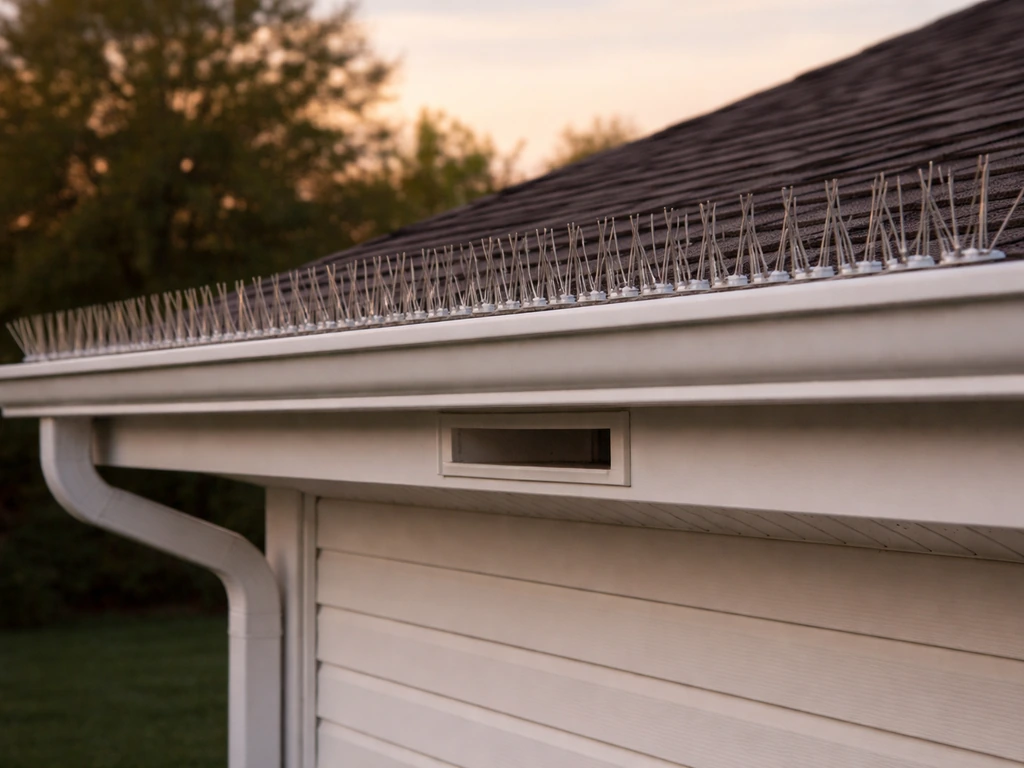
Prevention is genuinely easier than repeated cleanup. Birds look for ledges, overhangs, gutters, and cavities that give them shelter, a flat or cupped surface, and proximity to food and water. Removing those conditions, or making them less hospitable, is the most effective long-term approach.
- Install bird spikes or anti-perch strips on ledges, windowsills, balcony railings, and rooflines. These are humane deterrents that make landing uncomfortable without harming birds.
- Block cavity access points under eaves, in vents, and in gutters with mesh or hardware cloth before nesting season starts (late winter to early spring in most of the northern hemisphere).
- Keep gutters clean and free of debris: accumulated leaf matter and standing water create ideal nesting conditions.
- Use bird netting over balconies, HVAC units, or garden areas where droppings are a recurring problem.
- Remove food sources: outdoor pet food, open compost bins, and spilled birdseed near the house all attract birds closer to structures where nesting happens.
- For cars parked under trees or near roosting areas, a fitted car cover is the most effective physical barrier. Parking under a different tree or in a garage is the obvious alternative.
- Reflective deterrents (old CDs, reflective tape, or purpose-made holographic tape) work temporarily but birds often habituate to them, so they are best used as a short-term measure while you address the underlying attractant.
- For balconies and pet areas, hose down surfaces regularly before droppings have a chance to dry and accumulate. Wet, fresh droppings are significantly easier and safer to clean than dried, crusted material.
One note: in the United States, most wild bird species are protected under the Migratory Bird Treaty Act. This means you generally cannot remove an active nest with eggs or chicks in it without a permit. Check your local wildlife regulations before intervening in an active nest situation. Prevention before nesting starts is both more effective and legally simpler than dealing with a nest mid-season.
FAQ
If swiftlet nests are made from saliva, does that mean any “bird nest” product I buy is bird saliva only?
Not necessarily. Edible bird’s-nest products are typically made from swiftlet salivary gland secretions, but processing can mix in grading trims, water residue, or incidental bits from harvesting. If you are buying a supplement or food, check whether the product specifies swiftlet species and whether it is “raw” versus “processed” because filtering and soaking can change what remains.
Can bird saliva affect people through skin contact, or is inhalation always the main concern?
Skin contact is usually lower risk than breathing in dust, but it is not risk-free. If dried material from droppings or nesting debris gets on skin and then is rubbed into eyes or mouth, irritation or accidental ingestion can occur. Rinse exposed skin and hands, and avoid touching your face while cleaning.
Is it safe to vacuum up dried nest material if I use a regular household vacuum?
Usually no, because many vacuums can aerosolize fine particles when they disturb crusted droppings. The article emphasizes avoiding dust-raising methods; for higher amounts or dusty, crusty buildup, the safer move is professional cleanup or at least equipment designed for particulate control (HEPA filtration) and proper respiratory protection.
What is the difference between a fresh nest versus an old, crusty one in terms of health risk?
Fresh material tends to be less dusty and less likely to release airborne spores when disturbed. Old nests with dried droppings are more likely to become aerosolized during sweeping, scraping, or blowers, which is why the article highlights histoplasmosis exposure from stirring dry deposits.
Do I need a mask if I only remove a small amount of nesting material outdoors?
For healthy adults, a small amount on an open balcony often does not create serious risk, especially if you do not create dust. Still, using a mask and wetting the area before removal reduces the chance you will accidentally dry-scrape and aerosolize particles, particularly if the area is enclosed or near doors and vents.
Is there any way to clean without causing dust if the nest is in a tight spot like a gutter downspout?
Yes, prioritize methods that prevent airborne particles. Wetting the area before removal, using paper towels or disposable wipes rather than dry scraping, and bagging debris immediately helps. Also avoid pointing fans or blowing air toward the space where you or others are breathing.
If I got droppings on my eye while cleaning, what should I do immediately?
Rinse the eye with clean water for at least 10 to 15 minutes, then get medical advice promptly even if it does not hurt right away. Do not “wait and see” if the exposure was significant, involved dried crust, or happened in an enclosed area where you may have also inhaled dust.
How long should I watch for symptoms after nest cleanup?
For histoplasmosis, symptoms typically develop about 3 to 17 days after exposure, so the article’s guidance focuses on the first few weeks. If you develop fever, persistent cough, or chest pain within roughly three weeks, contact a clinician and mention the nest and droppings cleanup so infection is considered earlier.
Does cleaning a nest in winter or during cold weather reduce the risk?
Lower temperatures can reduce drying and dustiness, but they do not eliminate risk. Crusty material can still become dusty when disturbed, and spores or infectious particles can persist. The safest approach is still to avoid dry sweeping and to control dust regardless of season.
Are there legal or practical steps I should take before removing an active nest?
Yes. Many wild birds are protected, and active nests with eggs or chicks often require a permit or specific process. If the nest is active, prioritize prevention steps afterward, and consider contacting local wildlife authorities or a licensed wildlife control provider for compliant removal.
What prevention steps actually work for stopping birds from returning to the same spot?
Remove the specific “setup” birds use: block access to ledges or cavities, reduce sheltered overhangs, clean up old materials so scent and debris cues are less attractive, and consider bird deterrents that match the species and location. The article notes birds choose flat or cupped ledges and nearby food and water, so fixing those factors is key.