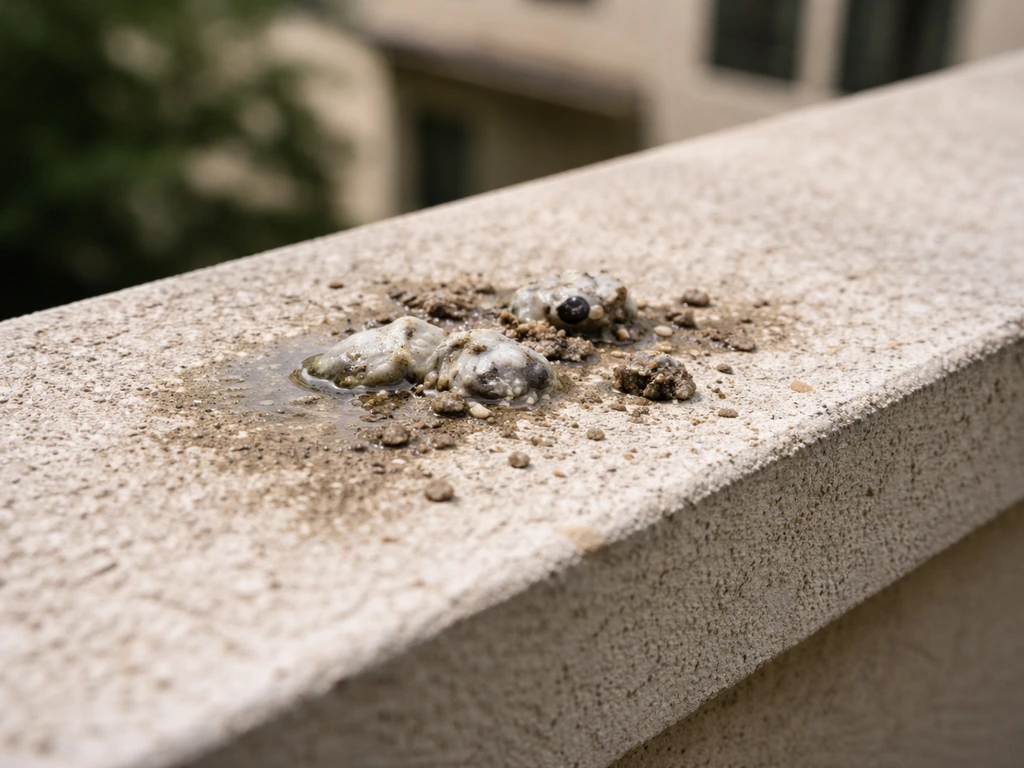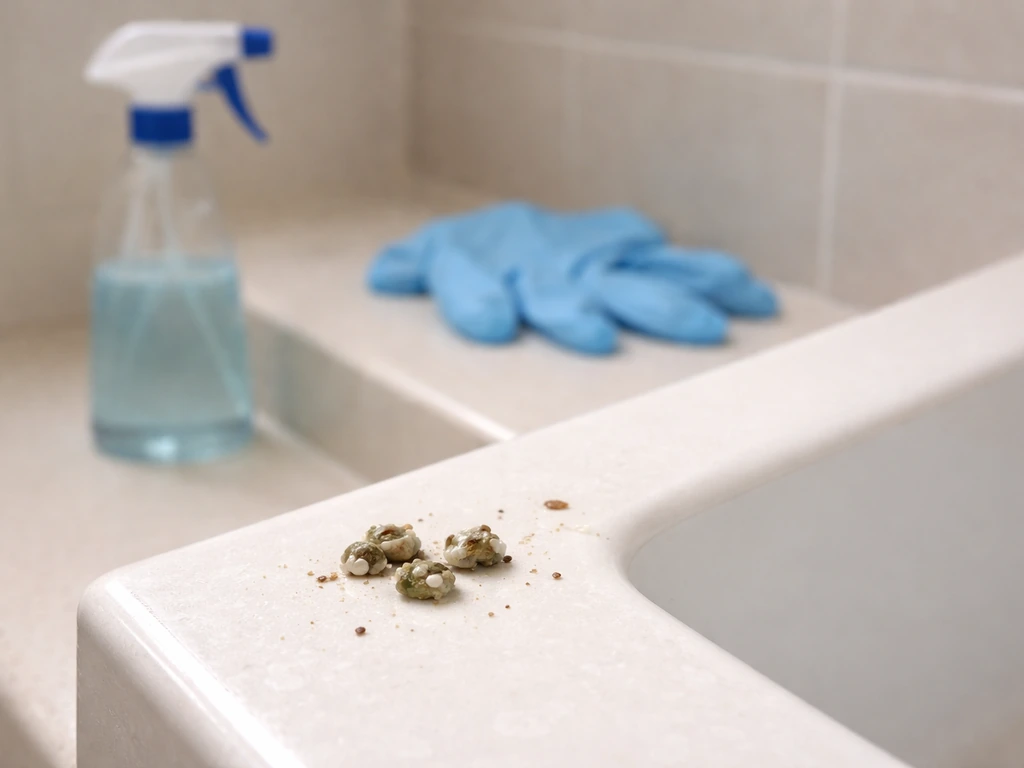
Bird droppings are mostly harmless in casual, one-off encounters outdoors, but they do carry real health risks when you're disturbing dry or accumulated deposits, working in enclosed spaces, or you have a compromised immune system. The key dangers are fungal spores (especially Histoplasma and Cryptococcus), bacterial infections like psittacosis, and irritating dust and ammonia. Knowing which situations are actually risky, and cleaning up properly when it matters, keeps you safe without panic.
Bird Droppings Health and Safety: Clean Safely and Prevent Risks

Marcus Fielding
27 May 2026
What's actually risky about bird droppings
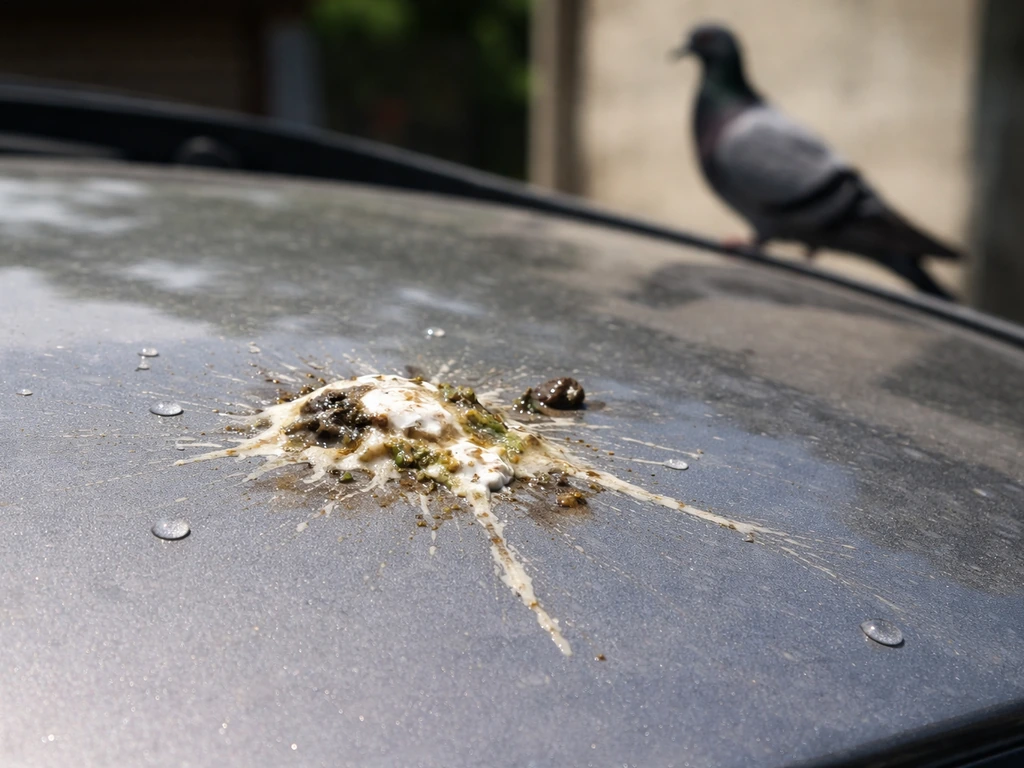
Fresh bird droppings from a passing pigeon landing on your car? The risk is pretty low. But bird droppings can carry a handful of pathogens worth knowing about, and the risk goes up sharply when the droppings are dry, crumbling, and in large quantities or confined spaces.
The three big concerns from a health standpoint are Histoplasma capsulatum, Cryptococcus neoformans, and Chlamydia psittaci. Histoplasma is a fungus that can be present in bird and bat droppings, and the CDC confirms people can become infected by inhaling the spores. These infections can lead to lung problems, which is why avoiding dusty cleanup is important. blank" rel="noopener noreferrer">Cryptococcus neoformans, another fungus, lives in soil, decaying wood, and bird droppings worldwide, and can cause a serious lung and nervous system infection if inhaled. blank" rel="noopener noreferrer">Psittacosis (sometimes called parrot fever) is a bacterial respiratory illness caused by Chlamydia psittaci, which humans can catch by breathing in aerosolized dried droppings or secretions from infected birds.
On top of the pathogen risk, large accumulations of droppings produce ammonia gas as they break down. In enclosed areas like attics, barns, or poorly ventilated sheds, ammonia concentrations can reach levels that irritate your eyes, nose, throat, and lungs. Bird droppings also contain allergens and uric acid, which can trigger allergic reactions in sensitive people and cause significant damage to surfaces like car paint.
Who faces the most risk? People cleaning up large accumulations, workers disturbing droppings in enclosed spaces, immunocompromised individuals (including anyone on chemotherapy or immunosuppressant medications), young children, and people with pre-existing lung conditions. For most healthy adults doing a quick outdoor cleanup, the risk is genuinely low as long as you follow sensible precautions. The hazard ramps up with quantity, dryness, and confinement.
How people actually get exposed
There are four main exposure routes, and understanding them helps you figure out where to put your energy when cleaning up.
- Inhalation of dust and aerosols: This is the biggest risk. When dry droppings are swept, scraped, or disturbed, they break into fine particles that carry fungal spores and bacteria into the air. The particles can stay suspended for a while, especially indoors. Power washing can also aerosolize particles into a fine mist. This is the exposure route behind histoplasmosis, cryptococcosis, and psittacosis.
- Direct skin contact: Handling droppings with bare hands transfers pathogens to your skin and, critically, to your face if you touch your eyes, nose, or mouth afterward. The CDC specifically flags this as a route for germ transmission when cleaning bird cages. Fresh droppings on a cut or broken skin are a higher concern than a splash on intact skin.
- Indirect surface contact: Contaminated surfaces (railings, car hoods, outdoor furniture, pet bowls, children's play equipment) act as transfer points. A child touches a contaminated surface and then puts their hand in their mouth. Your dog sniffs or licks droppings on the ground. These are real but manageable exposure routes.
- Accidental ingestion: Less common but worth knowing about. Contaminated water runoff near bird roosts, unwashed produce from gardens where birds roost, or children playing on contaminated ground can lead to ingestion of pathogens. Washing your hands and produce thoroughly handles most of this risk.
The indoor vs. outdoor distinction matters a lot here. Outdoors, wind disperses particles quickly and the concentration of any airborne spores or bacteria stays low. Indoors (attics, chicken coops, garages, warehouses), particles accumulate and circulate without dispersing, making inhalation risk much higher. If you're cleaning up a small splash on your car in a driveway, you're in a very different risk category than someone shoveling pigeon droppings out of a roosting attic.
Immediate steps for safe cleanup today
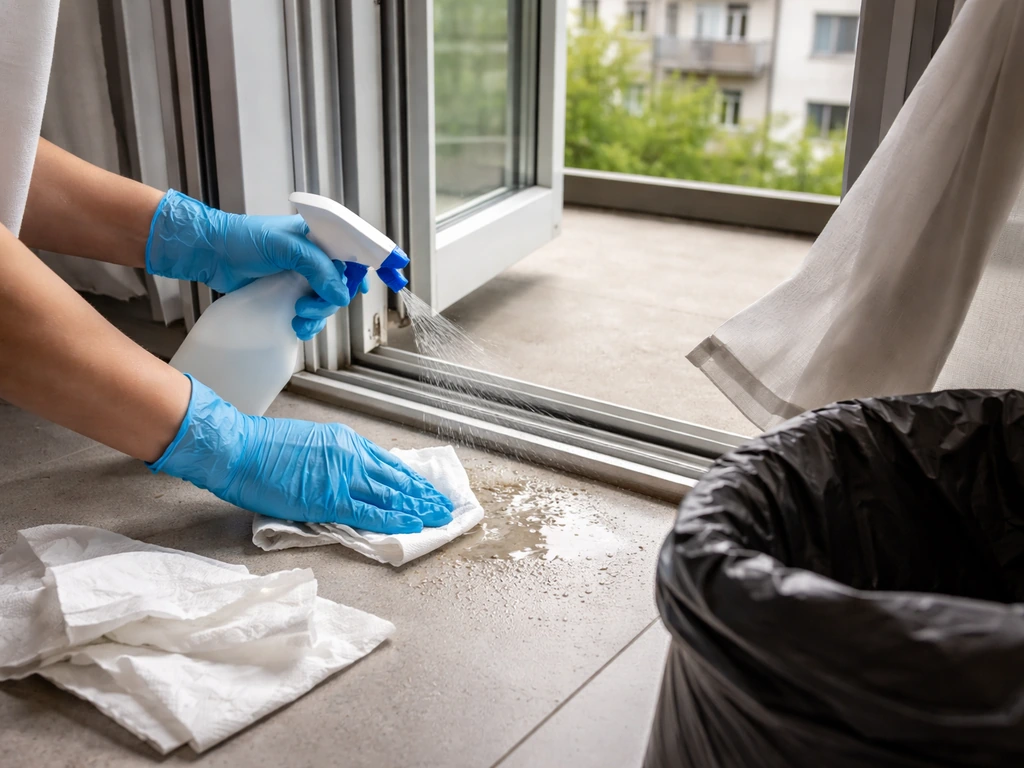
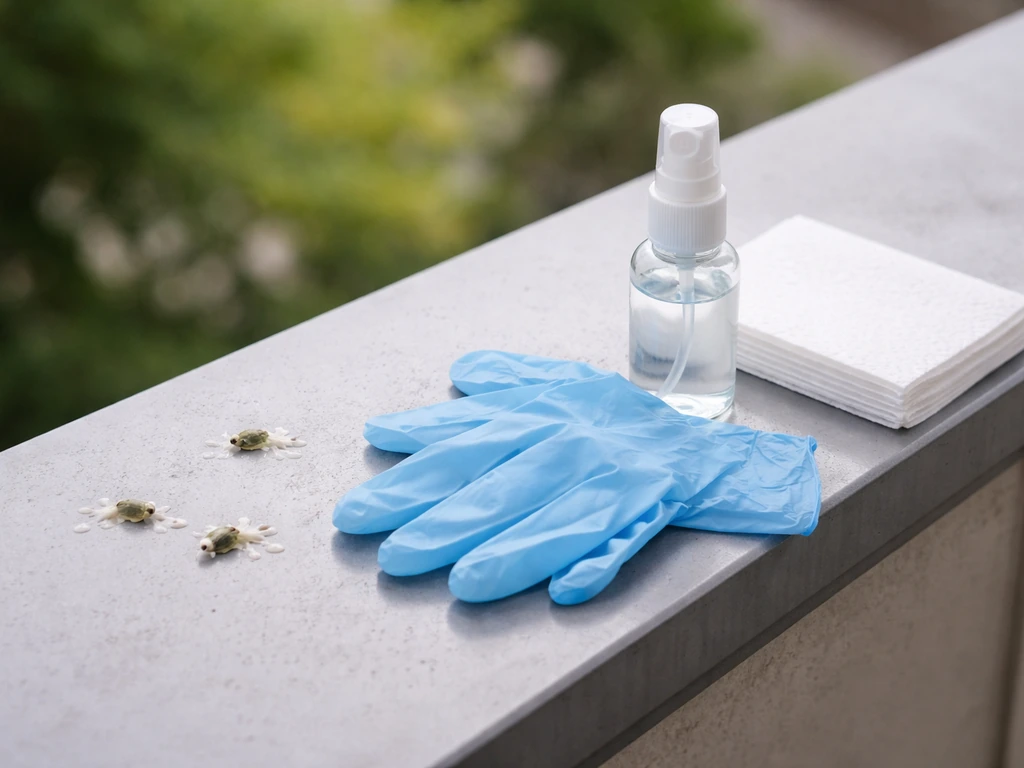
Whether you're dealing with a fresh splatter on your car or a months-old accumulation on a balcony, the process is similar. The goal is to remove the material without creating dust clouds and to disinfect what's left behind.
- Ventilate the area first. If you're working indoors or in a semi-enclosed space like a covered patio, open windows and doors to get airflow moving before you touch anything.
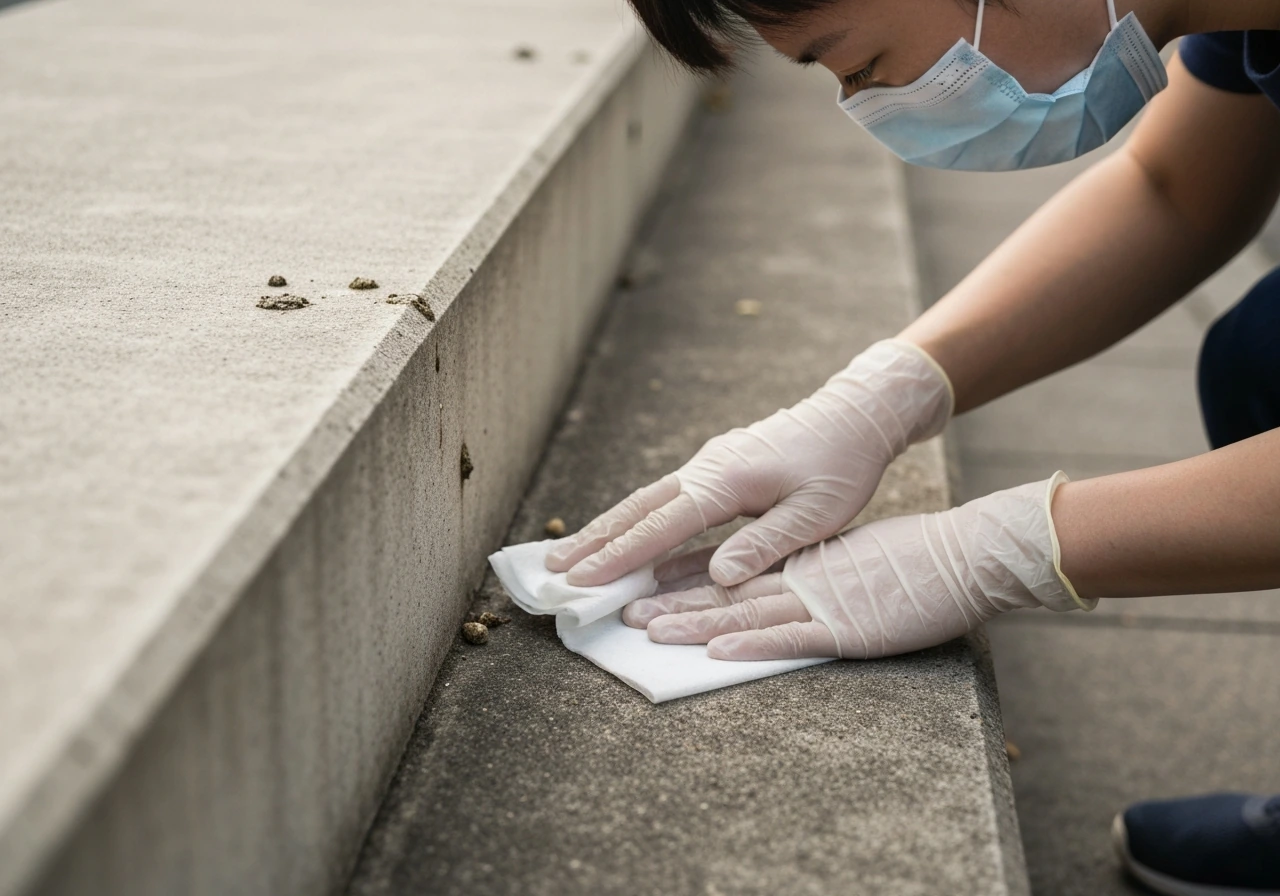
- Put on protective gear before you start (details in the next section). At minimum: gloves and a mask. Don't skip this step.
- Wet the droppings down. Don't dry-sweep or scrape. Mist fresh or dry droppings with water, or apply a diluted disinfectant solution, and let it soak for a few minutes. This dampens any spores or bacteria so they can't become airborne when you remove the material.
- Remove the softened material. Use disposable paper towels, old rags you'll throw away, or a plastic scraper. Scoop from the outside inward to avoid spreading the mess. For larger accumulations, use a damp mop or damp cloth rather than a dry broom.
- Bag everything immediately. Double-bag used paper towels, disposable cloths, and gloves in sealed plastic bags before disposing of them in an outdoor trash bin.
- Disinfect the surface. After physical removal, apply a disinfectant to the affected area and let it sit for the manufacturer's recommended contact time before wiping clean.
- Wash your hands thoroughly. Use soap and water for at least 20 seconds, even if you wore gloves. Wash any skin that was exposed.
For car paint specifically: bird droppings are acidic from uric acid, and dried droppings can etch clearcoat within hours in hot weather. Wet, soften, and lift the deposit with a damp microfiber cloth rather than scrubbing. Scrubbing dry deposits grinds them into the paint. Once removed, a wipe with an isopropyl alcohol solution (70% works well) disinfects the surface without damaging most automotive finishes.
For large accumulations (more than a few shovels' worth, or covering several square feet), you're entering professional remediation territory. OSHA and CDC/NIOSH treat heavy bird dropping accumulations as an occupational hazard with specific engineering controls. That means OSHA-focused controls are especially important for employees tasked with cleaning up large amounts in work environments OSHA and CDC/NIOSH treat heavy bird dropping accumulations as an occupational hazard. If you've got a serious infestation in an attic, barn, or commercial building, calling a professional remediation company is genuinely the safer call, not overkill.
Protective gear, disinfecting, and what not to do
What to wear
| Situation | Gloves | Mask | Eye Protection | Coveralls |
|---|---|---|---|---|
| Small outdoor cleanup (car, patio furniture, sidewalk splatter) | Disposable nitrile or latex gloves | Not required but recommended | Not required | Not required |
| Moderate accumulation outdoors (balcony ledge, bird feeder area) | Disposable nitrile gloves | N95 respirator recommended | Safety glasses or goggles | Old clothes you'll wash immediately |
| Indoor or enclosed space with accumulation | Disposable nitrile gloves | N95 respirator (minimum) | Safety goggles | Disposable coveralls or dedicated work clothes |
| Large infestation or heavy accumulation (attic, barn, warehouse) | Heavy-duty gloves + disposable outer gloves | N95 or P100 respirator | Full-seal goggles | Full disposable coveralls, boot covers |
An N95 respirator is the key piece of gear for any situation beyond a tiny fresh splatter. A standard dust mask or a cloth face covering doesn't filter fine fungal spores or bacterial particles reliably. If you have any lung condition or are immunocompromised, wear an N95 even for small outdoor jobs.
Disinfectants that work
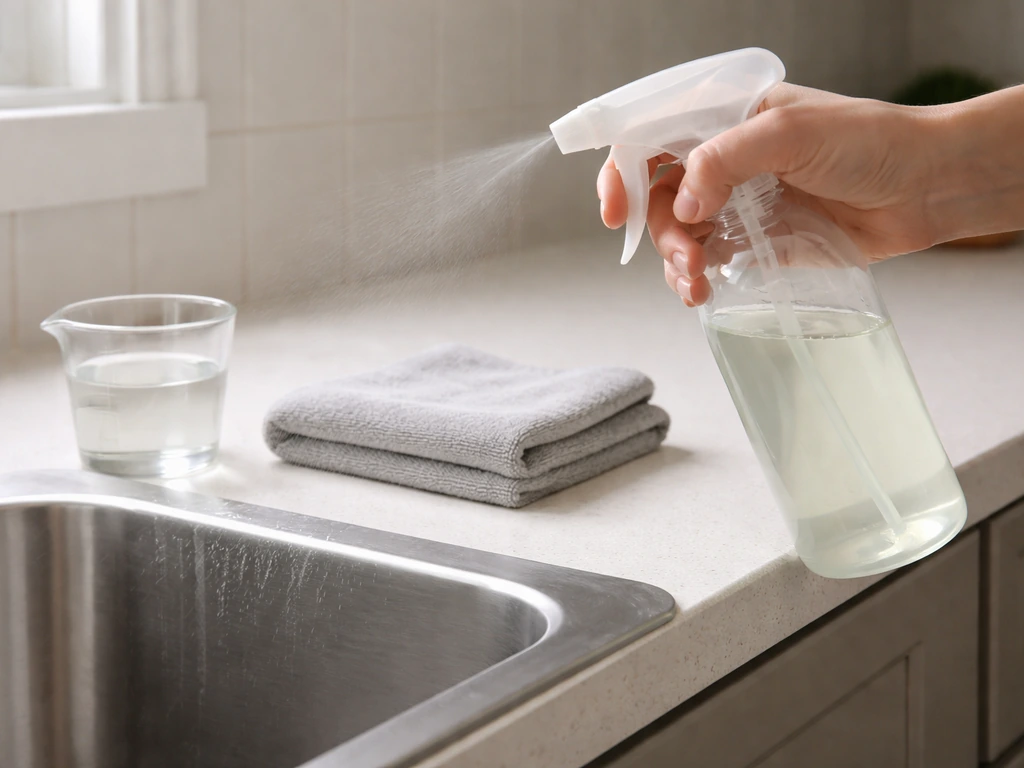
- Diluted bleach solution: 1 part household bleach to 9 parts water. Effective against bacteria and some fungi. Allow 10 minutes contact time before wiping. Do not use on car paint, metal, or colored fabrics.
- Quaternary ammonium disinfectants (like Lysol spray or similar EPA-registered products): Good general-purpose choice for patios, outdoor furniture, and hard surfaces. Follow label directions for contact time.
- 70% isopropyl alcohol: Good for car surfaces, glass, and metal where bleach could cause damage. Less effective on heavy organic material, so always physically remove droppings first.
- Hydrogen peroxide (3%): A gentler option for surfaces that might be bleach-sensitive. Less potent, so make sure surfaces are clean of organic material first.
What to avoid
- Never dry-sweep or blow dried droppings with a leaf blower. This is exactly how you turn a low-risk situation into a dangerous one by sending spore-laden dust straight into the air you're breathing.
- Don't use a standard vacuum cleaner without a HEPA filter. Standard vacuums exhaust fine particles right back into the air.
- Avoid high-pressure washing in enclosed spaces. Power washing aerosolizes material and can contaminate surfaces further away.
- Don't handle droppings with bare hands, even for a 'quick' cleanup. The CDC specifically warns against this.
- Don't let kids or pets in the cleanup area until you've removed material and disinfected.
Symptoms to watch for and when to get medical help
For most brief, incidental exposures outdoors, you're very unlikely to develop any illness. But if you had significant inhalation exposure (especially in an enclosed space with dry droppings), or you're immunocompromised, it's worth knowing what to look out for over the following weeks.
| Potential Illness | Symptoms to Watch For | Typical Onset | When to See a Doctor |
|---|---|---|---|
| Histoplasmosis | Fever, cough, fatigue, chest pain, shortness of breath | 3 to 17 days after exposure | Any respiratory symptoms after significant exposure, especially if immunocompromised |
| Cryptococcosis | Cough, shortness of breath, fever, headache (if affecting nervous system: stiff neck, confusion) | Weeks to months after exposure | Promptly if neurological symptoms develop; any respiratory symptoms in immunocompromised individuals |
| Psittacosis | Fever, chills, headache, muscle aches, dry cough, sometimes pneumonia | 5 to 14 days after exposure | If respiratory illness develops after known exposure to bird droppings or sick birds |
| Skin or eye irritation | Redness, itching, irritation | Within hours | If symptoms don't resolve within 24 to 48 hours, or if eye exposure occurred |
When you call or visit a clinician, describe the exposure clearly: what type of birds, how much accumulation was present, whether the droppings were fresh or dried, whether the space was indoors or outdoors, how long you were exposed, and what protective gear you were wearing. This helps the doctor order the right tests. Histoplasmosis and cryptococcosis can be detected through blood, urine, or tissue antigen tests; psittacosis is typically confirmed with blood antibody tests or PCR. Treatment exists for all three and works well when caught early.
If you're immunocompromised (due to HIV, organ transplant, chemotherapy, or long-term steroid use), don't wait for symptoms to worsen before seeking care. These infections can progress faster and more seriously in people with weakened immune systems, so a lower threshold for calling your doctor is appropriate.
How to stop birds from returning and clean less dangerously going forward
Prevention genuinely is easier than cleanup, especially when it comes to the health angle. Reducing roosting and accumulation means you'll spend less time in the cleanup scenario altogether. The CDC and NIOSH both emphasize that preventing accumulation of droppings is a primary strategy for reducing exposure risk.
Deterrents that actually work
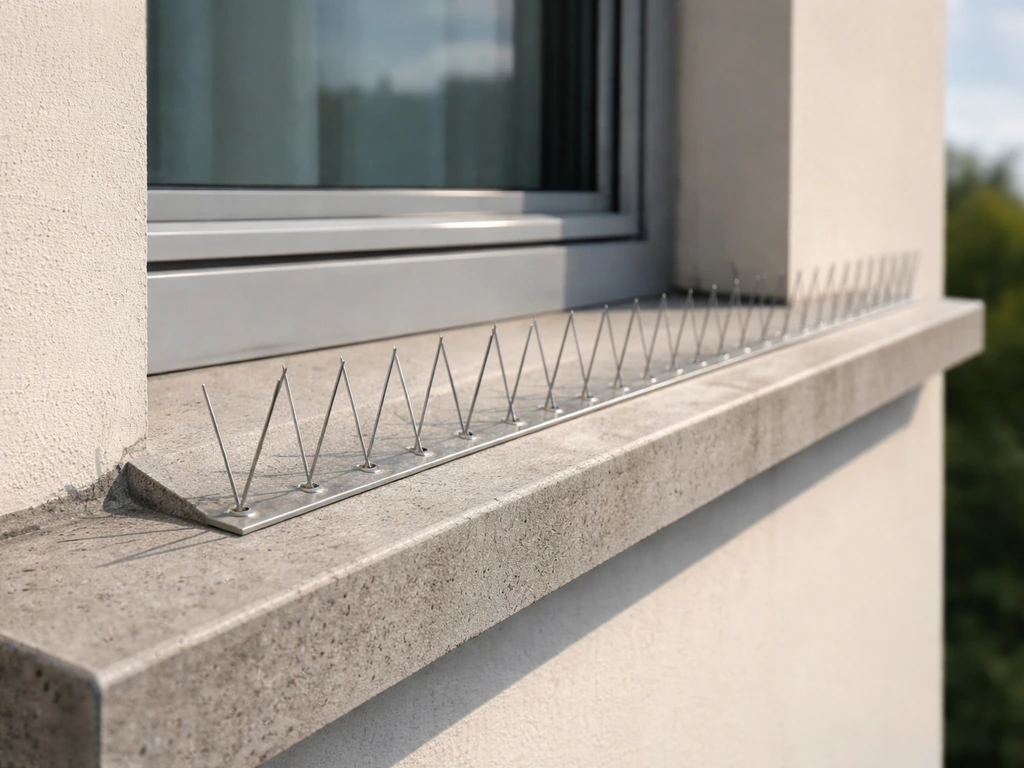
- Bird spikes: Installed on ledges, railings, and roof edges, they stop birds from landing and roosting. Best for pigeons, starlings, and gulls. Not a visual gimmick, they work reliably when properly installed.
- Bird netting: Physical barrier netting is the most effective exclusion method for covering large areas like balconies, eaves, or garden spaces. Properly installed netting keeps birds out without harming them.
- Reflective tape and visual deterrents: Reflective ribbon, flash tape, or predator silhouettes (owl decoys, hawk kites) can deter some birds, especially in less established roosting sites. They lose effectiveness over time as birds habituate, so rotate their placement.
- Slope modifications: Birds won't roost on ledges angled at 45 degrees or more. Physical slope strips or foam wedges installed on flat ledges remove the comfortable perching surface.
- Remove food and water sources: Bird feeders, uncovered pet food bowls, and standing water near the house actively attract birds. If you want fewer droppings, be deliberate about whether you're unintentionally feeding the problem.
- Sound deterrents: Ultrasonic devices have mixed evidence for effectiveness. Distress call systems work better for some species but can disturb neighbors and habituating birds eventually ignore them.
Setting up a safer cleaning routine
Regular cleaning before droppings accumulate and dry is the single best way to reduce health risk. Fresh droppings are far easier and safer to clean than dried, crumbly deposits. For high-use areas like balconies, car parking spots under trees, or bird feeder areas, a weekly rinse with water followed by a disinfectant wipe-down takes a few minutes and prevents the buildup that creates real risk.
For outdoor areas where birds regularly roost overhead, a garden hose-down while wearing gloves and keeping your face away from the splash zone is sufficient for maintenance. Don't let it build up to the point where scraping is required, and you'll stay well out of the higher-risk categories.
A quick note on the 'good luck' angle
Many cultures have a belief that being hit by bird droppings brings good luck. It's a charming idea and honestly one of the more comforting superstitions out there. But culturally reassuring or not, the safety advice doesn't change: wash the affected skin promptly, don't touch your face first, and follow the cleanup steps above. You can absolutely hold on to the superstition while still taking 30 seconds to clean up properly. The two are not in conflict.
When to call a professional
Call a pest control or remediation professional when you're dealing with any of the following: an indoor infestation with large accumulations (attic, crawl space, HVAC ductwork), a protected bird species that legally cannot be disturbed without a permit, a workplace situation where OSHA standards apply, or a situation where you or household members are immunocompromised. Professional remediators have the appropriate respirators, containment equipment, and disposal protocols that make large-scale jobs genuinely safe. It is worth the cost compared to the risk of significant fungal inhalation exposure.
FAQ
Is it safe to clean bird droppings off my car if they already dried?
For car and outdoor splashes, aim to eliminate the material and then disinfect. If it dried first, soften it with damp microfiber before you touch it, avoid scrubbing, and then disinfect with a 70% isopropyl alcohol wipe. If you already scraped it dry or it etched the clearcoat, disinfection can still reduce contamination, but you may need paint correction to restore the finish.
What protective gear should I use beyond an N95 when doing bird droppings health and safety cleanup?
N95 filtration is mainly about inhaling airborne particles, not about preventing skin contact. Wear disposable gloves, treat the area as potentially contaminated, and wash hands thoroughly after cleanup. If splatter reached your eyes or you got droplets on broken skin, rinse with clean water right away and seek medical advice if irritation persists.
Can I use disinfectant spray and bleach together when cleaning bird droppings?
Don’t mix cleaners. Ammonia-containing products (or bleach) can increase irritation when combined with bird dropping residue, and they can worsen fumes in enclosed areas. Use water to soften and lift, then disinfect with the single product you chose (for example, 70% isopropyl alcohol on many surfaces) and ventilate the space.
Can I handle bird droppings health and safety issues myself, or do I need a professional?
Yes, but only for higher-risk jobs. If the droppings are dry, in large quantity, or in an enclosed space, DIY cleanup increases the chance you will create dust and inhale spores. In those scenarios, the article’s guidance effectively shifts from “quick cleanup” to “professional remediation territory,” especially if you see heavy buildup on beams, rafters, or duct-adjacent areas.
How long after exposure should I worry about bird droppings-related illness?
Watching for symptoms is useful, but timing matters. Many people with brief incidental outdoor exposure will never develop illness, while higher exposure (enclosed space, dried crumbly droppings, prolonged dust disturbance) warrants monitoring over the following weeks. If you are immunocompromised, contact a clinician sooner, even without symptoms.
What should I tell a doctor if I think I inhaled aerosolized bird droppings?
If you inhaled dusty droppings, the priority is reducing further exposure, then getting medical guidance based on what happened. Tell the clinician whether the space was indoors or outdoors, whether the droppings were dry, the approximate quantity, and whether you used an N95. Bringing a rough photo of the cleanup area can help describe “confined and dusty” conditions accurately.
How should I dispose of wipes and rags used for bird droppings health and safety cleanup?
If you spilled and cleaned small amounts, you usually do not need biohazard disposal bags, but you should still contain waste. Double-bag soiled materials or disposable wipes, seal them, and avoid shaking. For small car or balcony cleanups, normal trash is often acceptable once sealed, but follow local rules if you are in a workplace or handling a large accumulation.
Do asthma or COPD change my risk level or cleanup precautions for bird droppings?
People with pre-existing lung disease may be at higher risk of irritation from ammonia and dust, even if infection risk stays low. Use strict dust control, ventilate, and consider upgrading protection (at least a properly fitted N95) before starting, and stop if you trigger coughing or wheezing that doesn’t settle.
After I clean bird droppings, what should I do to prevent the problem from coming back?
Sanitizing isn’t enough if the site still attracts birds. After cleanup, block the roosting source, improve surface maintenance, and schedule regular removal before droppings dry and accumulate. Reducing roosting and frequency of buildup is the prevention strategy that most reliably lowers future exposure.
What immediate steps should I take if I get bird droppings on my skin or in my eyes?
If you get hit by droppings, wash skin promptly, rinse eyes if splashed, and avoid touching your face before washing. Clothing that got contaminated should be removed carefully and laundered; if you splashed into the mouth or inhaled directly during cleanup, contact a clinician if you develop respiratory symptoms or if you are immunocompromised.